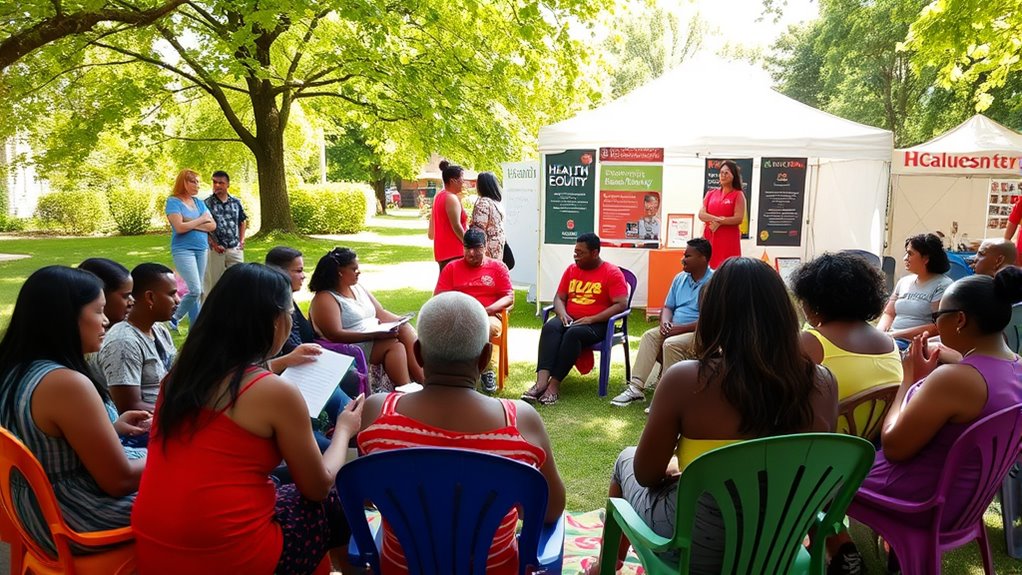

To advance health equity, you should prioritize genuine community participation by listening actively and building trust through cultural competence. Engaging community leaders, respecting local norms, and tailoring communication make initiatives relevant and accepted. Consistent engagement, transparency, and incorporating feedback foster ownership and sustain interest. When you focus on authentic relationships and culturally sensitive approaches, your programs become more effective. Keep exploring these best practices to strengthen your community efforts and create lasting health improvements.
Key Takeaways
- Involve community members early to ensure health initiatives are relevant and culturally appropriate.
- Build trust through transparent communication, respecting local norms, and engaging community leaders as partners.
- Tailor messaging and materials to reflect community language, beliefs, and cultural traditions for better understanding.
- Foster ongoing relationships with communities through continuous engagement, feedback, and responsiveness to their needs.
- Incorporate community input into program design to promote ownership, relevance, and sustainability of health equity efforts.

How can communities play a essential role in advancing health equity? The answer lies in their ability to foster trust and demonstrate cultural competence. When communities actively participate in health initiatives, they help shape solutions that truly meet their needs. Building trust is crucial because people are more likely to engage with programs they believe respect their values and understand their cultural backgrounds. To do this effectively, you must recognize that cultural competence isn’t just about language translation or surface-level awareness. It involves developing a deep understanding of the community’s traditions, beliefs, and social norms. When health providers and organizers show genuine respect for these elements, they create an environment where community members feel valued and heard.
Communities foster trust and cultural understanding to advance health equity effectively.
Trust building begins with transparent communication. When you openly share information about health risks, available resources, and the goals of programs, you foster a sense of collaboration rather than top-down enforcement. It’s important to listen actively and validate community concerns, which demonstrates respect and helps dispel fears or misconceptions. Engaging community leaders and respected figures can accelerate trust because they serve as bridges between health providers and residents. These leaders can advocate for programs and help dispel myths, making it easier for community members to participate willingly.
Cultural competence also plays a crucial role in designing interventions that resonate with diverse populations. For example, understanding language preferences and health beliefs allows you to tailor messaging that feels relatable and respectful. When health education materials reflect the community’s cultural context, it’s more likely to be understood and accepted. This personalized approach shows that you value the community’s identity, which further strengthens trust. Additionally, incorporating remote work principles such as flexible engagement strategies can enhance outreach efforts, especially in hard-to-reach areas.
Furthermore, ongoing engagement is key. Building trust isn’t a one-time effort; it requires consistent presence, follow-up, and adaptation based on feedback. When community members see that their voices influence program development, they become more invested. This feedback loop fosters a sense of ownership and partnership, making health initiatives more sustainable.
Top picks for "community engagement health"
Open Amazon search results for this keyword.
As an affiliate, we earn on qualifying purchases.
Frequently Asked Questions
How Can Technology Enhance Community Engagement Efforts?
Technology boosts your community engagement efforts by enabling digital outreach, making it easier to connect with diverse populations quickly. Use mobile health tools to provide accessible health information and services, especially for underserved groups. These technologies foster real-time communication, gather feedback, and build trust. By leveraging digital platforms and mobile health, you can create more inclusive, effective engagement strategies that promote health equity and empower your community.
What Are Common Challenges in Sustaining Community Involvement?
You face common challenges like volunteer burnout and funding limitations, which can hinder sustained involvement. To keep community members engaged, you need to address burnout by recognizing efforts and offering support, secure diverse funding sources to guarantee stability, and build strong relationships to foster ongoing commitment. Balancing these factors helps maintain enthusiasm, overcome obstacles, and ensure long-term community participation in health equity initiatives.
How Do Cultural Differences Impact Engagement Strategies?
Cultural differences considerably impact your engagement strategies by emphasizing the need for cultural awareness. When you recognize diverse beliefs and practices, you can tailor your communication to be more respectful and effective. Language barriers may hinder understanding, so offering translation services or multilingual materials becomes essential. By adapting your approach to accommodate cultural nuances, you foster trust and encourage active participation from diverse communities, ultimately enhancing health equity efforts.
What Metrics Best Measure Engagement Success?
Did you know that programs with high participation rates see a 30% greater impact? To measure engagement success, focus on metrics like measuring participation, such as attendance and active involvement, and evaluating impact through surveys and outcome data. These indicators help you understand how well your efforts resonate with the community and whether they lead to meaningful health improvements. Tracking these metrics guarantees you’re effectively fostering community engagement and advancing health equity.
How Can Organizations Build Trust With Skeptical Communities?
To build trust with skeptical communities, you should prioritize cultural sensitivity and genuine listening. Show respect for their values and concerns, and involve community members in decision-making processes. Be transparent, consistent, and follow through on promises. By demonstrating you value their input and understand their culture, you foster trust. Building relationships over time creates a foundation of credibility, making community members more open to your initiatives.
Conclusion
By actively involving your community, you become a bridge that connects people to better health outcomes, much like a lighthouse guiding ships safely ashore. Embrace best practices to foster trust, empower voices, and build lasting partnerships. When you prioritize community engagement, health equity becomes a shared journey rather than a distant goal. Remember, your efforts can transform challenges into opportunities, lighting the way toward a healthier, more equitable future for everyone involved.