
TL;DR

Get health and wellness essentials delivered free with Prime
- Fast, free delivery on millions of items
- Prime Video, Amazon Music and more included
- Member-only deals all year
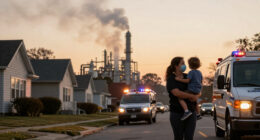
A study in the Journal of the American Geriatrics Society examined Medicare beneficiaries aged 65 and older in North Carolina who used electricity-dependent medical devices during Hurricanes Matthew and Florence. County-level disaster declarations showed no significant immediate changes, while flood-map analyses found stronger associations between exposure and hospitalizations and deaths; Black participants had worse outcomes as flooding severity increased.
A study of older adults in North Carolina who relied on electricity-dependent medical devices found that hurricane exposure—especially as measured through flooding—was associated with hospitalizations and deaths. Published in the Journal of the American Geriatrics Society, the research examined Medicare beneficiaries aged 65 and older around Hurricanes Matthew in 2016 and Florence in 2018, and reported worse outcomes for Black participants as flood severity increased.
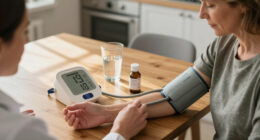
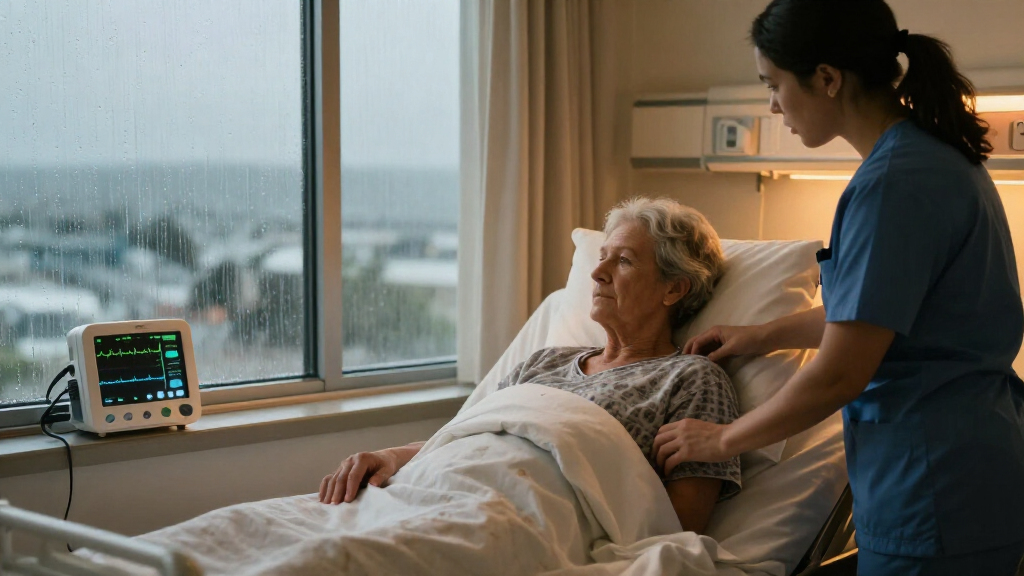
The investigators assessed the immediate and sustained effects of the two hurricanes on health outcomes during the following year. The population studied comprised Medicare beneficiaries aged 65 or older who used electricity-dependent equipment, including ventilators, respirators and dialysis machines. The report describes these devices as a potential source of vulnerability when storms disrupt power or access to care, but it does not quantify the contribution of any one disruption.
When researchers classified exposure using county-level federal disaster declarations, they found no statistically significant immediate changes after either hurricane. They did find sustained increases in hospitalizations and deaths over the year following Hurricane Matthew. The supplied report does not specify the size of those increases or describe a comparable sustained result for Florence under this analysis.
A second approach used the North Carolina Flood Extent Archive, which provides more detailed flood exposure information. Those analyses showed stronger and more consistent associations between hurricane exposure and hospitalizations and deaths. The study also reported that Black individuals experienced worse short- and long-term outcomes as flooding severity rose. The results describe associations; they do not, on their own, establish that flooding directly caused each outcome.
Flood Risk and Medical Device Dependence
The findings point to a practical challenge for disaster planning: older people who depend on powered medical equipment may face health risks that persist beyond a storm’s immediate passage. Electricity, transport and continued access to health care can all matter to people managing serious conditions, although this study does not isolate which pathways explain the observed associations.
The different results from disaster declarations and flood mapping also matter. A county-level designation may not reflect the conditions experienced by each resident, while more localized flood data can distinguish exposure within a broader area. The flood-based associations suggest that where flooding occurs and how severe it is may be important when identifying risk, but they do not prove that one measurement method should replace another in every setting.
The reported disparities by race add an equity concern for emergency preparedness. The researchers found worse outcomes for Black participants as flooding severity increased, but the supplied report does not identify the causes of that pattern. The result supports further study of unequal exposure and access to resources rather than a conclusion about any single explanation.
electricity-dependent medical devices for seniors
As an affiliate, we earn on qualifying purchases.
As an affiliate, we earn on qualifying purchases.
Two North Carolina Hurricanes Studied
The research focused on Hurricane Matthew in 2016 and Hurricane Florence in 2018, using Medicare data for older North Carolina residents who used electricity-dependent medical equipment. By examining both near-term and year-long outcomes, the investigators considered whether possible impacts were limited to the period during or immediately after a storm.
The paper, titled “Assessing the effects of hurricane hazards on hospitalization or death among older adults using electricity-dependent medical devices,” appeared in the Journal of the American Geriatrics Society in 2026. Its DOI is 10.1111/jgs.70757. The source report says the research team linked hurricane hazard information with health care utilization data and worked with affected communities while shaping the work.
“This work lays the foundation for studying how hurricanes and floods affect medically vulnerable populations more broadly—and for partnering with community organizations and local and state agencies to strengthen disaster preparedness and planning.”
— Jennifer L. Lund, senior author and researcher at the UNC Gillings School of Global Public Health
portable hospital ventilators for emergencies
As an affiliate, we earn on qualifying purchases.
As an affiliate, we earn on qualifying purchases.
Limits of the Reported Findings
The available report does not provide effect sizes, confidence intervals or detailed methods, so readers cannot assess the magnitude or precision of the reported associations from this account alone. It also does not explain which factors—such as power outages, evacuation, disrupted treatment or difficulty reaching hospitals—may have contributed to outcomes.
The findings concern a specific group of Medicare beneficiaries in one state and two hurricanes. The source does not establish whether the same patterns apply to younger people, people using other forms of medical support, or storms in other regions. Nor does it report whether the racial differences persist after accounting for other factors. Association is not proof of direct causation, and additional details from the full study would be needed to evaluate the results more fully.
home dialysis machines for elderly
As an affiliate, we earn on qualifying purchases.
As an affiliate, we earn on qualifying purchases.
Further Research and Preparedness Planning
The senior author said the team aims to extend research on how hurricanes and floods affect medically vulnerable populations and to work with community organizations and local and state agencies on preparedness. The source does not announce a specific next study, timetable or policy change.
Further work could clarify how localized flood exposure relates to health outcomes, what mechanisms contribute to risk, and how outcomes differ across communities. For now, the study adds evidence for planners to consider the needs of people dependent on powered medical devices when preparing for storms, while its findings should be read within the limits of the population and events examined.
battery backup for medical devices
As an affiliate, we earn on qualifying purchases.
As an affiliate, we earn on qualifying purchases.
Key Questions
Who did the study examine?
It examined North Carolina Medicare beneficiaries aged 65 and older who used electricity-dependent medical equipment, including ventilators, respirators and dialysis machines.
Which hurricanes were included?
The researchers studied health outcomes around Hurricane Matthew in 2016 and Hurricane Florence in 2018.
Did the study find an immediate increase in hospitalizations or deaths?
Using county-level federal disaster declarations, researchers found no significant immediate changes after either hurricane. Flood-map analyses showed stronger and more consistent associations, but the supplied report does not give detailed effect estimates.
Does the research prove that flooding caused the health outcomes?
No. The report describes associations between hurricane or flood exposure and outcomes. It does not establish that flooding directly caused individual hospitalizations or deaths or identify the mechanisms involved.
What did the study report about racial differences?
It reported that Black individuals experienced worse short- and long-term outcomes as flooding severity increased. The report does not explain the reasons for that difference.
Source: rss
Halloween Picks
halloween
As an affiliate, we earn on qualifying purchases.