
Social determinants like income, education, neighborhood conditions, and social support shape health outcomes around the world by influencing what resources you can access, your lifestyle choices, and your exposure to risks. When these factors improve, health disparities decrease, and populations tend to live longer and healthier lives. Conversely, socioeconomic hardships increase the risk of chronic diseases and limit healthcare access. To understand how these elements interact and impact health globally, keep exploring these connections further.
Key Takeaways
- Social determinants like income, education, and neighborhood conditions influence access to healthcare and healthy living environments worldwide.
- Economic disparities impact disease prevalence and health outcomes across different populations and regions.
- Social support networks and community resources affect mental health and resilience globally.
- Addressing social inequalities is essential for reducing health disparities and achieving health equity worldwide.
- Policy interventions targeting social determinants can improve overall population health and decrease preventable illnesses internationally.
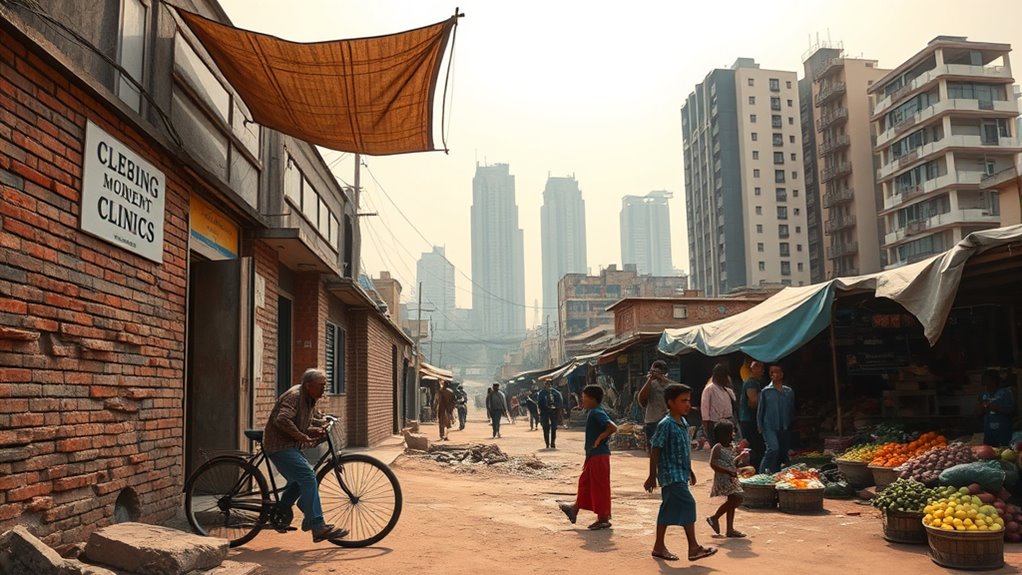
Your health isn’t determined solely by your genetics or healthcare access; instead, it’s heavily influenced by social factors like income, education, neighborhood conditions, and social support. These social determinants shape your opportunities for a healthy life and can either bridge or widen health disparities. When considering health equity, it’s essential to recognize how socioeconomic factors impact everyone differently across communities and countries. For example, individuals with higher income levels often have better access to nutritious food, safe housing, quality education, and healthcare services—all of which contribute to improved health outcomes. Conversely, those facing economic hardship may experience chronic stress, limited resources, and barriers to care, leading to worse health conditions over time.
Health is shaped by social factors like income, education, and neighborhood conditions that influence disparities worldwide.
Socioeconomic factors play a vital role in determining your risk for many diseases. People living in poverty are more likely to experience conditions like hypertension, diabetes, or respiratory illnesses because they often lack access to healthy foods, safe environments for physical activity, and preventive healthcare. Their neighborhoods may be unsafe or lack green spaces, discouraging outdoor activity and fostering unhealthy lifestyles. Education also influences health outcomes because it affects health literacy—your ability to understand health information and make informed decisions. Without proper education, you might miss out on essential preventive measures or fail to recognize early warning signs of illness.
Your social environment impacts your mental and emotional well-being as well. Supportive social networks, community engagement, and a sense of belonging can buffer against stress and promote resilience. Conversely, social isolation or exposure to violence and discrimination can have detrimental effects on both mental and physical health. These social factors often intersect, creating complex layers of advantage or disadvantage that influence your overall health trajectory.
Furthermore, understanding the role of social determinants in shaping health outcomes highlights the importance of a holistic approach to healthcare that addresses broader societal issues rather than just individual treatment. Addressing health equity means tackling these socioeconomic factors head-on. It involves creating policies that guarantee everyone has fair access to resources necessary for good health, regardless of income or background. This includes investing in education, affordable housing, and community infrastructure that promotes healthy lifestyles. By understanding how social determinants shape health outcomes, you recognize that health disparities are not just individual issues but societal challenges requiring collective action. When social equity improves, so does the overall health of populations, reducing preventable illnesses and extending life expectancy for marginalized communities. Your health is deeply connected to these social factors, and addressing them is key to building healthier, more equitable societies worldwide.
Frequently Asked Questions
How Can Policies Effectively Target Social Determinants to Improve Health?
You can implement policy interventions that directly address social determinants like housing, education, and employment, fostering health equity. By prioritizing equitable resource distribution and removing barriers, you guarantee vulnerable populations gain better access to healthcare and support services. Collaborate with communities to create tailored solutions, monitor outcomes, and adapt policies as needed. These steps help create a healthier, more equitable society where everyone has the opportunity to thrive.
What Role Does Education Play in Health Disparities Worldwide?
You can see that education plays a vital role in health disparities worldwide by influencing educational inequality and health literacy. When you lack access to quality education, you’re more likely to have limited health knowledge, making it harder to make informed decisions. Improving education helps bridge these gaps, empowering you to understand health information better, adopt healthier behaviors, and ultimately reduce disparities across different populations.
How Do Cultural Factors Influence Social Determinants and Health Outcomes?
Did you know that cultural perceptions can influence health behaviors in over 80% of communities worldwide? You see, cultural factors like traditional practices and beliefs shape social determinants by affecting access to care, health choices, and perceptions of illness. These perceptions can either promote healthy behaviors or hinder them, ultimately impacting health outcomes. Recognizing these influences helps you understand that addressing cultural nuances is essential for improving global health strategies.
What Are the Challenges in Measuring Social Determinants Globally?
You face challenges in measuring social determinants globally because inconsistent data collection methods and lack of data standardization hinder comparisons across countries. Different regions may use varied indicators or prioritize diverse factors, making it hard to gather accurate, comparable data. These inconsistencies complicate efforts to understand how social determinants influence health outcomes worldwide, limiting policymakers’ ability to develop targeted interventions and allocate resources effectively.
How Can Communities Build Resilience Against Social Health Risks?
Building resilience against social health risks is like planting a sturdy tree, rooted in strong community engagement and smart resource allocation. You can foster this by involving community members in decision-making, ensuring their voices guide initiatives. Allocate resources effectively to address social determinants, such as housing and education, and strengthen local networks. This approach helps communities adapt, thrive, and weather health storms, transforming vulnerabilities into sources of strength.
Conclusion
So, next time you wonder why health issues persist worldwide, remember it’s not just medicine or luck. It’s the social factors often ignored—poverty, education, environment—that truly shape health outcomes. Ironically, addressing these root causes could be the most effective cure, yet they’re usually overlooked in favor of quick fixes. Perhaps if we paid more attention to the social side, we’d finally create a healthier world—one that surprisingly depends on our social choices, not just medical miracles.