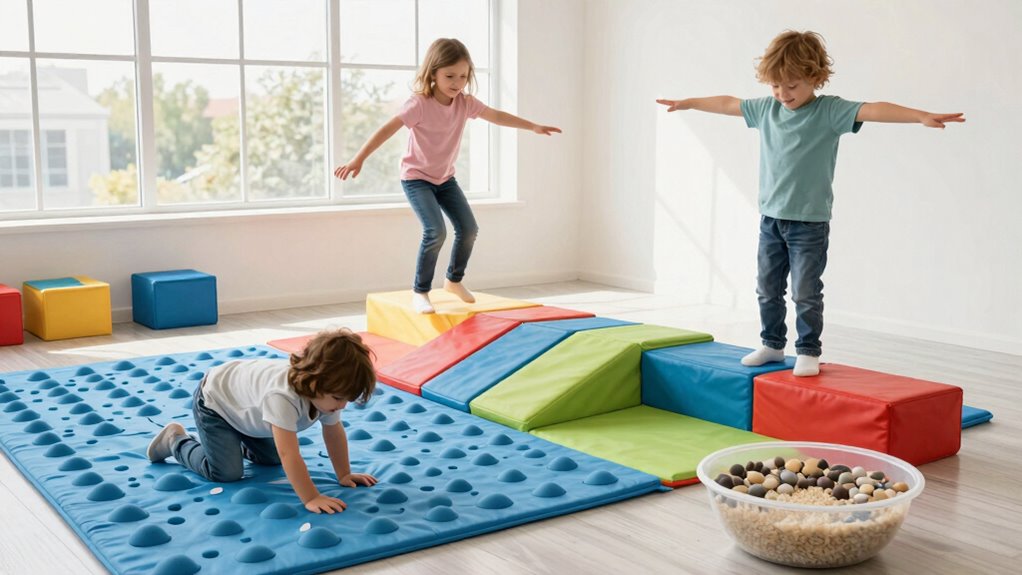
To effectively layer sensory and movement play, combine tactile activities with physical actions, like crawling through textured tunnels or reaching for objects on textured mats. Use movement to deepen tactile exploration, encouraging children to grasp, manipulate, or feel different textures while moving between stations. Incorporate multisensory challenges, such as scavenger hunts or balance exercises with tactile elements. If you keep exploring, you’ll discover even more ways to create a engaging, developmentally rich environment.
Key Takeaways
- Incorporate movement activities that involve reaching, crawling, or balancing across textured and varied surfaces.
- Design multisensory stations combining tactile stimuli with gross motor tasks like climbing or jumping.
- Use layered activities, such as searching for textured objects while moving through obstacle courses.
- Integrate outdoor natural elements to enhance multisensory engagement during active play.
- Sequence sensory exploration with physical movements to deepen sensory processing and motor development simultaneously.
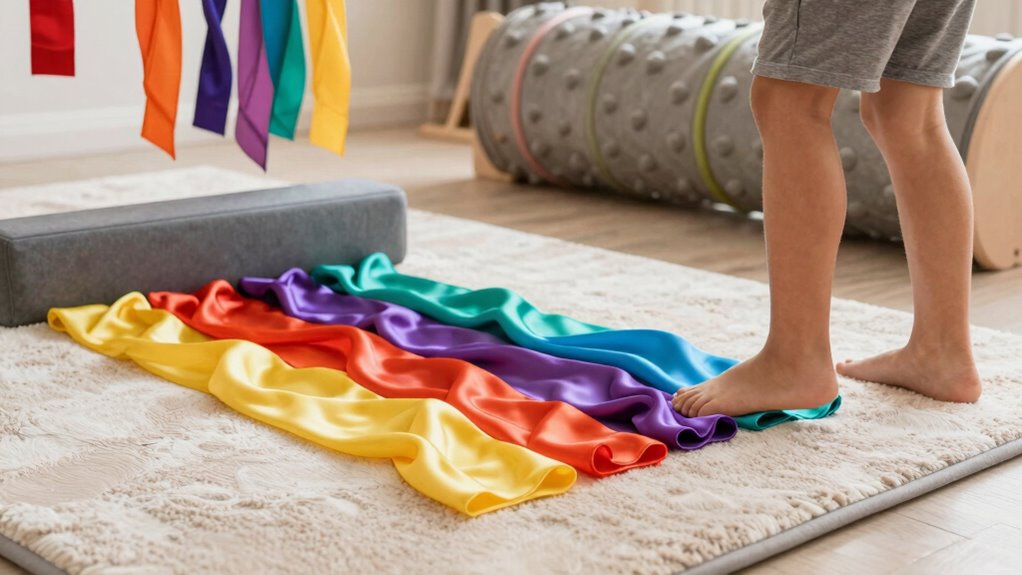
To start, consider setting up stations where children can explore various textured objects—like sand, rice, or soft fabric—while moving around. As they reach, grasp, and manipulate these items, they’re engaging their tactile senses. At the same time, you can incorporate gross motor activities, such as crawling, jumping, or balancing, that encourage children to move from one textured station to another. This layering supports tactile exploration in a dynamic way, making the experience both sensory-rich and physically engaging.
You can also design obstacle courses that include tactile elements. For example, children can crawl through tunnels lined with different fabrics or walk across textured mats. As they navigate these challenges, they’re practicing gross motor skills like coordination, balance, and spatial awareness. Meanwhile, the varied textures stimulate tactile senses, creating a multisensory experience that reinforces both sensory processing and motor development. Incorporating multisensory activities can further deepen the engagement and enhance learning outcomes.
Another effective approach is to use movement-based sensory games that involve tactile components. Think of activities like “push and pull” games with textured balls or “feel and find” scavenger hunts where children search for objects with specific textures. These games encourage children to use their hands for tactile exploration while moving their bodies to search or reach. Such layered activities foster gross motor coordination through movement, while also refining their tactile discrimination skills. Incorporating urban greening elements into outdoor play spaces can further enhance multisensory engagement and support sustainable environmental practices.
sensory play tunnel with textured surfaces
As an affiliate, we earn on qualifying purchases.
As an affiliate, we earn on qualifying purchases.
Frequently Asked Questions
How Do I Ensure Safety During Layered Sensory and Movement Activities?
To guarantee safety during layered sensory and movement activities, you should conduct a thorough risk assessment beforehand, identifying potential hazards. Always use appropriate safety equipment, like helmets, pads, or harnesses, to protect against falls or injuries. Supervise closely and set clear boundaries to prevent overstimulation or accidents. Regularly check the environment and equipment for safety, and adapt activities as needed to match the child’s age and abilities.
What Are Some Age-Appropriate Sensory and Movement Layering Ideas?
You can incorporate age-appropriate sensory and movement layering ideas by using music integration to enhance engagement and rhythm. Include balance exercises like walking along a line or balancing on one foot to develop coordination. For younger kids, add textured mats or soft fabrics for tactile stimulation, while older children can try obstacle courses that combine sensory inputs and movement. These activities support development while keeping play fun and safe.
How Can I Modify Activities for Children With Sensory Sensitivities?
To modify activities for children with sensory sensitivities, focus on gentle guidance and gradual adjustments. Use softer stimuli and smaller sensory segments to support sensory integration and movement modulation. Incorporate calming cues, such as slow movements or quiet environments, allowing children to self-regulate. Always observe their responses, and be ready to adapt activities by reducing intensity or providing breaks, ensuring a supportive, soothing experience tailored to their unique needs.
How Long Should Each Layered Activity Last?
You should plan each layered activity to last around 10 to 15 minutes, balancing engagement and overstimulation. Use duration planning to guarantee kids stay interested without feeling overwhelmed. Incorporate a variety of activities, alternating sensory and movement play, to keep the experience fresh and stimulating. Pay attention to the child’s cues, and if they seem tired or overstimulated, it’s time to pause or switch activities to maintain a positive experience.
What Signs Indicate a Child Is Overwhelmed During Play?
Remember, “a watched pot never boils.” If you notice signs like a child covering their ears, averting their gaze, becoming fidgety, or showing signs of play fatigue, they might be overwhelmed. Sensory overload often manifests as irritability or withdrawal, while play fatigue shows as decreased engagement or exhaustion. Keep a close eye and offer breaks to prevent sensory overload and guarantee joyful, safe play experiences.
outdoor textured mats for kids
As an affiliate, we earn on qualifying purchases.
As an affiliate, we earn on qualifying purchases.
Conclusion
By blending sensory and movement play, you create a rich, textured world where children can explore and grow. Imagine a young child crawling through a tunnel filled with textured fabrics—each movement awakens new senses, building confidence and coordination. Just like a chef layers flavors to craft a delicious dish, layering these playful activities nurtures a child’s development. When you combine movement and sensory play, you’re giving them a toolkit for a lifetime of curiosity and resilience.
multisensory obstacle course for children
As an affiliate, we earn on qualifying purchases.
As an affiliate, we earn on qualifying purchases.
tactile sensory bins for kids
As an affiliate, we earn on qualifying purchases.
As an affiliate, we earn on qualifying purchases.