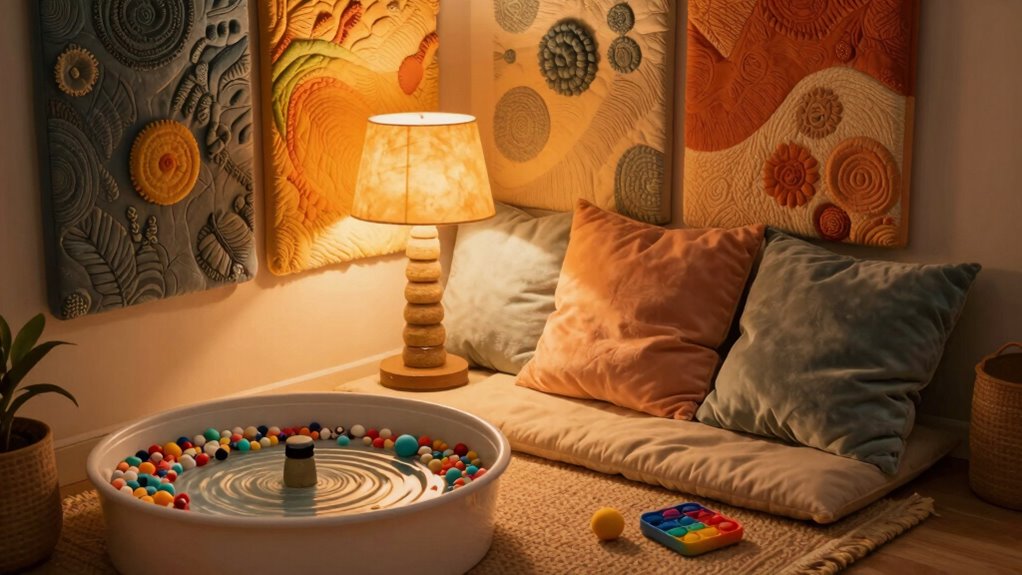

To design a cozy sensory room corner at home, choose soft, adjustable lighting like dimmable lamps or fairy lights to create a calming atmosphere. Use comfortable furniture such as plush bean bags or padded mats and organize sensory tools within easy reach. Incorporate soothing colors, tactile textures, and multi-sensory elements to make the space inviting and adaptable. Keep the layout open and clutter-free, ensuring it’s accessible and personalized — learn more to perfect your space.
Key Takeaways
- Use soft, adjustable lighting like dimmable lamps or fairy lights to create a calming atmosphere.
- Arrange comfortable, accessible furniture such as plush chairs or mats to encourage relaxation.
- Incorporate soothing colors and sensory-friendly materials to enhance comfort and engagement.
- Keep the space uncluttered with organized storage for sensory toys and tools within easy reach.
- Design the area to be flexible and personalized, allowing adjustments for individual sensory needs.
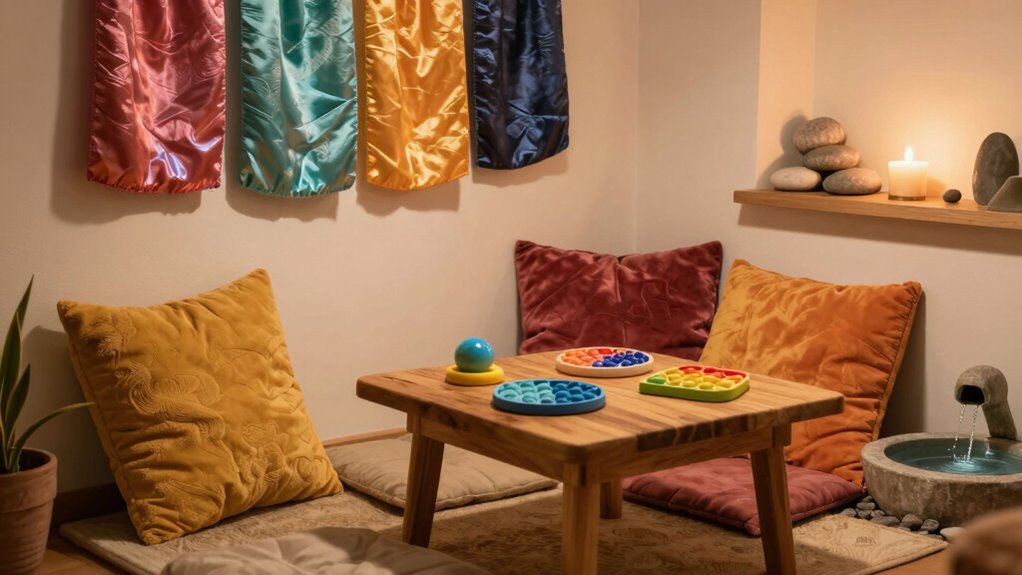
Have you ever wondered how to create a calming space in your home that promotes relaxation and sensory engagement? Designing a sensory room corner is a wonderful way to foster tranquility and stimulate your senses in a cozy, personal environment. To start, focus on lighting options. Soft, adjustable lighting works best, as it allows you to control the ambiance and avoid harsh glare. Consider using dimmable lamps, fairy lights, or LED strips that emit warm, gentle light. These options help create a soothing atmosphere, perfect for winding down or sensory exploration. Avoid bright, fluorescent lights, which can be overstimulating and disrupt the calming vibe you’re aiming for. Adding a small, portable lamp or a Himalayan salt lamp can also introduce a warm glow and promote relaxation.
Next, think about furniture arrangements that encourage comfort and accessibility. Your goal should be to create a space where you feel safe and relaxed, so choose furniture that’s cozy and inviting. A soft armchair, a plush bean bag, or a padded mat can serve as a comfortable spot for sensory activities or quiet reflection. Arrange these pieces in a way that invites you to sit or lie down, making sure they’re placed in a way that doesn’t block natural light or impede movement. Keep the area uncluttered—too many objects can overwhelm your senses rather than soothe them. Instead, select a few key items that provide tactile, visual, or auditory stimulation, like a textured blanket, a small water fountain, or sensory toys. Incorporating inclusive design principles can help ensure the space is accessible and welcoming for everyone. Additionally, choosing soothing colors for the décor can enhance the calming effect of the room. Incorporating sensory-friendly materials can also help create a more inviting and comfortable environment for varied sensory needs. Including multi-sensory elements can further enrich the space, making it more engaging and adaptable to different preferences.
When arranging furniture, also consider the flow of the space. You want it to feel open and inviting, not cramped. Position your seating so you can easily access sensory tools and lighting controls without straining or climbing over other items. Incorporate a low shelf or storage bin nearby to keep sensory objects organized and within reach. This setup encourages independence and makes it easier to switch between different sensory experiences. To optimize the space further, adding appropriate textures can deepen the sensory engagement, making the environment richer and more stimulating. Remember, your sensory room corner should be flexible—adjust furniture and lighting as you learn what works best for you. With thoughtful lighting options and carefully planned furniture arrangements, you can craft a calming sanctuary that invites relaxation and sensory exploration, helping you unwind and reconnect with yourself whenever you need it.
As an affiliate, we earn on qualifying purchases.
Frequently Asked Questions
What Is the Ideal Size for a Sensory Room Corner?
The ideal size for a sensory room corner is about 4×4 feet, providing enough space to include sensory lighting and calming textures comfortably. You want enough room to move around, while still feeling cozy and inviting. This size allows you to incorporate soft mats, gentle lighting, and textured elements without feeling cramped. Keep it simple and accessible, focusing on creating a soothing environment that promotes relaxation and sensory engagement.
Can I Create a Sensory Space Outdoors?
Absolutely, you can create a sensory space outdoors—think of it as a secret garden of calm. Use weatherproof materials to withstand the whims of nature and outdoor lighting to cast a soothing glow during evenings. Picture soft cushions, textured stones, or water features blending into nature’s symphony. With careful planning, your outdoor sensory haven becomes a tranquil escape, inviting serenity no matter the weather.
How Often Should I Update Sensory Equipment?
You should update sensory equipment every six to twelve months to keep the space engaging. Regularly changing lighting options and color schemes can refresh the sensory experience for your child. Observe their reactions and preferences; if they seem bored or overstimulated, it’s time for an update. Incorporating new textures, visuals, or calming lights helps maintain their interest and guarantees the sensory corner remains a soothing, stimulating environment.
Are There Budget-Friendly Sensory Room Options?
Yes, you can create budget-friendly sensory room options using DIY projects and sensory toys. Repurpose household items like textured fabrics, soft lights, or water bottles filled with beads for engaging sensory experiences. You can also make your own sensory toys using inexpensive materials, such as stress balls filled with rice or homemade fidget toys. These affordable options help you design a calming space without overspending while providing effective sensory stimulation.
How Do I Ensure Safety in a Sensory Room?
Think of your sensory room as a gentle refuge in a storm. To guarantee safety, anchor items securely to prevent accidents and choose soft, non-toxic materials for sensory tools. Keep pathways clear for smooth sensory integration and use calming techniques like dim lighting and soothing sounds to promote relaxation. Regularly inspect equipment to maintain safety, creating a sanctuary where sensory exploration feels safe and nurturing.
sensory toys organizer storage bin
As an affiliate, we earn on qualifying purchases.
As an affiliate, we earn on qualifying purchases.
Conclusion
Creating a sensory room corner transforms your space into a calming oasis, like a gentle lullaby for your senses. With thoughtful touches and vibrant textures, you craft a sanctuary where stress melts away and tranquility blooms. It’s your personal haven—a colorful, soothing playground that welcomes you home like a warm hug. So, immerse yourself, let your imagination run wild, and watch your sensory corner become a magical retreat, whispering peace and comfort into every corner of your life.
As an affiliate, we earn on qualifying purchases.
As an affiliate, we earn on qualifying purchases.