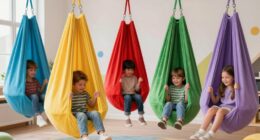

Sensory swings feel calming for some kids because their rhythmic, predictable motion offers gentle sensory input that helps organize their senses and create a sense of security. This calming motion can reduce sensory overload, making children feel more grounded and in control. It also promotes emotional regulation by providing a safe, contained movement that soothes the nervous system. If you keep exploring, you’ll discover more ways these swings support sensory development and emotional well-being.
Key Takeaways
- The rhythmic, repetitive motion mimics natural body movements, promoting relaxation and calming the nervous system.
- Sensory swings provide predictable, gentle input that helps organize sensory processing and reduce overwhelm.
- The feeling of safety and containment during swinging offers emotional stability and reduces anxiety.
- Sensory input from swings helps children with sensory processing differences feel grounded and secure.
- Personalized swing activities address individual sensory needs, enhancing comfort and calming effects.
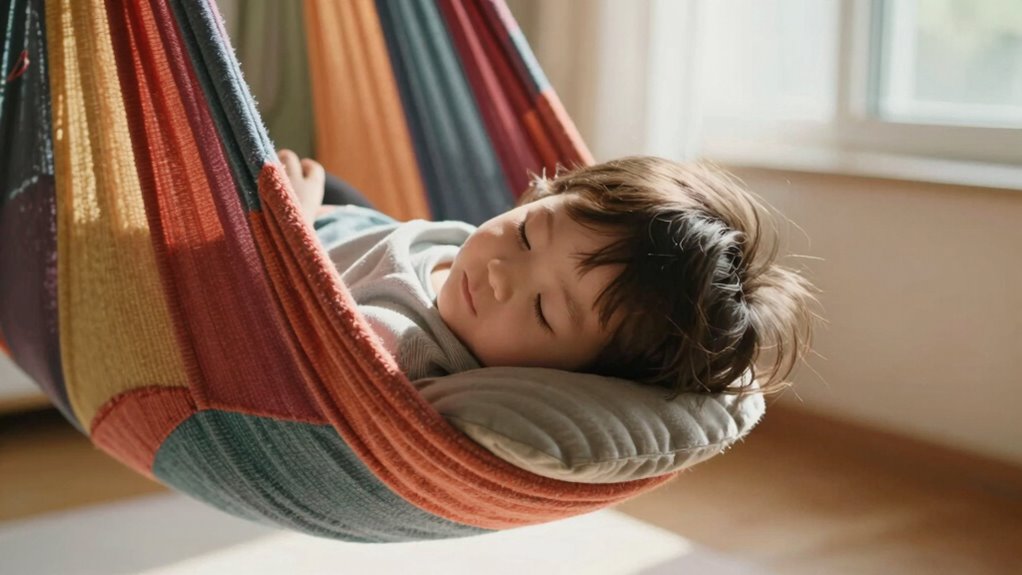
The calming effect of sensory swings is closely tied to their impact on motor development. As your child swings, they refine their balance, coordination, and muscle strength. These activities encourage movement patterns that are fundamental for developing motor skills. When a child learns to hold onto the swing, push themselves, or control their movement, they’re practicing essential motor functions. Over time, this kind of active play enhances muscle tone and coordination, which can translate into better performance in everyday activities like walking, running, or climbing. The repetitive motion of swinging mimics natural body movements, making it a gentle yet effective way to promote motor development. Additionally, the rhythmic swinging can help organize their sensory input, making it easier for them to focus and process their surroundings. This sensory input is crucial because sensory input plays a vital role in helping children with sensory processing differences feel more grounded and secure. The sensory input provided by swings offers a sense of security and predictability that many children crave. When they’re on a swing, they experience a sensation of being safely contained within a rhythmic motion, which can be especially comforting for kids who have difficulty with sensory integration. This feeling of safety helps children better process other sensory information, making daily environments less overwhelming. This sense of calm often leads to fewer tantrums and better emotional regulation. You might wonder why some kids respond more positively to swings than others. The answer lies in individual sensory needs. Kids with sensory processing differences are often more sensitive to stimuli, so the gentle, predictable motion of a swing can provide just the right amount of sensory input to soothe and stabilize their nervous system. For these kids, sensory swings aren’t just about fun—they’re a crucial tool to help them feel grounded, improve their motor skills, and navigate the world with greater confidence. So, it’s no surprise that many children find swinging to be one of their favorite calming activities. Additionally, understanding sensory processing differences can help caregivers tailor activities to meet each child’s unique needs more effectively. Recognizing the individual sensory needs of each child allows for more personalized and effective use of sensory swings. Moreover, incorporating concepts like sensory integration can further enhance the benefits of swinging for children with diverse sensory profiles.
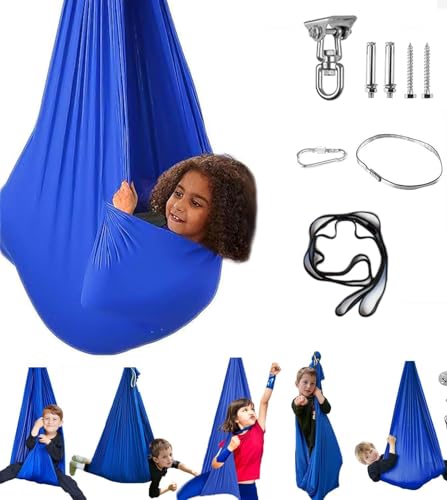
Aokitec Sensory Swing for Kids with Special Needs, Indoor Kids Swing Cuddle Hammock Chair Adjustable Aerial Swing for Children with Autism, ADHD, Asperger, Sensory Integration(Blue)
[A RELAXING SPACE FOR KIDS ] Aokitec sensory kids swing help your children relax and get their bearings…
As an affiliate, we earn on qualifying purchases.
As an affiliate, we earn on qualifying purchases.
Frequently Asked Questions
Are Sensory Swings Suitable for All Children?
Sensory swings aren’t suitable for all children, especially if they have certain medical conditions or safety concerns. You should consider sensory integration needs and consult a professional before introducing one. These swings can be very effective calming techniques for kids who benefit from vestibular input, but they might not suit every child’s preferences or needs. Always supervise and guarantee proper safety measures to make the experience beneficial and safe.
How Do Sensory Swings Support Children With Sensory Processing Disorder?
You might think sensory swings are just fun, but they actually support children with sensory processing disorder by enhancing sensory integration. They provide gentle vestibular therapy, helping kids regulate their balance and movement responses. This calming effect reduces anxiety and improves focus. So, while it looks like play, sensory swings serve an essential role in calming and organizing the sensory system, making everyday activities easier and more enjoyable for your child.
What Safety Precautions Should Be Taken With Sensory Swings?
When using sensory swings, you should prioritize safety by guaranteeing proper swing installation on sturdy, secure support structures. Check that the anchors and hardware are rated for the weight and regularly inspect for wear or damage. Use material safety guidelines to choose non-toxic, durable fabrics that won’t cause irritation. Always supervise your child during use, and follow manufacturer instructions to prevent accidents and ensure a safe, calming experience.
Can Sensory Swings Be Used Outdoors Safely?
You can definitely use sensory swings outdoors, but you need to keep a weather eye on outdoor installation and weather considerations. Make sure the swing is securely anchored and made of weather-resistant materials. Avoid using it during heavy rain, strong winds, or extreme sun exposure, as these conditions can compromise safety. Regularly inspect the swing for any damage or wear, and bring it indoors during harsh weather to keep your child safe and comfortable.
How Long Should Children Typically Use Sensory Swings During Sessions?
You should generally limit sensory swing sessions to about 10-15 minutes, depending on your child’s comfort and needs. Keep the swing at a safe height, making sure it’s secure and not too high to prevent accidents. Observe your child closely for signs of fatigue or overstimulation, and adjust the swing height or session duration accordingly. Regular breaks are essential to guarantee a calming, enjoyable experience without overwhelming your child.

Sensory Swing for Kids Indoor Outdoor – Calming Cocoon Therapy Swing, Holds 300lbs – Hug-Like Sensory Hammock with 360° Swivel Hardware for Autism, ADHD, SPD Support
A HUG-LIKE CALMING SPACE – This indoor sensory swing wraps children in a soft, cocoon-like embrace that feels…
As an affiliate, we earn on qualifying purchases.
As an affiliate, we earn on qualifying purchases.
Conclusion
So, it’s almost funny how a simple swing can make such a difference, isn’t it? Sometimes, the calming effect isn’t just about the swing itself, but the feeling of being gently cradled and secure. It’s like the universe just happens to align, providing kids with a little moment of peace amidst chaos. In those quiet, swinging seconds, they find comfort — a coincidence that feels like magic in their busy worlds.

YuAnWe Dual Protection Tree Swing Straps with Backup Lifeline, 2500LB Capacity, Metal Frame Compatible, Suitable for Sensory, Saucer, Disc Swing & Hammock, Kids Indoor and Outdoor Fun
DUAL FAIL-SAFE PROTECTION:heavy-duty main strap supports 2500lbs dynamic weight tested to ASTM F1148-21 standards, with an 80cm backup…
As an affiliate, we earn on qualifying purchases.
As an affiliate, we earn on qualifying purchases.
Aokitec Sensory Swing for Kids with Special Needs, Indoor Kids Swing Cuddle Hammock Chair Adjustable Aerial Swing for Children with Autism, ADHD, Asperger, Sensory Integration(Blue)
[A RELAXING SPACE FOR KIDS ] Aokitec sensory kids swing help your children relax and get their bearings…
As an affiliate, we earn on qualifying purchases.
As an affiliate, we earn on qualifying purchases.