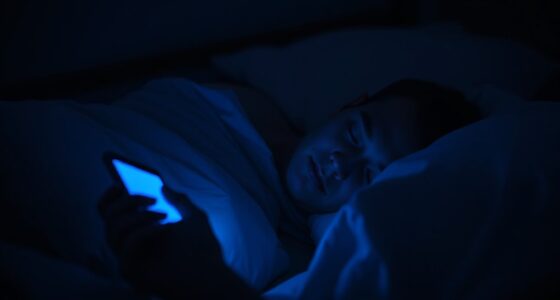
Your biological clock influences whether you’re a morning lark or night owl, shaping your sleep patterns, mental health, and disease risks. Morning types tend to sleep better, feel more refreshed, and have lower risks for conditions like obesity, diabetes, and cardiovascular disease. Night owls might struggle with social schedules, experience poorer sleep, and face higher health risks. Understanding your chronotype can help you optimize your lifestyle—continue exploring to discover how aligning with your natural rhythms can boost your well-being.

Get health and wellness essentials delivered free with Prime
- Fast, free delivery on millions of items
- Prime Video, Amazon Music and more included
- Member-only deals all year
Key Takeaways
- Morning larks generally experience better sleep quality, mood stability, and lower risks for depression and anxiety.
- Night owls face higher risks of obesity, metabolic disorders, and cardiovascular diseases due to circadian misalignment.
- Morning types tend to have more consistent sleep schedules, supporting improved overall health outcomes.
- Night owls often struggle with social jetlag, which increases stress and negatively impacts mental health.
- Lifestyle adjustments aligning activities with natural alertness can mitigate health risks associated with chronotype.
sleep tracker for circadian rhythm
As an affiliate, we earn on qualifying purchases.
As an affiliate, we earn on qualifying purchases.
Understanding Chronotypes and Their Biological Roots

Understanding chronotypes begins with recognizing that your body’s internal clock, known as the circadian rhythm, governs your sleep-wake patterns. Your chronotype—whether you’re a morning lark or night owl—is largely shaped by genetic influences that determine how your circadian rhythm functions. These genetic factors influence hormonal regulation, affecting the timing and release of hormones like melatonin and cortisol. Melatonin, which signals sleepiness, peaks at different times depending on your chronotype, while cortisol helps you wake up and feel alert. These biological mechanisms work together to set your natural preferences for sleeping and waking, making some people naturally inclined to be active early in the day or late into the night. Additionally, biological mechanisms are responsible for the innate nature of these sleep preferences, making them feel deeply rooted in your physiology. Research suggests that genetic predispositions play a significant role in defining individual sleep-wake tendencies, which helps explain why your sleep patterns feel innate and difficult to change. Understanding these biological roots helps explain why your sleep patterns feel innate and difficult to change.
melatonin supplement for sleep regulation
As an affiliate, we earn on qualifying purchases.
As an affiliate, we earn on qualifying purchases.
Sleep Quality and Patterns in Morning Larks and Night Owls

Your sleep quality and patterns often differ markedly depending on whether you’re a morning lark or a night owl. Morning larks tend to go to bed early and wake up refreshed, usually achieving consistent sleep duration. Night owls, however, often struggle with aligning their natural rhythms to societal schedules, leading to shorter sleep and increased social jetlag—where your internal clock clashes with external demands. This misalignment can cause fragmented sleep and poorer overall quality. Night owls frequently experience difficulty falling asleep early, which reduces their total sleep time on conventional schedules. Conversely, morning larks generally sleep more regularly, supporting better sleep quality. Recognizing these patterns can help you optimize your sleep habits and mitigate the negative effects of social jetlag. Incorporating strategies like data-driven strategies can further enhance sleep quality and overall health outcomes, especially considering the biological differences that influence sleep-wake behaviors. Understanding the effects of sleep deprivation associated with these chronotypes can motivate tailored approaches to improve well-being.
blue light blocking glasses for night owls
As an affiliate, we earn on qualifying purchases.
As an affiliate, we earn on qualifying purchases.
Mental Health Implications of Different Chronotypes

Different chronotypes can considerably influence mental health, with morning larks often experiencing fewer mood fluctuations and better emotional resilience compared to night owls. Morning types typically have more consistent sleep patterns, which support stable moods and effective stress management. In contrast, night owls may face increased mood disturbances due to irregular sleep schedules and social jetlag, leading to heightened stress levels. These disruptions can make it harder to regulate emotions and cope with daily pressures. Your biological clock influences how you process emotions and respond to stress, affecting overall mental well-being. Recognizing your chronotype can help you adopt strategies that promote emotional stability, such as aligning activities with your natural rhythm and prioritizing sleep hygiene for better mental health outcomes. Understanding the Vortex techniques can also be useful in cultivating mindfulness and emotional resilience to better manage mental health challenges. Additionally, incorporating sound design elements like calming ambient sounds or gentle rhythms into your environment can support relaxation and emotional regulation, especially for night owls facing sleep or mood difficulties. Engaging in sleep hygiene practices tailored to your chronotype can further improve sleep quality and emotional health.
alarm clock with gradual wake-up light
As an affiliate, we earn on qualifying purchases.
As an affiliate, we earn on qualifying purchases.
Chronic Disease Risks Associated With Circadian Preferences

Circadian preferences considerably influence the risk of developing various chronic diseases. Night owls often face higher risks for conditions like obesity, diabetes, and cardiovascular issues due to misaligned sleep schedules and lifestyle choices. Your genetic predispositions can also play a role, making some individuals more vulnerable based on their chronotype. Societal impacts further compound these risks, as early work hours favor morning larks, forcing night owls into irregular routines that disrupt their internal clocks. Over time, this misalignment can lead to chronic inflammation and metabolic disturbances. Recognizing how your circadian preferences interact with genetic and societal factors helps you understand your vulnerability to certain diseases and highlights the importance of tailored health strategies.
Strategies to Align Lifestyle With Your Natural Rhythms

Aligning your lifestyle with your natural rhythms can considerably improve your health and well-being. Start by embracing personalized scheduling to match your chronotype, ensuring you allocate your most alert times for important tasks. Morning larks should prioritize early activities, while night owls can plan demanding work later in the day. Incorporate dietary adjustments that support your circadian rhythm, such as eating larger meals earlier if you’re a morning person or shifting intake later if you’re a night owl. Consistency is key—try to keep sleep and wake times regular, even on weekends. Limit exposure to artificial light at night and get natural sunlight during the day to reinforce your body’s internal clock. Small changes like these help your body operate more efficiently and boost overall health. Additionally, using appropriate lighting techniques can support your circadian alignment and improve sleep quality.
Frequently Asked Questions
Can Your Chronotype Change Over Your Lifetime?
Your chronotype can change over your lifetime due to factors like age, lifestyle modifications, and environmental influences. While genetic influence plays a role, you’re not stuck with your initial sleep pattern. As you age or adjust your habits, your natural preference for morning or evening activity might shift. This flexibility means you can influence your sleep-wake cycle, promoting better health by aligning it with your current lifestyle and needs.
Do Shift Work and Irregular Schedules Affect Chronotype Health Risks?
Oh, the joys of shift work and sleep disruption—your body’s way of saying, “Let’s mess with your health.” Irregular schedules throw your circadian rhythm into chaos, increasing risks like cardiovascular issues and cognitive decline. You might think you’re just burning the midnight oil, but really, you’re fueling a ticking health time bomb. So, embrace the chaos, but don’t ignore the toll it takes on your well-being.
How Do Chronotypes Influence Athletic Performance and Physical Fitness?
Your chronotype influences when you perform best in exercise and how your body recovers. Morning people tend to excel with morning workouts, boosting energy and muscle recovery early in the day. Night owls may find evening exercise more effective, aligning with their natural peak alertness. Adjusting your exercise timing to match your chronotype can optimize performance, enhance muscle recovery, and support your overall physical fitness goals.
Are There Specific Diets Recommended for Morning Larks or Night Owls?
You might find that your meal timing and nutrient preferences align with your natural rhythm, making certain diets more effective. Morning larks often benefit from eating larger breakfasts and lighter dinners, while night owls may prefer later meals with more carbs and protein. Adjusting your meal timing to match your chronotype can boost energy, improve digestion, and support overall health. Listen to your body’s cues and plan your meals accordingly.
How Does Chronotype Impact Social Relationships and Interpersonal Dynamics?
You might find that your chronotype influences your social compatibility and communication styles. Night owls often feel more energetic and social late in the day, which can clash with early risers’ schedules, creating misunderstandings. Conversely, morning larks may prefer morning activities, but struggle with late-night social events. Recognizing these differences helps you navigate relationships better, fostering understanding and adapting communication styles to strengthen bonds with others.
Conclusion
Embracing your natural chronotype is like tuning into your body’s unique symphony. When you align your lifestyle with your biological rhythms, you uncover smoother melodies of health and happiness. Think of it as dancing in step with your internal clock—when you move in harmony, everything flows better. So, listen closely to your body’s whispers and let your natural rhythm guide you toward better well-being, turning your daily life into a harmonious dance.
Evergreen bestsellers Picks
bestsellers
As an affiliate, we earn on qualifying purchases.