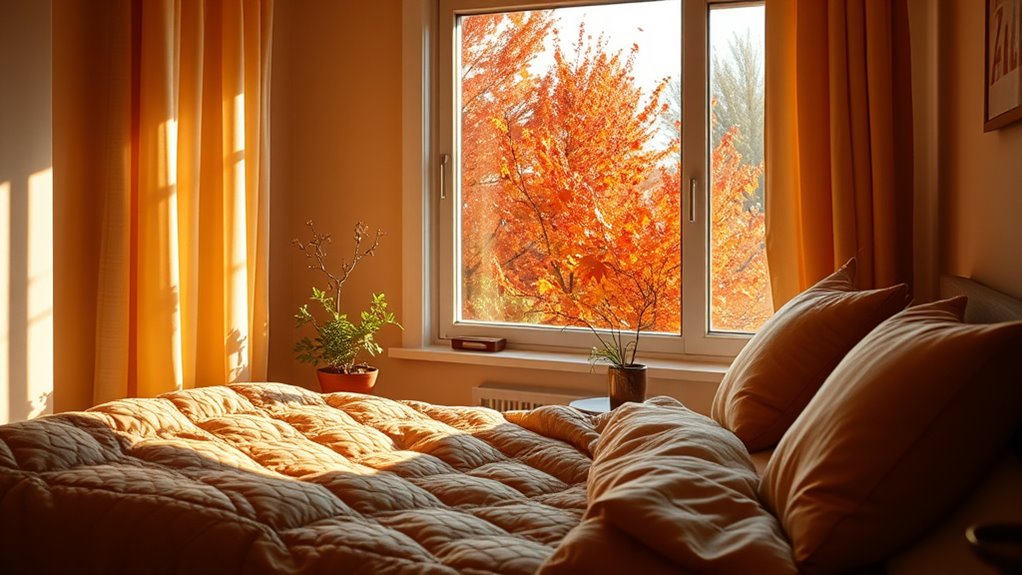

Seasonal changes affect your sleep through variations in light and temperature. During winter, less sunlight can delay melatonin production, making it harder to fall asleep, while shorter days can disrupt your circadian rhythm. In summer, higher temperatures and longer days might cause trouble sleeping or early waking. Adjusting your sleep environment, like maximizing natural light and regulating room temperature, can help maintain better sleep year-round. Keep exploring to discover more ways to optimize your rest.
Listen free for 30 days with Audible
Thousands of audiobooks and originals — cancel anytime.
As an affiliate, we earn on qualifying purchases.
Key Takeaways
- Reduced daylight in winter delays melatonin production, making it harder to fall asleep and disrupting circadian rhythms.
- Longer summer days promote better sleep regulation by providing more natural light exposure.
- Temperature fluctuations across seasons influence sleep quality, with colder months requiring warmer environments and hot months needing cooling solutions.
- Seasonal changes can cause irregular sleep patterns, leading to early waking, difficulty sleeping, or sluggish mornings.
- Adjusting lighting, temperature, and sleep environment helps mitigate seasonal sleep disruptions and promotes consistent rest year-round.

As the seasons change, so do our sleep patterns, often without us realizing why. One of the biggest factors influencing this shift is light exposure. During winter months, the days are shorter, meaning you get less sunlight, which can throw off your internal clock. Less natural light in the morning delays your body’s production of melatonin, the hormone that signals sleep time. This can make it harder to fall asleep at night or cause you to wake up feeling less rested. Conversely, longer summer days increase your light exposure, helping regulate your circadian rhythm more effectively. But if you’re not outside during daylight hours, or if you spend a lot of time in artificial lighting, your sleep-wake cycle can become misaligned regardless of the season. Understanding how battery technologies influence energy availability can also help optimize your environment, such as using lighting solutions that mimic natural light patterns. Temperature regulation also plays a vital role in how well you sleep through seasonal changes. In colder months, your body has to work harder to keep warm, which can disrupt sleep quality. A cooler, consistent room temperature—around 60 to 67 degrees Fahrenheit—is generally ideal for sleep, but during winter, heating systems might not always provide even warmth, leading to discomfort or frequent awakenings. On the other hand, summer heat can cause your body temperature to rise, making it difficult to fall asleep or stay asleep throughout the night. High temperatures can interfere with your body’s natural cooling process, which is essential for restful sleep. Using fans, air conditioning, or breathable bedding can help regulate your temperature and improve sleep quality. These seasonal shifts in light exposure and temperature regulation don’t just affect how quickly you fall asleep; they also influence the quality of your rest. When your body doesn’t receive enough sunlight, or if your sleeping environment isn’t properly cooled or warmed, your sleep cycles can become irregular. You might find yourself waking up too early or feeling sluggish in the mornings. Additionally, these changes can impact your mood, energy levels, and overall health. To counteract these effects, try to maximize natural light during the day—spend time outside or sit near windows—and keep your sleeping environment at a comfortable temperature. Small adjustments like blackout curtains or a fan can make a big difference in maintaining consistent, quality sleep year-round. Recognizing how light exposure and temperature regulation fluctuate with the seasons can help you adapt your habits and create a sleep-friendly environment that supports your well-being no matter the weather outside.
light therapy lamp for winter sleep
As an affiliate, we earn on qualifying purchases.
As an affiliate, we earn on qualifying purchases.
Frequently Asked Questions
How Does Daylight Saving Time Impact Sleep Patterns?
Daylight saving time disrupts your sleep cycle by shifting your circadian rhythm. When clocks change, your body struggles to adapt, causing difficulty falling asleep or waking up at the usual times. This sudden change can lead to sleep deprivation, decreased alertness, and mood swings. To minimize impact, try adjusting your sleep schedule gradually before the time change, and expose yourself to natural light to help reset your circadian rhythm.
Can Seasonal Allergies Disrupt Sleep Quality?
Yes, seasonal allergies can cause sleep disturbances. When allergies flare up, you might experience sneezing, congestion, or itchy eyes, making it hard to settle down. Allergy medications may help, but some can also cause side effects like drowsiness or restlessness. You can improve sleep by managing symptoms early, staying allergy-free, and creating a cozy, cool sleeping environment. Don’t overlook allergens that might be lurking and disrupting your restful night.
Are Winter Months Linked to Increased Insomnia?
Yes, winter months are linked to increased insomnia, as you may experience winter hibernation tendencies and seasonal affective disorder. Shorter days and less sunlight can disrupt your circadian rhythm, making it harder to fall asleep or stay asleep. You might notice feeling more tired or sluggish during winter, which can worsen insomnia symptoms. To combat this, try light therapy or maintaining a consistent sleep schedule to help regulate your sleep cycle.
How Does Temperature Fluctuation Affect Sleep Comfort?
They say, “A stitch in time saves nine,” and that’s true for sleep comfort too. Temperature fluctuations can disrupt your sleep due to thermoregulation challenges. To stay comfortable, you should make bedding adjustments—use lighter sheets in warm weather or add extra blankets when it’s cold. Keeping your sleeping environment steady helps your body regulate temperature naturally, ensuring restful sleep despite outside changes.
Do Vitamin D Levels Influence Sleep During Different Seasons?
Yes, your Vitamin D levels influence sleep during different seasons. As seasonal changes reduce sunlight exposure, your body produces less Vitamin D, which plays a key role in sleep regulation. Lower Vitamin D can disrupt hormone production, like melatonin, making it harder to fall asleep or stay asleep. Maintaining adequate Vitamin D levels through sunlight, diet, or supplements helps support healthy sleep patterns year-round, especially in darker months.
As an affiliate, we earn on qualifying purchases.
Conclusion
As seasons shift, so do your sleep patterns, much like the changing tides. By understanding how daylight and temperature influence your body, you can adapt your habits for better rest year-round. Embrace the seasons as an opportunity to tune into your body’s needs, just like adjusting sails to the wind. Remember, staying mindful of these changes helps you sail smoothly through every season, waking up refreshed and ready for whatever lies ahead.
As an affiliate, we earn on qualifying purchases.
As an affiliate, we earn on qualifying purchases.
Flea & tick season Picks
flea and tick prevention
As an affiliate, we earn on qualifying purchases.