

You can introduce preschoolers to STEM using household items like rice, pasta, or beans in sensory bins to encourage exploration, fine motor skills, and problem-solving. Build simple machines such as ramps, levers, or pulleys with everyday objects like cardboard, sticks, and toy parts to teach mechanics and engineering concepts. These hands-on activities make science fun and accessible. Keep exploring to find more simple ideas and ways to inspire curiosity in young learners.

Get health and wellness essentials delivered free — and shop member deals
- Fast, free delivery on millions of items
- Access to Prime Big Deal Days deals on October 6–7
- Prime Video, Amazon Music and more included
Key Takeaways
- Use sensory bins with household items like rice and beans to promote exploration, fine motor skills, and problem-solving.
- Demonstrate simple machines such as ramps and levers with everyday objects to teach basic engineering concepts.
- Create hands-on experiments using household items to explore motion, force, and mechanics in an engaging way.
- Incorporate building activities with household materials to reinforce STEM principles through model construction.
- Design project-based activities that connect STEM concepts to real-world objects using safe, easy-to-access household items.
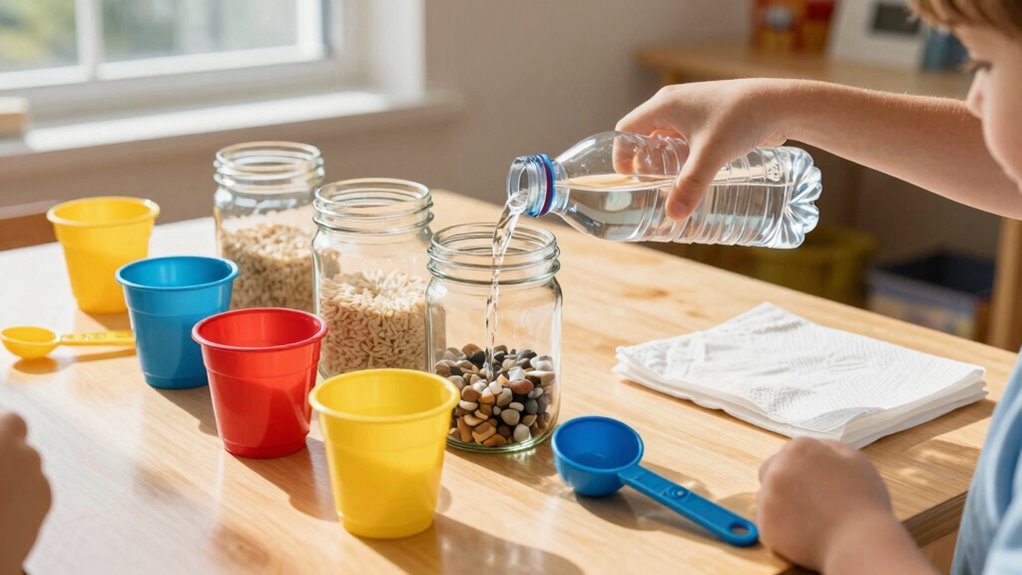
Engaging preschoolers in STEM activities doesn’t require fancy equipment or expensive tools—just a few common household items can spark curiosity and learning. One great way to do this is by building sensory bins. These bins are simple to create and can be tailored to your child’s interests. Fill a shallow container with rice, pasta, or beans, and add small toys, scoops, and cups. As your child explores the textures and manipulates the objects, they develop fine motor skills and sensory awareness. You can enhance the experience by hiding objects in the bin and encouraging your preschooler to find them, fostering problem-solving and concentration. Building sensory bins is a versatile activity that promotes exploration and discovery, making learning both fun and interactive.
Another exciting area to explore is simple machines, which introduces your preschooler to basic engineering concepts. You can start by gathering household items like ramps made from cardboard, toy pulleys, or levers created from sticks and spools. Show your child how a small incline can make it easier to roll a ball or slide an object downward, illustrating the function of a ramp. Use a broomstick or a ruler as a lever to lift small objects, explaining how it reduces effort. These hands-on experiments help your child understand the mechanics behind everyday tools and objects, sparking curiosity about how things work. Incorporating project-based learning approaches, like building small models or experiments, can further deepen their understanding of STEM concepts. Understanding basic engineering principles enhances their problem-solving skills and encourages inventive thinking. Plus, they make the concepts tangible, helping your preschooler connect theory to real-world objects. Additionally, introducing the idea of simple machines can help children grasp how their environment is designed for efficiency and function.
sensory bins for preschool STEM activities
As an affiliate, we earn on qualifying purchases.
As an affiliate, we earn on qualifying purchases.
Frequently Asked Questions
How Can I Ensure Safety During STEM Activities at Home?
You should always supervise your child closely during STEM activities and set clear safety precautions. Keep small items away to prevent choking, and use child-safe tools. Prepare for emergencies by having a first aid kit nearby and knowing basic first aid procedures. Stay attentive, and communicate safety rules clearly. This way, you guarantee a safe environment where your preschooler can explore and learn confidently with household items.
What Are Age-Appropriate STEM Activities for Preschoolers?
You can encourage early exploration with age-appropriate STEM activities that involve hands-on experiments using household items. Simple projects like building with blocks, mixing colors, or observing plant growth help preschoolers learn through play. Choose activities that match their developmental level, ensuring safety and engagement. These activities foster curiosity, critical thinking, and problem-solving skills while making learning fun and accessible at home.
How Can I Encourage Creativity in STEM Play?
Did you know that children’s creativity peaks when they’re given open-ended questions? To encourage creativity in STEM play, use creative prompts and open-ended questions that invite exploration, like “What can you build with these blocks?” or “How does this change when you add more?” These foster imaginative thinking, allowing preschoolers to experiment and discover independently, making STEM activities both fun and educational.
Are There Any Recommended Materials for STEM Activities?
You can use simple household tools like plastic cups, spoons, and straws for STEM activities. Incorporate DIY experiments with items like baking soda, vinegar, or water to explore chemical reactions. Recycled containers, rubber bands, and paper clips work well for building structures. These materials are safe, accessible, and encourage preschoolers to experiment and learn through hands-on play, fostering curiosity and foundational STEM skills.
How Much Supervision Is Needed During These Activities?
Think of supervising your child during STEM activities like steering a boat through calm waters—you need to stay attentive but not hover constantly. Typically, you should provide close supervision, especially when using sharp or small items, and do a risk assessment beforehand to identify potential hazards. Your active involvement helps guarantee safety, encourages curiosity, and allows you to step in quickly if something unexpected happens, keeping the learning fun and secure.
simple machine building kits for kids
As an affiliate, we earn on qualifying purchases.
As an affiliate, we earn on qualifying purchases.
Conclusion
Remember, “necessity is the mother of invention,” and with just household items, you can spark your preschooler’s curiosity and creativity. These simple STEM activities not only make learning fun but also build critical thinking skills early on. Keep exploring and encouraging their natural wonder—after all, the best lessons often come from what’s right under your nose. So, get creative, have fun, and watch your little one discover the world around them!
household item STEM experiment kits
As an affiliate, we earn on qualifying purchases.
As an affiliate, we earn on qualifying purchases.
As an affiliate, we earn on qualifying purchases.
Fall Picks
fall essentials
As an affiliate, we earn on qualifying purchases.