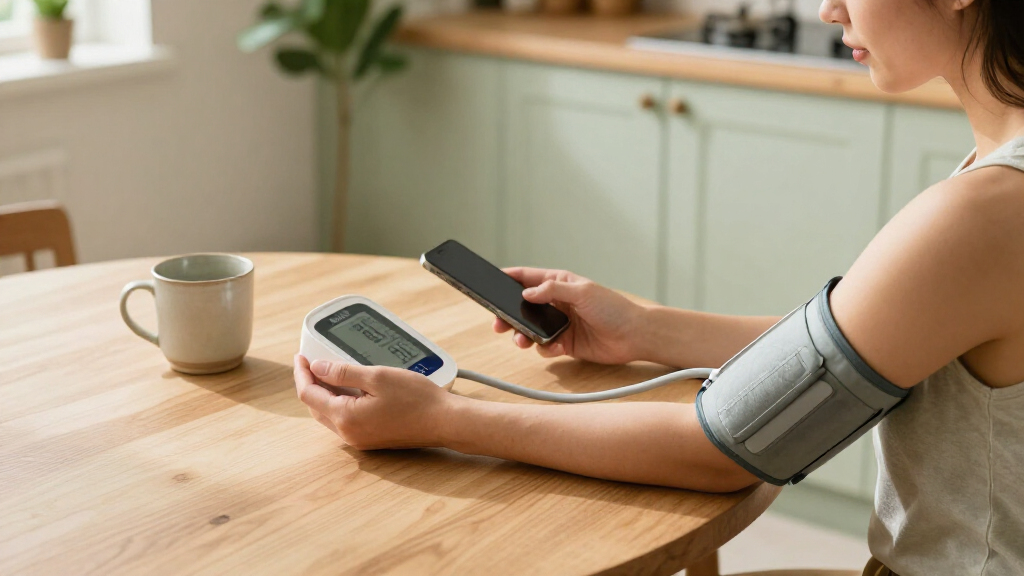

The best smart blood pressure monitors pair a dependable upper-arm reading with an app that makes tracking and sharing results easier. Withings BPM Connect is my best overall pick for its Wi-Fi and Bluetooth syncing, while OMRON Evolv suits buyers who want a compact, all-in-one design and iHealth Track Pro offers a straightforward app-connected option. The main tradeoffs are how much you value automatic syncing, cuff convenience, and features such as irregular-heartbeat alerts over a simpler setup. App compatibility and cuff fit matter just as much as connectivity, especially if more than one person will use the monitor. Read on for the full breakdown of all 11 options and the buyer needs each one serves best.

Get health and wellness essentials delivered free with Prime
- Fast, free delivery on millions of items
- Prime Video, Amazon Music and more included
- Member-only deals all year
Key Takeaways
- Withings BPM Connect earns the best-overall position for combining Wi-Fi and Bluetooth, so readings can sync without relying solely on a phone connection.
- OMRON Evolv stands apart for a compact, integrated design, while its connected approach may be less appealing to buyers who prefer a separate display and cuff.
- The two Wellue BP2A listings and the two iHealth Track options show why buyers should check the exact model and cuff configuration rather than relying on a product-family name.
- Wide-range cuff fit is a practical differentiator: the iHealth Track model with a wide-range cuff may suit more arm sizes than a standard-cuff option, but shoppers still need to verify the stated range.
- The lineup spans basic app logging to Wi-Fi syncing and rhythm-related alerts; more connected features are useful only when the app works with a buyer’s phone and routine.
| MbH Bluetooth Upper Arm Blood Pressure Monitor with IHB and AF Detection |  | Best for Rhythm-Alert Features | Measurement type: Upper arm | Connectivity: Bluetooth | App compatibility: iOS and Android | VIEW LATEST PRICE | See Our Full Breakdown |
| Wellue BP2A Smart Wireless Upper Arm Blood Pressure Monitor |  | Best for Rechargeable Simplicity | Measurement type: Upper arm | Measurements: Systolic pressure, diastolic pressure, and heart rate | Cuff range: 22–42 cm | VIEW LATEST PRICE | See Our Full Breakdown |
| iHealth Track Pro Upper Arm Blood Pressure Monitor |  | Best for Clear On-Device Readings | Display: Wide-angle LED with red, yellow, and green indicators | Memory: 120 readings on-device | Connectivity: Bluetooth sync to iHealth MyVitals app | VIEW LATEST PRICE | See Our Full Breakdown |
| Smart Upper Arm Blood Pressure Monitor with App |  | Best for Shared Household Tracking | Measurement type: Upper-arm blood pressure and pulse | Arm circumference: 8.7–15.7 inches | User profiles: 3 | VIEW LATEST PRICE | See Our Full Breakdown |
| Yuwell Wireless Upper Arm Blood Pressure Monitor |  | Best for Voice-Guided Use | Model: YE630CR | Weight: 257 g | Cuff size: 8.7–17.7 inches | VIEW LATEST PRICE | See Our Full Breakdown |
| iHealth Neo Wireless Blood Pressure Monitor, Upper Arm BP Machine with App |  | Best for Travel | Type: Wireless upper-arm blood pressure monitor | Operation: One button | Measurement time: 30–60 seconds | VIEW LATEST PRICE | See Our Full Breakdown |
| Wellue BP2A Bluetooth Blood Pressure Monitor |  | Best for Wide Cuff Fit | Model: BP2A | Type: Upper-arm blood pressure monitor | Connectivity: Bluetooth | VIEW LATEST PRICE | See Our Full Breakdown |
| iHealth Track Smart Upper Arm Blood Pressure Monitor with Wide-Range Cuff |  | Best for Phone-Free Reading History | Type: Upper-arm blood pressure monitor | Operation: Two buttons | Display: Large, multi-color backlit display | VIEW LATEST PRICE | See Our Full Breakdown |
| Withings BPM Vision Blood Pressure Monitor |  | Best Premium Display and Sync | Model: BPM Vision | Certification: FDA cleared | Connectivity: Wi-Fi and Bluetooth | VIEW LATEST PRICE | See Our Full Breakdown |
| OMRON Evolv Wireless Upper Arm Blood Pressure Monitor |  | Best One-Piece Design | Type: Wireless upper-arm blood pressure monitor | Cuff: Attached ComFit cuff | Cuff fit: 9–17 inches | VIEW LATEST PRICE | See Our Full Breakdown |
| Withings BPM Connect Wi-Fi and Bluetooth Blood Pressure Monitor |  | Best for Automatic Cloud Sync | Measurement type: Blood pressure and heart rate | Cuff size: 22–42 cm | Connectivity: Wi-Fi and Bluetooth | VIEW LATEST PRICE | See Our Full Breakdown |
| smart blood pressure monitor | Connectivity | App compatibility |
|---|---|---|
| MbH Bluetooth Upper Arm Blood | Bluetooth | iOS and Android |
| Wellue BP2A Smart Wireless Upp | Bluetooth | iOS and Android |
| iHealth Track Pro Upper Arm Bl | Bluetooth sync to iHealth MyVitals app | — |
| Smart Upper Arm Blood Pressure | — | iOS and Android |
| Yuwell Wireless Upper Arm Bloo | Bluetooth | iOS and Android via yuwell HealthCare+ |
| iHealth Neo Wireless Blood Pre | Bluetooth 4.0 | — |
| Wellue BP2A Bluetooth Blood Pr | Bluetooth | — |
| iHealth Track Smart Upper Arm | Bluetooth 4.0 or later | iOS 12.0 or later; Android 9.0 or later |
| Withings BPM Vision Blood Pres | Wi-Fi and Bluetooth | — |
| OMRON Evolv Wireless Upper Arm | Bluetooth | OMRON Connect, Apple Health, and Google Fit |
| Withings BPM Connect Wi-Fi and | Wi-Fi and Bluetooth | — |
More Details on Our Top Picks
MbH Bluetooth Upper Arm Blood Pressure Monitor with IHB and AF Detection
The MbH stands apart from simpler app-connected monitors by checking for irregular heartbeat and atrial fibrillation alongside blood pressure and vessel-health indicators. Its Bluetooth app stores up to 200 readings, giving users a record to review or share rather than relying only on a single measurement. Compared with the Wellue BP2A, which focuses on blood pressure and heart rate, the MbH offers more rhythm-related detection features; the Wellue, by contrast, specifies a rechargeable battery and a 22–42 cm cuff. This MbH is small and lightweight, which suits travel, but its app-based sharing depends on a compatible smartphone. Detection results are not a diagnosis, so this model makes most sense as a tracking tool for people who want added alerts, not as a substitute for clinical assessment.
Pros:- Checks for irregular heartbeat and atrial fibrillation in addition to blood pressure
- Stores up to 200 readings in the companion app
- Bluetooth sharing can help users send records to family or a doctor
- Small, lightweight design is convenient for travel
Cons:- App syncing and sharing require a compatible iOS or Android smartphone
- The supplied product details do not specify a cuff circumference range
- Rhythm alerts do not replace medical diagnosis
Best for: Adults who want app-based blood pressure tracking with added irregular-heartbeat and AF alerts to discuss with a clinician
Not ideal for: People who want a monitor that works without a smartphone for data sharing, or who need specified rechargeable power and cuff-range details
- Measurement type:Upper arm
- Connectivity:Bluetooth
- App compatibility:iOS and Android
- Reading storage:Up to 200 values
- Detection features:Irregular heartbeat (IHB), atrial fibrillation (AF), and cardiovascular vessel health analysis
- Cuff fit:Adjustable; suitable for adults and children
- Portability:Small and lightweight
- Accuracy:Clinically validated
Our verdict“Choose the MbH if rhythm-related alerts and portable app tracking matter more to you than the Wellue BP2A’s specified rechargeable power and cuff range.”
Wellue BP2A Smart Wireless Upper Arm Blood Pressure Monitor
The Wellue BP2A keeps the routine straightforward: press one button, wait about 30 seconds, then view blood pressure and heart-rate readings in its app. Its rechargeable design is a practical difference from the iHealth Track Pro, which uses AA batteries or USB-C, and from the Smart Upper Arm Monitor, whose USB-C connection is plug-in power rather than recharging. The BP2A also supports multiple users viewing and sharing historical records, while its 22–42 cm cuff covers a broad range of adult arm sizes. The tradeoff is that app features require a compatible phone, and the cuff range may not suit arms outside those measurements. Its listed measurements are focused on blood pressure and heart rate, so buyers seeking the MbH’s specified AF and irregular-heartbeat detection should look elsewhere.
Pros:- One-button automatic measurement takes about 30 seconds
- Rechargeable power supports portable use without relying on disposable batteries
- Bluetooth app supports historical data viewing and sharing across multiple users
- 22–42 cm cuff fits a broad range of standard to large adult arms
Cons:- App features require a compatible iOS or Android device
- Cuff fit is limited to arm circumferences of 22–42 cm
- Listed measurements do not include the MbH’s specified AF and IHB detection
Best for: People who want a rechargeable upper-arm monitor with one-button readings and app-based history sharing
Not ideal for: Households needing a cuff outside 22–42 cm or buyers seeking the MbH’s specified AF and irregular-heartbeat detection
- Measurement type:Upper arm
- Measurements:Systolic pressure, diastolic pressure, and heart rate
- Cuff range:22–42 cm
- Connectivity:Bluetooth
- App compatibility:iOS and Android
- Operation:One-button automatic measurement
- Measurement time:About 30 seconds
- Power:Rechargeable
- FDA status:FDA cleared
Our verdict“Pick the Wellue BP2A for a simple rechargeable routine and broad adult cuff range, but choose the MbH if rhythm-related alerts are your priority.”
iHealth Track Pro Upper Arm Blood Pressure Monitor
The iHealth Track Pro is a strong fit for people who want feedback at the monitor itself, not just in a phone app. Its wide-angle LED display uses red, yellow, and green indicators, while movement and cuff-wrap detection can flag common measurement problems before a reading is treated as useful. Compared with the Smart Upper Arm Monitor, it has a more explicit set of error checks and flexible AA or USB-C power; that family-focused model instead stores 199 readings per user across three profiles. The iHealth keeps 120 readings on-device and offers unlimited tracking through MyVitals, so long-term records depend on app setup. Its 22–42 cm cuff also leaves out users with arms beyond that range. This is the better choice for visible guidance and setup checks, not for maximum shared on-device memory.
Pros:- Wide-angle LED with color indicators is easy to read from different positions
- Movement and cuff-wrap detection can flag measurement issues
- Uses either three AA batteries or USB-C power
- MyVitals app supports unlimited data storage and trend tracking
Cons:- Long-term tracking and sharing require a smartphone and app installation
- On-device memory is limited to 120 readings
- 22–42 cm cuff range may not fit very small or very large arms
Best for: Users who want easy-to-read color guidance and alerts for movement or cuff placement while measuring
Not ideal for: Families who prioritize separate profiles and larger per-user on-device storage, or users with arm sizes outside 22–42 cm
- Display:Wide-angle LED with red, yellow, and green indicators
- Memory:120 readings on-device
- Connectivity:Bluetooth sync to iHealth MyVitals app
- Power source:3 AA batteries or USB Type-C
- Cuff size:8.7–16.5 inches (22–42 cm) circumference
- Warranty:12 months
- Features:Movement detection, cuff-wrap detection, and irregular-heartbeat detection
Our verdict“Choose the iHealth Track Pro for clear on-device guidance and measurement checks; choose the Smart Upper Arm Monitor if multiple user profiles matter more.”
Smart Upper Arm Blood Pressure Monitor with App
This model earns its place for households that need separate records without depending on each person to sort readings later. It supports three user profiles, with up to 199 stored readings per person, and its large LCD shows systolic, diastolic, and pulse values directly. That gives it a family-oriented advantage over the iHealth Track Pro, which stores 120 readings on-device but emphasizes display guidance and measurement-error detection. App graphs and caregiver email alerts add a way to follow trends remotely. Power is the notable compromise: USB-C supplies plug-in power, but the monitor is not rechargeable; four AA batteries are the alternative. Its 8.7–15.7 inch cuff range is also narrower than the Wellue BP2A’s stated 22–42 cm range, so checking fit before choosing matters.
Pros:- Three user profiles keep household readings separate
- Stores up to 199 readings per user on the device
- App provides trend graphs, unlimited data storage, and caregiver email alerts
- Large LCD shows systolic, diastolic, and pulse readings
Cons:- Not rechargeable; USB-C is plug-in power only
- Cuff range is limited to 8.7–15.7 inches
- Portable use with batteries requires four AA cells
Best for: Households with up to three users who want separate reading histories and caregiver trend alerts
Not ideal for: Travelers seeking rechargeable power or people whose upper-arm circumference falls outside 8.7–15.7 inches
- Measurement type:Upper-arm blood pressure and pulse
- Arm circumference:8.7–15.7 inches
- User profiles:3
- On-device storage:199 readings per user
- App compatibility:iOS and Android
- Power options:Type-C plug-in power or 4 AA batteries
- Battery capacity:Up to around 300 measurements under normal conditions
- Rechargeable:No
Our verdict“Choose this model for a multi-user home that values separate histories and caregiver alerts, but not if rechargeable travel use is a priority.”
Yuwell Wireless Upper Arm Blood Pressure Monitor
The Yuwell is aimed at users who benefit from spoken prompts as much as app history. Its voice broadcasting, integrated 360° cuff, and smart inflation are designed to make setup and measurement less fiddly, a useful contrast with the app-centered Wellue BP2A, which keeps operation to one button but does not list voice guidance. The Yuwell also has a 257 g lightweight body and a stated battery life of up to 250 uses per charge, making it a more travel-friendly choice than the non-rechargeable Smart Upper Arm Monitor. Bluetooth syncing and trend visuals require the yuwell HealthCare+ app, though, and spoken readings may be disruptive in quiet shared spaces. Its 8.7–17.7 inch cuff range is broader than several options here, but buyers should still check their fit.
Pros:- Voice broadcasting can make readings easier to follow without relying only on the display
- Integrated 360° cuff avoids complicated assembly
- Up to 250 uses per charge supports travel and regular home monitoring
- 8.7–17.7 inch cuff range accommodates a broad range of arm sizes
Cons:- Full data tracking and trend views require the yuwell HealthCare+ app
- Voice prompts may be disruptive in quiet or shared spaces
- No reading-storage capacity is specified in the provided product details
Best for: Older adults or users who prefer spoken measurement guidance, with a caregiver or smartphone available for app tracking
Not ideal for: People who measure in quiet shared spaces or want to track readings without installing a companion app
- Model:YE630CR
- Weight:257 g
- Cuff size:8.7–17.7 inches
- Battery life:Up to 250 uses per charge
- Connectivity:Bluetooth
- App compatibility:iOS and Android via yuwell HealthCare+
- Features:Voice broadcasting, smart cuff inflation, and error alerts
- Cuff design:Integrated 360° cuff
Our verdict“Pick the Yuwell if spoken guidance and a lightweight rechargeable design suit your routine, but choose the Wellue BP2A for simpler one-button app tracking without voice prompts.”
iHealth Neo Wireless Blood Pressure Monitor, Upper Arm BP Machine with App
The iHealth Neo is the portability pick in this group: its thin, lightweight body and rechargeable battery make it easier to pack than the more integrated OMRON Evolv. One-button operation keeps the measurement routine simple, while gentle inflation aims to make readings more comfortable. Results appear on the device, so a phone is not needed just to take a measurement; Bluetooth and the MyVitals app add ongoing history and export options for sharing records with a clinician. The tradeoff is that the supplied details give no cuff range or on-device memory capacity, making fit and offline tracking harder to judge than with the iHealth Track. Choose it for a portable, app-connected routine, but check cuff compatibility before buying.
Pros:- Ultra-thin, lightweight design is suited to packing and travel
- Rechargeable 950mAh battery supports up to 130 measurements per charge
- One-button operation and a large display keep routine readings straightforward
- MyVitals supports unlimited data storage and CSV, XLS, or PDF exports
Cons:- Cuff size and fit range are not stated in the supplied product details
- App syncing and sharing require a compatible phone and Bluetooth
- The supplied details do not specify how many readings the device stores offline
Best for: People who travel often and want a slim, rechargeable upper-arm monitor with app-based records they can export for a clinician.
Not ideal for: Buyers who need a clearly specified wide-range cuff or rely on substantial on-device history without a phone.
- Type:Wireless upper-arm blood pressure monitor
- Operation:One button
- Measurement time:30–60 seconds
- Connectivity:Bluetooth 4.0
- App:MyVitals
- Battery:Rechargeable 950mAh lithium battery
- Battery capacity:Up to 130 measurements per charge
- Data export:CSV, XLS, and PDF
Our verdict“Choose the iHealth Neo if portability and exportable app records matter more than a documented cuff range or extensive offline history.”
Wellue BP2A Bluetooth Blood Pressure Monitor
The Wellue BP2A earns its place for buyers who need a broad adult cuff range and straightforward app-based trend tracking. Its cuff fits arms from 8.6 to 16.5 inches, a useful advantage over the OMRON Evolv, which starts at 9 inches. A 1.3-inch OLED display and one-touch operation make readings accessible without a complicated control sequence, while the Vihealth app adds unlimited history. Its FDA-cleared status is stated in the product details, though buyers should still follow setup and measurement instructions rather than treating any monitor as a substitute for clinical advice. The main compromise is reliance on a smartphone for full history and sharing. Compared with the iHealth Track, the BP2A offers rechargeable power but less described on-device storage.
Pros:- Cuff fits a broad 8.6–16.5-inch arm range
- FDA-cleared designation is stated in the product details
- Vihealth app offers unlimited data storage and trend tracking
- Built-in rechargeable battery is listed for up to three months of use
Cons:- Full data history and sharing depend on installing and using the app
- One-touch operation offers less manual control over inflation
- The supplied details do not state the monitor’s offline reading capacity
Best for: Adults seeking a rechargeable upper-arm monitor with a wide cuff range and app-based long-term trend records.
Not ideal for: People who want to review a long measurement history without a smartphone or prefer direct control over inflation.
- Model:BP2A
- Type:Upper-arm blood pressure monitor
- Connectivity:Bluetooth
- Display:1.3-inch OLED
- Cuff size:8.6–16.5 inches (22–42 cm)
- Battery:Built-in rechargeable; up to three months of use
- Certification:FDA cleared
- App:Vihealth
Our verdict“Pick the Wellue BP2A if cuff range and rechargeable app tracking take priority over smartphone-free history.”
iHealth Track Smart Upper Arm Blood Pressure Monitor with Wide-Range Cuff
The iHealth Track suits buyers who want useful feedback on the monitor itself, not only in an app. Its large, color-coded backlit screen makes results easier to read at a glance, and the device stores up to 99 readings before syncing becomes necessary. That gives it an advantage over the Wellue BP2A, whose listed long-term history lives in the app. The wide-range cuff fits arms from 8.7 to 16.5 inches, and the monitor can flag detected heart rhythm disturbances. It runs on AAA batteries rather than a rechargeable pack, so ongoing use means keeping replacements available. The setup instructions also call for careful reading before first use; this is a sensible choice for people willing to follow the fitting and measurement steps for a more self-contained routine.
Pros:- Large, color-coded backlit display makes readings easier to interpret
- Stores up to 99 readings on the monitor
- Wide-range cuff fits 8.7–16.5-inch upper arms
- Can alert users to detected heart rhythm disturbances
Cons:- Uses four AAA batteries rather than a rechargeable battery
- App tracking requires a compatible smartphone and Bluetooth
- Accurate use depends on following the setup and measurement instructions
Best for: Households that want an easy-to-read display and a meaningful measurement history stored on the device between app syncs.
Not ideal for: Buyers who prefer a rechargeable monitor or want app-free tracking beyond the device’s 99-reading capacity.
- Type:Upper-arm blood pressure monitor
- Operation:Two buttons
- Display:Large, multi-color backlit display
- On-device storage:Up to 99 readings
- Cuff fit:8.7–16.5 inches (22–42 cm)
- Connectivity:Bluetooth 4.0 or later
- App compatibility:iOS 12.0 or later; Android 9.0 or later
- Power:Four AAA batteries
- Standards:Meets ESH 2010 performance standards
Our verdict“Choose the iHealth Track if clear on-device feedback and stored readings matter more than rechargeable power.”
Withings BPM Vision Blood Pressure Monitor
The Withings BPM Vision is the most screen-focused option here. Its 2.8-inch display, color-coded feedback, and built-in tutorials can help users follow the reading process and interpret results without constantly checking a phone. Automatic Wi-Fi or Bluetooth syncing also reduces the effort of maintaining a long-term record, while the stated battery life of up to one year limits charging interruptions. Compared with the iHealth Track, it trades that model’s stated on-device memory for a larger, more guided display and automatic syncing. There are meaningful compatibility limits: it requires iOS 18 or Android 12, supports two household users who cannot share one phone for syncing, and is listed as incompatible with pacemakers. Check those restrictions before choosing it.
Pros:- Large 2.8-inch screen with color-coded feedback
- Built-in tutorials support guided use
- Wi-Fi and Bluetooth can sync readings to the Withings app
- Battery life is listed as up to one year
Cons:- Listed as incompatible with pacemakers
- Two household users cannot share one phone for syncing
- Requires iOS 18 or Android 12, which excludes some older phones
Best for: Tech-oriented users who want a large guided display, automatic Wi-Fi or Bluetooth syncing, and long battery life.
Not ideal for: People with pacemakers, households sharing one phone across two users, or anyone with an older phone operating system.
- Model:BPM Vision
- Certification:FDA cleared
- Connectivity:Wi-Fi and Bluetooth
- Screen:2.8-inch LCD
- Cuff size:8.7–16.5 inches (22–42 cm)
- Battery life:Up to one year
- Compatibility:iOS 18 or later; Android 12 or later
- Household users:Two; cannot share one phone for syncing
Our verdict“Choose the Withings BPM Vision for a guided, automatically synced experience if its phone and pacemaker restrictions do not affect you.”
OMRON Evolv Wireless Upper Arm Blood Pressure Monitor
The OMRON Evolv is the lineup’s one-piece option: its cuff is attached to the monitor, reducing the separate tubing and components some buyers find awkward to store or position. It also detects irregular heartbeats during routine measurements and stores up to 100 readings on the device. Compared with the iHealth Neo, the Evolv offers a clearly stated cuff range and more specified offline memory, but its 9–17-inch fit excludes some smaller arms that the iHealth Track’s cuff can accommodate. Bluetooth links readings to OMRON Connect, Apple Health, and Google Fit for longer-term tracking and sharing. The tradeoff is that the app is needed for unlimited storage, and the supplied details list AAA batteries rather than a rechargeable battery.
Pros:- One-piece design with an attached ComFit cuff simplifies handling
- Detects irregular heartbeats during measurements
- Stores up to 100 readings on the monitor
- Connects with OMRON Connect, Apple Health, and Google Fit
Cons:- Cuff fits only arms measuring 9–17 inches
- Unlimited data storage requires the app
- Uses four AAA batteries rather than a rechargeable battery
Best for: People who want an upper-arm monitor with an attached cuff, irregular-heartbeat detection, and compatibility with major health apps.
Not ideal for: Users with arms below 9 inches or above 17 inches, or buyers who want rechargeable power and unlimited history without an app.
- Type:Wireless upper-arm blood pressure monitor
- Cuff:Attached ComFit cuff
- Cuff fit:9–17 inches
- On-device memory:Up to 100 readings
- Connectivity:Bluetooth
- App compatibility:OMRON Connect, Apple Health, and Google Fit
- Irregular heartbeat detection:Yes
- Power:Four AAA batteries
Our verdict“Choose the OMRON Evolv if a tidy attached-cuff design and broad health-app connections matter more than rechargeable power or a wider cuff range.”
Withings BPM Connect Wi-Fi and Bluetooth Blood Pressure Monitor
The Withings BPM Connect is a strong fit for people who want readings to reach their phone without having to connect the monitor manually each time. Its Wi-Fi and Bluetooth sync sends measurement history to the Health Mate app, while the on-device color feedback gives a quick visual cue before you open the app. It also records heart rate, so the stored history includes more than blood pressure alone.
Compared with the iHealth Track Smart Upper Arm Blood Pressure Monitor with Wide-Range Cuff, the Withings prioritizes connected record-keeping over wider cuff accommodation: its cuff fits arms from 22–42 cm. The rechargeable battery, rated for up to six months per charge, avoids routine battery replacement, but the app is required to review history and share readings. Choose it for low-effort syncing; skip it if you need a wider cuff range or want records accessible without the app.
Pros:- Wi-Fi and Bluetooth provide two ways to sync readings to the Health Mate app.
- Color-coded feedback on the monitor offers a quick visual reading of results.
- Measures both blood pressure and heart rate.
- Rechargeable battery is rated for up to six months per charge.
Cons:- The 22–42 cm cuff range may not fit some users.
- Reviewing measurement history and sharing data requires the Health Mate app.
Best for: Adults with an arm circumference of 22–42 cm who want readings to sync automatically to an app for tracking and sharing with a doctor.
Not ideal for: People whose arm circumference falls outside the 22–42 cm cuff range, or buyers who want to review and share measurement history without using the Health Mate app.
- Measurement type:Blood pressure and heart rate
- Cuff size:22–42 cm
- Connectivity:Wi-Fi and Bluetooth
- Display:LCD with color-coded feedback
- Power source:Rechargeable battery
- Battery life:Up to 6 months per charge
- Weight:12.8 ounces
- Dimensions:6.1 x 2.36 x 2.16 inches
- Manufacturer warranty:2 years
Our verdict“Choose the Withings BPM Connect if automatic app syncing and on-device color feedback matter more to you than a wider cuff range or app-free history access.”
How We Picked
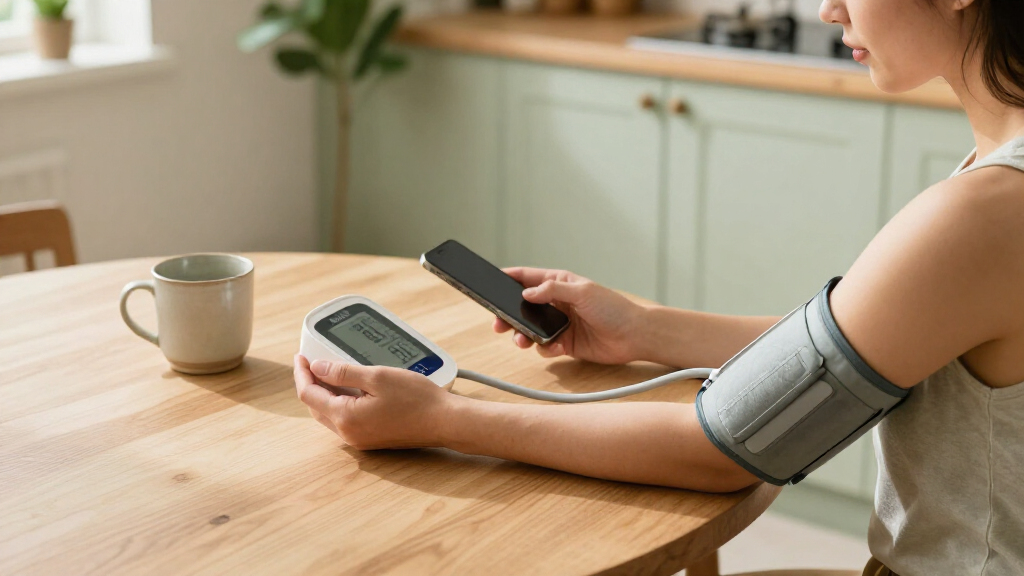
I ranked these smart blood pressure monitors by how well their connected features support a repeatable home-measurement routine. I weighed upper-arm design, cuff fit, display and control simplicity, Bluetooth or Wi-Fi syncing, app-based history, and any stated irregular-heartbeat or atrial-fibrillation detection features. I also considered whether the listed setup appears suited to a first-time user, someone tracking readings over time, or a household that needs a more flexible cuff or a compact device.
The order gives the most weight to a useful balance of measurement workflow and connected convenience, not to the longest feature list. That puts Withings BPM Connect first for its dual connectivity, with OMRON Evolv and iHealth Track Pro as distinct alternatives for compactness and straightforward app use. Models with less detail in the supplied product names, overlapping listings, or features that depend on checking cuff range and app compatibility rank lower until buyers confirm those specifics. No smart monitor can replace clinical guidance; these picks are for home tracking, not diagnosis.
| smart blood pressure monitor | Connectivity | App compatibility |
|---|---|---|
| MbH Bluetooth Upper Arm Blood | Bluetooth | iOS and Android |
| Wellue BP2A Smart Wireless Upp | Bluetooth | iOS and Android |
| iHealth Track Pro Upper Arm Bl | Bluetooth sync to iHealth MyVitals app | — |
| Smart Upper Arm Blood Pressure | — | iOS and Android |
| Yuwell Wireless Upper Arm Bloo | Bluetooth | iOS and Android via yuwell HealthCare+ |
| iHealth Neo Wireless Blood Pre | Bluetooth 4.0 | — |
| Wellue BP2A Bluetooth Blood Pr | Bluetooth | — |
| iHealth Track Smart Upper Arm | Bluetooth 4.0 or later | iOS 12.0 or later; Android 9.0 or later |
| Withings BPM Vision Blood Pres | Wi-Fi and Bluetooth | — |
| OMRON Evolv Wireless Upper Arm | Bluetooth | OMRON Connect, Apple Health, and Google Fit |
| Withings BPM Connect Wi-Fi and | Wi-Fi and Bluetooth | — |
Factors to Consider When Choosing Smart Blood Pressure Monitors
Choosing among connected monitors is less about collecting the most app features and more about finding a setup you can use consistently. I would check fit, phone compatibility, data sharing, and measurement habits before comparing extras.
Match the cuff to the person who will use it
A cuff that does not fit the user’s arm can make a convenient device a poor choice. Measure the upper arm and compare it with the manufacturer’s stated cuff range before ordering; do not assume that a wide-range label fits every arm. If several people will share one monitor, check whether the cuff works for each user and whether the app can keep their records separate. A monitor with rhythm alerts does not compensate for an incorrect cuff fit or inconsistent positioning. When fit is uncertain, ask a clinician or pharmacist to help identify a suitable cuff size. This check can matter more than choosing between Wi-Fi and Bluetooth.
Choose syncing that fits your daily routine
Bluetooth usually requires the phone to be nearby and the app ready to receive readings, while Wi-Fi can support syncing without the phone being beside the monitor. That convenience matters if you want readings logged automatically, but it also adds setup and network compatibility to the checklist. If you take measurements in one place with your phone close at hand, Bluetooth may be enough. Ask whether the monitor stores readings if the connection drops and how those measurements later reach the app. Do not buy based on connectivity labels alone: confirm the current app supports your phone and the features you plan to use. A simpler device can be easier to maintain if you rarely review digital history.
Decide who needs access to the readings
App history is most useful when it makes patterns easier for you and your healthcare professional to review. Check whether the app can export or share readings in a format your clinician can use, rather than assuming that a graph automatically provides useful clinical context. For a shared household monitor, look for a clear way to assign each reading to the correct person. Separate profiles can prevent mixed records, while a single-user setup may be simpler for an individual. Also review what account or phone permissions the app requires and whether you are comfortable with its data handling. If you only need occasional readings, a basic record you can share may be enough.
Treat rhythm alerts as prompts, not diagnoses
Some monitors list irregular-heartbeat or atrial-fibrillation detection, but these features do not confirm a condition or replace an evaluation by a healthcare professional. Buyers drawn to the MbH model’s IHB and AF detection should check exactly what its alerts indicate and what follow-up the manufacturer recommends. An alert can be useful information to discuss with a clinician, but a lack of alerts does not rule out a rhythm problem. Avoid choosing an advanced feature as a substitute for medical advice or a prescribed monitoring plan. If a clinician has asked you to track blood pressure or rhythm-related symptoms, ask which device features and records would be most useful. For routine home tracking, ease of taking and logging readings may matter more than extra alerts.
Pay for convenience you will actually use
Wi-Fi, a compact integrated design, app history, and additional alerts can make monitoring easier, but each can bring more setup or dependency on software. Before favoring a premium connected model, decide whether you will review trends, share records, or benefit from syncing without your phone nearby. A beginner may prefer a clear display and simple controls over a feature-rich app. Buyers who travel or have limited storage may value a compact design, while those measuring at home may prefer a more familiar separate monitor and cuff. Check whether essential readings remain visible on the device if the app is unavailable. The best value is the model whose useful features fit your routine, not the one with the longest feature list.
Build a repeatable measurement routine
A smart monitor can log readings, but it cannot make inconsistent measurement habits comparable. Follow the device instructions for posture, cuff placement, and rest before measuring, and use a consistent schedule if your clinician has recommended one. Avoid comparing single readings taken under very different conditions as if they reveal a trend. Check the manual for memory behavior, battery or charging needs, and any steps required to keep the app synchronized. If multiple readings are requested, follow your clinician’s directions rather than creating your own protocol. A straightforward routine often produces more useful records than adding another connected feature.
Frequently Asked Questions
Should I choose Wi-Fi or Bluetooth for a home blood pressure monitor?
Bluetooth is usually sufficient if you take readings near your phone and do not mind opening or checking the app. Wi-Fi can reduce that phone-dependence by syncing over a home network, which may suit someone who wants readings logged with less effort. It also means you should confirm the device supports your network and that setup is manageable for you. Consider what happens to readings when the connection is unavailable, and whether the monitor stores them until syncing resumes. Choose based on your routine, not on the assumption that one connection type gives more useful measurements.
How can I tell whether a monitor’s cuff will fit me?
Measure around your upper arm as directed by the cuff instructions and compare the result with the manufacturer’s stated size range. Do not infer fit from labels such as “wide-range” alone, since ranges vary by model. If you are buying for another person or sharing the monitor, check fit for every intended user. A cuff that is too small or too large may interfere with reliable readings, so fit deserves attention before app features. Ask a healthcare professional for help if your measurement sits near a range boundary or you are unsure how to position the cuff.
Are irregular-heartbeat or AF detection features a substitute for a medical test?
No. A monitor’s rhythm-related alert is a prompt to seek appropriate medical advice, not a diagnosis or a replacement for clinical testing. The meaning and limits of an alert depend on the device and its instructions. A monitor that does not show an alert cannot rule out an irregular rhythm either. If you have symptoms or a clinician has asked you to monitor your rhythm, follow their guidance about what device and records to use. Keep the readings and alert details available for that conversation.
Can two people use one smart monitor without mixing their readings?
That depends on the device and its app, so check for separate user profiles or a clear way to assign each measurement before sharing one. Some setups may save readings to a single account or phone, which can make records hard to interpret if users take turns. Also confirm the cuff fits both people and that each person can follow the same measurement instructions. If the app cannot separate records reliably, separate devices or another agreed tracking method may be safer for organization. Ask a clinician how they want shared household readings presented.
Do I need an app-connected monitor if I only take readings occasionally?
Not necessarily. An app can help preserve a history and make sharing readings easier, but it adds phone compatibility, account setup, and syncing to the process. If you take readings infrequently, a clear on-device display and a reliable way to record results may meet your needs. Connected features become more useful when you are tracking a pattern, following a clinician’s instructions, or sharing records regularly. Before buying, check whether the device shows readings without the app and whether the app remains usable with your phone. The simplest setup you will maintain can be more helpful than extra features you leave unused.
Conclusion
For most buyers who want automatic connected tracking, I would start with Withings BPM Connect as the best overall option. Choose iHealth Track Pro as the straightforward app-connected alternative and compare its listing with the wide-range-cuff iHealth Track model if fit is a concern. The OMRON Evolv is the best premium-style pick for shoppers who value a compact, integrated form, while the standard iHealth Track is a sensible value-oriented choice for buyers who want a simpler connected setup. Beginners should prioritize clear controls, an easy-to-fit cuff, and a readable display over advanced alerts; buyers seeking rhythm-related features can investigate the MbH IHB and AF detection model, while treating alerts as prompts rather than diagnoses. Before deciding, verify cuff range, phone compatibility, and how readings are stored and shared.