The best medication reminder devices make it easier to follow a prescribed schedule, but the right choice depends on how much help the routine needs. My best overall pick is the Colorwing Smart Pill Dispenser, which combines a large-capacity organizer with Bluetooth alarms and dual locks. For simpler routines, the Tabtime Vibrating Alarm Reminder Watch offers discreet reminders, while the 21-Day Bluetooth Automatic Pill Dispenser suits people who want longer refill intervals. The main tradeoff is between hands-off dispensing and simpler, more portable reminders that require you to manage the pills yourself. Read on for the full comparison, buying advice, and picks for different needs.

Get health and wellness essentials delivered free with Prime
- Fast, free delivery on millions of items
- Prime Video, Amazon Music and more included
- Member-only deals all year
Key Takeaways
- Automatic dispensing offers more than an alarm: The Colorwing and other automatic models can help control access to scheduled doses, while watches and trackers prompt you to act but do not dispense medication.
- Capacity changes the refill routine: The 21-day rising-pod dispenser prioritizes fewer refill sessions; smaller daily or weekly organizers may be easier to fill and check.
- Reminder style affects whether a device gets noticed: Vibration, spoken prompts, sound-and-light alerts, and app-linked alarms suit different hearing, vision, and privacy needs.
- Simple devices can be a better fit than connected ones: A 7-day AM/PM tracker or TabTime timer avoids app setup and device pairing, but relies more on the user to sort and take each dose.
- Security and independence pull in different directions: Dual-lock dispensers can limit access to scheduled medication, while open organizers and lanyard trackers are easier to use without setup or unlocking.
| Tabtime Vibrating Alarm Reminder Watch with 10 Daily Alarms |  | Best for Discreet Reminders | Daily alarms: Up to 10 | Alert type: Silent vibration | Power: Rechargeable battery | VIEW LATEST PRICE | See Our Full Breakdown |
| Colorwing Smart Pill Dispenser for Seniors, 31-Slot Automatic Medication Organizer with Bluetooth Alarms and Dual Locks |  | Best for Caregiver-Supported Dose Control | Capacity: 31 slots | Access control: Fingerprint scanner and physical backup key | Reminders: Custom voice recording or 3 alert tones | VIEW LATEST PRICE | See Our Full Breakdown |
| 7-Day AM/PM Medication Tracker and Reminder |  | Best Battery-Free Dose Tracker | Tracking period: 7 days | Dose schedule: AM and PM | Power: Battery-free | VIEW LATEST PRICE | See Our Full Breakdown |
| ORKA Talking Medication Reminder Clock with Voice-Recordable Alarms |  | Best for Large, Spoken Reminders | Display: Digital; 11.17 in screen | Display dimensions: 9.63 x 5.69 in | Digit height: 1.93 in | VIEW LATEST PRICE | See Our Full Breakdown |
| Med-Q Electronic Pill Dispenser with Alarm |  | Best for Straightforward AM/PM Dosing | Compartments: 14 removable boxes | Schedule: 7 days, morning and evening | Alarms: 1 or 2 per day | VIEW LATEST PRICE | See Our Full Breakdown |
| Windtrace Automatic Pill Dispenser with Alarm |  | Best for Straightforward Scheduled Doses | Compartments: 28 | Daily reminders: 1 to 6 scheduled times | Alerts: Audio alarm and flashing blue light | VIEW LATEST PRICE | See Our Full Breakdown |
| 21-Day Bluetooth Automatic Pill Dispenser with Rising Pods |  | Best for Caregiver Dose Tracking | Capacity: Up to 21 days | Dosage rings: 8 | Alarms: 8 | VIEW LATEST PRICE | See Our Full Breakdown |
| TabTime Pill Reminder and Timer with 8 Daily Alarms |  | Best Compact Reminder | Alarms: 8 independently set daily alarms | Display: LCD | Power: Battery-powered | VIEW LATEST PRICE | See Our Full Breakdown |
| ROCAM Digital Dementia Clock with Medication Reminders |  | Best for Visible Household Routine Prompts | Display: 7-inch digital display | Alarms: Up to 20 | Clock styles: 12 | VIEW LATEST PRICE | See Our Full Breakdown |
| Automatic Pill Dispenser – One-Press Daily Dispense with Slide-Door Cup, Sound & Light Alerts, Moisture-Proof Dual Desiccants, Large Compartments |  | Best for Easy, Clean Dose Access | Compartments: 28, various sizes | Alert options: Sound only, light only, or sound and light | Moisture protection: Water-resistant lid with dual desiccant slots | VIEW LATEST PRICE | See Our Full Breakdown |
| Odaro Pill Reminder and Tracker, Lanyard or Sticker, 2-Pack | 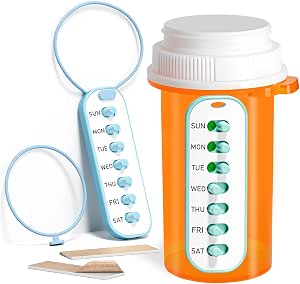 | Best Reusable and Portable Pill Tracker | Brand: Odaro | Pack Quantity: 2 | Attachment Options: Lanyard or sticker | VIEW LATEST PRICE | See Our Full Breakdown |
| MEDCENTER Digital Talking Medication Alarm Clock |  | Best Electronic Voice Reminder System | Display type: Digital | Additional feature: Snooze | Usage: Indoor | VIEW LATEST PRICE | See Our Full Breakdown |
| medication reminder device | Power |
|---|---|
| Tabtime Vibrating Alarm Remind | Rechargeable battery |
| Colorwing Smart Pill Dispenser | — |
| 7-Day AM/PM Medication Tracker | Battery-free |
| ORKA Talking Medication Remind | Corded electric |
| Med-Q Electronic Pill Dispense | — |
| Windtrace Automatic Pill Dispe | — |
| 21-Day Bluetooth Automatic Pil | Battery or plug-in; stated battery life over 2 months |
| TabTime Pill Reminder and Time | Battery-powered |
| ROCAM Digital Dementia Clock w | AC power |
| Automatic Pill Dispenser | — |
| Odaro Pill Reminder and Tracke | — |
| MEDCENTER Digital Talking Medi | 2 included AA batteries |
More Details on Our Top Picks
Tabtime Vibrating Alarm Reminder Watch with 10 Daily Alarms
The Tabtime Vibrating Alarm Reminder Watch suits people who need prompts throughout the day but want to keep medication private. Its 10 silent vibration alarms can mark several dose times without audible alerts at work, in shared housing, or during appointments. Compared with the Med-Q Electronic Pill Dispenser, it can prompt someone wherever they are, while Med-Q gives a visible and audible cue tied to a specific compartment. That flexibility comes with a tradeoff: the watch reminds but does not organize pills or confirm a dose was taken. Its two-button setup is simpler than a phone-based system, though the listing does not state battery life and specifies a strap fit only for 6.3–8.3-inch wrists. I’d choose it for portable prompting, not dose tracking.
Pros:- Up to 10 daily alarms support multiple medication times and other routine prompts.
- Silent vibration gives discreet reminders in shared or quiet settings.
- Rechargeable battery and included USB cable avoid routine disposable-battery replacement.
- Two-button controls keep setup relatively simple.
Cons:- Does not store medication or track whether a dose was taken.
- Battery life between charges is not specified.
- Only a 6.3–8.3-inch wrist fit is specified.
Best for: People who take medication away from home and want private, scheduled vibration prompts without relying on a phone.
Not ideal for: People who need a dispenser to organize doses or verify that medication was taken, and buyers whose wrist size falls outside the specified range.
- Daily alarms:Up to 10
- Alert type:Silent vibration
- Power:Rechargeable battery
- Charging:USB cable included
- Controls:Two-button setup
- Strap:Silicone with buckle
- Fit:6.3–8.3 in wrist circumference
Our verdict“Choose the Tabtime watch if you need frequent, private reminders on the go and can manage your pills separately.”
Colorwing Smart Pill Dispenser for Seniors, 31-Slot Automatic Medication Organizer with Bluetooth Alarms and Dual Locks
The Colorwing Smart Pill Dispenser is the most control-focused choice here: it combines 31 slots, scheduled dispensing, fingerprint access, and Bluetooth intake tracking. That makes it better suited than the Med-Q Electronic Pill Dispenser for households that need limits on access and want a caregiver to check dose records through the app. Its one-touch access is also designed with seniors and people with arthritis in mind. The tradeoff is a more involved setup: schedules and app features may take help to configure, and Bluetooth tracking depends on pairing a phone. Unlike the battery-free 7-Day AM/PM Medication Tracker, it requires regular charging, though the stated 30-plus-day battery life reduces that chore. I’d pick it when dispensing control matters more than a simple visual reminder.
Pros:- 31 slots support weekly or monthly medication planning.
- Fingerprint scanner and backup key restrict access to stored medication.
- Custom voice reminders or alert tones provide a choice of prompt.
- Bluetooth app supports dose control and intake tracking without a subscription.
Cons:- Initial schedule setup and phone pairing may require caregiver help.
- Requires charging, unlike the battery-free 7-Day AM/PM Medication Tracker.
- Bluetooth app features depend on a paired phone.
Best for: Families supporting an older adult who needs scheduled dose release, restricted access, and app-based caregiver tracking.
Not ideal for: People who want a low-setup, phone-free reminder or who cannot reliably charge and pair a connected dispenser.
- Capacity:31 slots
- Access control:Fingerprint scanner and physical backup key
- Reminders:Custom voice recording or 3 alert tones
- Dose planning:Weekly or monthly plans; includes 7 reversible dose rings
- Battery:1200 mAh; charges in 2 hours and lasts 30+ days
- Connectivity:Bluetooth 5.0
- App:Free companion app; no subscription required
Our verdict“Choose Colorwing when a caregiver-supported household needs controlled dispensing and dose tracking in one device.”
7-Day AM/PM Medication Tracker and Reminder
This 7-Day AM/PM Medication Tracker makes dose status visible without requiring power, programming, or an alarm. Sliding markers show whether a morning or evening dose has been taken, which can help someone spot a missed dose or avoid taking the same one twice. Compared with the Med-Q Electronic Pill Dispenser, it is less involved and can track creams, inhalers, drops, injections, or pet medication, but it does not alert anyone at a set time or hold pills in compartments. The manual markers are the central tradeoff: a user or caregiver must move them after each dose, so the tracker depends on that habit. Its countertop, wall, and refrigerator placement options make it easy to put near an existing routine. I’d choose it for visible tracking, not timed prompting.
Pros:- Seven-day AM/PM layout makes dose status easy to scan.
- Battery-free operation avoids charging and battery replacement.
- Countertop, wall, and refrigerator placement fit different routines.
- Customizable stickers support other medicines and pet doses.
Cons:- Does not provide timed alarm notifications.
- Users or caregivers must slide the markers manually after doses.
- Does not dispense or store medication.
Best for: People or caregivers who want a simple, visible record of morning and evening doses across a week, including non-pill treatments.
Not ideal for: Anyone who needs an automatic alarm, dose release, or a device that records intake without manually moving markers.
- Tracking period:7 days
- Dose schedule:AM and PM
- Power:Battery-free
- Mounting options:Countertop, wall, or refrigerator
- Included accessories:3M Command strips and customizable stickers
- Compatible medications:Pills, creams, inhalers, eye drops, and injections
Our verdict“Choose this tracker when a visible, power-free dose record matters more than automatic reminders.”
ORKA Talking Medication Reminder Clock with Voice-Recordable Alarms
The ORKA Talking Medication Reminder Clock is aimed at people who benefit from a large visual display and spoken prompts in a fixed room. Its eight recordable alarms can use familiar wording, while the extra-large digits and adjustable volume give more flexibility than the compact Tabtime vibrating watch. The watch is easier to carry and more discreet; ORKA is easier to see and hear at home, with time, date, and day announcements in six languages. That room-based approach has limits: the clock needs AC power for operation, and setting it up may require assistance, especially for someone with dementia. A backup battery retains settings during outages, but it does not make the clock portable. I’d choose ORKA for an accessible bedside or kitchen reminder station rather than prompts on the move.
Pros:- Large display with 1.93-inch digits is easier to read across a room.
- Up to eight voice-recordable alarms allow familiar, specific prompts.
- Announces time, date, and day in six languages.
- Adjustable volume and brightness, mute switch, and flashing alarm display offer multiple alert settings.
Cons:- Requires AC power for operation and is designed for tabletop use.
- Setup may require assistance for users with dementia.
- A clock reminder does not organize medication or confirm a dose was taken.
Best for: People who spend much of the day near a tabletop clock and benefit from large digits, spoken time, and personalized audible reminders.
Not ideal for: People who need portable or silent prompts, or who cannot get help configuring a corded device.
- Display:Digital; 11.17 in screen
- Display dimensions:9.63 x 5.69 in
- Digit height:1.93 in
- Alarms:Up to 8 voice-recordable alarms
- Languages:English (US), English (UK), Spanish, German, French, Italian
- Power:Corded electric
- Backup battery:1 CR2 battery included; retains settings during outages
- Maximum volume:90 dB
- Controls and alerts:Adjustable brightness and volume, mute switch, flashing alarm display, USB port
Our verdict“Choose ORKA for a fixed home location where spoken reminders and a large display are more useful than portability.”
Med-Q Electronic Pill Dispenser with Alarm
The Med-Q Electronic Pill Dispenser pairs a familiar seven-day AM/PM layout with audible and flashing alerts that identify which compartment to open. Its 14 removable boxes make it more dose-specific than the Tabtime vibrating watch, which can prompt at more times but cannot show which pills to take. Med-Q suits a steady one- or two-dose routine; its compartments can also be carried individually. The tradeoff is limited access control: it does not lock, so it cannot restrict access to the other doses. Setup may also need family assistance, and the two AA batteries are not included, even though stated battery life is about 14 months. Compared with the Colorwing dispenser, Med-Q offers a simpler weekly schedule without app tracking or automatic dose release. I’d choose it for basic, visible AM/PM organization.
Pros:- Fourteen removable compartments organize morning and evening doses for seven days.
- Audible and flashing alerts highlight the compartment to open.
- Individual boxes can be taken along when away from the organizer.
- Large day labels and easy-open lids support at-home access.
Cons:- Does not lock, so users can open compartments outside the intended schedule.
- Supports only one or two alarms per day.
- Two AA batteries are required and not included; setup may need family help.
Best for: People taking one or two daily doses who want a weekly compartment organizer with an alert that points to the correct dose.
Not ideal for: People who need locked medication storage, more than two daily reminders, or app-based caregiver dose tracking.
- Compartments:14 removable boxes
- Schedule:7 days, morning and evening
- Alarms:1 or 2 per day
- Alarm duration:5 minutes, with repeat alerts every 30 minutes
- Battery:2 AA batteries, not included
- Battery life:About 14 months
- Dimensions:8.75 x 4.5 x 1 in
- Capacity:About 7 large pills per box
- Locking:Does not lock
Our verdict“Choose Med-Q for a familiar, straightforward weekly AM/PM routine when locked dispensing and app tracking are unnecessary.”
Windtrace Automatic Pill Dispenser with Alarm
The Windtrace suits people who want scheduled dispensing without relying on a phone. Its 28 compartments can reduce refill frequency, while audio and flashing-light alerts cover up to six dose times a day. Compared with the 21-Day Bluetooth Automatic Pill Dispenser with Rising Pods, it has fewer reminder slots and no app-based intake records, but its simpler setup may be easier for someone who prefers controls on the device. The sliding retrieval window and removable tray support access and refilling, and the LCD makes settings visible. The tradeoff is that programming takes some setup, and the alarm can be disruptive in quiet spaces. I’d choose it for a home routine that benefits from organized dispensing and clear alerts, without caregiver tracking.
Pros:- 28 compartments can reduce how often medication needs refilling
- Audio and flashing-light alerts provide two reminder cues
- Sliding retrieval window is designed to make doses easier to access
- Removable tray supports refilling and cleaning
Cons:- Requires programming before the reminder schedule is ready
- The loud alarm may disturb others in quiet settings
Best for: People managing several daily doses at home who want a large-capacity dispenser with on-device audio and visual alerts
Not ideal for: Caregivers who need remote dose records or users who need more than six scheduled reminders each day
- Compartments:28
- Daily reminders:1 to 6 scheduled times
- Alerts:Audio alarm and flashing blue light
- Display:LCD
- Tray:Removable, food-grade material
- Dosage rings:6
- Batteries included:4 AA
Our verdict“Choose Windtrace for a high-capacity, device-based reminder routine when app tracking and more than six daily alarms are unnecessary.”
21-Day Bluetooth Automatic Pill Dispenser with Rising Pods
This dispenser stands apart from simpler alarms by pairing scheduled pod dispensing with Bluetooth reminders and records of the past 14 days. That history can help a caregiver check a routine, while the key lock helps limit accidental access or double dosing. The rising pods and removable tray also make filling and collecting medication more convenient than a compact alarm such as the TabTime Pill Reminder and Timer with 8 Daily Alarms, which has just one compartment. The tradeoff is added setup: Bluetooth and app use may be difficult for someone who wants a fully self-contained device. Its capacity is listed as up to 21 days, but it is not a fit for buyers who need a long interval between refills. I’d shortlist it when shared oversight matters more than minimal setup.
Pros:- App reminders and 14-day medication records support dose oversight
- Key lock can help prevent accidental access and double dosing
- Rising pods and removable tray ease access and refilling
- Battery or plug-in power provides two operating options
Cons:- Bluetooth and app setup may challenge users who prefer simple controls
- Capacity is limited to up to 21 days
- Battery duration and reliability are claims from the product description
Best for: People with a caregiver who wants app reminders and recent medication records alongside scheduled dispensing
Not ideal for: Users who prefer a phone-free setup or need a dispenser that holds more than 21 days of medication
- Capacity:Up to 21 days
- Dosage rings:8
- Alarms:8
- Pod capacity:Up to 12 capsules or softgels per pod
- Connectivity:Bluetooth 5.0
- Medication records:Past 14 days
- Power:Battery or plug-in; stated battery life over 2 months
- Time formats:12-hour and 24-hour
Our verdict“Choose this model when caregiver visibility and dose records justify the extra app setup.”
TabTime Pill Reminder and Timer with 8 Daily Alarms
The TabTime is the most portable choice here for someone who needs prompts more than organized pill storage. Its eight independently set daily alarms repeat automatically, and the LCD with three-button setup keeps the routine relatively direct. Compared with the Windtrace Automatic Pill Dispenser with Alarm, it takes up less space and avoids a large dispensing unit, but it cannot sort multiple doses: its single compartment is only a place to keep medication, not a multi-dose organizer. Battery power suits travel and rooms without a nearby outlet, though batteries eventually need replacement. I’d pick it for a person who carries a small set of pills and wants recurring reminders in a compact device. Skip it if missed doses stem from confusion about which pills to take or when to retrieve them.
Pros:- Eight alarms can be set independently and repeat daily
- Compact dimensions support portability
- Three-button setup keeps controls simple
- LCD displays the reminder information
Cons:- Single compartment does not organize multiple doses
- Battery requires replacement eventually
Best for: Travelers or people with a simple medication routine who want several recurring alarms in a pocketable reminder
Not ideal for: People who need separate compartments for multiple doses or scheduled automatic dispensing
- Alarms:8 independently set daily alarms
- Display:LCD
- Power:Battery-powered
- Compartments:1
- Dimensions:3.15 × 0.79 × 2.36 inches
- Material:Plastic
- Included components:Acoustic alarm, LCD display, countdown timer, attachments
Our verdict“Choose TabTime for portable recurring prompts when a reminder matters more than pill sorting.”
ROCAM Digital Dementia Clock with Medication Reminders
The ROCAM works as a household reminder display as much as a medication alarm. Its 7-inch screen and up to 20 alarms can show prompts for medicine alongside appointments and daily routines, which may help someone who benefits from seeing the day at a glance. Compared with the ORKA Talking Medication Reminder Clock with Voice-Recordable Alarms, the ROCAM emphasizes a customizable visual display, with clock styles, brightness, sounds, and languages. It does not dispense or organize pills, so it cannot replace a compartment dispenser such as Windtrace when dose sorting is needed. It also depends on AC power; backup batteries retain settings, but the display turns off during an outage. I’d choose it for a tabletop routine hub, not for portable reminders or medication access control.
Pros:- Up to 20 alarms can cover medication and other daily routines
- Large display offers customizable clock styles and languages
- Adjustable brightness and auto-dimming support different room conditions
- Battery backup retains time and alarm settings during outages
Cons:- Display turns off during a power outage
- Backup AAA batteries are not included
- Tabletop clock does not organize or dispense medication
Best for: Households supporting someone who benefits from a large, visible schedule of medication and routine prompts
Not ideal for: People who need pill compartments, automatic dispensing, or reminders that remain visible during a power outage
- Display:7-inch digital display
- Alarms:Up to 20
- Clock styles:12
- Alarm sounds:18
- Volume levels:9
- Brightness levels:10
- Power:AC power
- Backup batteries:2 AAA batteries, not included
- Connectivity:USB and SD card photo display
Our verdict“Choose the ROCAM when a customizable visual schedule is more useful than pill storage or dispensing.”
Automatic Pill Dispenser – One-Press Daily Dispense with Slide-Door Cup, Sound & Light Alerts, Moisture-Proof Dual Desiccants, Large Compartments
This dispenser puts the retrieval step at the center: a slide-door tray delivers medication into a cup, which may suit someone with weak grip strength or a preference for less direct handling. Its sound and light alerts can be used in different combinations, while the dual desiccant slots address moisture concerns in humid homes. Compared with the Windtrace Automatic Pill Dispenser with Alarm, it highlights cup-based access and moisture protection rather than an LCD, dosage rings, or a stated schedule of up to six daily reminders. The product description does not specify alarm timing or programming details, so buyers should confirm those match their routine. It is also limited to home, non-institutional use, and gummy-style capsules may stick. I’d favor it when access and moisture protection lead the decision.
Pros:- Slide-door dispensing delivers medication directly into a cup
- Sound-only, light-only, or combined alert modes offer flexibility
- Dual desiccant slots address humid storage conditions
- Large compartments accommodate many tablets and capsules
Cons:- Not intended for assisted living facilities or nursing homes
- Gummy-style capsules may stick to the tray
- Product details do not specify the number or timing of daily alarms
Best for: Home users with limited grip strength who want medication dispensed into a cup and added moisture protection
Not ideal for: Care facilities, users taking gummy-style capsules, or buyers who need clearly specified alarm scheduling
- Compartments:28, various sizes
- Alert options:Sound only, light only, or sound and light
- Moisture protection:Water-resistant lid with dual desiccant slots
- Material:Silicone sealing structure
- Intended use:Home and non-institutional use only
Our verdict“Choose this dispenser for cup-based access and moisture protection at home, after confirming its reminder schedule fits your needs.”
Odaro Pill Reminder and Tracker, Lanyard or Sticker, 2-Pack
This reusable pill tracker stands out for its flexibility and ease of use, especially compared with electronic reminders like the MEDCENTER Clock. Its ability to transfer between bottles with stickers or lanyards makes it ideal for users who prefer a simple, manual system that doesn’t rely on batteries or digital settings. The tactile click confirms when a dose has been taken, reducing the risk of missed doses—however, it requires users to remember to slide the tracker after each use, which can be inconvenient for some. Compared to electronic options, this tracker is low-tech but highly portable. It’s best suited for individuals who want a visual, reusable reminder without complex setup. The main tradeoff is the manual operation, which could be overlooked. This pick makes the most sense for those who value reusability and transferability over automation or alarms.
Pros:- Reusable and transferable between pill bottles, reducing waste and cost
- Offers both sticker and lanyard attachment options for versatile placement
- Click confirmation helps prevent double dosing
Cons:- Requires manual sliding after each dose, which can be overlooked
- No electronic alert or reminder system, relying entirely on user memory
Best for: Adults who prefer a simple, reusable visual reminder that can be moved between bottles and don’t need automated alerts.
Not ideal for: People who need automatic or auditory medication reminders, or those who might forget to slide the tracker after taking medication.
- Brand:Odaro
- Pack Quantity:2
- Attachment Options:Lanyard or sticker
- Included Accessories:Four rubber bands
- Compatibility:Works with most pill bottle sizes
- Reusable:Yes
Our verdict“This tracker is best for users who want a simple, manual, and portable reminder that they can customize and reuse easily.”
MEDCENTER Digital Talking Medication Alarm Clock
The MEDCENTER Digital Talking Medication Alarm Clock makes the most sense for users who need clear, auditory cues, especially those with visual impairments or who struggle with reading small print. Its recorded voice reminders and multiple alarms help ensure medication times aren’t missed, which sets it apart from simple visual reminders like the Odaro tracker. The large display and loud alarms are particularly helpful for seniors or those with hearing difficulties. However, it requires users or caregivers to set up the alarms and manage the schedule, unlike devices with automatic scheduling. Compared with analog clocks, its digital voice alerts provide a higher level of assurance for medication adherence. This device is ideal for individuals who benefit from straightforward, audible prompts but are comfortable with basic digital controls. The main tradeoff is the need for manual setup and the absence of an included power adapter, relying solely on batteries.
Pros:- Recorded voice reminders clearly instruct users when to take medication
- Supports multiple daily alarms for flexible scheduling
- Large, easy-to-read display with loud alarms for better visibility and audibility
Cons:- Requires manual setup of alarms, which may be challenging for some users
- No power adapter included, relying on two AA batteries
Best for: Older adults or visually impaired users who need clear, spoken medication reminders and multiple alarms to stay on schedule.
Not ideal for: People who prefer a plug-in device or those who want fully automated systems that sync with smartphones or apps.
- Display type:Digital
- Additional feature:Snooze
- Usage:Indoor
- Mounting type:Wall mount
- Power:2 included AA batteries
- Item dimensions:1.75 in W × 2.75 in H
- Weight:7.36 oz
- Material:Plastic
Our verdict“This clock is best for users who need reliable, audible medication prompts with minimal complexity in setup.”

How We Picked
I compared these 12 devices by how directly they address missed doses, how much work they shift to the user or caregiver, and how clearly they signal a scheduled medication time. I looked at reminder format, dispensing method, capacity, accessibility, setup demands, and access control. A reminder-only watch, clock, or tracker can be simpler and more portable, but it cannot confirm that a dose was taken. Automatic dispensers can reduce sorting and access errors, though they call for more setup and routine maintenance.
The ranking gives the most weight to practical coverage across common routines: a useful balance of reminders, organization, and support without making every buyer depend on an app or complicated setup. I placed specialized options—such as voice-recordable clocks, dementia-oriented clocks, and lanyard trackers—where their narrower use is a strength for the right person, not a reason to treat them as universal picks. Since a device cannot replace medical advice or verify ingestion on its own, I also considered whether its limits are clear and whether a caregiver may need to stay involved.
Factors to Consider When Choosing Best Medication Reminder Devices
Start with the routine the device must support, not the longest feature list. A useful reminder should fit the person’s medication schedule, abilities, and living situation, while remaining manageable to fill and maintain.
Match the device to the kind of help needed
A reminder and a dispenser solve different problems: one signals that it is time, while the other can organize or release a dose. If the main difficulty is remembering, a watch, clock, or tracker may be enough. If sorting doses or taking only the scheduled compartment is a concern, an automatic dispenser may add useful structure. Do not assume an alarm means a dose was taken; most devices cannot verify swallowing. For higher-risk schedules or significant memory challenges, discuss the device’s role with a pharmacist, clinician, or caregiver.
Choose capacity around the refill pattern
A high-capacity device can reduce how often someone needs to refill it, but it may take longer to sort and can be harder to carry. A weekly organizer keeps the supply visible and may make errors easier to spot, though it requires more frequent filling. Think about who prepares the medication, how steady their hands are, and whether the device stays at home or travels. Check that compartments fit the actual pills and dose combinations; a large slot count does not guarantee enough room for a particular regimen. Ask a pharmacist before changing how pills are stored, especially if any medication has special handling instructions.
Pick alerts the user will notice and understand
Sound may be missed by someone with hearing loss or may be unwelcome in shared spaces. Vibration can be discreet, but it only helps if the device is worn and the user can feel it. Spoken prompts and large visual displays can make clock-style reminders easier to follow, while light alerts can add a visible cue. Consider whether several different alert types would help or simply create noise and confusion. If possible, choose a format the user already responds to, then check that the alert can be heard, seen, or felt where medication is usually taken.
Balance safeguards with ease of access
Locks may help limit access to medication outside the scheduled dose, but they can also create a barrier for someone who needs to manage the device independently. An unlocked organizer is easier to open and refill, yet it places more responsibility on the user to select the correct compartment. Consider who will set up the device and what happens if the primary caregiver is unavailable. Look for a clear process for missed alarms, refills, and access to medication during travel or a schedule change. A safeguard is useful only if the intended user can still get the medication when needed.
Check setup and ongoing maintenance before buying
Bluetooth features may offer a connected reminder experience, but pairing, permissions, and phone access can add work. A standalone alarm may be easier for someone who does not use a smartphone regularly, though it may offer less remote oversight. Ask who will update alarms if the prescription changes and how often the organizer needs cleaning or refilling. Battery and power requirements matter too, particularly when a device is relied on every day. Keep an up-to-date medication list and review device settings after any clinician-directed change.
Plan for travel, schedule changes, and backup
A bedside clock or large automatic dispenser may work well at home but be awkward to bring along. A watch or small tracker is more portable, though it may only remind rather than hold or dispense medication. Before relying on a device away from home, check how alarms are set, whether the schedule can be adjusted, and how doses are carried safely. Avoid assuming that a device’s compartments suit every medication or that its alerts will remain active without checking batteries or power. A written medication list and a backup reminder can help when the device is unavailable or the routine changes.
Frequently Asked Questions
Should I choose an automatic dispenser or a reminder watch?
Choose an automatic dispenser when the user needs help organizing doses or limiting access to medication outside the scheduled time. A reminder watch is a better match when the pills are already organized and the main issue is remembering when to take them. The watch is more portable and does not ask the user to manage a dispenser’s setup, but it cannot release or confirm a dose. Consider who will fill the device and whether the user can operate it without help. For a complicated regimen, ask a pharmacist whether the planned compartments and schedule are appropriate.
Can a medication reminder device confirm that a dose was taken?
An alarm can signal a scheduled time, and an automatic dispenser may release a dose, but that does not prove the medication was swallowed. Some devices may help a caregiver notice activity or missed alerts, but the type of tracking depends on the model and should be checked before purchase. Avoid treating an alarm history as a complete medication record unless the manufacturer clearly describes what it records. If confirmation matters for safety, discuss a supervision plan with the person’s clinician or caregiver. Keep a separate medication log if the care team recommends one.
Are Bluetooth-connected dispensers a good choice for someone who does not use a smartphone?
They may still work if their basic alarms and dispensing functions can be set up and used without the phone, but that varies by device. Before buying, check whether Bluetooth is required for daily operation or only used for setup and added features. If a caregiver manages the app, agree on who will update the schedule and respond to notifications. For a user who needs a straightforward, standalone prompt, a talking clock or simple alarm may be easier to maintain. Do not rely on remote alerts until you understand what they report and what they cannot detect.
How do I choose between a weekly organizer and a multiweek dispenser?
A weekly organizer is often easier to inspect because the doses are grouped by day and time, but it needs regular refilling. A multiweek dispenser can reduce refill frequency, though filling it may take longer and checking the remaining supply can be less immediate. Base the choice on who does the sorting, how often that person is available, and whether the medication schedule changes often. Confirm that the compartments fit the pills and combinations in the prescribed routine. Ask a pharmacist before storing medication in a different container if its packaging or storage conditions matter.
What should I do if the user misses an alarm or a dose?
Follow the medication’s specific instructions or contact a pharmacist or clinician; do not assume the next dose should be doubled or taken immediately. A reminder device cannot decide whether a delayed dose is safe, since guidance varies by medication and schedule. Set a practical backup plan, such as a caregiver check-in or written instruction for whom to call. Review whether the alert was missed because of volume, vibration, location, or a confusing schedule, and adjust the setup only when it remains consistent with medical directions. If missed doses happen often, the routine may need support beyond a device.
Conclusion
For the broadest combination of capacity, reminders, and access control, I recommend the Colorwing Smart Pill Dispenser as the best overall pick, provided its setup and Bluetooth features suit the user. The Tabtime Pill Reminder and Timer is my best value-style choice for someone who wants recurring prompts without an automatic dispenser, while the 21-Day Bluetooth Automatic Pill Dispenser is the premium-style fit for buyers prioritizing a longer refill interval and rising-pod format. For beginners, I would start with the 7-Day AM/PM Medication Tracker if sorting and taking doses are manageable, or a simple Tabtime alarm if timing is the main challenge. The ORKA Talking Medication Reminder Clock suits people who benefit from spoken, recordable prompts; the ROCAM Digital Dementia Clock targets a more specialized display-and-reminder need, and the Odaro lanyard or sticker trackers favor portable, simple prompts. Choose the least complicated device that addresses the actual barrier, and involve a caregiver or pharmacist when medication safety or schedule changes call for extra support.
Halloween Picks
halloween
As an affiliate, we earn on qualifying purchases.