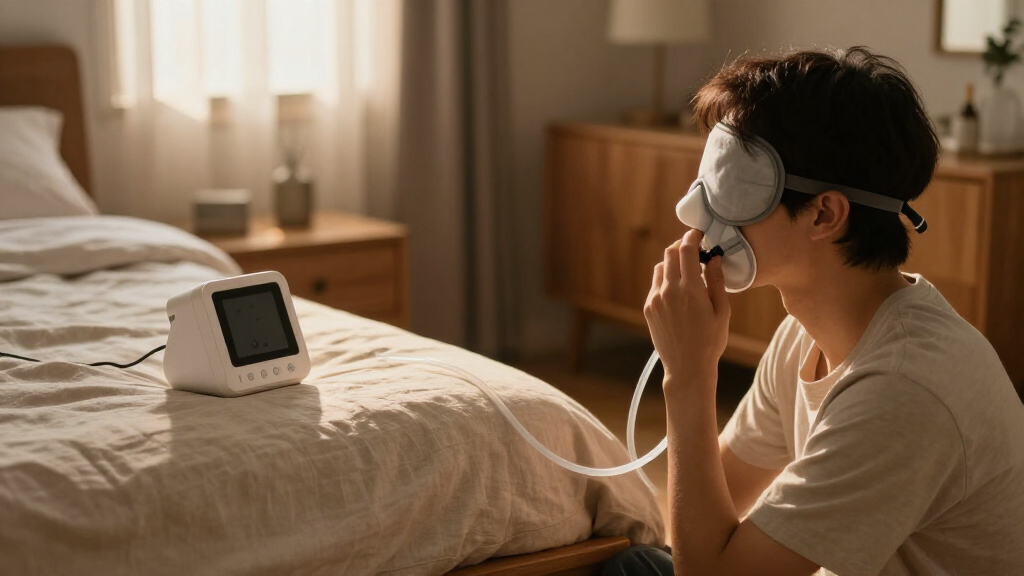
Sleep apnea monitors range from finger-worn oxygen trackers to contactless bed sensors, and they differ in what they measure and how clearly they present overnight data. My best overall pick is the Wellue O2Ring Rechargeable Bluetooth Pulse Oximeter for its wearable oxygen tracking and vibration alerts; the EMAY Sleep Breathing Monitor stands out for airflow-focused tracking, while the Withings Sleep offers a low-effort under-mattress format. The central tradeoff is between direct oxygen readings, broader sleep signals, and comfort during the night. These devices can support personal tracking, but they do not diagnose sleep apnea or replace clinical testing. Continue reading for the full breakdown and guidance on choosing the right kind of monitor.

Get health and wellness essentials delivered free — and shop member deals
- Fast, free delivery on millions of items
- Access to Prime Big Deal Days deals on October 6–7
- Prime Video, Amazon Music and more included
Key Takeaways
- Wearable oxygen tracking leads this lineup: the Wellue O2Ring combines overnight pulse oximetry with vibration alerts, a more direct fit for people tracking oxygen patterns than general sleep trackers.
- Airflow and oxygen answer different questions: EMAY‘s breathing monitor focuses on airflow, while the Wellue and EMAY oximeters focus on oxygen saturation and pulse.
- Comfort is a real ranking factor: the Withings Sleep pad and contactless monitors avoid wearing a sensor, while ring, wrist, and finger devices keep hardware on the body overnight.
- Data access varies as much as sensing: app summaries may suit casual tracking, while products with PC reports or built-in memory offer another route for reviewing overnight records.
- Several names represent closely related options: the two Garmin Index Sleep Monitor entries and two Wellue O2Ring entries make it worth checking the exact model and format before choosing.
| Wellue O2Ring Rechargeable Bluetooth Pulse Oximeter with Vibration Alerts |  | Best for Overnight Oxygen Trends | Measurements: SpO2, pulse rate, and body motion | Battery life: Up to 12–16 hours | Onboard memory: Four groups of 10-hour data | VIEW LATEST PRICE | See Our Full Breakdown |
| RingConn Gen 2 Smart Ring, Matte Black, Size 10 |  | Best for Long-Wear App Insights | Color and size: Matte black; Size 10 | Case material: Titanium | Weight: About 2 g; varies by size | VIEW LATEST PRICE | See Our Full Breakdown |
| 60GHz mmWave Non-Wearable Sleep and Vital Signs Monitor |  | Best Contactless Room Monitor | Radar frequency: 61–62.5GHz | Heart rate accuracy: ±1 BPM, as claimed | Breathing rate accuracy: ±0.1 RPM, as claimed | VIEW LATEST PRICE | See Our Full Breakdown |
| Wellue Style 2 Wrist Pulse Oximeter with Audio Reminder, Bluetooth Blood Oxygen Monitor, Rechargeable, 72-Hour Battery Life |  | Best for Extended Recording | Measurements: Blood oxygen saturation and pulse rate | Battery life: Up to 72 hours | Sensor: Patented silicone ring sensor | VIEW LATEST PRICE | See Our Full Breakdown |
| Withings Sleep – Under-Mattress Sleep Tracking Pad with Sleep Cycle Analysis | 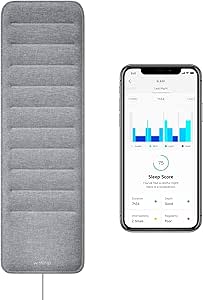 | Best for No-Wear Sleep Tracking | Sensor type: Pneumatic under-mattress pad | Connectivity: Wi-Fi | App: Health Mate | VIEW LATEST PRICE | See Our Full Breakdown |
| Wellue CheckmeO2 Max Continuous Pulse Oximeter with Smart Reminders |  | Best for Long Wear | Measurements: Blood oxygen saturation, pulse rate, and motion | Sensor: Soft silicone ring sensor | Connectivity: Bluetooth | VIEW LATEST PRICE | See Our Full Breakdown |
| EMAY Sleep Oxygen Monitor with PC Software & App, Bluetooth Rechargeable Pulse Oximeter, 72-Hour Built-in Memory |  | Best for Overnight Reports | Modes: Spot check and continuous tracking | Connectivity: Bluetooth | Power: Rechargeable | VIEW LATEST PRICE | See Our Full Breakdown |
| Garmin Index Sleep Monitor Smart Sleep Band |  | Best for Broader Sleep Insights | Model number: 010-03024-01 | Wear location: Upper arm | Tracked metrics: Sleep score, sleep stages, HRV, rest duration, breathing variations | VIEW LATEST PRICE | See Our Full Breakdown |
| Wellue O2Ring Bluetooth Pulse Oximeter, Wearable Blood Oxygen Saturation Monitor with Vibration Reminder, App and PC Reports, Rechargeable |  | Best Compact Oxygen Tracker | Measurements: Blood oxygen saturation and heart rate | Sensor type: Wearable ring sensor | Item weight: 15 g | VIEW LATEST PRICE | See Our Full Breakdown |
| Non-Wearable Contactless Smart Sleep Tracker |  | Best Contactless Wellness Tracker | Monitoring technology: Millimeter-wave radar | Tracking: Sleep stages, heart rate, breathing, movement, bed-in and bed-out | Connectivity: 2.4 GHz Wi-Fi | VIEW LATEST PRICE | See Our Full Breakdown |
| Garmin Index Sleep Monitor | | Best for Garmin Users Tracking Sleep Patterns | Brand: Garmin | Model number: 010-03024-00 | Item type: Sleep monitor | VIEW LATEST PRICE | See Our Full Breakdown |
| EMAY Sleep Breathing Monitor with App-Based Airflow Tracking |  | Best for Airflow-Focused Home Tracking | Weight: 10 g | Color: Black | Material: Food-grade silicone | VIEW LATEST PRICE | See Our Full Breakdown |
| sleep apnea monitor | Connectivity | Battery life |
|---|---|---|
| Wellue O2Ring Rechargeable Blu | Bluetooth 4.0 BLE | Up to 12–16 hours |
| RingConn Gen 2 Smart Ring | Bluetooth | Up to 10–12 days |
| 60GHz mmWave Non-Wearable Slee | 2.4GHz Wi-Fi | — |
| Wellue Style 2 Wrist Pulse Oxi | Bluetooth | Up to 72 hours |
| Withings Sleep | Wi-Fi | — |
| Wellue CheckmeO2 Max Continuou | Bluetooth | Up to 72 hours per charge |
| EMAY Sleep Oxygen Monitor with | Bluetooth | — |
| Garmin Index Sleep Monitor Sma | — | Up to 7 nights |
| Wellue O2Ring Bluetooth Pulse | Bluetooth | Up to 16 hours per charge |
| Non-Wearable Contactless Smart | 2.4 GHz Wi-Fi | — |
| Garmin Index Sleep Monitor | Garmin Connect app sync | Up to 7 nights |
| EMAY Sleep Breathing Monitor w | Smartphone app | — |
More Details on Our Top Picks
Wellue O2Ring Rechargeable Bluetooth Pulse Oximeter with Vibration Alerts
The Wellue O2Ring is the most directly focused pick here for following overnight oxygen and pulse trends: it records both continuously, adds motion data, and can vibrate when readings cross preset thresholds. Its app and PC reports give more detail to review than the Withings Sleep pad’s sleep and breathing summaries, while the ring form keeps the sensor on a finger rather than under a mattress. That focus comes with limits. Wellue says this device is for sports and aviation, not medical use, so its readings and alerts should not be treated as diagnosis or clinical monitoring. The battery lasts up to 12–16 hours, but that is far shorter than the Style 2’s stated 72 hours. Choose it for personal trend tracking, not medical decisions.
Pros:- Continuously records SpO2, pulse rate, and motion
- Vibration alerts can flag readings outside preset thresholds
- App and PC reports support PDF and CSV sharing
- Rechargeable battery lasts up to 12–16 hours
Cons:- Intended for sports and aviation, not medical use
- App syncing requires Bluetooth and a compatible device
- Battery life is much shorter than the Wellue Style 2’s stated 72 hours
Best for: People seeking a wearable way to log overnight oxygen and pulse trends and review reports on a compatible phone or PC
Not ideal for: Anyone needing a medical-grade sleep apnea monitor, or who wants multiple nights of use without frequent recharging
- Measurements:SpO2, pulse rate, and body motion
- Battery life:Up to 12–16 hours
- Onboard memory:Four groups of 10-hour data
- Connectivity:Bluetooth 4.0 BLE
- App compatibility:iOS 9.0 or above; Android 5.0 or above
- Material:Silicone
- Finger circumference:2.17–3.15 inches
- Intended use:Sports and aviation; not a medical device
Our verdict“Choose the O2Ring for wearable oxygen and pulse trend records, provided you do not need a medical device or longer battery life.”
RingConn Gen 2 Smart Ring, Matte Black, Size 10
The RingConn Gen 2 suits buyers who want sleep apnea insights as part of a wider picture of sleep, heart rate, HRV, stress, activity, and blood oxygen. Its up to 10–12 days of battery life and lack of subscription fees make it easier to keep in a routine than the rechargeable Wellue O2Ring, which is built around oxygen, pulse, and motion tracking. The tradeoff is that RingConn’s apnea monitoring and AHI data come through its companion app; the supplied details do not establish it as a medical device, so the insights are not a substitute for diagnosis. Fit also needs attention: this Size 10 ring uses a sizing system different from standard U.S. ring sizes, and battery life varies by size. It makes most sense for people comfortable wearing a ring overnight who value broad app-based tracking.
Pros:- Combines sleep apnea insights with sleep, heart rate, HRV, stress, activity, and blood oxygen tracking
- Up to 10–12 days of battery life
- Companion app has no subscription fees
- Lightweight titanium case weighs about 2 g
Cons:- The stated sleep apnea monitoring is app-based and not presented as medical diagnosis
- Sizing differs from standard U.S. ring sizes
- Battery life varies by ring size
Best for: Wearable-tech users who want sleep apnea insights alongside broad sleep and activity tracking without a subscription
Not ideal for: People seeking a standalone medical monitor, or anyone unwilling to check the ring’s separate sizing system before buying
- Color and size:Matte black; Size 10
- Case material:Titanium
- Weight:About 2 g; varies by size
- Battery life:Up to 10–12 days
- Water resistance:100 meters; IP68
- Connectivity:Bluetooth
- Compatible platforms:Android and iOS
- Measured metrics:Sleep duration, stress, heart rate, heart rate variability, and blood oxygen
- Warranty:12 months
Our verdict“Pick RingConn if you want long-wearing, broad app-based sleep insights, and skip it if you need clinical apnea monitoring.”
60GHz mmWave Non-Wearable Sleep and Vital Signs Monitor
This 60GHz mmWave monitor stands apart from the RingConn Gen 2 and Wellue rings by tracking from the room rather than from something worn on the body. It reports heart rate, breathing, occupancy, and sleep patterns, which may appeal to people who dislike sensors on their finger or wrist. Wi-Fi connection and Alexa or Google Home support also give it a smart home role the other monitors in this batch do not share. However, its description does not specify apnea-specific scoring or an oxygen measurement, so its breathing reports are not the same kind of data as the O2Ring’s SpO2 readings. Its accuracy figures and abnormal-reading alerts are product claims, not independently verified in the provided details. Buyers also need 2.4GHz Wi-Fi and a USB-C power source.
Pros:- Tracks without a wearable sensor or camera
- Reports heart rate, breathing, occupancy, and sleep patterns
- Works with Alexa and Google Home
- USB-C power connection
Cons:- The provided feature list does not include blood oxygen or apnea-specific scoring
- Requires a 2.4GHz Wi-Fi connection
- Accuracy and alert performance claims are not independently verified in the provided information
Best for: People who want contactless room-based breathing and heart-rate reports and already use 2.4GHz Wi-Fi or a compatible smart home system
Not ideal for: Buyers who specifically need blood oxygen measurements, apnea-specific reporting, or a wearable record they can review away from the room
- Radar frequency:61–62.5GHz
- Heart rate accuracy:±1 BPM, as claimed
- Breathing rate accuracy:±0.1 RPM, as claimed
- Connectivity:2.4GHz Wi-Fi
- Smart home compatibility:Alexa and Google Home
- Power:USB-C, 5V/1A
- Housing:Alloy
- Operating temperature:-10°C to 50°C
- Monitoring features:Heart rate, breathing, occupancy, and sleep reports
Our verdict“Choose this monitor for contactless room reports, but choose the Wellue O2Ring if oxygen readings are your priority.”
Wellue Style 2 Wrist Pulse Oximeter with Audio Reminder, Bluetooth Blood Oxygen Monitor, Rechargeable, 72-Hour Battery Life
The Wellue Style 2 is the battery-life pick among the wearable oxygen monitors in this batch: its stated 72-hour runtime gives it a clear advantage over the O2Ring’s 12–16 hours for longer stretches between charges. It pairs a wrist unit with a silicone ring sensor and adds both vibration and audio alerts, plus phone and PC software for live readings and historical reports. That setup is more purpose-built for extended oxygen and pulse recording than the broader sleep tracking offered by the RingConn Gen 2. Yet it remains explicitly for sports and aviation, not medical use, so it should not guide diagnosis or treatment. Its onboard memory retains only the last four recordings, each up to 10 hours, which makes report syncing important if you want to keep older sessions.
Pros:- Up to 72 hours of rechargeable battery life
- Vibration and audio alerts for preset low SpO2 or pulse thresholds
- Vihealth app and O2 Insight Pro PC software provide readings and reports
- Ring sensor is designed to stay in place
Cons:- Intended for sports and aviation use only, not a medical device
- Onboard memory stores only the last four recordings, up to 10 hours each
- Bluetooth is needed for app syncing
Best for: People who want longer-running wearable SpO2 and pulse tracking with audio alerts and app or PC reports
Not ideal for: People seeking medical apnea diagnosis, or those who need extensive on-device storage for many sessions
- Measurements:Blood oxygen saturation and pulse rate
- Battery life:Up to 72 hours
- Sensor:Patented silicone ring sensor
- Connectivity:Bluetooth
- Alerts:Vibration and audio
- Onboard memory:Last four recordings, up to 10 hours each
- App:Vihealth
- PC software:O2 Insight Pro
- Intended use:Sports and aviation; not a medical device
Our verdict“Choose the Style 2 for longer wearable oxygen and pulse sessions, while keeping its nonmedical intended use in mind.”
Withings Sleep – Under-Mattress Sleep Tracking Pad with Sleep Cycle Analysis
The Withings Sleep is the least intrusive option here: it sits under the mattress and tracks sleep cycles, snoring, breathing disturbances, and heart rate without asking you to wear a sensor overnight. Compared with the 60GHz mmWave monitor, it has a named Health Mate app and specified mattress compatibility, plus IFTTT integration for simple smart home routines. Its breathing disturbance tracking may be useful as part of a personal sleep record, but the supplied details do not describe apnea diagnosis, oxygen measurement, or medical use. That makes it less suited to buyers focused on overnight SpO2 trends than either Wellue monitor. Mattress fit is another practical constraint: it supports mattresses 4 to 15 inches thick, and syncing depends on Wi-Fi and the app. It fits people who want passive sleep tracking more than targeted oxygen monitoring.
Pros:- Under-mattress setup avoids wearing a sensor
- Tracks sleep cycles, snoring, breathing disturbances, and heart rate
- Automatically syncs to the Health Mate app over Wi-Fi
- IFTTT integration supports smart home routines
Cons:- Does not list blood oxygen measurement in the provided product data
- Mattress must be between 4 and 15 inches thick
- Requires Wi-Fi and the Health Mate app
Best for: People who want to track sleep patterns, snoring, and breathing disturbances without wearing a device
Not ideal for: People who need overnight blood oxygen readings, apnea diagnosis, or have a mattress outside the 4–15 inch range
- Sensor type:Pneumatic under-mattress pad
- Connectivity:Wi-Fi
- App:Health Mate
- Mattress compatibility:4 to 15 inches thick
- Tracked data:Deep, light, and REM sleep cycles; snoring; breathing disturbances; heart rate
- Smart home integration:IFTTT
Our verdict“Choose Withings Sleep for passive sleep and breathing pattern tracking, not for oxygen monitoring or medical apnea assessment.”
Wellue CheckmeO2 Max Continuous Pulse Oximeter with Smart Reminders
The CheckmeO2 Max is the most practical pick here for someone who wants continuous oxygen and pulse tracking beyond a single night. Its soft silicone ring sensor and up to 72 hours of battery life suit extended wear better than the Wellue O2Ring, which is rated for up to 16 hours per charge. Adjustable vibration and audio reminders add a way to notice readings that cross configured thresholds, while ViHealth and O2 Insight Pro provide app and computer access to recorded data. The tradeoff is its stated sports and aviation use: it is not a medical device and cannot diagnose or monitor sleep apnea. I’d choose it for wellness tracking and longer battery runtime, not as a substitute for clinical evaluation.
Pros:- Tracks oxygen saturation, pulse rate, and motion continuously
- Up to 72 hours of battery life per charge
- Soft silicone ring sensor is designed for comfortable wear
- Adjustable vibration and audio reminders
Cons:- Not intended for medical use or sleep apnea diagnosis
- Full data review relies on the companion app or PC software
Best for: People seeking wearable oxygen and pulse trends over multiple days for sports or aviation use
Not ideal for: Anyone who needs a device to diagnose sleep apnea or guide medical care
- Measurements:Blood oxygen saturation, pulse rate, and motion
- Sensor:Soft silicone ring sensor
- Connectivity:Bluetooth
- Battery life:Up to 72 hours per charge
- Memory:Four groups of 10-hour data
- Compatible software:ViHealth app and O2 Insight Pro
- Intended use:Sports and aviation; not intended for medical use
Our verdict“Choose the CheckmeO2 Max for extended wearable wellness tracking, but look to a clinician for sleep apnea assessment.”
EMAY Sleep Oxygen Monitor with PC Software & App, Bluetooth Rechargeable Pulse Oximeter, 72-Hour Built-in Memory
Among these wearable options, the EMAY is the clearest choice for someone who wants overnight oxygen data with report metrics. It supports both spot checks and continuous tracking, keeps up to 72 hours of recordings on the device, and can export CSV data with SpO2 trends, heart rate trends, and ODI. That makes its reporting more explicit than the Wellue CheckmeO2 Max listing, which names compatible software but does not specify these report metrics. The tradeoff is a more involved review process: historical trends require syncing to the app or PC software, and the low oxygen or heart rate alarm thresholds need to be set beforehand. Its features can help organize wellness observations, but they do not establish a sleep apnea diagnosis.
Pros:- Offers spot checks and continuous overnight tracking
- Stores up to 72 hours of data without a phone nearby
- Reports SpO2 trends, heart rate trends, and ODI
- CSV export and audio alerts for configured thresholds
Cons:- Historical trend analysis requires app or PC software sync
- Alarm thresholds must be configured before a session
- Does not diagnose sleep apnea
Best for: People who want to review overnight oxygen and heart rate trends in app or PC reports
Not ideal for: Buyers who want on-device historical analysis without syncing or setting alarm thresholds
- Modes:Spot check and continuous tracking
- Connectivity:Bluetooth
- Power:Rechargeable
- Built-in memory:72 hours
- Compatibility:PC software, iOS app, and Android app
- Alarm:Audio alarm for low SpO2 or heart rate
- Report metrics:SpO2 trends, heart rate trends, and ODI
- Data export:CSV
Our verdict“Pick the EMAY if you want exportable overnight oxygen reports and are comfortable syncing data after each session.”
Garmin Index Sleep Monitor Smart Sleep Band
The Garmin Index Sleep Monitor is the broadest sleep-tracking option in this group, combining sleep stages, HRV, rest duration, and breathing variations via Pulse Ox in an upper-arm band. That wider set of sleep context distinguishes it from the Wellue O2Ring, which centers on oxygen and heart rate readings with threshold alerts. A smart wake alarm and up to seven nights of battery life may also appeal to Garmin Connect users who want a routine-focused tracker without wearing a smartwatch. But this is a wellness band, not a medical monitor, so its breathing metrics should not be treated as a sleep apnea diagnosis. Pulse Ox availability varies by country, and the provided size is S-M; buyers should check regional availability and fit before choosing it.
Pros:- Tracks sleep stages, HRV, rest duration, and breathing variations
- Up to seven nights of battery life
- Lightweight, breathable upper-arm design
- Works with Garmin Connect without requiring a smartwatch
Cons:- Not a medical device and cannot monitor medical conditions
- Pulse Ox is unavailable in some countries
- Listed size is S-M, which may not fit every user
Best for: Garmin Connect users who want sleep-stage, HRV, and breathing-variation trends from an upper-arm band
Not ideal for: People seeking clinical sleep apnea monitoring or users outside supported Pulse Ox regions
- Model number:010-03024-01
- Wear location:Upper arm
- Tracked metrics:Sleep score, sleep stages, HRV, rest duration, breathing variations
- Pulse Ox:Availability varies by country
- Battery life:Up to 7 nights
- Size:S-M; 12.8 x 2.5 x 0.02 inches
- App:Garmin Connect
- Warranty:1-year limited warranty
Our verdict“Choose the Garmin band for broad wellness sleep trends, not for diagnosing or managing sleep apnea.”
Wellue O2Ring Bluetooth Pulse Oximeter, Wearable Blood Oxygen Saturation Monitor with Vibration Reminder, App and PC Reports, Rechargeable
The O2Ring focuses on the measurements most relevant to oxygen trend tracking: continuous blood oxygen saturation and heart rate, with vibration reminders for readings outside preset thresholds. Its ring sensor weighs 15 g, and app and PC reports can be exported as PDF or CSV. Compared with the CheckmeO2 Max, it has a much shorter stated battery life—up to 16 hours rather than 72—but its compact wearable design and report-sharing options make it a straightforward overnight-focused alternative. Fit is a real constraint: the supported finger perimeter is 2 to 3.2 inches. Like the other Wellue options here, it is intended for sports and aviation, not medical diagnosis; alerts and trends cannot confirm sleep apnea.
Pros:- Continuously tracks oxygen saturation and heart rate
- Lightweight 15 g ring sensor
- App and PC reports support PDF and CSV export
- Vibration reminders respond to preset thresholds
Cons:- Up to 16 hours of battery life is shorter than the CheckmeO2 Max
- Fit is limited to a 2 to 3.2 inch finger perimeter
- Not intended for clinical use or sleep apnea diagnosis
Best for: People who want a compact ring sensor for overnight oxygen and heart rate trend records
Not ideal for: Users outside the supported finger fit range or anyone needing a medical sleep apnea monitor
- Measurements:Blood oxygen saturation and heart rate
- Sensor type:Wearable ring sensor
- Item weight:15 g
- Connectivity:Bluetooth
- Battery life:Up to 16 hours per charge
- On-device storage:Four groups of 10-hour recordings
- Supported finger perimeter:2 to 3.2 inches
- Reports:App and PC software with PDF and CSV export
- Intended use:Sports and aviation; not a medical device
Our verdict“Choose the O2Ring for compact overnight oxygen trend tracking and report exports if its finger fit works for you.”
Non-Wearable Contactless Smart Sleep Tracker
This bedside tracker suits people who would rather sleep without a ring, band, or finger sensor. Its millimeter-wave radar tracks breathing, heart rate, movement, and sleep stages without physical contact or a camera, while the app adds reports, trends, reminders, and family alerts. Compared with the Garmin Index Sleep Monitor, it avoids wearing a device but also lacks the listed HRV and Pulse Ox metrics. White noise and ambient lighting make it more of a bedtime and general sleep tool than a focused oxygen monitor. It requires 2.4 GHz Wi-Fi, and nearby movement or vibration can affect data. Since it is not for medical use and does not list oxygen saturation tracking, it is a poor fit for buyers seeking apnea-related oxygen monitoring.
Pros:- Tracks sleep without wearables or cameras
- Monitors breathing, heart rate, movement, and sleep stages
- App includes reports, trends, reminders, and family alerts
- White noise and ambient lighting support bedtime routines
Cons:- Does not list oxygen saturation tracking
- Requires 2.4 GHz Wi-Fi
- Nearby movement or vibration may affect sleep data
- Not intended for medical use
Best for: People who want contactless bedroom sleep and breathing trends for general wellness
Not ideal for: Buyers seeking oxygen saturation measurements or medical monitoring for suspected sleep apnea
- Monitoring technology:Millimeter-wave radar
- Tracking:Sleep stages, heart rate, breathing, movement, bed-in and bed-out
- Connectivity:2.4 GHz Wi-Fi
- App features:Reports, trend tracking, reminders, and family alerts
- Additional features:White noise and ambient lighting
- Wearable required:No
- Medical use:Not for medical use
Our verdict“Pick this tracker for contactless general sleep trends, but choose an oxygen monitor if SpO2 data is your priority.”
Garmin Index Sleep Monitor
The Garmin Index Sleep Monitor suits people who want a broad picture of sleep patterns in the Garmin Connect app, with an upper-arm band that tracks sleep stages, HRV, duration, and breathing variations. Its up-to-seven-night battery life reduces charging interruptions, while the smart wake alarm adds a practical daily-use feature. Compared with the EMAY Sleep Breathing Monitor, Garmin tracks a wider set of general sleep and wellness metrics; EMAY focuses more directly on airflow and respiratory reporting. That distinction matters for buyers choosing between trend tracking and a breathing-focused report. Garmin’s Pulse Ox breathing variation insights are not available in every country, and the monitor is not intended to diagnose or monitor medical conditions. It makes most sense for Garmin app users seeking wellness data, not a medical apnea assessment.
Pros:- Tracks sleep score, stages, HRV, and duration in one wearable
- Up to seven nights of battery life
- Syncs with Garmin Connect with or without a compatible Garmin smartwatch
- Smart wake alarm vibrates to wake the wearer
Cons:- Not intended to diagnose or monitor medical conditions
- Pulse Ox breathing variation insights may not be available in all countries
Best for: Garmin Connect users who want sleep-stage, HRV, and breathing-variation trends from a wearable band
Not ideal for: People seeking a medical sleep apnea diagnosis or a dedicated airflow report; this is a wellness tracker, and regional Pulse Ox availability varies
- Brand:Garmin
- Model number:010-03024-00
- Item type:Sleep monitor
- Battery life:Up to 7 nights
- Physical size:17.8 × 2.5 × 0.02 in (452 × 63.5 × 0.55 mm), L-XL band
- Tracking features:Sleep score, sleep stages, HRV, rest duration, breathing variations, skin temperature, and women’s health tracking
- Connectivity:Garmin Connect app sync
- Included components:Index Sleep Monitor, charging/data cable, and documentation
- Warranty:1-year limited warranty
Our verdict“Choose the Garmin Index if you want broad sleep and wellness trends in Garmin Connect, and skip it if you need a diagnostic apnea test.”
EMAY Sleep Breathing Monitor with App-Based Airflow Tracking
The EMAY Sleep Breathing Monitor is the more targeted choice for buyers who want nasal airflow recordings and an app-generated respiratory report. It tracks airflow, AHI, snoring, and respiratory events, giving its data a more breathing-specific focus than the Garmin Index Sleep Monitor, which covers broader sleep and wellness metrics. At just 10 g, with three strap sizes and a food-grade silicone mask, it is designed for overnight wear. Its narrow measurement set is also its main tradeoff: EMAY does not record SpO2 or pulse rate, and it is not recommended for mouth breathers or use with a CPAP mask. The report can help users discuss patterns with a clinician, but the device does not replace medical diagnosis.
Pros:- Records nasal airflow throughout sleep
- App analyzes recordings and generates a respiratory report
- Lightweight 10 g design intended for overnight wear
- Three strap sizes and food-grade silicone support fit adjustment
Cons:- Not recommended for mouth breathers
- Does not record SpO2 or pulse rate
- Cannot be used with a CPAP mask and does not replace medical diagnosis
Best for: Nasal breathers who want overnight airflow, snoring, and respiratory-event reports through a smartphone app
Not ideal for: Mouth breathers, CPAP users, or anyone needing oxygen and pulse measurements or a medical diagnosis
- Weight:10 g
- Color:Black
- Material:Food-grade silicone
- Sensors:Three
- Tracking:Airflow, AHI, snoring, and respiratory events
- Connectivity:Smartphone app
- Compatible devices:Smartphones
- GPS:Not supported
Our verdict“Choose EMAY for app-based nasal airflow reporting, provided you breathe through your nose and understand it is not a diagnostic device.”
How We Picked
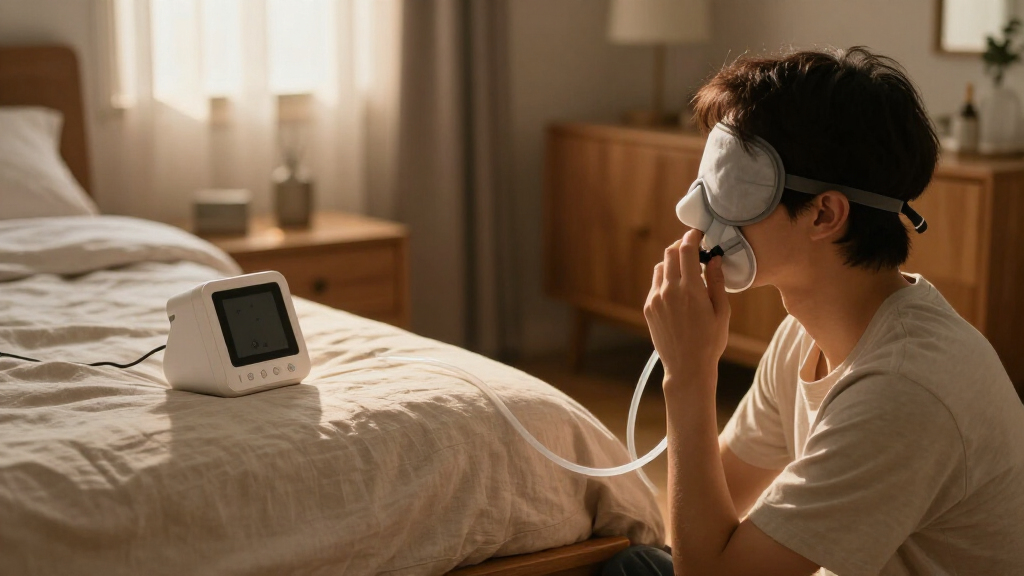
I ranked these sleep apnea monitors by how directly their measurements relate to overnight breathing concerns, how practical they appear for repeated use, and how useful their alerts and data access may be to a buyer. Devices that track oxygen or airflow received more weight for this specific category than products centered on general sleep metrics. I also considered wearing comfort, whether the device is contactless, and how much setup or ongoing review its format may involve.
The ordering reflects those differences rather than treating every sleep tracker as an apnea monitor. The Wellue O2Ring leads for a balance of oxygen tracking and alerts; the EMAY Sleep Breathing Monitor fills a distinct airflow-tracking role, and the under-mattress and contactless options rank for buyers who prioritize avoiding wearables. Similar or repeated product listings are treated as distinct catalog entries only where their stated features differ. No device here is a diagnostic substitute for a sleep study, so I favor products as tracking aids and match each to a clear buyer need.
| sleep apnea monitor | Battery life |
|---|---|
| Wellue O2Ring Rechargeable Blu | Up to 12–16 hours |
| RingConn Gen 2 Smart Ring | Up to 10–12 days |
| 60GHz mmWave Non-Wearable Slee | — |
| Wellue Style 2 Wrist Pulse Oxi | Up to 72 hours |
| Withings Sleep | — |
| Wellue CheckmeO2 Max Continuou | Up to 72 hours per charge |
| EMAY Sleep Oxygen Monitor with | — |
| Garmin Index Sleep Monitor Sma | Up to 7 nights |
| Wellue O2Ring Bluetooth Pulse | Up to 16 hours per charge |
| Non-Wearable Contactless Smart | — |
| Garmin Index Sleep Monitor | Up to 7 nights |
| EMAY Sleep Breathing Monitor w | — |
Factors to Consider When Choosing Sleep Apnea Monitors
Before choosing a device, decide what kind of overnight signal you actually want to follow. The label “sleep apnea monitor” covers products that measure different things, so a comfortable tracker may still leave your main question unanswered.
Choose the Signal That Matches Your Question
Oxygen saturation, airflow, pulse, movement, and sleep stages are different signals, and they cannot be used interchangeably. Oxygen tracking may show dips during the night, while airflow tracking focuses more directly on breathing patterns. A general sleep tracker can describe rest and movement without measuring either signal in the same way. A common mistake is choosing by the word “sleep” in the product name instead of checking the stated measurements. Start by asking what information you hope to record, then select a sensor that captures it. If you need a clinical answer about apnea, discuss appropriate testing with a health professional.
Balance Comfort Against Sensor Contact
A wearable must stay in place through normal changes in sleeping position to produce a useful record. Finger and wrist sensors may feel noticeable, and rings can take adjustment; contactless pads and bedside sensors avoid wearing hardware but rely on their placement and sensing range. Buyers sometimes focus on avoiding a wearable without checking whether the contactless device measures the signal they need. Consider how you sleep, whether a strap or ring would bother you, and whether sharing a bed affects placement. If you are uncertain, favor a format you can realistically use night after night. Consistent use is often more informative than an elaborate device left unused.
Check How Alerts Work Before Relying on Them
Vibration and audio reminders can draw attention to a threshold event, but an alert is not a diagnosis or a guarantee that every event will be detected. Check whether alerts are configurable, whether they depend on a connected phone, and what happens when the sensor shifts or loses contact. Buyers may assume that any alarm means the device has interpreted an apnea event, when it may only respond to a chosen oxygen or pulse threshold. Think about whether you want an alert during sleep or a report to review the next morning. A quiet vibration may suit someone sharing a room, while audio could be easier to notice for another person. Choose based on the actual alert behavior, not just the presence of an alert feature.
Plan for Reviewing and Sharing the Data
Overnight charts are most useful when you can understand them and retrieve them later. Some buyers want a quick app summary, while others may prefer stored records or PC reports for a longer review. Check how data moves from sensor to phone or computer, whether the app is required, and how much history the device retains. Do not assume every product offers the same export or sharing options simply because it has Bluetooth. If you plan to discuss readings with a clinician, ask what format would be useful and keep the device’s limitations clear. Paying for more reporting tools makes sense only when you expect to use them.
Treat Home Tracking as a Screening Aid
Consumer monitors can provide personal tracking signals, but readings alone cannot confirm or rule out sleep apnea. A normal-looking night does not settle persistent symptoms, and an unusual reading can have several explanations, including sensor fit or movement. Avoid changing treatment based solely on a consumer device’s graph or alarm. If symptoms such as loud snoring, witnessed breathing pauses, or daytime sleepiness concern you, bring that context to a qualified clinician. The device may help you describe patterns over time, but its role is to inform a conversation rather than replace formal assessment. Keep that distinction in mind when comparing technical features.
Frequently Asked Questions
Can a sleep apnea monitor diagnose sleep apnea?
No consumer monitor in this roundup should be treated as a standalone diagnostic test. These products track signals such as oxygen, airflow, pulse, or general sleep activity, and each signal has limits. A reading may help you notice a pattern, but it cannot establish the cause or clinical significance of that pattern. If you suspect sleep apnea, speak with a qualified clinician about an appropriate evaluation. Use home readings as supporting information, not as a reason to delay care.
Should I choose an oxygen monitor or an airflow monitor?
Choose based on the information you want to track, since oxygen saturation and airflow describe different parts of breathing. An oximeter records oxygen and pulse patterns, while an airflow-focused device is intended to follow breathing flow. Neither one, by itself, provides a complete clinical assessment of sleep apnea. If a clinician has asked you to track a particular signal, follow that guidance. If you are choosing for personal awareness, compare comfort and data review alongside the sensor type.
Are contactless sleep monitors as useful as wearable ones?
They can be useful for different preferences, but the formats may capture different signals and work differently in a real bedroom. Contactless devices avoid a ring, strap, or finger sensor, which can make nightly use more comfortable for some people. Wearables make direct body contact and, in this lineup, include options focused on oxygen measurements and alerts. Placement, movement, and whether another person shares the bed may affect how a contactless sensor works. Compare the product’s stated measurements before treating comfort as the deciding factor.
Do vibration or audio alerts mean the device detected an apnea event?
Not necessarily. An alert may be triggered by a configured oxygen or pulse threshold, rather than by a device identifying apnea as a clinical event. Sensor fit, movement, and the product’s alert settings can affect what gets recorded or signaled. Read the device’s description to learn what condition triggers its reminder. If alerts are causing concern or symptoms persist, discuss them with a clinician instead of interpreting them as a diagnosis.
What should I do if my monitor shows repeated overnight oxygen dips?
First check whether the sensor was fitted and positioned according to its instructions, since movement or poor contact can affect readings. Save the records and note any symptoms or circumstances that may help explain the pattern. Repeated readings from a consumer device still do not diagnose sleep apnea or identify the reason for dips. Share the concern with a qualified clinician, who can advise whether formal testing is appropriate. Do not start, stop, or change treatment based only on the device’s report.
Conclusion
For the broadest match to overnight oxygen tracking with alerts, I recommend the Wellue O2Ring Rechargeable Bluetooth Pulse Oximeter as best overall. The EMAY Sleep Oxygen Monitor is my best value pick for buyers who want Bluetooth tracking, app access, and stored data, while the RingConn Gen 2 is the best premium-style ring option for someone who prefers a broader wearable format. Beginners who want a simpler, non-worn setup may prefer the Withings Sleep pad, provided its sleep tracking fits their goal. For airflow-focused tracking, choose the EMAY Sleep Breathing Monitor; for avoiding body-worn sensors, compare the contactless monitor and 60GHz mmWave option. Match the device to the signal and format you will use, and seek clinical evaluation when apnea is a concern.
Evergreen bestsellers Picks
bestsellers
As an affiliate, we earn on qualifying purchases.