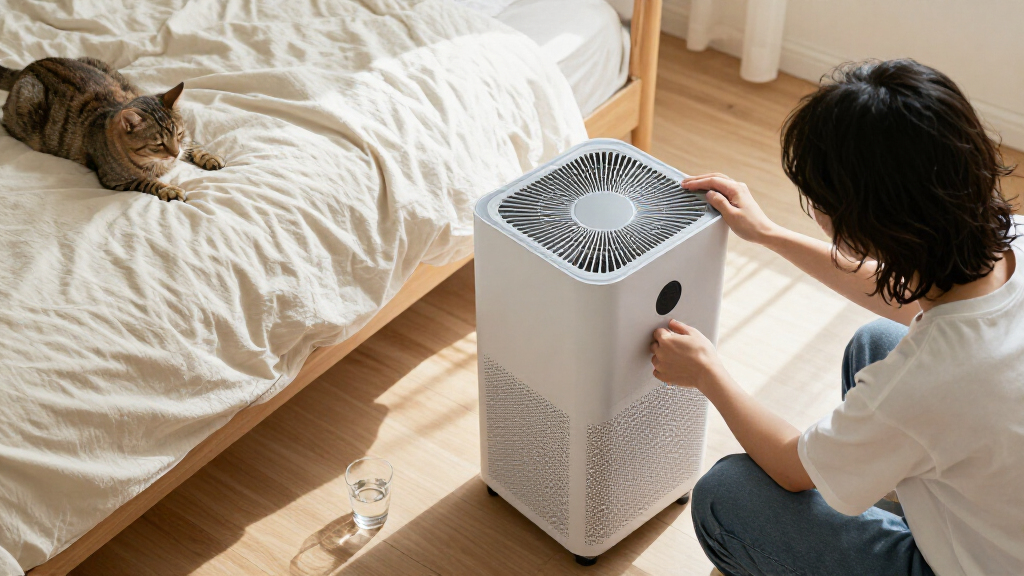

For most allergy sufferers, I’d start with the LEVOIT Vital 200S-P, which pairs large-room coverage with smart controls and a washable pre-filter. The Blueair Blue Pure 511i Max is a better fit for a smaller space where a compact smart unit matters, while the Clorox Medium Room Air Purifier offers a more straightforward option for everyday room cleaning. The main tradeoffs are room size, ongoing filter upkeep, noise at higher fan speeds, and how much automation you want. A purifier can reduce airborne particles in its rated space, but it cannot remove allergens settled on surfaces or replace ventilation and cleaning. Continue reading for the full breakdown of all 15 picks and how to match one to your room.

Get health and wellness essentials delivered free with Prime
- Fast, free delivery on millions of items
- Prime Video, Amazon Music and more included
- Member-only deals all year
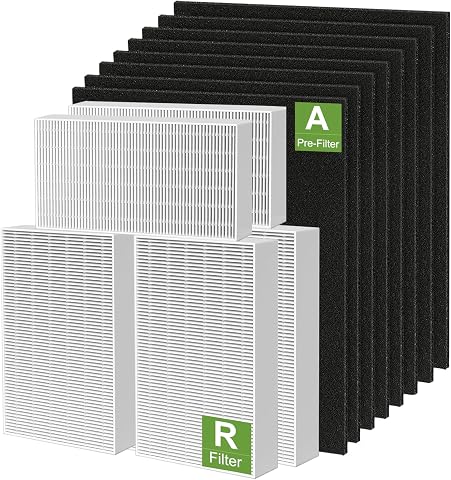
Complete the kit


Key Takeaways
- The LEVOIT Vital 200S-P leads this lineup for larger rooms because it combines smart controls and a washable pre-filter; it is a more feature-rich choice than the smaller Levoit Core models.
- Small-room buyers have several distinct paths: the Clorox Tabletop emphasizes compact placement, the AromaRoom targets bedrooms and baby rooms, and the Blueair Blue Pure 511i Max adds smart functionality in a compact format.
- Large-area claims need context. The ECOSELF lists coverage up to 2,400 square feet, but buyers should check the air-cleaning rate at the number of air changes they need rather than relying on maximum area alone.
- Filter upkeep separates convenience from low-effort ownership. The Levoit Vital 100S-P has a washable pre-filter, while the PuroAir 240 two-pack offers two units for separate rooms but also means maintaining two systems.
- Extra features are not automatically allergy benefits. PM2.5 monitoring, app control, auto modes, and a scent diffuser may add convenience, but proper room sizing and particle filtration matter more when choosing a unit for airborne allergens.
| Clorox Medium Room Air Purifier with True HEPA Filter |  | Best Overall for Medium Rooms | Filter: Three-stage: pre-filter, True HEPA, and active carbon | Particle capture: 99.97% of particles as small as 0.1 microns | Room coverage: 225 sq. ft. at 5 air changes per hour; up to 1,000 sq. ft. at 1 air change per hour | VIEW LATEST PRICE | See Our Full Breakdown |
| Clorox Tabletop Air Purifier with True HEPA Filter for Small Rooms |  | Best Compact Bedroom Pick | Filter: Two-stage 360° filter with pre-filter and True HEPA | Particle capture: 99.97% of particles as small as 0.1 micron | Room coverage: Up to 200 sq. ft. | VIEW LATEST PRICE | See Our Full Breakdown |
| ECOSELF Air Purifier for Large Rooms up to 2,400 sq ft with True HEPA Filter |  | Best for Large, Quiet Spaces | Coverage: Up to 2,400 sq. ft. | Filtration: True HEPA; captures 99.97% of airborne particles | Air changes: Twice per hour in large rooms | VIEW LATEST PRICE | See Our Full Breakdown |
| LEVOIT Vital 200S-P Smart Air Purifier for Large Rooms |  | Best for Pollen and Pet Allergens | Model: Vital 200S-P | Recommended room area: Up to 1,875 sq. ft. | AHAM verified: Yes | VIEW LATEST PRICE | See Our Full Breakdown |
| FreAire HAP605 Air Purifier for Large Rooms, White |  | Best for Pet Homes and Low-Noise Sleep | Model: HAP605 | Room coverage: Up to 2,600 sq. ft. | Air inlets: One front inlet and two side inlets | VIEW LATEST PRICE | See Our Full Breakdown |
| AromaRoom True HEPA Air Purifier for Bedrooms and Baby Rooms |  | Best for Fragrance-Free Flexibility | Model: AP103-A | Coverage area: 323 ft² (30 m²) | Air circulation: Twice per hour | VIEW LATEST PRICE | See Our Full Breakdown |
| Levoit Core 200S-P Smart Air Purifier |  | Best Smart Pick for Small Rooms | Model: Core 200S-P | Room size: 140 sq. ft. | Air changes: 4.8 per hour in a 140 sq. ft. room | VIEW LATEST PRICE | See Our Full Breakdown |
| Levoit Core 300-P Air Purifier for Home |  | Best Quiet, No-App Option | Model: Core 300-P | Filter type: 3-in-1 filtration | Pollen CADR: 167 CFM | VIEW LATEST PRICE | See Our Full Breakdown |
| KNKA APH4000 Air Purifier for Home, White |  | Best for Pet Homes and Large Rooms | Model: APH4000 | Maximum room coverage: 1,695 sq. ft. at one air refresh per hour | Frequent-cleaning coverage: Up to 350 sq. ft. at 4.8 air refreshes per hour | VIEW LATEST PRICE | See Our Full Breakdown |
| Levoit Vital 100S-P Air Purifier with Washable Pre-Filter |  | Best Smart Pick for Pet Allergies | Model: Vital 100S-P | Filter type: 3-stage | Frequent-cleaning coverage: 222 sq. ft. at 4.8 air changes per hour | VIEW LATEST PRICE | See Our Full Breakdown |
| DREO Air Purifier with HEPA Filter, PM2.5 Monitor, Auto and Sleep Modes, and Scent Diffuser |  | Best for Real-Time Air Quality Feedback | Model: DR-HAP008 (Dreo 338) | CADR: 115 CFM | Room coverage: Up to 178 sq. ft. at 4.8 air changes per hour; up to 856 sq. ft. at 1 air change per hour | VIEW LATEST PRICE | See Our Full Breakdown |
| GermGuardian AC4825E 22-Inch HEPA Air Purifier Tower, Gray |  | Best for Straightforward HEPA Filtration | Model: AC4825E | Height: 22 inches | Filter type: True HEPA with activated-carbon pre-filter | VIEW LATEST PRICE | See Our Full Breakdown |
| Blueair Blue Pure 511i Max Smart Air Purifier |  | Best for Quiet Smart Bedroom Use | Model: Blue Pure 511i Max | Filtration technology: HEPASilent dual filtration | Particle capture: 99.97% of airborne particles down to 0.1 microns | VIEW LATEST PRICE | See Our Full Breakdown |
| PuroAir 240 HEPA Air Purifier, 2-Pack, Black |  | Best for Two-Room Coverage | Model: PuroAir 240 | Quantity: 2 | Coverage: Up to 1,000 sq. ft. in one hour | VIEW LATEST PRICE | See Our Full Breakdown |
| VOOPNU Air Purifier with 360° Filtration, White |  | Best Compact Pick for Tight Spaces | Coverage area: Up to 1,076 sq. ft. | Dimensions: 6.69 x 6.69 x 9.84 inches | Filtration: Three-layer filtration system | VIEW LATEST PRICE | See Our Full Breakdown |
| air purifiers for allergie | Model |
|---|---|
| Clorox Medium Room Air Purifie | — |
| Clorox Tabletop Air Purifier w | — |
| ECOSELF Air Purifier for Large | — |
| LEVOIT Vital 200S-P Smart Air | Vital 200S-P |
| FreAire HAP605 Air Purifier fo | HAP605 |
| AromaRoom True HEPA Air Purifi | AP103-A |
| Levoit Core 200S-P Smart Air P | Core 200S-P |
| Levoit Core 300-P Air Purifier | Core 300-P |
| KNKA APH4000 Air Purifier for | APH4000 |
| Levoit Vital 100S-P Air Purifi | Vital 100S-P |
| DREO Air Purifier with HEPA Fi | DR-HAP008 (Dreo 338) |
| GermGuardian AC4825E 22-Inch H | AC4825E |
| Blueair Blue Pure 511i Max Sma | Blue Pure 511i Max |
| PuroAir 240 HEPA Air Purifier | PuroAir 240 |
| VOOPNU Air Purifier with 360° | — |
More Details on Our Top Picks
Clorox Medium Room Air Purifier with True HEPA Filter
For allergy relief in a bedroom or living area, I’d put this Clorox near the top because it pairs a True HEPA filter with five air changes per hour in rooms up to 225 square feet. That faster circulation is more useful for regular exposure to pollen and dust than its headline coverage of up to 1,000 square feet, where the rate falls to one air change per hour. The PM2.5 display and auto mode give it a clearer feedback loop than the simpler Clorox Tabletop Air Purifier, which instead prioritizes a smaller footprint and timer. Its three-stage filter adds a carbon layer for odors, but replacement is recommended every 6–12 months. I’d choose it for a medium room, not as a fast-cleaning solution for a large open plan.
Pros:- Three-stage filtration combines a pre-filter, True HEPA filter, and active carbon layer.
- Provides five air changes per hour in rooms up to 225 square feet.
- PM2.5 display and auto mode provide air-quality feedback and adjust operation.
- Compact 5.8-pound design is easier to place than larger-room models.
Cons:- Air changes per hour drop to one at the stated maximum coverage of 1,000 square feet.
- Filter replacement is recommended every 6–12 months.
- The stated virus and bacteria reduction occurs as air passes through the filter; the unit does not kill them.
Best for: People managing pollen or dust in a bedroom or living room up to 225 square feet who want automatic operation and visible air-quality feedback.
Not ideal for: Buyers seeking rapid air turnover across a large open room; at the maximum stated coverage, it provides only one air change per hour.
- Filter:Three-stage: pre-filter, True HEPA, and active carbon
- Particle capture:99.97% of particles as small as 0.1 microns
- Room coverage:225 sq. ft. at 5 air changes per hour; up to 1,000 sq. ft. at 1 air change per hour
- Airflow:360°
- Air-quality feedback:PM2.5 digital display and color-coded light
- Noise:30 dB
- Dimensions and weight:8.74 × 8.74 × 14.65 in; 5.8 lb
- Filter life:6–12 months
- Certifications:EPA Certified; Energy Star certified
Our verdict“Choose this Clorox for a medium room where HEPA filtration, automatic adjustment, and a visible PM2.5 reading matter more than large-area coverage.”
Clorox Tabletop Air Purifier with True HEPA Filter for Small Rooms
This is the space-saving choice for allergy sufferers who want HEPA filtration close to where they sleep or work. Its three fan speeds and 23 dB noise level suit a small bedroom better than the larger Clorox Medium Room Air Purifier, while the 360-degree intake draws air from around its compact body. The coverage figures deserve attention: it can provide five air changes per hour in 80 square feet, but only two in a 200-square-foot room. That makes it a better fit for a modest room than for a larger bedroom where allergens need frequent circulation. A timer and adjustable night light add flexibility, though it lacks the larger Clorox model’s PM2.5 display and auto mode. I’d pick it for quiet, local use, not for whole-room monitoring.
Pros:- Compact 7.5-inch-square body fits tabletops and tight bedroom spaces.
- True HEPA filtration captures 99.97% of particles as small as 0.1 micron.
- Three fan speeds, a timer, and an adjustable night light support bedroom use.
- Stated noise level is 23 dB.
Cons:- Provides only two air changes per hour at its maximum stated 200-square-foot coverage.
- Does not include the PM2.5 display or auto mode found on the Clorox Medium Room model.
- Filter replacement is recommended every 6–12 months.
Best for: Apartment dwellers, students, or parents who want a compact purifier for a small bedroom, nursery, or home-office nook.
Not ideal for: People with a large bedroom or open-plan space who want frequent air turnover or an air-quality display and automatic adjustment.
- Filter:Two-stage 360° filter with pre-filter and True HEPA
- Particle capture:99.97% of particles as small as 0.1 micron
- Room coverage:Up to 200 sq. ft.
- Air changes:Up to 5 per hour in 80 sq. ft.; 2 per hour in 200 sq. ft.
- Fan speeds and timer:3 speeds; 2-, 4-, or 8-hour timer
- Noise:23 dB
- Dimensions and weight:7.5 × 7.5 × 9.5 in; 3.2 lb
- Power:AC/DC; 12 W
- Filter replacement interval:Every 6–12 months
Our verdict“Choose this tabletop Clorox for quiet filtration in a small bedroom, but move up to the Medium Room model for faster circulation and air-quality feedback.”
ECOSELF Air Purifier for Large Rooms up to 2,400 sq ft with True HEPA Filter
The ECOSELF is aimed at buyers who want one purifier to serve a broad living area, with a stated maximum coverage of 2,400 square feet and a PM2.5 sensor that can adjust fan speed in auto mode. Its sleep setting is listed at 22 dB, making it a quieter-on-paper large-room option than the FreAire HAP605, whose sleep mode is listed at 20 dB but whose maximum coverage is higher. The key limitation is circulation: ECOSELF specifies only two air changes per hour in large rooms, so the coverage figure does not mean rapid allergen removal. Compared with the LEVOIT Vital 200S-P, it claims a larger area, while the LEVOIT provides AHAM-verified CADR figures for pollen, dust, and smoke. I’d favor ECOSELF for broad coverage and controls, not for buyers who prioritize independently specified pollen throughput.
Pros:- Designed for coverage up to 2,400 square feet.
- PM2.5 display and sensor support real-time monitoring and auto fan adjustment.
- Sleep mode is listed at 22 dB.
- Includes timer, lock controls, filter indicator, and aromatherapy function.
Cons:- Large-room purification frequency is stated as two air changes per hour.
- Manufacturer recommends official ECOSELF replacement filters.
- The supplied product details do not give CADR figures for comparing allergen throughput.
Best for: Households with a large shared room that want PM2.5 monitoring, automatic fan adjustment, and a quiet sleep setting.
Not ideal for: Buyers who need a clearly stated high air-change rate across a large room or prefer AHAM-verified CADR figures for comparing pollen performance.
- Coverage:Up to 2,400 sq. ft.
- Filtration:True HEPA; captures 99.97% of airborne particles
- Air changes:Twice per hour in large rooms
- Air-quality monitoring:PM2.5 display and infrared sensor
- Sleep-mode noise:22 dB
- Controls and modes:Timer, fan speed, auto, sleep, and lock controls
- Maintenance:Filter indicator; manufacturer recommends official replacement filters
- Additional feature:Aromatherapy function
- Certifications:ETL, FCC, EPA, CARB, DOE
Our verdict“Choose ECOSELF for a large shared space where quiet operation and automatic PM2.5 response matter more than a higher stated air-change rate.”
LEVOIT Vital 200S-P Smart Air Purifier for Large Rooms
Among the large-room options here, I’d choose the Vital 200S-P when the allergy concern is specifically pollen, dust, and pet dander, because it provides AHAM-verified CADR figures rather than relying on coverage alone. Its pollen CADR is 289 CFM, with separate figures for dust and smoke, giving buyers more useful comparison data than the ECOSELF’s broad coverage claim. The U-shaped inlet is designed to help collect pet hair and odors, alongside a traditional inlet, which makes this model more targeted to pet-owning homes than the Clorox Medium Room unit. It is rated for rooms up to 1,875 square feet, below the ECOSELF and FreAire coverage claims, and the product details do not specify a filtration percentage or particle-size range. Replacement-filter options also require choosing the right type for the need.
Pros:- AHAM-verified CADR ratings include a specified 289 CFM for pollen.
- Separate CADR figures are provided for dust and smoke.
- Traditional and U-shaped inlets are designed to help collect pet hair and odors.
- Rated for rooms up to 1,875 square feet.
Cons:- Product details do not specify filtration percentage or particle-size range.
- Coverage is lower than the stated maximums for ECOSELF and FreAire.
- Different replacement filters serve different needs, so buyers must select the appropriate type.
Best for: Pet-owning households or pollen-sensitive buyers who want a large-room purifier with AHAM-verified CADR data and an inlet designed to handle pet hair.
Not ideal for: Shoppers who need a stated HEPA capture percentage or particle-size range, or whose room exceeds the stated 1,875-square-foot coverage.
- Model:Vital 200S-P
- Recommended room area:Up to 1,875 sq. ft.
- AHAM verified:Yes
- CADR for smoke:250 CFM
- CADR for dust:254 CFM
- CADR for pollen:289 CFM
- Air inlets:Traditional inlet and U-shaped inlet
- Noise:27 dB
- Target particles:Dust, pollen, pet hair, dander, and smoke
Our verdict“Choose the Vital 200S-P for large rooms where pollen or pet allergens are the priority and verified CADR figures are more useful than the biggest coverage claim.”
FreAire HAP605 Air Purifier for Large Rooms, White
The HAP605 stands out for pet households that want broad stated coverage plus a pre-filter they can wash rather than replace. Its front-and-side inlets support circulation, while Turbo Pet Mode gives owners a dedicated setting for heavier pet-related air cleanup. The FreAire claims coverage up to 2,600 square feet, above the ECOSELF’s 2,400-square-foot figure, but neither maximum alone tells me how quickly a room’s air is cleaned; no air-change rate or CADR is provided here. For nighttime use, 20 dB sleep mode and lights-off operation make it quieter on paper than the LEVOIT Vital 200S-P at 27 dB. The tradeoff is upkeep: its main filter is recommended for replacement every 3–6 months, more often than the 6–12-month intervals listed for the two Clorox models.
Pros:- Three-direction air intake and a dedicated Turbo Pet Mode suit pet-heavy spaces.
- Reusable, washable pre-filter supports routine removal of larger debris and pet hair.
- Sleep mode is listed at 20 dB and turns off display lights.
- PM2.5 sensor and Auto Mode adjust fan speed as detected air quality changes.
Cons:- Main filter replacement is recommended every 3–6 months.
- No CADR or air-change rate is specified in the supplied product details.
- Manufacturer recommends genuine replacement filters for proper fit and airflow.
Best for: Pet owners with a large room who want a washable pre-filter, a dedicated pet mode, and a low-noise sleep setting.
Not ideal for: Buyers who want published CADR or air-change figures to judge allergen removal speed, or who prefer less frequent main-filter replacement.
- Model:HAP605
- Room coverage:Up to 2,600 sq. ft.
- Air inlets:One front inlet and two side inlets
- Air-quality sensor:PM2.5
- Modes:Auto, Turbo Pet, and Sleep
- Sleep-mode noise:20 dB
- Pre-filter:Reusable and washable
- Main filter replacement:Every 3–6 months; red replacement indicator
- Certifications and warranty:ETL, FCC, CARB, CA65; 1-year warranty
Our verdict“Choose the HAP605 for a pet-focused large-room setup with washable pre-filter maintenance and quiet sleep operation, but not if you need published cleaning-rate figures.”
AromaRoom True HEPA Air Purifier for Bedrooms and Baby Rooms
For allergy-focused bedroom use, the AromaRoom pairs True HEPA filtration with a smoke-remover filter and a low-speed sleep mode rated at 22 dB. Its stated coverage is 323 sq. ft. with two air circulations per hour, so it suits a moderate room where quiet operation matters more than rapid, frequent cleaning. Compared with the Levoit Core 200S-P, it covers a larger stated area, while the Levoit refreshes its smaller room 4.8 times per hour and adds app and voice controls. The AromaRoom’s fragrance pad is optional, not necessary for filtration; people sensitive to scents can leave it unused. The tradeoff is limited automation, plus filter replacement every 3–6 months and a warning against high-humidity spaces.
Pros:- True HEPA filtration targets dust, pollen, and other particles sized 0.1–0.3 microns.
- Rated for 323 sq. ft. with two air circulations per hour.
- Sleep mode runs at a stated 22 dB on low.
- Includes a smoke-remover filter and optional fragrance pad.
Cons:- Air circulation is slower than the Levoit Core 200S-P’s 4.8 changes per hour in its specified room.
- Replacement filters are recommended every 3–6 months.
- Not recommended for high-humidity locations.
Best for: Allergy sufferers furnishing a bedroom or baby room who want quiet operation, a smoke-remover filter, and the option to use essential oils.
Not ideal for: People who need frequent air changes in a large room, app-based controls, or a purifier for a humid bathroom.
- Model:AP103-A
- Coverage area:323 ft² (30 m²)
- Air circulation:Twice per hour
- Filtration:True HEPA
- Particle size captured:0.1–0.3 microns
- Sleep-mode noise:22 dB on low
- Timer settings:2, 4, and 8 hours
- Recommended filter replacement:Every 3–6 months
Our verdict“Choose the AromaRoom for quiet, moderate-size bedroom filtration with an optional fragrance pad, but skip it if you need smart controls or faster air turnover.”
Levoit Core 200S-P Smart Air Purifier
The Core 200S-P is the clearest choice here for a small room with frequent air cleaning: it refreshes a 140 sq. ft. space 4.8 times per hour and captures 99.97% of specified dust, pollen, and dander particles sized 0.1–0.3 microns. Its 360-degree intake helps the compact unit draw air from around its placement, while app and voice controls make scheduling and filter-life checks easier than on the manual-control Levoit Core 300-P. That convenience comes with a tighter coverage boundary: the AromaRoom claims 323 sq. ft., though at a slower two circulations per hour. The Core 200S-P also adds activated carbon for odors and fumes, but its low noise floor is 27 dB rather than the Core 300-P’s stated 24 dB Sleep Mode. Choose it for control and small-room turnover, not larger spaces.
Pros:- Refreshes a 140 sq. ft. room 4.8 times per hour.
- Captures 99.97% of specified dust, pollen, and dander particles sized 0.1–0.3 microns.
- App, touch, and compatible voice controls support convenient operation.
- Activated carbon helps absorb odors and fumes.
Cons:- Its stated frequent-cleaning room size is limited to 140 sq. ft.
- As low as 27 dB is higher than the Core 300-P’s stated 24 dB Sleep Mode.
- The manufacturer recommends genuine Levoit replacement filters.
Best for: Apartment dwellers or bedroom users who want app or voice control and frequent particle filtration in a room around 140 sq. ft.
Not ideal for: Buyers cleaning a larger bedroom or open-plan space, or anyone who prefers a lower stated Sleep Mode noise level over smart controls.
- Model:Core 200S-P
- Room size:140 sq. ft.
- Air changes:4.8 per hour in a 140 sq. ft. room
- Filter type:3-in-1
- Particle removal:99.97% of dust, pollen, and dander sized 0.1–0.3 microns
- Controls:App, touch, and voice
- Noise level:As low as 27 dB
- Dimensions:8.1 × 8.1 × 12.6 in
- Weight:6.6 lb
Our verdict“Pick the Core 200S-P for smart, frequent allergy-particle cleaning in a small room; choose a larger-capacity model for broader coverage.”
Levoit Core 300-P Air Purifier for Home
The Core 300-P makes a practical case for allergy sufferers who want strong stated pollen CADR and quiet nighttime use without app setup. Its CADR is 167 CFM for pollen, and the unit is rated for 4.8 air changes per hour in a 222 sq. ft. room. That makes its frequent-cleaning capacity more generous than the Core 200S-P’s 140 sq. ft. room rating, while avoiding the Vital 100S-P’s app and voice-control emphasis. Sleep Mode is rated at 24 dB, and the display can be switched off to limit bedroom light. The compromise is hands-on operation: there is no Auto Mode or smart connectivity, so fan-speed changes are manual. Its 1,073 sq. ft. figure means one air change per hour, not the faster turnover allergy-focused buyers may want.
Pros:- Pollen CADR is rated at 167 CFM.
- Provides 4.8 air changes per hour in a 222 sq. ft. room.
- Sleep Mode is rated at 24 dB, with a display light-off option.
- Includes timer settings and a filter-change indicator.
Cons:- Fan speed must be adjusted manually; there is no Auto Mode or smart connectivity.
- The 1,073 sq. ft. coverage rating corresponds to only one air change per hour.
- Recommended filter replacement is every 6–8 months.
Best for: Bedroom users who prioritize quiet operation, pollen-focused airflow, and straightforward touch controls over smart features.
Not ideal for: People who want automated fan adjustment, app scheduling, or frequent air changes across a large open space.
- Model:Core 300-P
- Filter type:3-in-1 filtration
- Pollen CADR:167 CFM
- Coverage area:1,073 sq. ft. at one air change per hour
- Air changes:4.8 per hour in a 222 sq. ft. room
- Filtration efficiency:99.97% for 0.1–0.3 μm airborne particles
- Sleep-mode noise:24 dB
- Power:56 W; 120 V AC
- Recommended filter replacement:Every 6–8 months
Our verdict“Choose the Core 300-P for quiet, high-turnover filtration in a mid-size room if manual controls are acceptable.”
KNKA APH4000 Air Purifier for Home, White
The APH4000 is the lineup’s large-room workhorse, with dual filter cartridges, a washable pre-filter, and a pollen CADR of 244 CFM. For allergy households with pets, its PET mode and washable layer offer a more practical route for catching hair and larger debris before it reaches the main filters than the AromaRoom’s simpler setup. Its key limitation is the gap between headline coverage and frequent cleaning: it refreshes rooms up to 350 sq. ft. 4.8 times per hour, but at 1,695 sq. ft. it provides only one refresh per hour. The Auto mode and real-time AQI display add useful monitoring absent from the Core 300-P, though the APH4000 is larger in scope and requires two replacement cartridges. Plan for replacements every 3–6 months.
Pros:- Pollen CADR is rated at 244 CFM.
- Dual filter cartridges include washable pre-filters and activated carbon filtration.
- PET, Auto, ECO, and Sleep modes offer several ways to match operation to household needs.
- Built-in sensor displays real-time air quality; Sleep Mode is rated at 22–24 dB.
Cons:- The maximum 1,695 sq. ft. coverage rating corresponds to only one air refresh per hour.
- Both filter cartridges need attention, with replacement recommended every 3–6 months.
- Its frequent-cleaning rating is limited to rooms up to 350 sq. ft.
Best for: Pet-owning households needing frequent filtration in rooms up to 350 sq. ft., with automatic operation and a washable pre-filter.
Not ideal for: Buyers expecting rapid allergy-focused cleaning throughout a 1,695 sq. ft. space or wanting longer intervals between filter replacements.
- Model:APH4000
- Maximum room coverage:1,695 sq. ft. at one air refresh per hour
- Frequent-cleaning coverage:Up to 350 sq. ft. at 4.8 air refreshes per hour
- Pollen CADR:244 CFM (415 m³/h)
- Smoke/dust/PM2.5 CADR:226 CFM (384 m³/h)
- Filtration:Three-stage system with washable pre-filter, high-efficiency filter, and activated carbon filter
- Modes:PET, ECO, Sleep, Auto
- Sleep-mode noise:22–24 dB
- Filter replacement interval:Every 3–6 months
Our verdict“Choose the APH4000 for pet-focused, high-turnover cleaning in a sizable room, but do not treat its maximum coverage figure as a rapid-cleaning rating.”
Levoit Vital 100S-P Air Purifier with Washable Pre-Filter
The Vital 100S-P combines pet-focused features with smart scheduling, making it a strong fit for homes where dander and fur are regular concerns. Its washable pre-filter can catch larger debris before it reaches the three-stage filter, while activated carbon helps reduce odors, fumes, and VOCs. In a 222 sq. ft. room, it is rated for 4.8 air changes per hour; the much larger 1,073 sq. ft. figure means one air change per hour. Compared with the Levoit Core 300-P, the Vital adds app and voice controls, Auto and Pet modes, and a washable pre-filter, but the Core 300-P has a stated 24 dB Sleep Mode versus this model’s 25 dB. Filter-life monitoring and scheduling suit hands-off routines, though genuine Levoit filters are recommended.
Pros:- Provides 4.8 air changes per hour in a 222 sq. ft. room.
- Washable pre-filter helps trap pet fur and larger particles.
- App, button, and voice controls support scheduling and filter-life checks.
- Pet, Auto, and Sleep modes combine with activated carbon for odors and fumes.
Cons:- The 1,073 sq. ft. coverage figure corresponds to only one air change per hour.
- Its stated 25 dB noise level is slightly higher than the Core 300-P’s 24 dB Sleep Mode.
- The manufacturer recommends using genuine Levoit replacement filters.
Best for: Pet owners with allergy concerns who want frequent filtration in a room up to 222 sq. ft., plus app scheduling and a washable pre-filter.
Not ideal for: Buyers who need frequent air changes across a large open-plan area or do not want to rely on the manufacturer’s replacement filters.
- Model:Vital 100S-P
- Filter type:3-stage
- Frequent-cleaning coverage:222 sq. ft. at 4.8 air changes per hour
- Maximum coverage:1,073 sq. ft. at one air change per hour
- Particle filtration efficiency:99.97% for particles sized 0.1–0.3 μm
- CADR:143 CFM for smoke
- Noise level:25 dB
- Controls:App, buttons, Amazon Alexa, and Google Assistant
- Special features:Washable pre-filter, activated carbon filter, Pet, Auto, and Sleep modes
Our verdict“Choose the Vital 100S-P for smart, pet-aware allergy filtration in a mid-size room; look elsewhere if you need rapid cleaning across a large space.”
DREO Air Purifier with HEPA Filter, PM2.5 Monitor, Auto and Sleep Modes, and Scent Diffuser
The DREO pairs 3-in-1 particle and odor filtration with a PM2.5 sensor, so allergy-prone households can see changing air readings and let Auto mode respond. Its strongest use case is a bedroom or other room up to 178 sq. ft. at 4.8 air changes per hour; the much larger 856-square-foot figure represents only one air change per hour, a weaker fit for active allergy control. Compared with the Blueair Blue Pure 511i Max, DREO adds an AQI display and scent tray, while Blueair offers app controls and a stated 19 dB minimum noise level. DREO also has Turbo and Sleep modes, but its effective allergy-focused coverage is modest. I’d choose it for a small room where visible feedback matters, not for a large open space.
Pros:- Three-layer filter combines a pre-filter, high-efficiency filter, and activated carbon for particles and odors.
- PM2.5 sensor and AQI display show changing air quality.
- Auto mode adjusts fan speed based on detected air quality.
- Sleep mode turns off display lights, and the unit is ENERGY STAR certified.
Cons:- The more relevant 4.8-air-changes-per-hour coverage is limited to 178 sq. ft.
- The 856 sq. ft. figure reflects only one air change per hour.
- The scent diffuser adds fragrance rather than improving allergen removal.
Best for: People who want visible PM2.5 readings and automatic fan adjustment in a bedroom or office up to 178 sq. ft.
Not ideal for: Buyers seeking fast, frequent air cleaning across a large room; its 856 sq. ft. figure is based on only one air change per hour.
- Model:DR-HAP008 (Dreo 338)
- CADR:115 CFM
- Room coverage:Up to 178 sq. ft. at 4.8 air changes per hour; up to 856 sq. ft. at 1 air change per hour
- Filter:3-in-1: pre-filter, high-efficiency filter, activated carbon
- Air quality monitoring:PM2.5 sensor with AQI display from 1–999
- Modes:Auto, Turbo, Sleep, Normal
- Certifications:AHAM Verified; ENERGY STAR certified
- Annual energy use:Approximately 125 kWh
Our verdict“Choose the DREO for sensor feedback and automatic operation in a small allergy-sensitive room, but not as a large-room purifier.”
GermGuardian AC4825E 22-Inch HEPA Air Purifier Tower, Gray
The GermGuardian keeps its allergy-focused pitch simple: a True HEPA filter captures dust, pollen, and pet dander, while an activated-carbon pre-filter helps with household odors. Its stated cleaning rate—153 sq. ft. every 12.5 minutes—gives buyers a clearer small-room benchmark than the PuroAir 240 pair’s coverage figure, which is stated for one air change per hour. Three fan speeds include a sleep setting, and the optional UV-C light is an add-on rather than the core reason to buy it. Compared with the smart Blueair Blue Pure 511i Max, this tower offers fewer connected features and no stated air-quality sensor, but its controls are more direct. I’d favor it for a single room and buyers comfortable maintaining replaceable filters; ongoing filter and bulb needs add upkeep.
Pros:- True HEPA filtration targets dust, pollen, and pet dander.
- Activated-carbon pre-filter helps reduce cooking and pet odors.
- Three fan speeds include a sleep mode.
- CARB, ETL, and Zero Ozone Verified certifications are listed.
Cons:- The UV-C light is optional and is not part of the standard particle-filtration layers.
- Replacement HEPA filters, carbon filters, and the UV-C bulb add ongoing maintenance.
- No air-quality sensor or app controls are listed.
Best for: Buyers seeking a conventional True HEPA tower for a bedroom or other room around 153 sq. ft., with simple fan-speed controls.
Not ideal for: People who want app control, automatic sensor-based fan adjustment, or minimal replacement-part maintenance.
- Model:AC4825E
- Height:22 inches
- Filter type:True HEPA with activated-carbon pre-filter
- Particle capture:99.97% of particles as small as 0.1 microns
- Room coverage:153 sq. ft. every 12.5 minutes; up to 743 sq. ft. once per hour
- Fan speeds:3
- Additional feature:Optional UV-C light
- Certifications:CARB Certified, ETL Certified, Zero Ozone Verified
Our verdict“Pick the GermGuardian for uncomplicated HEPA filtration in one room, and skip it if you want smart monitoring or fewer replacement parts.”
Blueair Blue Pure 511i Max Smart Air Purifier
For allergy-sensitive sleepers, the Blueair’s combination of HEPASilent filtration, automatic sensing, and operation as quiet as 19 dB makes it the most bedroom-oriented smart pick in this group. It cleans 237 sq. ft. in about 12.5 minutes, a useful small-room benchmark that is more informative for recurring allergen exposure than broad one-air-change-per-hour claims. The app adds scheduling, controls, air-quality monitoring, and filter reminders; the DREO offers a visible AQI display and scent tray instead, but has a smaller 178-square-foot rating at 4.8 air changes per hour. Blueair’s compact 360-degree intake suits a bedside or nursery placement, though this is not a substitute for a larger-capacity unit in an open-plan area. I’d pick it when quiet automation matters more than broad room coverage.
Pros:- HEPASilent filtration captures 99.97% of airborne particles down to 0.1 microns.
- Operation as low as 19 dB suits sleep-sensitive rooms.
- Sensors adjust fan speed automatically, with app control, scheduling, and filter reminders.
- Compact body uses 360-degree air intake.
Cons:- Its small-room design limits suitability for large or open-plan spaces.
- The listed 1,138 sq. ft. coverage is based on one hour of cleaning rather than the faster small-room cycle.
Best for: Light sleepers, parents, and app-oriented buyers who need automatic allergen control in a small bedroom or nursery.
Not ideal for: Households trying to clean a large open room quickly; this model is designed primarily for compact spaces.
- Model:Blue Pure 511i Max
- Filtration technology:HEPASilent dual filtration
- Particle capture:99.97% of airborne particles down to 0.1 microns
- Small-room cleaning:237 sq. ft. in about 12.5 minutes
- Cleaning coverage:Up to 1,138 sq. ft. in one hour
- Noise level:As low as 19 dB
- Air intake:360°
- Smart features:Air-quality sensors, automatic fan adjustment, app control, scheduling, and filter reminders
Our verdict“Choose the Blueair for quiet, app-managed allergen filtration in a small bedroom, not for fast whole-room cleaning in a large space.”
PuroAir 240 HEPA Air Purifier, 2-Pack, Black
This two-unit bundle is the clearest fit for households wanting separate purifiers in two rooms: each PuroAir 240 combines a pre-filter, HEPA filter, and activated carbon, with a particle sensor and sleep mode. That room-by-room flexibility is the main distinction from the single-unit Blueair Blue Pure 511i Max, whose stronger listed fast-cleaning detail is tied to a 237-square-foot room in about 12.5 minutes. PuroAir instead lists coverage of up to 1,000 sq. ft. per hour, so I would not read that as rapid, frequent cleaning across such a large space. The pair makes sense for bedrooms or a bedroom and living area, but the supplied details omit replacement-filter intervals and costs. I’d choose it for distributed coverage, not for buyers who need a clearly specified high air-change rate.
Pros:- Two units allow purification in separate rooms.
- Three-layer filtration targets dust, pollen, smoke, pet dander, and VOCs.
- Particle sensor can adjust power when polluted air is detected.
- Sleep mode and stated 24/7 operation suit ongoing household use.
Cons:- The 1,000 sq. ft. coverage figure is based on cleaning a room in one hour.
- Replacement-filter costs and intervals are not specified in the provided product details.
- No specific noise level or faster room-cleaning rate is listed.
Best for: Households that want two separate purifier units for bedrooms or other smaller rooms, with particle sensing and sleep mode.
Not ideal for: Buyers who need a published fast-cleaning area or clear replacement-filter intervals and costs before choosing.
- Model:PuroAir 240
- Quantity:2
- Coverage:Up to 1,000 sq. ft. in one hour
- Filtration:Pre-filter, HEPA filter, activated carbon
- Particle removal:Up to 99.9% of pollutants
- Sensor:Smart particle sensor
- Modes:Sleep mode
- Warranty:2 years
- Certifications:CARB, ETL, ISO, UL
Our verdict“Choose this two-pack to place separate purifiers in two rooms, but look elsewhere if you need a clear high-speed coverage rating or filter-maintenance details.”
VOOPNU Air Purifier with 360° Filtration, White
The VOOPNU is notable for its small 6.69-by-6.69-inch footprint and 360-degree intake, making it easier to place on a desk, shelf, or beside a bed than the 22-inch GermGuardian AC4825E tower. Its three-layer filter is listed as capturing 99.97% of airborne pollutants, and the 22 dB minimum noise claim suits sleep-oriented use. The main caution is coverage: the stated 1,076-square-foot figure does not include a cleaning time or air-change rate, so it cannot show how quickly the unit reduces allergens in that space. The essential-oil tray is optional fragrance, not an allergy-control feature, and the manufacturer recommends genuine replacement filters and continuous operation. I’d treat this as a compact-room or personal-space option, not rely on the broad coverage figure for a large allergy-affected room.
Pros:- Compact dimensions allow placement where taller tower purifiers may not fit.
- 360-degree intake and three-layer filtration target airborne pollutants.
- Noise level is listed as low as 22 dB.
- Essential-oil tray offers an optional way to add fragrance.
Cons:- The 1,076 sq. ft. coverage claim does not specify cleaning time or air changes per hour.
- The manufacturer recommends continuous operation.
- Use of off-brand replacement filters may reduce efficiency or damage the unit.
Best for: People with limited floor or desk space who want a compact purifier for a bedside area, small room, or personal workspace.
Not ideal for: Buyers seeking a verified fast-cleaning rate for a large room, or those unwilling to use the manufacturer-recommended replacement filters.
- Coverage area:Up to 1,076 sq. ft.
- Dimensions:6.69 x 6.69 x 9.84 inches
- Filtration:Three-layer filtration system
- Air intake:360°
- Pollutant capture:99.97%
- Noise level:As low as 22 dB
- Essential-oil tray:Yes; add 3–5 drops
- Certifications:DOE, ETL, FCC, CARB, CE, ROHS
Our verdict“Choose the VOOPNU when compact placement matters most, but don’t rely on its broad coverage claim without a stated cleaning rate.”
How We Picked
I compared the 15 listed models through the needs of someone trying to reduce airborne allergy triggers at home. The main criteria were particle filtration claims, stated room coverage, suitability for bedrooms or larger shared spaces, and controls that affect day-to-day use. I also weighed practical ownership factors such as washable pre-filters, smart features, sleep modes, included filter configurations, and the burden of maintaining one unit versus several. Coverage figures can depend on airflow and air changes per hour, so a maximum square-foot claim alone did not earn a model a higher place.
The ranking gives priority to a useful balance of room fit, filtration, and manageable operation. The Vital 200S-P ranks first as a broad-use large-room option; compact models rank higher for targeted bedroom use rather than whole-home coverage. Multi-unit and high-coverage models serve specific layouts, while models centered on convenience extras rank lower when those extras do not replace the core need for appropriate particle removal. Since the supplied product list does not include comparable independent performance measurements, I avoid treating similar filter labels or advertised area figures as proof that two units clean equally well.
Factors to Consider When Choosing Air Purifiers For Allergies
I’d choose an allergy purifier by matching its cleaning capacity to the room and the way you will run it, not by comparing feature lists alone. These broader checks can help prevent a common mismatch: buying a small unit for a large open space, or paying for automation when a simple purifier would serve the room just as well.
Match Coverage to the Room You Actually Use
Start with the room where symptoms are most disruptive, then measure that space rather than using the entire floor plan. Open doorways, high ceilings, and connected living areas can make a room behave larger than its listed square footage. Look for a stated clean-air delivery rate or coverage figure tied to a clear air-change rate, since a maximum-area claim may describe slower cleaning. If the maker does not explain the conditions behind its coverage number, treat that number as a rough guide. A unit sized for a bedroom may work well as a bedside purifier but struggle to clean an open-plan living area at a useful pace. For separate rooms, two appropriately sized units can make more sense than moving one purifier around, though they add filter and placement duties.
Check What the Filter Can Capture—and What It Cannot
For airborne particles such as pollen, dander, and some dust, prioritize a clearly described particle filter and a well-sealed airflow path. A filter label is only part of the picture: air must pass through the filter rather than leak around it, and the fan must move enough air for the room. Particle filtration does not remove allergens that have settled into bedding, rugs, or upholstery, so cleaning those surfaces remains part of the plan. Activated carbon can help with some odors and gases, but it is not a substitute for particle filtration and its usefulness depends on how much carbon the unit contains. Avoid choosing a purifier solely because it lists many filter layers or extra technologies; ask what each layer contributes to your particular trigger. If allergies are severe or symptoms persist, a purifier is one part of household control, not a medical treatment.
Think About Air Changes, Not Just Maximum Square Feet
Two purifiers may both claim to cover the same area while delivering different amounts of cleaned air per hour. For allergy control, faster air turnover can be useful during high-pollen periods or when a room is regularly occupied, but it often means running the fan at a higher speed. Higher settings may create more sound, which can make a theoretically powerful unit less comfortable overnight. Compare coverage at a stated air-change rate whenever that information is available, and consider whether the purifier can run continuously at a tolerable setting. A smaller unit operating near its limit is not always a better choice than a larger one running more quietly. If the available specifications do not provide comparable airflow data, treat coverage claims cautiously rather than assuming they describe equal cleaning performance.
Factor Filter Replacement Into Ownership
Before buying, check how often the main filter is meant to be replaced, whether the replacement is easy to find, and whether the model uses a proprietary shape or size. A washable pre-filter can catch larger debris and reduce buildup on the main filter, but it does not eliminate the need to replace the particle filter when required. Filter-life estimates depend on use, indoor conditions, and fan speed, so a calendar reminder or indicator is more practical than assuming the stated lifespan will fit every home. Multi-packs can cover several rooms, yet they also multiply the number of filters and devices to maintain. Avoid running a unit with a clogged filter or treating washing instructions as permission to wash a filter that is not marked washable. Regular upkeep is part of maintaining airflow and cleaning performance.
Balance Smart Features With Simple, Reliable Use
Auto modes and particle sensors can adjust fan speed as conditions change, while app controls may help with schedules or remote operation. These features are most useful when they make it easier to run the purifier consistently, not just when they add another screen to check. A sensor reading reflects what the device detects near itself; it does not measure every corner of the room or confirm that all allergens are gone. If you prefer fixed settings, a clear control panel and dependable sleep mode may matter more than connectivity. Scent-diffuser features deserve special caution for allergy-sensitive households, since added fragrances can bother some people even when the purifier itself is running. Choose the least complicated set of controls that fits your routine.
Plan Placement, Noise, and Everyday Use
A purifier needs open space around its intake and outlet, so measure the intended spot before choosing a tabletop, tower, or larger floor model. Placing it behind furniture or close against a wall can restrict airflow and reduce practical performance. In a bedroom, noise at the speed you will actually use matters more than a quiet-mode label alone; the lowest setting may clean less air. Think about whether the unit’s size and controls fit the room, whether its lights can be dimmed, and whether you can reach the filter compartment without moving heavy furniture. If you need allergen reduction throughout the day, a convenient location and tolerable sound often matter more than occasional high-speed operation. Keep the intake clear of curtains, bedding, and other obstructions.
Frequently Asked Questions
Should I buy one large purifier or two smaller ones for adjoining rooms?
Choose based on how open the rooms are and whether doors usually stay open. A purifier’s stated coverage does not automatically carry through walls, hallways, or closed doors, so separate units may clean individual rooms more reliably. One larger purifier can be simpler to maintain in a genuinely open area, while two smaller units give you targeted control in bedrooms or rooms used at different times. The PuroAir 240 two-pack is an example of a multi-unit format, but owning two units also means tracking two filters and finding space for both. Compare the combined coverage and maintenance needs rather than assuming a two-pack is better value for every layout.
Is a washable pre-filter enough to avoid replacing filters?
No. A washable pre-filter can capture larger particles such as hair and lint, which may help keep the main filter cleaner, but it does not replace the main particle filter. Follow the model’s care instructions, since washing a filter that is not designed to be washed can damage it or affect airflow. The Levoit Vital 100S-P includes a washable pre-filter, which can make routine upkeep more manageable, but buyers should still plan for replacement of its other filter components as directed. Check replacement availability and the maker’s maintenance schedule before buying. A clogged or overdue filter can compromise airflow even if the pre-filter has been cleaned.
Can an air purifier help with pet allergies if my pet stays in the room?
A purifier may reduce some airborne pet-related particles in a properly sized room, but it will not remove allergens from the pet, bedding, carpets, or furniture. Choose a unit with suitable particle filtration and enough airflow for the room, then keep it running where the pet spends time. Frequent cleaning of soft surfaces and washing pet bedding can address particles the purifier cannot capture while they remain settled. A washable pre-filter may be useful in homes with more visible hair and lint, but it does not replace the main filter. If symptoms remain troublesome, consider a broader allergy-control plan with a healthcare professional.
Do smart sensors and auto mode make a purifier better for allergies?
They can make operation more convenient by changing fan speed when the sensor detects a change in particle levels. That may help a household run the purifier consistently without adjusting it by hand. But a sensor measures conditions near the unit and may not detect every allergen, especially particles that are settled or present elsewhere in the room. A good room fit and sustained airflow matter more than app access or automatic settings by themselves. If a fixed fan setting is comfortable and easy to maintain, a simpler model can still be a sensible allergy-focused choice.
Is a purifier safe to run all night in a bedroom?
Many household purifiers are designed for regular operation, but check the manufacturer’s operating and placement instructions for the exact model. The practical question is whether the sound and indicator lights let you sleep while the unit runs at a useful speed. A quiet or sleep mode may reduce noise, though it can also lower airflow compared with a higher setting. Keep the purifier on a stable surface with clear intake and outlet space, and avoid placing it where bedding or curtains can block airflow. If the model includes a scent feature, leave it off if fragrance bothers you or triggers symptoms.
Conclusion
For a single large-room pick, I’d choose the LEVOIT Vital 200S-P as the best overall balance in this lineup. The Clorox Medium Room Air Purifier is my best-value-style choice for buyers who want a more straightforward medium-room option, while the Blueair Blue Pure 511i Max is the best premium-style pick for a compact space where smart controls are a priority. Beginners may prefer the Clorox Tabletop for a small room and simple placement rather than starting with a larger connected model. For specific needs, choose the Levoit Vital 100S-P if a washable pre-filter fits your maintenance routine, or the PuroAir 240 two-pack if you need units for separate rooms and are prepared to maintain both. Whichever you choose, match the purifier to the room, check the coverage conditions, and account for ongoing filter care.