At-home red light therapy devices range from small handheld wands to full-body mats, so the right choice depends on where you want coverage and how you plan to use it. I’d put the MitoMIN 2.0 Red Light Therapy Panel in the best overall position for buyers seeking a panel-style setup, while the BestQool BQ60 stands out as a more compact panel option and the Comfytemp Mat suits users who prefer a laid-back format. The main tradeoff is between targeted, portable designs and larger devices that cover more area but need more room and setup. Wavelength labels alone do not tell you how much useful light reaches the treatment area, so fit, coverage, controls, and clear specifications matter too. Read on for the full comparison and recommendations by buyer type.

Get health and wellness essentials delivered free with Prime
- Fast, free delivery on millions of items
- Prime Video, Amazon Music and more included
- Member-only deals all year
Key Takeaways
- Panels suit flexible positioning: The MitoMIN 2.0 and BestQool BQ60 offer panel formats, while lamps with stands trade broad positioning options for a more focused footprint.
- Wearable formats prioritize hands-free use: The Bonodave pad and Lifepro Allevared belt can sit against a target area, though their coverage is limited by their shape.
- Large coverage changes the space commitment: The Comfytemp mat covers more body area than a wand or face mask, but it also calls for room to lay it out and store it.
- Extra wavelengths need clear specifications: Morfone and Frovab list additional wavelengths; compare the stated output and intended use rather than assuming more numbers mean a better fit.
- Face-focused designs differ from general body devices: The INTEO mask targets face, neck, and chest, while the INTEO lamp and LifePro wand offer different ways to direct light at smaller areas.
| Red Light Therapy Panel with Adjustable Stand, 660nm Red and 850nm Near-Infrared LEDs, 2-Pack |  | Best for Flexible Two-Panel Setup | Quantity: 2 panels | Wavelengths: 660nm red and 850nm near-infrared | Stand adjustment: 180 degrees | VIEW LATEST PRICE | See Our Full Breakdown |
| Viconor Red and Near-Infrared Light Therapy Lamp with Stand |  | Best for Focused, Adjustable Sessions | LED count: 120 | Wavelengths: 660nm red and 850nm near-infrared | Included accessories: Stand, hook, and 3m power cord | VIEW LATEST PRICE | See Our Full Breakdown |
| Morfone Red Light Therapy Panel with 660nm, 850nm, and 940nm Wavelengths |  | Best for Multiple Wavelengths and Modes | Wavelengths: 660nm, 850nm, and 940nm | LED beads: 200 | Panel size: 16 × 8 inches | VIEW LATEST PRICE | See Our Full Breakdown |
| Bonodave Corded Red Light Therapy Pad with Elastic Strap, 660 nm Red and 850 nm Near-Infrared Lights |  | Best Wearable-Style Pick | Product type: Corded red light therapy pad | Wavelengths: 660nm red and 850nm near-infrared | Lamp beads: 105 | VIEW LATEST PRICE | See Our Full Breakdown |
| MitoMIN 2.0 Red Light Therapy Panel |  | Best Compact Panel with Verified Output | LED count: 60 | Wavelengths: 660nm red and 850nm near-infrared | Dimensions: 12 × 9 × 3 inches | VIEW LATEST PRICE | See Our Full Breakdown |
| Lifepro Allevared Red Light Therapy Belt with 105 Triple-Chip LEDs |  | Best for Hands-Free Body Placement | LED count: 105 triple-chip LEDs | Wavelengths: 660 nm red and 850 nm near-infrared | Modes: Red, near-infrared, or combined | VIEW LATEST PRICE | See Our Full Breakdown |
| BestQool BQ60 Red Light Therapy Panel, 660nm Red and 850nm Near-Infrared, 105W |  | Best for Adjustable Panel Setup | Model: BQ60 | Power: 105 W | Wavelengths: 660 nm red and 850 nm near-infrared | VIEW LATEST PRICE | See Our Full Breakdown |
| Red Light Therapy Panel with Adjustable Stand, 660nm Red Light and 850nm Near-Infrared LEDs |  | Best for Flexible Angled Positioning | LED count: 150 | Wavelengths: 660 nm red and 850 nm near-infrared | Stand: Adjustable height with flexible tube | VIEW LATEST PRICE | See Our Full Breakdown |
| Viconor Red Light Therapy Lamp with Stand, 660nm Red and 850nm Infrared LEDs |  | Best Compact Lamp | LED count: 120 | Wavelengths: 660 nm red and 850 nm near-infrared | LED configuration: Each light includes 1 red LED and 2 infrared LEDs | VIEW LATEST PRICE | See Our Full Breakdown |
| Frovab Red and Infrared Light Therapy Device, 660/810/980 nm |  | Best Rechargeable Handheld | Wavelengths: 660 nm, 810 nm, and 980 nm | LED configuration: 16 × 660 nm, 4 × 810 nm, and 4 × 980 nm | Power levels: 25%, 50%, 75%, and 100% | VIEW LATEST PRICE | See Our Full Breakdown |
| Red Light Therapy Wrap Belt with 105 LEDs |  | Best for Wraparound Coverage | LED count: 105 | LED configuration: Each bead contains 2 × 660 nm red chips and 1 × 850 nm near-infrared chip | Waist fit: Up to 50 inches | VIEW LATEST PRICE | See Our Full Breakdown |
| INTEO Red Light Therapy Mask for Face, Neck, and Chest with 4 Light Modes |  | Best for Multi-Area Face and Neck Coverage | LED count: 680 | Light wavelengths: 850 nm infrared, 660 nm red, 600 nm amber, and 460 nm blue | Coverage: Face, neck, and upper chest | VIEW LATEST PRICE | See Our Full Breakdown |
| Comfytemp Red Light Therapy Mat, 33 x 17 in, 660 nm and 850 nm |  | Best for Broad Mat Coverage | Dimensions: 33 × 17 inches | LED count: 480 | Wavelengths: 660 nm red and 850 nm near-infrared | VIEW LATEST PRICE | See Our Full Breakdown |
| INTEO Red Light Therapy Lamp for Body and Face | 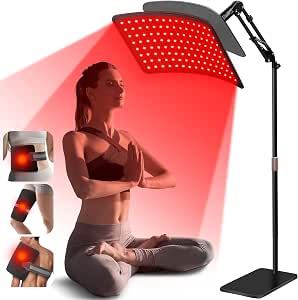 | Best for Flexible Positioning | Product type: Red light therapy lamp | Design: Detachable panel with adjustable stand and elastic strap | Working modes: 3 | VIEW LATEST PRICE | See Our Full Breakdown |
| LifePro LumiCure Handheld Red Light Therapy Wand |  | Best Compact Handheld Pick | Light wavelengths: 3 | Light type: Red and near-infrared | Portability: Handheld and lightweight | VIEW LATEST PRICE | See Our Full Breakdown |
| at-home red light therapy device | Wavelengths | LED count |
|---|---|---|
| Red Light Therapy Panel with A | 660nm red and 850nm near-infrared | — |
| Viconor Red and Near-Infrared | 660nm red and 850nm near-infrared | 120 |
| Morfone Red Light Therapy Pane | 660nm, 850nm, and 940nm | — |
| Bonodave Corded Red Light Ther | 660nm red and 850nm near-infrared | — |
| MitoMIN 2.0 Red Light Therapy | 660nm red and 850nm near-infrared | 60 |
| Lifepro Allevared Red Light Th | 660 nm red and 850 nm near-infrared | 105 triple-chip LEDs |
| BestQool BQ60 Red Light Therap | 660 nm red and 850 nm near-infrared | — |
| Red Light Therapy Panel with A | 660 nm red and 850 nm near-infrared | 150 |
| Viconor Red Light Therapy Lamp | 660 nm red and 850 nm near-infrared | 120 |
| Frovab Red and Infrared Light | 660 nm, 810 nm, and 980 nm | — |
| Red Light Therapy Wrap Belt wi | — | 105 |
| INTEO Red Light Therapy Mask f | — | 680 |
| Comfytemp Red Light Therapy Ma | 660 nm red and 850 nm near-infrared | 480 |
| INTEO Red Light Therapy Lamp f | — | — |
| LifePro LumiCure Handheld Red | — | Not specified |
More Details on Our Top Picks
Red Light Therapy Panel with Adjustable Stand, 660nm Red and 850nm Near-Infrared LEDs, 2-Pack
This two-panel set suits buyers who want more positioning options than a single compact lamp can offer. Each ultrathin panel combines 660nm red and 850nm near-infrared light, and its 180-degree stand and hanger support tabletop, floor, or suspended placement. Compared with the Viconor lamp, which has one curved panel intended for more focused coverage, this pair can be arranged around different body areas or set up in separate locations. That flexibility comes with a tradeoff: the listing gives no panel dimensions or light-output figures, so it is hard to judge coverage and compare performance before buying. It also does not specify a timer or intensity controls. I’d choose this set for adaptable placement, not for buyers who need detailed output data or clearly documented session controls.
Pros:- Includes two panels for more flexible placement than a single-panel device.
- Combines 660nm red and 850nm near-infrared LEDs.
- 180-degree adjustable stands support angled positioning.
- Hangers allow horizontal or vertical mounting.
Cons:- Panel dimensions are not provided, making coverage difficult to estimate.
- No light-output specifications are listed.
- The description does not specify a timer or intensity controls.
Best for: Households or individuals who want two red and near-infrared panels that can be positioned in different places or orientations.
Not ideal for: Buyers who need published panel dimensions, light-output measurements, a specified timer, or intensity controls before choosing a device.
- Quantity:2 panels
- Wavelengths:660nm red and 850nm near-infrared
- Stand adjustment:180 degrees
- Mounting:Stand and hanger
- Orientation:Horizontal or vertical
- Design:Ultrathin panels
Our verdict“Choose this two-panel set if adjustable placement matters more to you than published output data and documented session controls.”
Viconor Red and Near-Infrared Light Therapy Lamp with Stand
The Viconor is a more focused choice than the two-panel set in this roundup: its single curved panel has 120 LEDs and is designed to direct light toward a selected area rather than offer multiple panels around the body. It combines 660nm red and 850nm near-infrared light, while the included stand or hook and up-to-180-degree adjustment make it easier to position for face or body use. A 3 m power cord gives some reach around a home setup, though the lamp still needs to remain plugged in. The main compromise is the panel’s described small size, which limits how much area it can cover at once. Compared with the larger Morfone panel, this lamp is less suited to broader coverage, but may suit someone who values a portable, adjustable lamp over a larger panel with extra modes.
Pros:- Combines 660nm red and 850nm near-infrared LEDs.
- Curved panel is designed for focused positioning.
- Stand and hook offer different setup options.
- Angle and height can be adjusted up to 180 degrees.
Cons:- Small panel limits coverage at one time.
- Requires a power connection during use.
Best for: People seeking a portable, adjustable lamp for directing red and near-infrared light toward one face or body area at a time.
Not ideal for: Buyers who want broad body coverage in one session or a cordless device for use away from an outlet.
- LED count:120
- Wavelengths:660nm red and 850nm near-infrared
- Included accessories:Stand, hook, and 3m power cord
- Adjustment:Angle and height adjustment up to 180 degrees
- Panel shape:Curved
- Suggested use:15–30 minutes daily
Our verdict“Pick the Viconor if you want a portable lamp with flexible positioning for targeted sessions, rather than a larger coverage area.”
Morfone Red Light Therapy Panel with 660nm, 850nm, and 940nm Wavelengths
The Morfone earns its place for buyers who want more wavelength and session options than a basic two-wavelength panel provides. Its 200 LED beads use 660nm, 850nm, and 940nm wavelengths, with five modes that include continuous and pulse settings. The 16 × 8-inch panel is larger than the MitoMIN 2.0’s 12 × 9-inch face, though both remain targeted panels rather than full-body devices. An adjustable aluminum bracket rotates 180 degrees and changes height, making it easier to aim the light at different areas without changing the panel itself. Protective sunglasses are included, but the listing specifies 110V compatibility, so outlet requirements matter. Its extra wavelength and modes add choice, yet buyers seeking a simpler, independently verified output specification may prefer the MitoMIN 2.0, which lists third-party output testing.
Pros:- Combines 660nm, 850nm, and 940nm wavelengths.
- Offers five modes, including continuous and pulse settings.
- Height-adjustable aluminum bracket rotates 180 degrees.
- Protective sunglasses are included.
Cons:- The 16 × 8-inch panel may limit coverage per session.
- Listed as compatible with 110V outlets.
- Output measurements are not specified in the product data.
Best for: Home users who want a stand-mounted panel with three listed wavelengths, several light modes, and adjustable positioning.
Not ideal for: Buyers who need broad full-body coverage, require compatibility beyond 110V outlets, or prioritize independently verified output specifications.
- Wavelengths:660nm, 850nm, and 940nm
- LED beads:200
- Panel size:16 × 8 inches
- Modes:5, including continuous and pulse
- Bracket:Height-adjustable aluminum; 180-degree rotation
- Recommended use:10–30 minutes per session, 3–7 times per week
- Voltage compatibility:110V outlets
- Included accessory:Protective sunglasses
- Warranty:1-year quality assurance against manufacturing defects
Our verdict“Choose the Morfone if multiple wavelengths and modes matter more than a wider panel or published independent output verification.”
Bonodave Corded Red Light Therapy Pad with Elastic Strap, 660 nm Red and 850 nm Near-Infrared Lights
Unlike the stand-mounted Morfone and Viconor panels, the Bonodave is a flexible pad designed to strap around a body area. Its 16.1 × 7.9-inch surface combines 660nm red and 850nm near-infrared light, and the elastic strap makes it easier to keep the pad positioned without holding it in place. The USB controller adds a 10Hz pulse mode and 30-minute automatic shutoff, giving it more clearly specified session controls than the two-panel set. At 0.44 lb, the pad is light, but it remains corded and needs access to power; its dimensions also make it a targeted option rather than a way to cover a large area at once. I’d favor this format for hands-free placement on a smaller body region, while buyers wanting adjustable stand positioning should look at the Morfone instead.
Pros:- Elastic strap supports hands-free placement around different body areas.
- Combines 660nm red and 850nm near-infrared light.
- USB controller includes a 10Hz pulse mode.
- 30-minute automatic shutoff is specified.
Cons:- Corded design requires access to power during use.
- Pad dimensions may limit coverage of larger body areas.
Best for: People who want a lightweight pad that can be strapped around a specific body area and used with a timed session.
Not ideal for: Buyers who want cordless use, broad coverage from one device, or an adjustable stand for positioning a rigid panel.
- Product type:Corded red light therapy pad
- Wavelengths:660nm red and 850nm near-infrared
- Lamp beads:105
- Total light chips:315
- Pad dimensions:16.1 × 7.9 inches
- Elastic strap dimensions:35.2 × 4 inches
- Pulse mode:10Hz
- Timer:30-minute automatic shutoff
- Weight:0.44 lb
Our verdict“Choose the Bonodave if a strap-on, timed pad suits your routine better than a rigid, stand-mounted panel.”
MitoMIN 2.0 Red Light Therapy Panel
The MitoMIN 2.0 is the most specification-focused compact panel in this group. Its 60 LEDs combine 660nm red and 850nm near-infrared light, with separate red-only, near-infrared-only, and combined modes for choosing how the panel operates. The 12 × 9 × 3-inch housing is suited to targeted coverage, not treating a large area at once; the Morfone’s 16 × 8-inch panel is larger and adds a third listed wavelength and pulse mode. The MitoMIN’s distinction is that its irradiance and spectral output are independently verified, with electrical safety certification testing also listed. A digital timer and quiet fans add practical session controls. I’d choose it for compact use and documented testing, but skip it if your priority is covering more of the body per session.
Pros:- Offers red-only, near-infrared-only, and combined light modes.
- Independent testing covers irradiance and spectral output.
- Digital timer supports controlled sessions.
- Quiet fans and compact dimensions suit a home setup.
Cons:- Compact panel is intended for targeted rather than broad coverage.
- The product data does not list an adjustable stand or mounting system.
Best for: Buyers who want a compact panel for targeted areas and value independent verification of spectral and irradiance output.
Not ideal for: People seeking broad coverage from one session or wanting a larger panel with additional wavelengths and pulse modes.
- LED count:60
- Wavelengths:660nm red and 850nm near-infrared
- Dimensions:12 × 9 × 3 inches
- Modes:Red Only, Near Infrared Only, Both
- Timer:Digital control panel with timer
- Session energy:21,720 joules in 10 minutes
- Output testing:Independent irradiance and spectral output verification
- Safety testing:Electrical safety certification testing
- Cooling:Quiet fans
Our verdict“Pick the MitoMIN 2.0 for a compact, independently tested panel, but choose the Morfone if you want a larger face and more wavelength options.”
Lifepro Allevared Red Light Therapy Belt with 105 Triple-Chip LEDs
The Lifepro Allevared is the most practical pick here for targeting the waist, back, or legs without holding a device in place. Its flexible belt design stays close to the body, unlike the BestQool BQ60 panel, which needs to be positioned in front of the treatment area. The 105 triple-chip LEDs offer 660 nm red and 850 nm near-infrared, with separate or combined modes, so buyers can choose how to run a session. A built-in timer and automatic shutoff add convenience for routine use. The tradeoff is its reliance on USB power: the supplied details do not establish battery operation or runtime, so placement depends on a nearby compatible power source. It also covers a targeted area rather than offering the broader positioning options of a panel.
Pros:- Flexible, adjustable shape fits the waist, back, or legs
- Three modes offer red, near-infrared, or combined light
- Hands-free use with a 1–30-minute timer and automatic shutoff
- USB power supports use near a compatible power source
Cons:- Requires access to a compatible USB power source
- Battery capacity and runtime are not specified
- Belt format targets a smaller area at a time than a panel
Best for: People who want a hands-free, flexible device they can position around the waist, back, or legs while seated at home or at a desk.
Not ideal for: Buyers who need a cordless device or want to treat a broad area without repositioning a belt-style pad.
- LED count:105 triple-chip LEDs
- Wavelengths:660 nm red and 850 nm near-infrared
- Modes:Red, near-infrared, or combined
- Timer:1–30 minutes with automatic shutoff
- Power:USB-powered
- Design:Flexible, adjustable belt-style pad
- Intended placement:Waist, back, or legs
Our verdict“Choose the Lifepro Allevared if you want hands-free, close-fitting coverage for a specific body area and can use it near USB power.”
BestQool BQ60 Red Light Therapy Panel, 660nm Red and 850nm Near-Infrared, 105W
The BestQool BQ60 suits buyers who want a panel that can move between a stand-mounted position and a hanging setup. Its 660 nm red and 850 nm near-infrared modes can run separately or together, giving it more setup flexibility than the Lifepro Allevared belt, which is designed to sit against a targeted body area. The listed irradiance is 95.6 mW/cm² at 3 inches, a distance-specific figure that helps define the stated measurement but should not be treated as the output at every position. Touchscreen controls and a cooling system add operating convenience, while the included stand and hanging kit support different rooms or routines. The main compromise is that the panel’s dimensions are not provided, making it harder to judge coverage and storage needs before choosing it.
Pros:- Red, near-infrared, and combined light modes
- Adjustable U-shaped stand and hanging kit offer placement flexibility
- Touchscreen controls simplify operation
- Cooling system and flicker-free LEDs are designed for steady operation
Cons:- Irradiance is listed only at 3 inches, so output at other distances is unspecified
- Panel dimensions are not provided
- Requires positioning the panel rather than wearing it hands-free
Best for: Home users who want a movable panel with both stand and hanging options and are comfortable choosing a treatment distance.
Not ideal for: Buyers who need a known coverage area before purchase, want a wearable device, or cannot accommodate a panel setup.
- Model:BQ60
- Power:105 W
- Wavelengths:660 nm red and 850 nm near-infrared
- Irradiance:95.6 mW/cm² at 3 inches
- Light modes:Red, near-infrared, or both
- Stand and mounting:Adjustable U-shaped stand and included hanging kit
- Controls:Touchscreen
- LED and cooling features:Flicker-free LEDs and cooling system
Our verdict“Pick the BQ60 if you want a configurable home panel and can work around its unspecified dimensions and distance-dependent output details.”
Red Light Therapy Panel with Adjustable Stand, 660nm Red Light and 850nm Near-Infrared LEDs
This 150-LED panel is a fit for buyers who want to adjust the light’s height and angle without relying on a fixed tabletop position. Its flexible tube lets the panel point toward different areas, while reflecting cups are designed to focus light at the LEDs. Compared with the BestQool BQ60, whose stand and hanging kit support multiple mounting styles, this model emphasizes height and directional adjustment in a single stand-based setup. The manufacturer suggests 10–30-minute sessions, three to seven times a week; that schedule may suit someone who prefers a defined routine, but it is not a shortcut to broader coverage. Moving between body areas still means repositioning the panel. Assembly is required, and the provided details do not specify irradiance or panel dimensions, leaving output and coverage harder to gauge.
Pros:- 150 LEDs combine 660 nm red and 850 nm near-infrared
- Adjustable stand and flexible tube allow height and angle changes
- Reflecting cups are designed to focus light
- Suggested session duration and frequency are provided
Cons:- Assembly is required
- Panel must be repositioned to target different body areas
- Irradiance and panel dimensions are not specified
Best for: People who want a stand-mounted panel that can be aimed at different areas from varied heights and angles.
Not ideal for: Buyers who want a ready-to-use device, need published irradiance or dimensions, or prefer wearable coverage.
- LED count:150
- Wavelengths:660 nm red and 850 nm near-infrared
- Stand:Adjustable height with flexible tube
- Panel feature:Reflecting cups designed to focus light
- Suggested session duration:10–30 minutes
- Suggested frequency:3–7 times per week
- Setup:Assembly required
Our verdict“Choose this panel if adjustable height and aim matter more to you than quick setup or published coverage details.”
Viconor Red Light Therapy Lamp with Stand, 660nm Red and 850nm Infrared LEDs
The Viconor lamp is the compact choice for buyers who want a stand-supported or hangable light without committing to a larger panel setup. Its curved 120-LED face combines 660 nm red and 850 nm near-infrared, and the stand adjusts up to 180 degrees to help aim the light during home use. The included hook adds another placement option, though this is a smaller lamp rather than a broad-coverage panel like the BestQool BQ60. That makes it easier to fit into a home routine but means users may need to move it to address different areas. The power cord is 1.8 m long, so placement still depends on reaching an outlet. Buyers who need coverage dimensions or an irradiance figure will not find those details in the supplied specifications.
Pros:- Curved panel combines 660 nm red and 850 nm near-infrared LEDs
- Stand adjusts up to 180 degrees for aiming
- Can be used with the included stand or hanging hook
- Compact and lightweight design is suited to home use
Cons:- Small panel may cover only a limited area at once
- Requires a power connection and has a 1.8 m cord
- Irradiance and panel dimensions are not specified
Best for: People with limited space who want a small, aimable lamp for targeted use at home.
Not ideal for: Buyers seeking broad body coverage in one position, cordless operation, or stated irradiance and coverage measurements.
- LED count:120
- Wavelengths:660 nm red and 850 nm near-infrared
- LED configuration:Each light includes 1 red LED and 2 infrared LEDs
- Stand adjustment:Up to 180 degrees
- Power cord length:1.8 m
- Included accessories:Stand and hook
Our verdict“Choose the Viconor if a compact, positionable lamp suits your space better than a larger panel, and targeted coverage is enough.”
Frovab Red and Infrared Light Therapy Device, 660/810/980 nm
The Frovab handheld differs from the lineup’s belts and panels by putting the user in control of where the light is applied. Its rechargeable design and three wavelengths—660, 810, and 980 nm—make it the most wavelength-diverse option among these five, while four power levels and continuous or 10 Hz pulse modes provide more settings than the simpler Viconor lamp. The tradeoff is hands-on, targeted use: unlike the Lifepro belt, it does not wrap around a body area for hands-free sessions, and the supplied details do not state irradiance or battery runtime. The 980 nm light is not visible during operation, so the device’s visible glow does not represent every wavelength being emitted. Protective glasses, an adapter, and a charging cable are included.
Pros:- Three wavelengths: 660 nm, 810 nm, and 980 nm
- Four power levels and continuous or 10 Hz pulse modes
- Rechargeable handheld format supports use away from a fixed panel position
- Includes protective glasses, AC adapter, charging cable, and manual
Cons:- Handheld use requires aiming and holding the device over the target area
- Battery runtime and irradiance are not specified
- 980 nm light is not visible during operation
Best for: People who want a rechargeable, handheld device with multiple wavelengths and adjustable power and mode settings for targeted use.
Not ideal for: Buyers who want hands-free or broad-area treatment, need published irradiance or battery runtime, or prefer a simple device with few settings.
- Wavelengths:660 nm, 810 nm, and 980 nm
- LED configuration:16 × 660 nm, 4 × 810 nm, and 4 × 980 nm
- Power levels:25%, 50%, 75%, and 100%
- Working modes:Continuous wave and 10 Hz pulse wave
- Timer:1–60 minutes
- Weight:0.53 lb device weight; 1.59 lb listed item weight
- Power:Rechargeable; includes one lithium-ion battery
- Included accessories:AC adapter with charging cable, protective glasses, and user manual
Our verdict“Pick the Frovab if you value a rechargeable handheld format and adjustable settings more than hands-free or wide-area coverage.”
Red Light Therapy Wrap Belt with 105 LEDs
For buyers who want a flexible device they can position around the waist, back, or legs, this belt offers more adaptable contact than the Comfytemp Red Light Therapy Mat, which has a fixed 33 x 17-inch shape. Its 105 LED beads combine 660 nm red and 850 nm near-infrared light, with five intensity levels and six timer choices for adjusting a session. The TPU lining is designed to be easy to clean, while the adapter or compatible power-bank option gives it more placement freedom than a device that must stay plugged into its adapter. The tradeoffs are practical: power-bank use depends on having a compatible unit, and the belt fits waists only up to 50 inches. I’d choose it for targeted wraparound use, not broad, hands-free coverage.
Pros:- Flexible belt can conform to the waist, back, and legs.
- Combines 660 nm red and 850 nm near-infrared light.
- Five intensity levels and six timer settings allow session adjustments.
- TPU lining is designed for easy cleaning, and the belt supports adapter or compatible power-bank operation.
Cons:- Power-bank operation requires a compatible power bank, which is not specified in the product data.
- Waist fit is limited to 50 inches.
- Wraparound coverage is more targeted than the broad surface of the Comfytemp mat.
Best for: Buyers seeking a flexible wrap for the waist, back, or legs, with adjustable session settings and the option to use a compatible power bank.
Not ideal for: People with waists over 50 inches, or buyers who want a large mat-style treatment area without wrapping or repositioning a belt.
- LED count:105
- LED configuration:Each bead contains 2 × 660 nm red chips and 1 × 850 nm near-infrared chip
- Waist fit:Up to 50 inches
- Irradiance:40–84 mW/cm² across levels 1–5
- Working modes:3
- Intensity levels:5
- Timer settings:5, 10, 15, 20, 25, and 30 minutes
- Power and lining:Included adapter or compatible power bank; transparent TPU lining
Our verdict“Choose this belt if you want adjustable wraparound sessions on specific body areas and your waist fits within its stated limit.”
INTEO Red Light Therapy Mask for Face, Neck, and Chest with 4 Light Modes
The INTEO mask is the lineup’s most coverage-focused wearable for the upper body: it extends from the face to the neck and upper chest, unlike the LifePro LumiCure Wand, which targets smaller areas and must be held. Its 680 LEDs and four wavelength modes include red, infrared, amber, and blue, giving buyers more mode variety than devices limited to red and near-infrared light. Flexible silicone and adjustable straps are intended to help the mask sit across different areas, while its rechargeable battery allows cordless sessions. That convenience comes with charging between uses, and the product data does not establish that its eye-covering headbands provide complete eye protection. Buyers who want a simple red-and-near-infrared device may prefer a less elaborate format; this mask makes more sense for those specifically seeking wearable face, neck, and chest coverage.
Pros:- Extended mask design covers the face, neck, and upper chest.
- Offers 850 nm infrared, 660 nm red, 600 nm amber, and 460 nm blue modes.
- Rechargeable battery supports cordless sessions.
- Flexible silicone and adjustable straps allow fit adjustments.
Cons:- Requires charging between sessions.
- Eye-covering headbands are included, but complete eye protection is not specified.
- Covers a broader area than the handheld LifePro LumiCure Wand, but is less suited to targeting isolated spots.
Best for: People seeking a cordless wearable that covers the face, neck, and upper chest and want several light-mode options.
Not ideal for: Buyers who need explicitly specified complete eye protection, prefer a plug-in device, or want only red and near-infrared wavelengths.
- LED count:680
- Light wavelengths:850 nm infrared, 660 nm red, 600 nm amber, and 460 nm blue
- Coverage:Face, neck, and upper chest
- Material:Flexible silicone
- Battery:Rechargeable 2000 mAh
- Charging:USB Type-C
- Timer settings:10, 15, 20, 25, or 30 minutes
- Fit and eye covering:Adjustable straps and eye-covering headbands
Our verdict“Pick the INTEO mask if wearable, cordless coverage from face through upper chest matters more than a simple targeted wand.”
Comfytemp Red Light Therapy Mat, 33 x 17 in, 660 nm and 850 nm
The Comfytemp mat suits buyers who want a larger flat surface rather than a wearable wrap or handheld tool. At 33 x 17 inches with 480 LEDs, it can cover more area at once than the Red Light Therapy Wrap Belt with 105 LEDs, whose shape is better for wrapping around particular body areas. The mat pairs 660 nm red with 850 nm near-infrared light and offers four modes plus three adjustable levels, so it has meaningful settings without the belt’s five intensity levels and six timer choices. Setup is straightforward: connect the pad to its adapter and press the button. That simplicity also defines the main limitation—the mat needs an adapter connection during operation, so it is less convenient to move around than the cordless INTEO mask. I’d favor it for at-home sessions where a flat, broad pad is more useful than portability.
Pros:- 33 x 17-inch surface offers broader coverage than the wrap belt.
- Uses 480 LEDs with 660 nm red and 850 nm near-infrared wavelengths.
- Four light modes and three adjustable levels provide session options.
- Simple adapter connection and button operation.
Cons:- Requires connection to an adapter during operation.
- Fixed flat shape is less adaptable to the waist and limbs than the wrap belt.
- Three adjustable levels offer fewer intensity choices than the belt’s five.
Best for: At-home users who want a relatively broad, flat treatment surface and prefer simple button-operated setup over a wearable format.
Not ideal for: People who need cordless operation, a body-conforming wrap, or more intensity and timer adjustments than the listed three levels provide.
- Dimensions:33 × 17 inches
- LED count:480
- Wavelengths:660 nm red and 850 nm near-infrared
- Light modes:4
- Adjustable levels:3
- Operation:Connect the pad to its adapter and press the button
Our verdict“Choose this mat for broad, flat at-home coverage if being tethered to its adapter is acceptable.”
INTEO Red Light Therapy Lamp for Body and Face
This INTEO lamp is the most positionable option here: its detachable panel can be used with an elastic strap or placed on a stand with a 360-degree rotating head. That setup makes it more adaptable to different body positions than the fixed Comfytemp mat, while avoiding the mask-style fit of the other INTEO device. Five brightness levels, three working modes, and nine timer settings give buyers plenty of control over the lamp’s operation. The stand adjusts up to 46.5 inches and assembles without tools, but its maximum height may limit positioning for some setups. The panel’s detachable design adds flexibility, though the listed power and remote cord lengths still mean this is not a cordless choice like the rechargeable INTEO mask. I’d rank it for buyers who value adjustable placement over wearable coverage or a broad flat mat.
Pros:- Detachable panel can be used independently with the elastic strap or mounted on the stand.
- Rotating lamp head and adjustable stand support varied positioning.
- Three working modes, five brightness levels, and nine timer settings.
- Tool-free assembly and aviation-grade aluminum stand.
Cons:- Stand height is limited to 46.5 inches.
- Power and remote cords limit placement compared with the cordless INTEO mask.
- The described recommended routine calls for 15–25 minutes per session, three to five times weekly.
Best for: Home users who want to position a panel on a stand or strap it for targeted use, with multiple brightness and timer settings.
Not ideal for: Buyers who need cordless sessions, a large mat-like surface, or a stand that extends beyond 46.5 inches.
- Product type:Red light therapy lamp
- Design:Detachable panel with adjustable stand and elastic strap
- Working modes:3
- Brightness levels:5
- Timer settings:9
- Lamp head rotation:360°
- Stand height:Up to 46.5 inches
- Cord lengths:1.4 m power cord; 2.8 m remote cord; 4.2 m total working length
- Stand and assembly:Aviation-grade aluminum; tool-free assembly
Our verdict“Choose this lamp if flexible panel positioning and adjustable settings matter more to you than cordless use or mat-sized coverage.”
LifePro LumiCure Handheld Red Light Therapy Wand
The LifePro LumiCure is the smallest-format choice in this group, built for targeted, handheld sessions rather than broad body coverage. Its three red and near-infrared wavelengths distinguish it from the Comfytemp mat’s specified 660 nm and 850 nm pair, while its lightweight build, wrist strap, and zippered case make it easier to carry than either the mat or the stand-mounted INTEO lamp. Button control keeps operation uncomplicated. The tradeoff is that handheld treatment requires the user to hold and reposition the wand; it does not offer the wearable fit of the INTEO mask or the adjustable stand of the INTEO lamp. The product data also does not list exact wavelength values, LED count, or timer settings, limiting how closely buyers can compare its technical output. I’d choose it for portability and small treatment areas, not unattended or broad sessions.
Pros:- Handheld, lightweight design is easy to carry.
- Uses three wavelengths of red and near-infrared light.
- Includes a wrist strap and zippered carrying case.
- Simple button operation.
Cons:- Must be held and repositioned during sessions.
- Less suited to broad coverage than the Comfytemp mat or INTEO lamp.
- Product data does not specify exact wavelength values, LED count, or timer settings.
Best for: People who want a lightweight device for targeted red and near-infrared sessions at home or while traveling.
Not ideal for: Buyers seeking broad hands-free coverage, exact wavelength specifications, or a wearable or stand-mounted device.
- Light wavelengths:3
- Light type:Red and near-infrared
- Portability:Handheld and lightweight
- Included accessories:Wrist strap and zippered case
- Operation:Button control
- LED count:Not specified
Our verdict“Choose the LumiCure if portability and targeted handheld use are priorities, and skip it if you want broad hands-free coverage.”
How We Picked
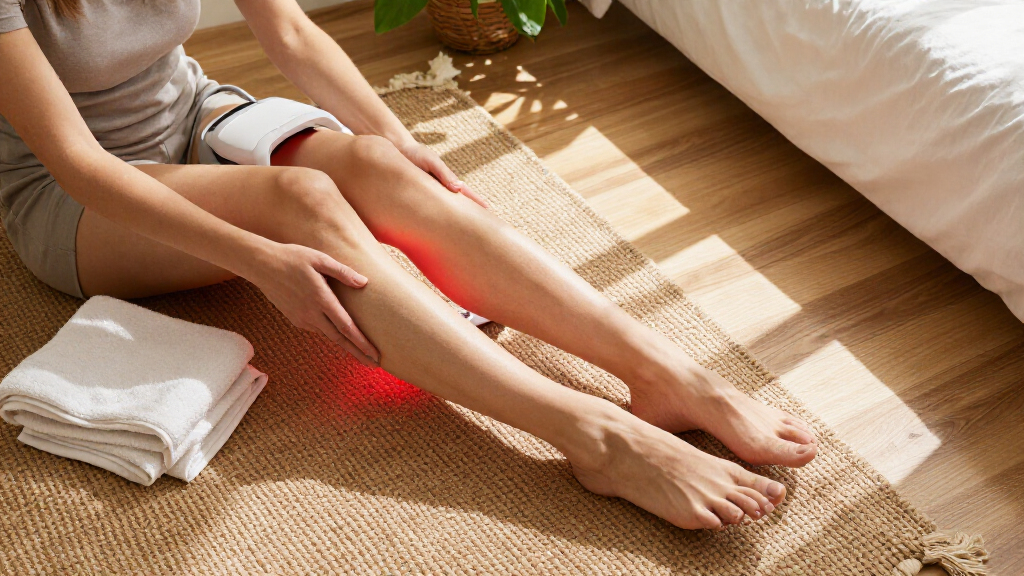
I compared the 15 devices on the factors that shape an at-home routine: treatment area, form factor, ease of positioning, portability, controls, and the clarity of available specifications. I gave weight to practical fit: a mat may cover more area, while a handheld wand can be directed precisely but requires more active handling. Wavelength listings were treated as product claims, not proof of performance; buyers should look for details such as irradiance at a stated distance, treatment guidance, and safety instructions.
The order reflects how broadly useful each format appears for home use, followed by more specialized options. Panel-style devices rank ahead of single-area tools when they offer a more adaptable setup, while compact and wearable products earn their place for buyers who value targeted use or easier storage. I also account for meaningful drawbacks, including space needs, limited coverage, hands-on positioning, and uncertainty when technical details are sparse. Because the supplied product information does not provide comparable output measurements for every device, the ranking focuses on stated features and buyer fit rather than unverified performance claims.
Factors to Consider When Choosing At-home Red Light Therapy Devices
Before choosing among at-home red light therapy devices, I’d start with the routine you can realistically maintain. A device’s shape and setup can matter as much as its wavelength list, especially when you have limited room or want to treat a particular area. These factors help separate useful differences from specifications that are difficult to compare.
Match the device shape to the area you want to treat
Start by mapping the target area, then compare it with the device’s actual lit surface. A panel or mat may cover more of the body at once, while a wand or belt focuses on a smaller region. Larger coverage can reduce repositioning, but it may require more floor or storage space. A compact device is easier to put away, though treating several areas may take more time. Don’t assume a product described as full body can illuminate your whole body from one position; check its dimensions and instructions. Choose for the area you expect to use regularly, rather than the largest coverage claim.
Look beyond wavelength labels
Many devices list red and near-infrared wavelengths, but those numbers alone do not show how much light reaches your skin. If the maker provides irradiance, check the measurement distance and method so you can interpret it alongside the recommended session distance. Compare treatment guidance and safety instructions too, since those affect how the device can be used at home. More listed wavelengths do not automatically mean better results or broader suitability. Be wary of comparing headline output figures when one product measures close to the LEDs and another measures farther away. When technical details are missing, treat that as a limit on what you can confidently compare.
Choose a setup you can repeat
Consider how you will position the device, keep the target area at the recommended distance, and manage the session. Stands can make a panel easier to place, while a wearable pad or belt may keep both hands free. A handheld wand offers control over a small spot but asks you to hold and move it. Check whether the controls are easy to reach and whether the device has a timer or clear session guidance. Think through where the power cord will run and whether the device can sit securely in your intended location. A simple routine you can follow is more useful than a feature set that complicates setup.
Balance coverage against storage and portability
A broad mat may be convenient during a session but awkward to store in a small home. A panel can be moved between rooms, although its stand and power supply add bulk. Wearable designs and wands are easier to put away, but their smaller treatment areas can mean more repositioning. Measure the space you plan to use and the storage spot before choosing a larger device. Check the listed dimensions, weight, cord length, and any stand requirements where those details are available. The best format is the one that fits both your room and your routine.
Check comfort, fit, and safety guidance
Wearable devices depend on how comfortably they fit the area, so review strap placement, dimensions, and care instructions before buying. Masks should sit securely without making it difficult to follow the maker’s eye protection guidance. For panels and lamps, confirm the recommended distance and whether protective eyewear is advised. Follow the manufacturer’s directions, and ask a clinician about use if you have a condition or take medication that affects light sensitivity. Avoid using a device in ways its instructions do not describe. Comfort and clear guidance help make home use more manageable.
Frequently Asked Questions
Should I choose a panel or a wearable device for home use?
I’d choose a panel if I want flexible positioning or expect to target different areas over time. A wearable pad or belt makes more sense when its shape matches one specific area and hands-free placement matters to me. Panels may need a stand or a stable surface, while wearables can be easier to store but cover less area. Compare dimensions and session instructions before deciding. The better choice is the one that fits the area and setup I can use consistently.
Do devices with more wavelengths offer a clear advantage?
Not from the wavelength list alone. A product naming extra wavelengths does not tell me how much light it delivers, how evenly it covers the treatment area, or what use its instructions support. I’d look for output measurements with a stated distance, operating guidance, and safety information before treating a longer list as a meaningful advantage. When those details are unavailable, I can compare format and coverage more reliably than claimed performance. Choose the device whose documented features match your intended use.
How can I tell whether a device will cover the area I want?
I’d check the illuminated dimensions and the maker’s recommended distance, then compare those with the area I plan to treat. A mat’s overall dimensions can be useful, but the active lighted area may be smaller. With a panel or lamp, the usable coverage can change with distance, so one size figure may not tell the whole story. Ask whether I’m comfortable repositioning the device or target area during a session. If the manufacturer does not explain coverage clearly, I would avoid relying on broad treatment-area claims.
Is a handheld wand a practical choice if I want to treat several areas?
A wand can direct light at small areas, which helps when precision and storage matter to me. Treating several larger areas may take repeated repositioning and more hands-on time than using a panel or mat. Before choosing one, I’d check its treatment instructions, grip, cord setup, and the size of the lighted head. A wand is most practical when my target areas are limited and I’m willing to guide it during use. For broader coverage, a larger format may fit the routine better.
What should I check before using a red light device near my face?
I’d read the product’s face-specific directions and eye safety guidance before using any device near my face. A face mask and a general panel may have different recommended distances and precautions, so I would not assume their instructions are interchangeable. Check whether the maker specifies protective eyewear, session duration, or areas to avoid. If I have a condition or use medication that may affect light sensitivity, I’d ask a clinician before starting. Clear instructions should be part of my buying decision, not an afterthought.
Conclusion
For a versatile panel format, I’d start with the MitoMIN 2.0 as the best overall pick, while the BestQool BQ60 is a strong choice for buyers who want a more compact panel. I’d treat the adjustable-stand two-pack as the best value candidate when having two units or broader positioning matters, though its setup needs more room. Beginners may prefer a straightforward lamp such as the Viconor, provided its instructions and fit match their needs. For specific needs, I’d choose the Comfytemp Mat for a laid-out format, the INTEO Mask for face-focused use, or the LifePro Wand for directing light at small areas. Compare dimensions, output details, and safety directions before settling on the device that best fits your home routine.