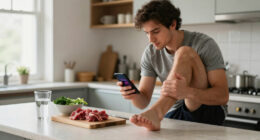
The best fitness equipment for older adults makes regular movement approachable while matching the user’s balance, mobility, space, and exercise goals. My best overall pick is the seated pedal exerciser, which supports low-impact arm or leg movement from a chair; the resistance-band set stands out for adaptable strength work, while the balance pad suits people focused on stability. The main tradeoffs are between seated support and standing movement, simple low-impact exercise and more demanding workouts, and compact storage versus a broader range of training. No single machine suits every ability level, so fit and safe setup matter as much as versatility. Read on for the full breakdown and guidance on choosing equipment that suits the person who will use it.

Get health and wellness essentials delivered free with Prime
- Fast, free delivery on millions of items
- Prime Video, Amazon Music and more included
- Member-only deals all year
Key Takeaways
- The seated pedal exerciser is the most adaptable starting point in this lineup because it can support arm or leg movement while the user remains seated.
- Resistance bands offer the broadest range of strength exercises in a small, low-clutter format, but users need to choose suitable resistance and anchor them securely.
- The balance pad is a focused stability tool, not a complete workout system; it makes the most sense when balance practice is a priority and support is close by.
- Standing options ask more of balance and coordination. The mini stepper and rebounder may be a poor match for someone who needs seated support or has unsteady footing.
- Compact equipment still needs a safe-use plan. A clear floor area, stable chair or handhold, and simple storage routine can matter more than adding workout features.
| Sunny Health & Fitness Compact Hydraulic Rower with 12-Level Resistance |  | Best for Low-Impact Full-Body Workouts | Brand: Sunny Health & Fitness | Model: SF-RW1205SMART | Resistance: 12 hydraulic levels | VIEW LATEST PRICE | See Our Full Breakdown |
| Sunny Health & Fitness Mini Stair Stepper with Resistance Bands |  | Best for Compact Standing Cardio | Brand: Sunny Health & Fitness | Model: 012-S | Resistance: Dual hydraulic cylinders | VIEW LATEST PRICE | See Our Full Breakdown |
| Resistance Bands Set for Physical Therapy, Rehab, Yoga, and Pilates |  | Best for Gentle, Adaptable Strength Work | Brand: Hshbxd | Material: Thermoplastic elastomer (TPE) | Number of bands: 5 | VIEW LATEST PRICE | See Our Full Breakdown |
| ACWARM HOME 40″ Mini Rebounder Trampoline for Adults, 440 Lbs Load, Green |  | Best for Supported, Low-Impact Bouncing | Brand: ACWARM HOME | Model: R03VC-AC-FT401-A-GN | Frame size: 40 in | VIEW LATEST PRICE | See Our Full Breakdown |
| GEONEO Under Desk Electric Elliptical Leg Exerciser |  | Best for Seated, Low-Effort Movement | Brand: GEONEO | Model: S205-Black | Resistance mechanism: Magnetic | VIEW LATEST PRICE | See Our Full Breakdown |
| Pedal Exerciser Bike for Seniors – Arm, Leg, Hand and Knee Exercise Equipment, Sitting Home Total Body Trainer |  | Best for Seated Full-Body Movement | Display: LCD | Power source: Pedal-powered, non-electric | Battery: 1 AAA included | VIEW LATEST PRICE | See Our Full Breakdown |
| ProsourceFit Exercise Balance Pad for Fitness and Stability Training |  | Best for Supported Balance Practice | Material: TPE foam | Dimensions: 15.5 × 12.5 × 2.5 inches | Weight: 12 ounces | VIEW LATEST PRICE | See Our Full Breakdown |
| fitness equipment for older adult | Brand | Model | Weight | Dimensions |
|---|---|---|---|---|
| Sunny Health & Fitness Compact | Sunny Health & Fitness | SF-RW1205SMART | 22.4 lb | — |
| Sunny Health & Fitness Mini St | Sunny Health & Fitness | 012-S | 15.2 lb | — |
| Resistance Bands Set for Physi | Hshbxd | — | — | 59 × 5.9 in per band |
| ACWARM HOME 40" Mini Rebounder | ACWARM HOME | R03VC-AC-FT401-A-GN | — | 40 × 40 × 60 in |
| GEONEO Under Desk Electric Ell | GEONEO | S205-Black | 11 lb | 15.75 × 13.98 × 6.3 in |
| Pedal Exerciser Bike for Senio | — | MDODM Sway Exerciser | — | — |
| ProsourceFit Exercise Balance | — | — | 12 ounces | 15.5 × 12.5 × 2.5 inches |
More Details on Our Top Picks
Sunny Health & Fitness Compact Hydraulic Rower with 12-Level Resistance
The compact frame and 12 hydraulic resistance levels make this a practical choice for older adults who want seated, full-body movement without dedicating a large area to equipment. At 22.4 pounds and 45.3 inches long, it is easier to move and store than the ACWARM HOME Mini Rebounder, though rowing does require a clear space for the stroke and repeated bending at the hips and knees. The digital display, phone holder, and SunnyFit app access can help make solo sessions easier to follow. Its main tradeoff is the hydraulic rowing feel, which differs from the smoother motion of traditional rowers. Compared with the Mini Stair Stepper, it involves more upper-body effort and a seated position, but it takes up more length.
Pros:- Low-impact rowing engages both the upper and lower body
- 12 hydraulic resistance levels allow workout intensity to be adjusted
- Lightweight 22.4-pound frame is easier to move than larger cardio equipment
- Phone holder and SunnyFit app access support guided or self-paced sessions
Cons:- Hydraulic resistance feels different from traditional rower resistance
- The 45.3-inch frame still needs dedicated floor space during use
- Warranty coverage is shorter for components than for the structural frame
Best for: Older adults who want a compact seated workout that combines leg drive, pulling, and adjustable resistance.
Not ideal for: People who need a very short-range movement, have difficulty bending or reaching, or expect the glide of a traditional rowing machine.
- Brand:Sunny Health & Fitness
- Model:SF-RW1205SMART
- Resistance:12 hydraulic levels
- Weight:22.4 lb
- Length:45.3 in
- Material:Alloy steel
- Warranty:3 years on structural frame; 180 days on other parts and components
- Included components:Rowing machine and user manual
Our verdict“Choose this rower for adjustable, seated full-body exercise in a compact footprint, provided its hydraulic feel suits you.”
Sunny Health & Fitness Mini Stair Stepper with Resistance Bands
For older adults comfortable standing during exercise, this mini stepper offers a small 15.7 × 12.4-inch footprint and arrives assembled, removing setup work from the purchase. Its adjustable step height changes how far you move with each step; it does not provide a stated set of resistance levels, so buyers should not confuse range adjustment with a predictable resistance dial. The included bands add light upper-body movement, unlike the Sunny Health & Fitness Compact Hydraulic Rower, which provides seated pulling and a more coordinated full-body motion. The LCD tracks time, steps, pace, and estimated calories, but the calorie figure is not a precise measure. At a stated 300-pound user limit, it offers a clear capacity reference, though it relies on balance and standing confidence more than the seated GEONEO exerciser.
Pros:- Arrives fully assembled for immediate setup
- Compact footprint fits small rooms
- Resistance bands add upper-body exercise options
- LCD displays time, step count, steps per minute, and estimated calories
Cons:- Standing on the stepper calls for more balance than the seated GEONEO exerciser
- Adjustable step height changes range of motion rather than a specified resistance level
- Calorie readings are estimates, not precise measurements
Best for: Older adults who can stand securely and want a ready-to-use, space-saving option for short stepping sessions.
Not ideal for: People with balance concerns who need seated exercise, or buyers seeking clearly defined resistance settings rather than adjustable step height.
- Brand:Sunny Health & Fitness
- Model:012-S
- Resistance:Dual hydraulic cylinders
- Footprint:Approximately 15.7 × 12.4 in
- Weight:15.2 lb
- Maximum user weight:300 lb
- Monitor:LCD tracks time, step count, steps per minute, and estimated calories
- Included accessories:2 resistance bands
- Warranty:1 year on structural frame; 180 days on other parts and components
Our verdict“Pick this stepper for compact standing cardio if you feel steady on your feet and prefer equipment that arrives ready to use.”
Resistance Bands Set for Physical Therapy, Rehab, Yoga, and Pilates
This set is the most adaptable option here for gentle strength work, stretching, and rehab-style movement: five bands range from 5 to 30 pounds, so a user can choose a lighter pull for mobility exercises or a stronger one as capacity allows. Unlike the Sunny Health & Fitness Compact Hydraulic Rower, the bands do not dictate a single exercise pattern or require a machine-sized floor area. They are also latex-free and powder-free, a useful distinction for people avoiding latex. The tradeoff is that bands require more setup and technique than seated pedal equipment; some exercises may call for tying a band into a loop, and there is no warranty listed. Their 59-inch length and low weight make them easy to carry, but users who need stable support or a guided motion may prefer the GEONEO exerciser or a balance pad instead.
Pros:- Five resistance levels offer options for varied movements and ability levels
- Latex-free and powder-free TPE construction
- Useful for physical therapy exercises, stretching, yoga, Pilates, and general workouts
- Lightweight and portable for home or travel
Cons:- Some exercises require tying a band into a loop
- No warranty is listed
- Resistance depends on how far the band is stretched, so it is less fixed than machine settings
Best for: Older adults seeking portable, low-impact resistance for prescribed exercises, stretching, or gradual strength training.
Not ideal for: People who want a seated, guided machine motion or need equipment that does not require positioning and handling a band.
- Brand:Hshbxd
- Material:Thermoplastic elastomer (TPE)
- Number of bands:5
- Resistance levels:5–30 lb per band
- Band resistances:Yellow: 5 lb; red: 10 lb; green: 15 lb; blue: 20 lb; gray: 30 lb
- Dimensions:59 × 5.9 in per band
- Latex-free:Yes
- Item weight:13.92 oz
Our verdict“Choose these bands for portable, adjustable resistance when you are comfortable setting up exercises and controlling the stretch.”
ACWARM HOME 40″ Mini Rebounder Trampoline for Adults, 440 Lbs Load, Green
The rebounder’s bungee-cord surface and adjustable handlebar aim to make light bouncing and balance practice gentler than higher-impact cardio. The handlebar can offer a steadying point, but it is not a substitute for assessing whether bouncing is appropriate for your balance or joint needs. Compared with the Sunny Health & Fitness Mini Stair Stepper, this option has a broader 40-inch exercise surface and folds for storage, while the stepper needs less floor area and arrives assembled. The rebounder requires assembly and its straps must be unfastened before each use, adding a repeated setup step. Capacity information also conflicts: the title cites a 440-pound load, while the product data lists a 360-pound maximum weight recommendation. I would rely on the lower stated recommendation unless the manufacturer clarifies the difference.
Pros:- Bungee system is designed for quieter, lower-impact movement
- Adjustable handlebar provides a handhold during exercise
- Folds to 15 × 30 inches for storage
- 40-inch frame offers more exercise surface than the mini stepper
Cons:- Product data conflicts on capacity: 440 lb in the title versus a 360 lb maximum weight recommendation
- Straps must be unfastened before each use
- Assembly is required despite being partly pre-assembled
Best for: Older adults who want a larger, handlebar-equipped surface for gentle bouncing or balance practice and have room to set it up.
Not ideal for: People who need a ready-to-use device, have concerns about standing balance or bouncing, or require an unambiguous user-weight limit.
- Brand:ACWARM HOME
- Model:R03VC-AC-FT401-A-GN
- Frame size:40 in
- Dimensions:40 × 40 × 60 in
- Load capacity:440 lb stated in title; maximum weight recommendation listed as 360 lb
- Materials:Polypropylene mat and alloy steel frame
- Handlebar height adjustment:30–40 in
- Folded dimensions:15 × 30 in
- Assembly:About 10 minutes; 60% pre-assembled
Our verdict“Consider this rebounder for gentle bouncing with a handhold if you can accommodate setup and confirm the applicable weight limit.”
GEONEO Under Desk Electric Elliptical Leg Exerciser
Among these picks, the GEONEO is the clearest fit for someone who wants seated leg movement without standing or coordinating a full-body exercise. It offers 12 speed settings, three preset automatic modes, and forward or reverse pedaling; a remote lets users change settings without reaching down to the unit. That convenience sets it apart from the Sunny Health & Fitness Mini Stair Stepper, which requires standing, and from the resistance bands, which depend on the user positioning and moving the band. Its 11-pound body and small footprint suit a home or office, but the unit needs a corded power connection. The product data also lists a 50-pound maximum weight recommendation, which refers to the exerciser’s stated limit, not a user-weight capacity, so buyers should verify fit and intended use before purchase.
Pros:- Seated pedaling avoids the standing balance demand of the mini stepper
- 12 speed settings and three automatic programs provide multiple operating choices
- Remote control reduces the need to reach down to the unit
- Compact 11-pound design fits under many desks
Cons:- Requires a corded electrical connection
- The stated 50-pound maximum weight recommendation is unusual and should be clarified with the seller
- Short 5.5-inch maximum stride limits the range of leg movement
Best for: Older adults who want seated, low-effort leg movement at a desk or chair and value remote-controlled settings.
Not ideal for: People seeking strength training, a standing balance challenge, cordless operation, or equipment with a clearly stated user-weight capacity.
- Brand:GEONEO
- Model:S205-Black
- Resistance mechanism:Magnetic
- Speed settings:12
- Automatic modes:P1, P2, P3
- Maximum stride length:5.5 in
- Dimensions:15.75 × 13.98 × 6.3 in
- Weight:11 lb
- Power and warranty:Corded electric; 1-year warranty
Our verdict“Choose the GEONEO for convenient seated leg movement if its power needs and listed equipment limit suit your setup.”
Pedal Exerciser Bike for Seniors – Arm, Leg, Hand and Knee Exercise Equipment, Sitting Home Total Body Trainer
For older adults who want to exercise while seated, this pedal-powered trainer combines arm and leg movement with side-to-side motion. Its LCD tracks time, distance, swing count, and estimated calories, giving users simple ways to follow a session without an electric motor or a complicated console. At 15.4 pounds, it is more substantial than a lightweight balance aid such as the ProsourceFit pad, but still designed for home use beside a chair. The main tradeoff is limited challenge: the description does not specify adjustable resistance, so stronger users may outgrow its workout. Assembly and a stable floor surface are also required. I’d choose it over the pad for repeated seated movement, but not as a substitute for supervised rehabilitation or a more demanding cardio machine.
Pros:- Combines arm and leg pedaling with side-to-side movement for seated activity.
- LCD displays time, distance, swing count, and calories burned.
- Pedal-powered design does not require an electrical outlet.
- Steel tubing and a stated maximum weight recommendation of 264 pounds.
Cons:- Limited resistance options may not provide enough challenge as strength improves.
- Requires assembly and a stable floor surface for use.
- The six-month warranty is relatively short.
Best for: Older adults who prefer seated, low-impact arm and leg exercise at home and want a basic display to track sessions.
Not ideal for: Fit users seeking progressively harder resistance, or anyone unable to assemble the unit or position it on a stable floor.
- Display:LCD
- Power source:Pedal-powered, non-electric
- Battery:1 AAA included
- Item weight:15.4 pounds
- Materials:ABS and iron
- Maximum weight recommendation:264 pounds
- Model:MDODM Sway Exerciser
- Warranty:6 months
Our verdict“Choose this for guided, seated arm-and-leg movement at home; skip it if adjustable resistance or a more demanding workout is the priority.”
ProsourceFit Exercise Balance Pad for Fitness and Stability Training
This lightweight foam pad adds a soft, unstable surface for balance, core, and stability exercises, while also serving for yoga, physical therapy, gardening, or seated use. At just 12 ounces, it is easier to move and store than the pedal exerciser, and it needs no setup or power. That simplicity is useful, but the instability is also the central limitation for older adults: beginners or anyone with a fall risk should start near a sturdy support and follow professional guidance rather than use it unassisted. Its 15.5 × 12.5-inch surface offers less room than a full-size mat, and it does not provide the repetitive seated cardio of the MDODM Sway Exerciser. I’d pick this for controlled balance practice and versatility, not for users who need a stable standing surface.
Pros:- Cushioned, non-slip surface supports balance and stability exercises.
- Lightweight at 12 ounces and easy to move between activities.
- Sweat-resistant TPE foam is suited to exercise and everyday uses.
- Can also serve for yoga, gardening, meditation, or as a cushion.
Cons:- The unstable surface may be difficult or unsafe for some users without support.
- Its compact dimensions limit movement compared with a full-size mat.
- Does not provide resistance or the sustained pedaling workout offered by the MDODM Sway Exerciser.
Best for: Older adults who can stand safely with support and want a portable surface for gentle balance, core, or physical-therapy exercises.
Not ideal for: People with significant balance limitations who may struggle on an unstable surface, or buyers wanting a broad exercise mat or seated cardio equipment.
- Material:TPE foam
- Dimensions:15.5 × 12.5 × 2.5 inches
- Weight:12 ounces
- Surface:Non-slip and sweat-resistant
- Primary uses:Balance, core strength, and stability training
- Additional uses:Yoga, physical therapy, gardening, meditation, and cushioning
Our verdict“Choose this for portable, supported balance practice if standing on an unstable surface is appropriate for you; otherwise, favor seated equipment.”
How We Picked
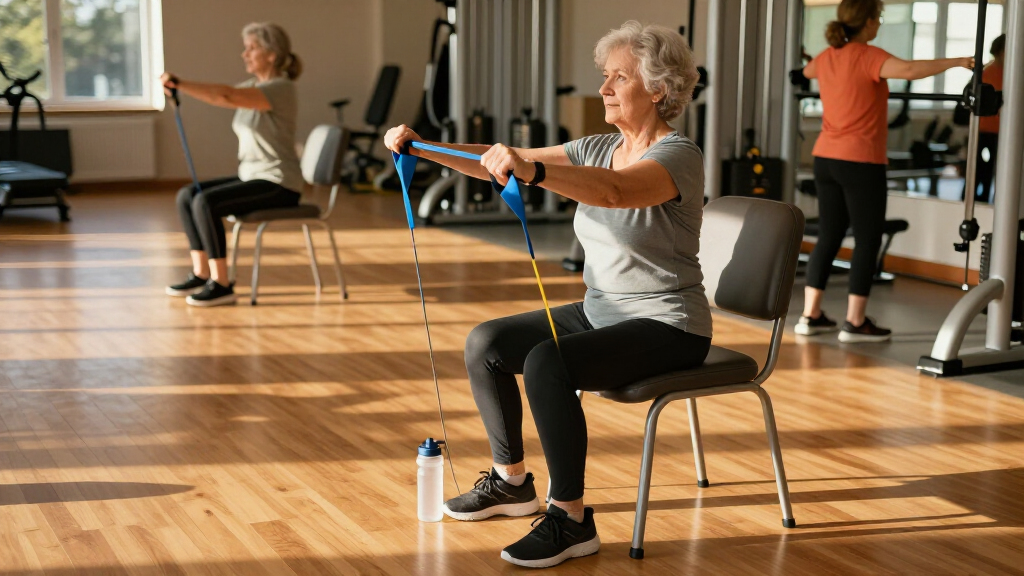
I ranked these seven products by how well their exercise style fits common older-adult needs: supported movement, manageable effort, ease of setup, and versatility. I also weighed footprint, storage, stability demands, and whether a product can serve a clear purpose without requiring a complicated routine. The ranking reflects practical fit across a range of users, not a claim that one type of exercise is right for everyone.
The seated pedal exerciser leads because it offers seated upper- and lower-body movement, while the resistance bands rank highly for their flexibility and compact storage. Products that rely on standing balance, such as the stepper and rebounder, can suit more confident users but have narrower fit. The rower and under-desk elliptical provide seated movement with different movement patterns, while the balance pad is ranked for its specific stability role rather than all-around exercise. Before buying, readers should check the manufacturer’s fit, assembly, and use guidance and ask a health professional about restrictions when needed.
| fitness equipment for older adult | Brand |
|---|---|
| Sunny Health & Fitness Compact | Sunny Health & Fitness |
| Sunny Health & Fitness Mini St | Sunny Health & Fitness |
| Resistance Bands Set for Physi | Hshbxd |
| ACWARM HOME 40" Mini Rebounder | ACWARM HOME |
| GEONEO Under Desk Electric Ell | GEONEO |
| Pedal Exerciser Bike for Senio | — |
| ProsourceFit Exercise Balance | — |
Factors to Consider When Choosing Best Fitness Equipment For Older Adults
Product features matter less than whether the equipment fits the user’s abilities, routine, and home. I recommend deciding how exercise will happen day to day before choosing a machine or accessory; that can prevent paying for functions that go unused or choosing a format that feels unsafe.
Match the Movement to Current Ability
Start with the position in which the user can move comfortably and steadily: seated, standing with support, or moving freely. A seated activity may be a better starting point for someone who tires quickly or feels unsure on their feet, while standing exercises may suit a person already comfortable with balance and coordination. Do not treat age alone as a measure of ability; mobility, pain, fatigue, and medical guidance vary widely. A common mistake is buying for an aspirational workout rather than one the person can do consistently today. If movement causes pain, dizziness, or unusual shortness of breath, stop and seek appropriate medical advice.
Check Stability and the Home Setup
Look at the floor surface, available clearance, nearby furniture, and whether the user can get on and off the equipment without awkward reaching. Small devices can still shift, tip, or create a trip hazard if placed on a loose rug or left in a walkway. Choose a stable chair when seated exercise calls for one, and keep a fixed handhold nearby for standing activity rather than relying on a movable table. Check the product’s stated user limits and setup instructions before use. A convenient location that is easy to access may support a steadier routine than equipment stored out of sight.
Choose the Right Kind of Resistance
Resistance can come from elastic bands, hydraulic action, pedals, or body movement, and each feels different to use. Adjustable resistance may allow a gradual start, but the lightest setting still needs to feel controlled and comfortable. Bands require careful inspection for wear and secure anchoring; stretching one toward the face or using a damaged band can create avoidable risk. Do not assume that more resistance means a better workout, especially when the goal is to build a habit or preserve comfortable movement. When strength training is the priority, a clinician or qualified fitness professional can help match exercise and resistance to the user.
Balance Versatility Against Simplicity
A multifunction product can support more kinds of movement, but extra options may also add setup steps and controls. A pedal exerciser that supports arm and leg activity may suit someone who wants one tool for varied seated movement, while a simple band set may be easier to store and use for selected exercises. Balance tools serve a narrower purpose and should not be mistaken for general strength or cardio equipment. Before paying for more features, ask which activities the user will actually repeat each week. Simple equipment that feels approachable can be more useful than a feature-rich device that is hard to position or understand.
Plan for Storage, Assembly, and Maintenance
Measure the intended workout and storage areas, including the space needed to sit down, step safely, or extend arms and legs. Folding or compact equipment can help in smaller homes, but moving a device between storage and use may be difficult for someone with limited strength or dexterity. Check whether assembly, resistance adjustments, and cleaning can be handled by the user or a helper. Inspect moving parts, bands, and contact surfaces according to the manufacturer’s instructions. A purchase that is easy to access and maintain is more likely to remain part of the routine.
Frequently Asked Questions
Which type of equipment is a sensible starting point for someone who has not exercised recently?
A seated option can be a practical place to start when standing balance or stamina is uncertain, but comfort and medical circumstances still matter. Begin with a short, gentle session and stop if symptoms feel unusual. Resistance bands can also work for a beginner if the exercises are taught clearly and the resistance is easy to control. Avoid starting with a rebounder or stepper solely because it looks engaging; those formats call for standing balance and coordination. If the person has health conditions or has been inactive after illness or injury, ask a clinician what activity is appropriate.
Is a pedal exerciser a replacement for walking?
No single piece of equipment fully replaces the movement, balance demands, and outdoor or indoor conditions of walking. A seated pedal device can offer low-impact leg movement when walking is difficult or when the user wants an indoor option, and some models also allow arm exercise. It does not provide the same weight-bearing practice as standing and walking. The right mix depends on mobility, goals, and clinical advice. Treat it as one possible way to move, not as proof that other activity is unnecessary.
Can balance equipment be used without someone nearby?
That depends on the user’s steadiness, the exercise, and the product instructions, so a balance pad should not automatically be treated as safe for solo practice. A soft or unstable surface can make a familiar stance harder, especially for someone with a fall history or limited balance. Start only with movements suitable for the person and place a fixed support within reach; a helper or professional may be appropriate. Do not use a movable chair or table as a handhold. If the user feels unsteady, choose supported practice rather than increasing the challenge.
What should I check before buying equipment for someone with limited hand strength?
Check whether the user can grip handles, fasten straps, adjust resistance, and move the equipment into position without pain or strain. Small controls and tightly secured bands can be frustrating even when the exercise itself is suitable. Look for a setup that a caregiver can assist with if needed, and confirm that the user can reach the controls from a stable seated or standing position. Ask the seller or manufacturer for precise operating and assembly details when the listing is unclear. A simpler design may be a better fit than a device with more functions.
When is it worth choosing a more versatile device instead of a compact accessory?
Paying for a broader range of exercise makes sense when the user has clear plans to use those modes and can manage the setup. A multifunction seated trainer may support several kinds of movement, while bands take less room and can cover varied exercises with the right instruction. Versatility is less useful if switching positions or adjusting parts interrupts the routine. Consider storage access, setup help, and the exercises the user can do comfortably before choosing. If only one activity is needed, a simpler tool may be the more practical fit.
Conclusion
For most people seeking one flexible place to begin, I recommend the seated pedal exerciser as best overall, with its arm-and-leg use offering more variety from a chair than a single-purpose tool. The resistance-band set is my best value and best compact pick for users who want adaptable strength work and can manage safe setup. For a beginner or someone who prefers supported movement, choose seated equipment such as the pedal exerciser or under-desk elliptical, based on the motion and controls that feel more approachable. I would reserve the mini rebounder and stair stepper for confident users comfortable with standing activity; neither is my default choice for someone with unsteady balance. The rower suits buyers seeking a more active seated workout, while the balance pad is best for a specific stability goal. Match the equipment to the user’s present abilities, available space, and professional guidance—not simply to the longest feature list.