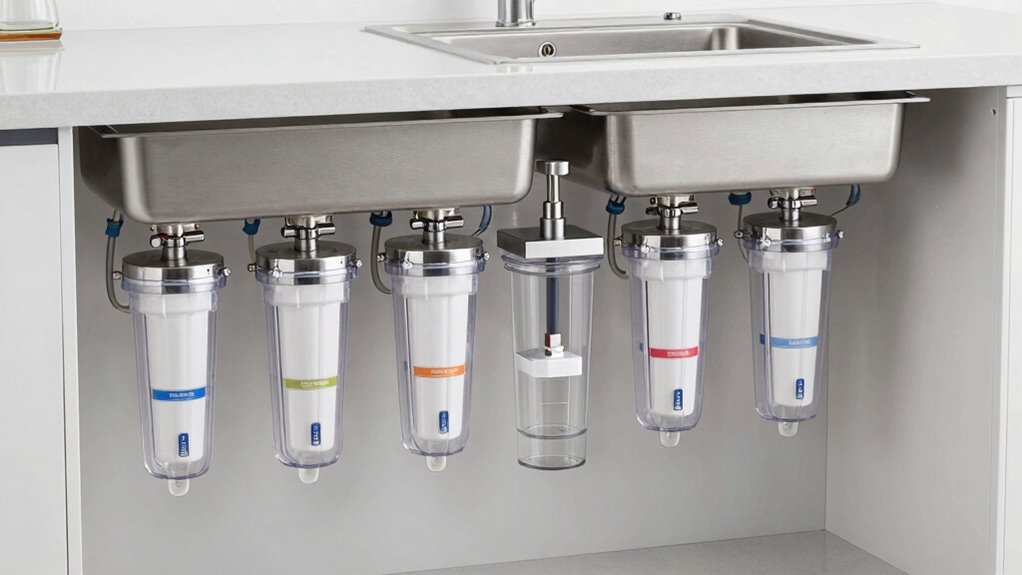

Searching for the best reverse osmosis systems under sink? The top pick for overall performance is the iSpring RCC7-BN, thanks to its reliable NSF certification and five-stage filtration. For those prioritizing mineral retention, the iSpring RCC7AK-BN offers a six-stage system with pH+ remineralization, while the Waterdrop G3P600 stands out with its tankless, high-capacity design. Buyers often face tradeoffs between filtration complexity, water output, and installation ease—more advanced systems may require extra maintenance, while simpler models might lack features like remineralization. Continue reading for a detailed breakdown to help you find the best fit for your home’s water needs.

Get health and wellness essentials delivered free — and shop member deals
- Fast, free delivery on millions of items
- Access to Prime Big Deal Days deals on October 6–7
- Prime Video, Amazon Music and more included
Key Takeaways
- The top models balance filtration quality, water output, and ease of installation, with the iSpring RCC7-BN leading overall.
- Remineralization features are common in higher-end units like the RCC7AK-BN, adding value for mineral-conscious consumers.
- Tankless systems like Waterdrop G3P600 offer higher capacity and convenience but often come at a premium price.
- Faucet design and finish can impact the overall aesthetic and installation process, influencing buyer satisfaction.
- Tradeoffs often involve choosing between higher capacity and more complex maintenance routines, especially in premium units.
| iSpring RCC7-BN NSF Certified 5-Stage Reverse Osmosis Water Filter with Brushed Nickel Faucet |  | Best Overall for High-Quality, Reliable Filtration | Capacity: 75 GPD | Certification: NSF/ANSI 58 | Faucet Material: Brushed Nickel | VIEW ON AMAZON | See Our Full Breakdown |
| iSpring RCC7AK-BN NSF Certified 6-Stage Reverse Osmosis System with pH+ Remineralization |  | Best for Mineral-Rich, Balanced Water | GPD: 75 | Stages: 6 | Certification: NSF/ANSI 58 | VIEW ON AMAZON | See Our Full Breakdown |
| Waterdrop G3P600 Tankless Reverse Osmosis Water Filter System, 600 GPD |  | Best for High Capacity and Space Saving | Flow Rate: 600 GPD | Filtration Stages: 8 | Certifications: NSF/ANSI 58, NSF/ANSI 372, NSF 42, FCC, EU Standards, UKCA Standards | VIEW ON AMAZON | See Our Full Breakdown |
| APEC Water ROES-PH75 6-Stage Under Sink Reverse Osmosis System with Alkaline Filter, 75 GPD |  | Best for Mineral-Enriched, Alkaline Water | Flow Rate: 75 GPD | Number of Stages: 6 | Max TDS: 2000 ppm | VIEW ON AMAZON | See Our Full Breakdown |
| iSpring RCC7AK-BLK 6-Stage Reverse Osmosis System with Alkaline Remineralization and Black Faucet |  | Best for Modern Style with Mineral Balance | Certification: NSF/ANSI 58 | Number of Stages: 6 | Remineralization: Yes | VIEW ON AMAZON | See Our Full Breakdown |
| APEC Water ROES-50 5-Stage Under Sink Reverse Osmosis System, 50 GPD |  | Best Overall for Reliable, High-Quality Water Purification | Flow Rate: 50 GPD | Filtration Stages: 5 | Includes: Filter set, faucet, water tank, installation kit | VIEW ON AMAZON | See Our Full Breakdown |
| reverse osmosis systems under sink | Certification | Flow Rate |
|---|---|---|
| iSpring RCC7-BN NSF Certified | NSF/ANSI 58 | 75 GPD |
| iSpring RCC7AK-BN NSF Certifie | NSF/ANSI 58 | — |
| Waterdrop G3P600 Tankless Reve | — | 600 GPD |
| APEC Water ROES-PH75 6-Stage U | WQA | 75 GPD |
| iSpring RCC7AK-BLK 6-Stage Rev | NSF/ANSI 58 | — |
| APEC Water ROES-50 5-Stage Und | — | 50 GPD |
More Details on Our Top Picks
iSpring RCC7-BN NSF Certified 5-Stage Reverse Osmosis Water Filter with Brushed Nickel Faucet
The iSpring RCC7-BN stands out as the best overall choice for those seeking a dependable, high-capacity under-sink reverse osmosis system. Its 5-stage filtration effectively removes over 1,000 contaminants, including lead and fluoride, outperforming some simpler models like the APEC ROES-PH75, which focuses more on mineral addition than contaminant removal. The system’s 75 GPD flow rate and certification to NSF/ANSI 58 assure both speed and safety. However, its need for under-sink space and the lack of built-in softening mean it requires some plumbing adjustments and maintenance. This unit suits households prioritizing purity and straightforward installation without extra features like remineralization.
Pros:- Effectively removes over 1,000 contaminants for pure drinking water
- High-capacity system with 75 GPD flow rate for family use
- Certified to NSF/ANSI 58 standards ensuring safety and quality
- Includes a stylish, lead-free faucet
Cons:- Requires sufficient under-sink space for installation
- Periodic filter replacements necessary, adding ongoing maintenance
- No built-in water softening or remineralization
Best for: Homeowners who need reliable, high-capacity filtration with straightforward installation.
Not ideal for: Small kitchens with limited under-sink space or those wanting integrated mineral balancing.
- Capacity:75 GPD
- Certification:NSF/ANSI 58
- Faucet Material:Brushed Nickel
- Filter Stages:5
- Flow Rate:75 GPD
Our verdict“Ideal for households seeking a dependable, straightforward filtration system with high capacity and proven safety standards.”
iSpring RCC7AK-BN NSF Certified 6-Stage Reverse Osmosis System with pH+ Remineralization
The iSpring RCC7AK-BN is tailored for those who want water that’s not only purified but also balanced with natural minerals. Its 6-stage process includes remineralization, which makes it more suitable than the RCC7-BN for health-conscious users who dislike flat-tasting water. The top-mounted design simplifies installation, and the transparent filter housing allows easy monitoring, unlike the RCC7-BN’s more enclosed setup. Still, the need for regular filter changes and some installation challenges make it less ideal for users seeking minimal maintenance or quick setup. This model fits best for households that want mineral-enhanced water without sacrificing purification quality.
Pros:- Remineralizes water for improved taste and health benefits
- Easy top-mounted installation from above
- Transparent housing for simple filter monitoring
- NSF/ANSI 58 certified for reliable contaminant reduction
Cons:- Requires regular filter replacements, adding maintenance
- Installation can be challenging for some DIYers
Best for: Health-conscious families who value mineral content and easy DIY setup.
Not ideal for: Users who prefer a low-maintenance system or have limited time for filter monitoring.
- GPD:75
- Stages:6
- Certification:NSF/ANSI 58
- Remineralization:Yes
- Installation:Top-mounted, easy DIY setup
Our verdict“Great for households prioritizing mineral-rich water and straightforward installation, with some ongoing maintenance considerations.”
Waterdrop G3P600 Tankless Reverse Osmosis Water Filter System, 600 GPD
The Waterdrop G3P600 redefines under-sink filtration with its tankless design and remarkable 600 GPD output, making it ideal for large families or commercial settings. Its 8-stage filtration, including certifications to NSF/ANSI standards, ensures comprehensive contaminant removal, comparable to systems like the RCC7AK-BN but with a focus on high volume. The smart display faucet offers real-time water quality insights, a feature absent in most traditional systems. The need for electricity and careful measurement of under-sink space for installation could be hurdles for some users. This system is best suited for those who need massive capacity without sacrificing space or wanting advanced monitoring features.
Pros:- Produces up to 600 gallons per day, ideal for high demand
- Tankless design saves space and simplifies installation
- Smart display faucet offers real-time water quality monitoring
- Low drain ratio reduces water waste
Cons:- Requires under-sink electrical connection, limiting placement options
- Installation needs precise measurement of space
- Price and availability may vary
Best for: Large households or small commercial setups needing high-volume, space-efficient filtration.
Not ideal for: Small kitchens or users without access to under-sink power sources or with limited cabinet space.
- Flow Rate:600 GPD
- Filtration Stages:8
- Certifications:NSF/ANSI 58, NSF/ANSI 372, NSF 42, FCC, EU Standards, UKCA Standards
- Tankless:Yes
- Drain Ratio:2:1
- Dimensions:18.12″L x 5.67″W x 17.72″H
Our verdict“Best suited for large households or businesses requiring high capacity and space-saving design with advanced monitoring features.”
APEC Water ROES-PH75 6-Stage Under Sink Reverse Osmosis System with Alkaline Filter, 75 GPD
The APEC ROES-PH75 is designed for those who want high-quality, mineral-rich water with alkalinity. Its 6-stage process filters out 99% of impurities similar to the RCC7-BN but adds calcium minerals to improve taste and pH balance, making it a strong candidate over systems like the RCC7AK-BN that focus on remineralization. Its 75 GPD capacity suits family use, but installation may involve plumbing adjustments, and complexity could deter less experienced users. This pick is ideal for those who prioritize water health benefits and taste over ease of setup.
Pros:- Removes up to 99% of impurities for safe, clean water
- Adds calcium minerals for better taste and alkalinity
- WQA certified for high quality and durability
- Reliable, long-lasting performance
Cons:- Installation may need plumbing adjustments
- Initial setup can be complex for beginners
Best for: Families seeking high purity and mineral enhancement in their drinking water.
Not ideal for: Users with limited plumbing skills or those looking for a simple, plug-and-play system.
- Flow Rate:75 GPD
- Number of Stages:6
- Max TDS:2000 ppm
- Feed Water Pressure:40-85 psi
- Certification:WQA
Our verdict“Excellent for those wanting high purity combined with mineral enhancement, with some installation effort required.”
iSpring RCC7AK-BLK 6-Stage Reverse Osmosis System with Alkaline Remineralization and Black Faucet
The iSpring RCC7AK-BLK combines high-level filtration with a stylish black aesthetic, appealing to modern kitchens. Its 6-stage process effectively reduces over 1,000 contaminants, similar to the RCC7AK-BN, but adds a sleek black faucet that complements contemporary décor. The remineralization feature enhances water taste and health, making it a strong alternative to the RCC7-BN for users wanting aesthetic appeal combined with mineral balance. However, it shares the same installation space requirements and lacks specified filter lifespan, which could be a concern for ongoing maintenance planning. This model is best for design-conscious homeowners who want reliable filtration with a modern look.
Pros:- Restores natural alkalinity and minerals for better flavor
- Reduces over 1,000 contaminants effectively
- Attractive black faucet complements modern kitchens
- Easy DIY installation with leak protection
Cons:- No specific filter lifespan or replacement intervals
- Requires under-sink space for installation
Best for: Design-savvy homeowners seeking effective contaminant removal with a stylish black finish.
Not ideal for: Users prioritizing simple installation or minimal ongoing maintenance without aesthetic considerations.
- Certification:NSF/ANSI 58
- Number of Stages:6
- Remineralization:Yes
- Contaminant reduction:up to 99%
- Included faucet:Black RO faucet
Our verdict“Perfect for style-conscious households wanting reliable filtration with a sleek, modern look, though ongoing maintenance details are less clear.”
APEC Water ROES-50 5-Stage Under Sink Reverse Osmosis System, 50 GPD
The APEC Water ROES-50 stands out as a versatile and dependable choice for households seeking consistent, high-quality drinking water. Its 5-stage filtration process effectively removes over 99.99% of common contaminants like arsenic, lead, fluoride, and microplastics, making it a solid alternative to the iSpring RCC7-BN, which, while also 5-stage, lacks the same level of filtration precision and ease of maintenance. The ROES-50’s quick-connect fittings simplify DIY installation, a major plus for those who want to set up without professional help. However, its filter replacement schedule can vary between 6 to 24 months depending on water quality, which might require more attention than some users expect. Additionally, its size may pose challenges in very tight under-sink spaces, and overkill for households with minimal water needs. Compared to models with higher GPD, like the Waterdrop G3P600, the ROES-50 offers sufficient capacity for typical families but not for high-demand settings.
Pros:- High removal efficiency of over 99.99% of common contaminants
- Easy DIY installation with quick-connect fittings
- Complete setup kit included for quick setup
- Reliable performance with proven 5-stage filtration
Cons:- Filter replacement interval can range widely, requiring user monitoring
- Requires sufficient space under the sink for installation
- Potentially overpowered for households with very low water consumption
Best for: Families who prioritize reliable removal of a wide range of contaminants and prefer a straightforward, DIY-friendly setup.
Not ideal for: Homes with very limited under-sink space or households with extremely low water usage, where its size and capacity might be unnecessary.
- Flow Rate:50 GPD
- Filtration Stages:5
- Includes:Filter set, faucet, water tank, installation kit
- Replacement Interval:6-24 months
Our verdict“This system makes the most sense for families seeking a dependable, straightforward reverse osmosis solution with excellent filtration performance.”

How We Picked
Products were evaluated based on filtration performance, ease of installation, build quality, water output, and value for the price. We prioritized NSF certification to ensure safety and reliability, while also considering user-friendly features that aid maintenance and setup. Each system was assessed for versatility—whether it suits various water qualities—and for its ability to provide clean, great-tasting water consistently. The ranking reflects a balance of these factors, aiming to recommend options suitable for different user needs—from beginners to advanced homeowners.| reverse osmosis systems under sink | Certification |
|---|---|
| iSpring RCC7-BN NSF Certified | NSF/ANSI 58 |
| iSpring RCC7AK-BN NSF Certifie | NSF/ANSI 58 |
| Waterdrop G3P600 Tankless Reve | — |
| APEC Water ROES-PH75 6-Stage U | WQA |
| iSpring RCC7AK-BLK 6-Stage Rev | NSF/ANSI 58 |
| APEC Water ROES-50 5-Stage Und | — |
Factors to Consider When Choosing Reverse Osmosis Systems Under Sink
Choosing the right reverse osmosis under sink system requires considering several key factors that impact performance, maintenance, and cost. Understanding these considerations helps ensure you select a system that aligns with your water quality, household size, and budget. Avoiding common pitfalls, such as overestimating capacity or ignoring filter replacement costs, can save time and money in the long run.Filtration Capacity and Water Output
Assess your household’s daily water consumption to determine the needed output. Systems like the Waterdrop G3P600 provide high GPD (gallons per day), suitable for larger families or high-demand households. Lower-capacity units like the APEC ROES-50 may be more appropriate for smaller households or those with less frequent water needs. Choosing a system with inadequate capacity can lead to frequent filter changes or slower water flow, while overshooting your needs might mean paying for features you won’t use.
Number of Filtration Stages and Features
More filtration stages typically mean cleaner water, with added benefits like pH balancing or remineralization. A 6-stage system, such as the RCC7AK-BN, offers enhanced mineral retention, which can improve taste and health benefits. However, additional stages can also increase maintenance complexity and cost. Decide whether these features are worth the extra expense based on your water quality and health priorities.
Ease of Installation and Maintenance
Look for systems with clear instructions, straightforward connections, and readily available replacement filters. Tankless models like Waterdrop G3P600 simplify installation and reduce space requirements, but may require more frequent filter changes. Conversely, traditional systems with tanks can be easier to service but take up more space. Consider your DIY comfort level and whether professional installation is feasible or needed.
Build Quality and Certification
Prioritize systems with NSF or ANSI certification, which verify safety and filtration efficacy. Well-built units with durable components tend to last longer and require fewer repairs. Cheaper models lacking certification might save money upfront but risk subpar filtration or potential health concerns. Balancing quality and budget is key to avoiding premature replacements or water quality issues.
Cost of Filters and Long-Term Value
Factor in the recurring expense of replacement filters, which can vary widely. Some systems have longer-lasting filters, reducing ongoing costs, while others might require frequent changes. A system with a higher upfront price may offer lower maintenance costs over time, providing better value for those planning for long-term use. Don’t overlook the total cost of ownership when making your decision.
Frequently Asked Questions
How often do I need to replace the filters in a reverse osmosis system?
Most reverse osmosis systems require filter replacements every 6 to 12 months, depending on water quality and usage. Pre-filters and carbon blocks often need more frequent changes, while the RO membrane may last 2-3 years. Regular maintenance ensures optimal water quality and prolongs system lifespan. Always refer to the manufacturer’s guidelines for specific intervals and replacement parts.
Will a reverse osmosis system remove beneficial minerals from my water?
Standard RO systems do remove many minerals, which can affect taste and health benefits. However, models with remineralization features, like the RCC7AK-BN, add minerals back into the water, balancing purity with health benefits. If mineral content is a concern, consider systems with this feature or plan to supplement your water intake accordingly.
Is it difficult to install a reverse osmosis system myself?
Many under sink RO systems are designed for DIY installation, with detailed instructions and all necessary parts included. While some models are straightforward, others may require basic plumbing skills or tools. Reviewing installation videos and manufacturer guidance can help, but if plumbing is unfamiliar, professional installation might be worth considering to ensure proper setup and leak prevention.
Can I connect a reverse osmosis system to my refrigerator or ice maker?
Yes, many systems can be connected to additional outlets for your refrigerator or ice maker, often via a dedicated line or adapter. This allows you to enjoy filtered water for all appliances without multiple filters. Be sure to choose a system with sufficient capacity and compatible fittings if you plan to expand its use beyond the sink. Professional installation can help ensure proper plumbing and flow rates.
What should I do if my reverse osmosis system’s water flow slows down?
A decrease in flow rate is often caused by clogged filters or a fouled membrane. Replacing the pre-filters and flushing the system can typically restore flow. If problems persist, the membrane might need replacement, or there could be a plumbing issue. Regular maintenance and timely filter changes are key to maintaining consistent water flow and quality.
Conclusion
For most households seeking a reliable and straightforward solution, the iSpring RCC7-BN offers excellent overall value with dependable filtration and easy setup. Those eager for enhanced mineral content and pH balance might prefer the iSpring RCC7AK-BN. If capacity and space-saving design are priorities, the Waterdrop G3P600 is a smart choice, despite a higher price point. Beginners should lean towards systems with clear instructions and minimal maintenance, while households with high water demands or specific health concerns may benefit from premium models with extra features and durability.
Fall Picks
fall essentials
As an affiliate, we earn on qualifying purchases.