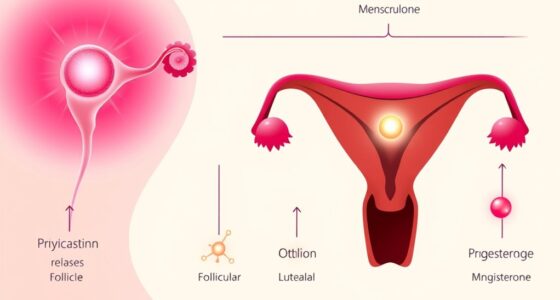

Menopause brings hormonal changes that cause hot flashes, night sweats, sleep issues, and mood swings. To manage symptoms, consider treatments like hormone therapy, and adopt lifestyle tips such as exercising regularly, eating a balanced diet rich in calcium and vitamin D, and maintaining good sleep habits. Staying proactive and informed helps ease this progression. If you want to learn effective strategies and ways to stay healthy, there’s more you can explore below.
Key Takeaways
- Menopause causes hormonal shifts leading to hot flashes, night sweats, sleep disturbances, and mood changes.
- Treatments include hormone therapy, medications, and natural remedies to manage symptoms effectively.
- Lifestyle tips like regular exercise, balanced diet, and stress reduction support overall health during menopause.
- Bone health can be preserved through weight-bearing exercises, calcium, and vitamin D intake.
- Regular medical check-ups help monitor symptoms and prevent long-term health issues.

Menopause marks a significant shift in your life, signaling the end of your reproductive years. During this time, your body goes through many changes, primarily due to hormonal fluctuations. These fluctuations, especially in estrogen and progesterone levels, can lead to a variety of symptoms such as hot flashes, night sweats, mood swings, and sleep disturbances. Understanding these changes can help you better manage them. One critical aspect often affected during menopause is your bone health. Estrogen plays a crucial role in maintaining bone density, so when its levels drop, your bones become more vulnerable to thinning and fractures. This increase in bone loss can lead to osteoporosis if not addressed proactively. To support your bone health, it’s essential to incorporate weight-bearing exercises, such as walking or strength training, into your routine. Additionally, consuming foods rich in calcium and vitamin D can help preserve bone density. Sometimes, your doctor might recommend supplements or medications to prevent further bone loss, especially if you’re at higher risk for osteoporosis. Incorporating nutrition strategies can further enhance your bone health and overall well-being.
Beyond bone health, hormonal fluctuations also influence your emotional well-being. You might notice increased anxiety, irritability, or feelings of sadness. These emotional changes are common and often linked to the same hormonal shifts causing physical symptoms. It’s important to recognize that these feelings are temporary and manageable. Practicing mindfulness, engaging in regular physical activity, and seeking support from friends, family, or mental health professionals can make a significant difference. Sleep disturbances are another common challenge. Hormonal changes can disrupt your sleep cycle, leading to fatigue and irritability during the day. Establishing a relaxing bedtime routine, avoiding caffeine late in the day, and maintaining a consistent sleep schedule can help improve your sleep quality.
Menopause also impacts your skin, hair, and urinary health, but focusing on your overall wellness can ease many symptoms. Staying active, eating a balanced diet, and avoiding smoking and excessive alcohol can positively influence how you feel during this transition. Remember, menopause is a natural phase, and while it brings changes, it also offers an opportunity to focus on your health and well-being. Regular check-ups with your healthcare provider can help you stay on top of symptoms and implement strategies to maintain your health. With the right lifestyle adjustments and support, you can navigate menopause confidently and maintain a vibrant, healthy life beyond it.
Top picks for "menopause symptom treatment"
Open Amazon search results for this keyword.
As an affiliate, we earn on qualifying purchases.
Frequently Asked Questions
Can Menopause Affect My Mental Health Long-Term?
Menopause can impact your mental health long-term by causing mental health challenges like mood swings, anxiety, or depression. These changes may affect your emotional well-being even after symptoms subside. You might notice lasting effects, especially if you experience severe symptoms or lack support. Staying proactive with self-care, seeking help, and maintaining a healthy lifestyle can help protect your emotional well-being during and after menopause.
Are There Natural Remedies for Severe Menopause Symptoms?
Yes, you can try natural remedies for severe menopause symptoms. Herbal supplements like black cohosh, red clover, and evening primrose oil may help reduce hot flashes and mood swings. Additionally, making dietary adjustments—such as increasing calcium and vitamin D intake, eating soy-based products, and reducing caffeine—can support your overall well-being. Always consult your healthcare provider before starting any new herbal supplements or major dietary changes.
How Does Menopause Impact Bone Health Over Time?
Menopause increases your osteoporosis risk because declining estrogen levels weaken your bones over time. To protect your bone health, you should prioritize adequate calcium intake and include weight-bearing exercises in your routine. Maintaining a balanced diet rich in vitamin D also helps your body absorb calcium more effectively. Regular check-ups and bone density tests will help monitor your bone health and catch issues early before they become severe.
Is It Safe to Exercise During Menopause?
Yes, it’s safe to exercise during menopause when you follow proper exercise safety guidelines. You should start slowly, include warm-ups and cool-downs, and listen to your body. Menopausal activity like walking, swimming, or yoga can boost your mood, improve bone health, and reduce symptoms. Always consult your healthcare provider before beginning a new routine to guarantee it’s suitable for your individual needs and to prevent injury.
What Are the Latest Advancements in Menopause Hormone Therapy?
Did you know that 80% of women find relief with personalized menopause hormone therapy? Recent advancements focus on optimizing hormone delivery methods, like bioidentical hormones and transdermal patches, to improve safety and effectiveness. Researchers are also tailoring treatments to individual needs, ensuring you get the right balance. These innovations aim to make menopause management safer and more effective, helping you maintain quality of life during this shift.
Conclusion
Think of menopause as a new chapter in your life’s book—sometimes cloudy, sometimes clear, but always full of possibilities. By recognizing symptoms, exploring treatments, and embracing healthy lifestyle tips, you can navigate this progression with confidence. Remember, you’re the author of your story, and this phase is just a turning point—an opportunity to rewrite your narrative with strength and resilience. Embrace the journey ahead and know you’re not alone in this transition.