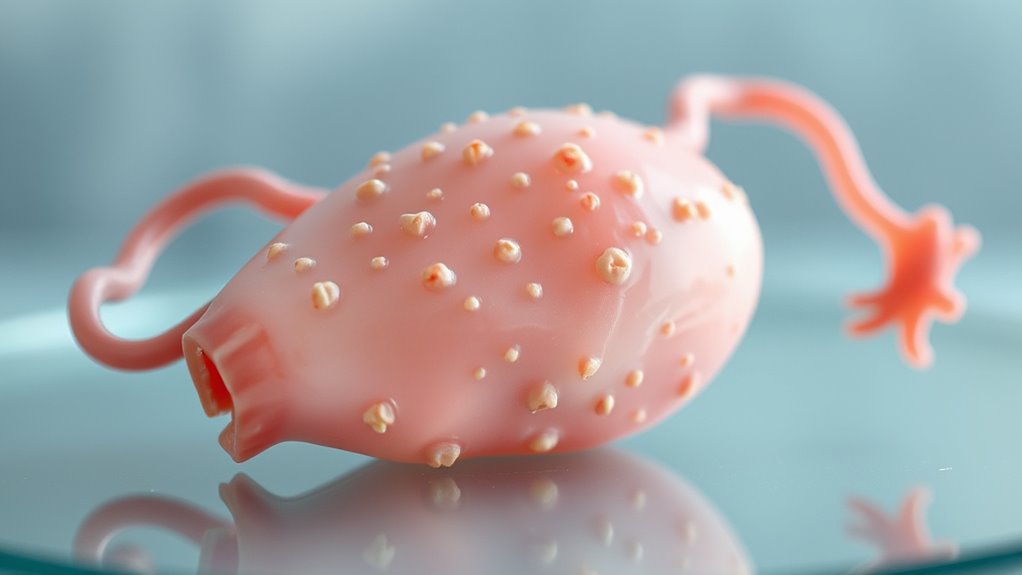

Polycystic Ovary Syndrome (PCOS) is a common hormonal disorder that affects your ovaries, leading to irregular periods, weight gain, acne, and excess hair. The underlying issue is a hormonal imbalance, especially elevated androgens, which causes many symptoms. Managing PCOS involves lifestyle changes like eating a balanced diet, exercising regularly, and reducing stress to regulate hormones. Keep exploring to discover more ways to support your health and stay balanced.
Key Takeaways
- PCOS is a hormonal disorder affecting ovary function, leading to irregular periods, weight gain, and excess hair growth.
- Elevated androgens cause many symptoms like acne and hirsutism, highlighting the role of hormonal imbalance.
- Lifestyle changes, including a balanced diet and regular exercise, are essential for managing symptoms and restoring hormonal health.
- Managing stress, prioritizing quality sleep, and weight control can significantly improve PCOS symptoms.
- Monitoring progress with healthcare professionals and combining lifestyle modifications with medical guidance optimizes management.
Polycystic Ovary Syndrome (PCOS) is a common hormonal disorder that affects people with ovaries, often disrupting menstrual cycles and causing symptoms like weight gain, acne, and excessive hair growth. Understanding the role of hormonal imbalance is key to managing PCOS effectively. When your hormones are out of sync, it can lead to increased levels of androgens, which contribute to many of the symptoms you’re experiencing. Recognizing that hormonal fluctuations are at the heart of PCOS helps you see why certain treatments and lifestyle changes can make a difference.
PCOS is a hormonal disorder causing menstrual irregularities, weight gain, acne, and excess hair.
One of the first steps you can take to manage hormonal imbalance is adopting specific lifestyle modifications. These adjustments aren’t just about diet and exercise—they’re about creating habits that help regulate your hormones naturally. For example, maintaining a balanced diet that’s rich in whole foods, fiber, and healthy fats can help stabilize blood sugar levels, which in turn supports hormonal balance. Avoiding processed foods and sugary snacks is essential because they can cause insulin spikes, exacerbating hormonal disruptions. Incorporating regular physical activity is equally important, as exercise helps improve insulin sensitivity and promotes weight management, both of which play a considerable role in reducing symptoms.
Lifestyle modifications also include managing stress, which has a direct impact on hormone production. Chronic stress can increase cortisol levels, further throwing your hormonal balance off course. Practices like yoga, meditation, or deep breathing exercises can help you keep stress levels in check. Additionally, getting enough quality sleep supports overall hormone health and can reduce symptoms like irregular periods and acne. It’s also beneficial to educate yourself about the hormonal imbalances involved in PCOS, as understanding the underlying causes can empower you to make more informed decisions about your health.
It’s also indispensable to monitor your weight, as even modest weight loss can markedly improve hormone levels and reduce symptoms. Combining a healthy diet with consistent exercise creates a powerful synergy that can help restore balance. You might find that working with a healthcare professional or a registered dietitian can give you tailored guidance suited to your specific needs. They can help you set realistic goals and track your progress.
Top picks for "polycystic ovary syndrome"
Open Amazon search results for this keyword.
As an affiliate, we earn on qualifying purchases.
Frequently Asked Questions
Can PCOS Affect Mental Health and Cause Depression?
Yes, PCOS can affect your mental health and cause depression. The hormonal imbalances and physical symptoms may lead to emotional struggles, impacting your overall well-being. You might experience mood swings, anxiety, or feelings of frustration. It’s important to recognize these signs and seek support, as managing your mental health is vital for maintaining your emotional well-being. Don’t hesitate to talk to a healthcare professional for guidance and support.
Are There Natural Remedies to Manage PCOS Symptoms?
Yes, you can try natural remedies to manage PCOS symptoms. Herbal remedies like spearmint tea and cinnamon may help regulate hormones, while dietary supplements such as inositol and vitamin D support insulin sensitivity. Incorporating a balanced diet, regular exercise, and stress reduction techniques also make a difference. Always consult your healthcare provider before starting any new herbal remedies or supplements to guarantee safety and effectiveness.
How Does PCOS Impact Long-Term Fertility Prospects?
Your long-term fertility prospects can be affected by PCOS due to hormonal imbalance and ovarian health issues. The hormonal imbalance may lead to irregular ovulation or anovulation, making conception more challenging. However, with proper management, such as lifestyle changes and medical treatments, you can improve your ovarian health and increase your chances of conception. Early intervention is key to maintaining fertility and minimizing potential complications over time.
What Are the Latest Advancements in PCOS Treatment Options?
Recent advancements in PCOS treatment include innovative hormonal therapies that better regulate your cycles and reduce symptoms. Genetic research is also uncovering new insights, leading to personalized approaches tailored to your genetics. These breakthroughs enable more effective management, improving your quality of life and fertility prospects. Staying informed about these developments helps you explore options with your healthcare provider, ensuring you receive the most up-to-date and targeted treatments available.
Is There a Link Between PCOS and Other Metabolic Disorders?
Think of PCOS as a tangled web connecting your body’s systems. Yes, it’s linked to metabolic disorders like insulin resistance and weight management issues. These connections act like pathways, where insulin resistance often fuels weight gain and hormonal imbalance. Managing insulin levels through diet and exercise can help untangle this web, easing symptoms and reducing risks of additional metabolic problems. Staying proactive helps keep your health in harmony.
Conclusion
Understanding and managing PCOS might feel overwhelming at times, but you’re not alone in this journey. With the right lifestyle changes, medical support, and self-care, you can take control of your health and symptoms. Remember, each step you take brings you closer to feeling better and more confident. So, why not start today? Your future self will thank you for the effort you put in now to live a healthier, happier life.