
TL;DR
Lagos communities are independently supplying water to millions of residents amid government neglect. This grassroots effort highlights resilience but also exposes ongoing infrastructure challenges.
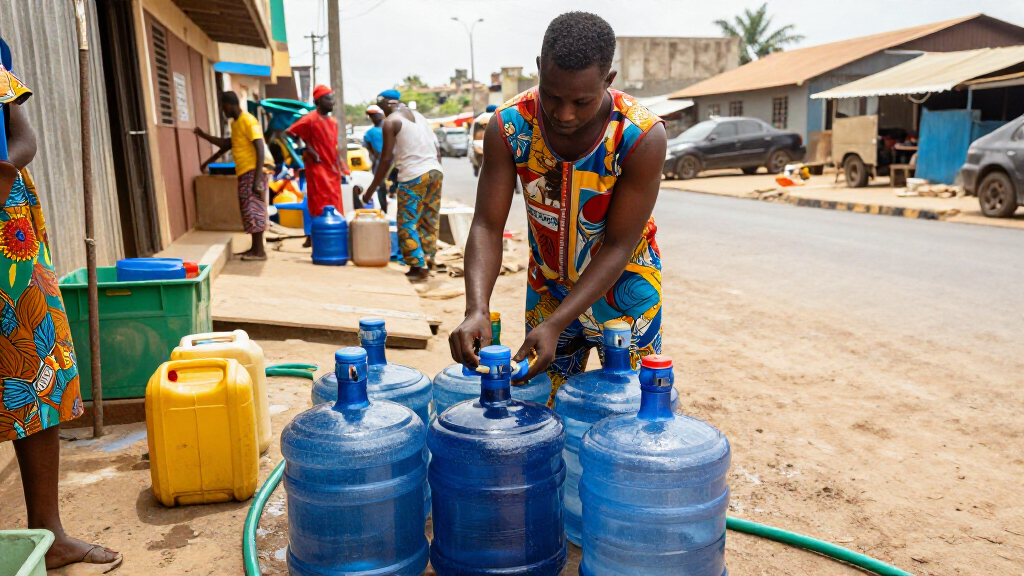
Multiple communities in Lagos State are independently sourcing and distributing water to millions of residents, despite the state’s limited intervention. This grassroots effort is filling a critical gap left by the government’s inadequate water infrastructure, raising questions about long-term sustainability and equity.
Local communities across Lagos have organized their own water supply systems, including boreholes, hand-dug wells, and water trucking, to serve residents who face unreliable access to municipal water. According to residents and community leaders, these efforts have become vital as the Lagos State government has not significantly improved or expanded public water infrastructure in recent years. Experts warn that while these community initiatives provide immediate relief, they may not be sustainable long-term solutions without government support and proper regulation. The Lagos Water Corporation has acknowledged the ongoing challenges but has not announced comprehensive measures to address the crisis, leaving many residents dependent on informal sources.Additionally, community leaders emphasize that their efforts are often hampered by inadequate funding, lack of technical expertise, and inconsistent access to clean water, which raises concerns about health and safety. Despite these hurdles, local groups continue to mobilize resources, often relying on donations and volunteer labor, to ensure their neighborhoods remain hydrated. The situation underscores the broader issue of infrastructure neglect and the urgent need for government intervention to establish sustainable water systems for all Lagos residents.Implications of Community-Led Water Provision in Lagos
This grassroots response highlights the resilience of Lagos communities in the face of government inaction, but it also exposes systemic failures in urban infrastructure planning. The reliance on informal water sources raises concerns about water quality, health risks, and long-term sustainability. The situation underscores the need for government policy reforms and investments to ensure equitable and reliable water access for Lagos’s growing population. If unchecked, these informal systems could lead to disparities and health issues, especially for vulnerable groups.
portable water filter for community use
As an affiliate, we earn on qualifying purchases.
As an affiliate, we earn on qualifying purchases.
Lagos Water Crisis: Growing Demand and Infrastructure Gaps
Lagos, Nigeria’s most populous city, faces an increasing demand for water due to rapid urbanization and population growth. The Lagos Water Corporation has reported that only a fraction of the city’s residents have access to reliable municipal water, with many relying on private vendors or informal sources. Past government initiatives to improve water infrastructure have been insufficient, leading communities to develop their own solutions. This grassroots response is not new but has become more prominent as official efforts lag behind the city’s needs. Experts have long warned that without significant investment, the water crisis could worsen, impacting health, economic productivity, and social stability.
“We are doing our best to provide water for our people because the government has failed us for years.”
— Community leader in Lagos
solar-powered water pump for wells
As an affiliate, we earn on qualifying purchases.
As an affiliate, we earn on qualifying purchases.
Long-Term Sustainability and Government Response Unclear
It is not yet clear whether the Lagos State government will implement comprehensive solutions to formalize and expand water infrastructure. The effectiveness and safety of community-led systems remain uncertain, especially regarding water quality and maintenance. The future of these grassroots efforts depends on policy changes, funding, and technical support, which have not yet been announced or guaranteed.
As an affiliate, we earn on qualifying purchases.
Potential Policy Interventions and Infrastructure Investments
The government is expected to face increasing pressure to address the water crisis through policy reforms and infrastructure projects. Monitoring developments from Lagos State authorities and community organizations over the coming months will be crucial to understanding whether sustainable, equitable water access can be achieved at scale. International aid and private sector involvement may also play a role in supporting long-term solutions.
water storage tank for community use
As an affiliate, we earn on qualifying purchases.
As an affiliate, we earn on qualifying purchases.
Key Questions
How are communities in Lagos providing water to residents?
Communities are using boreholes, wells, and water trucking to supply water, often relying on donations and volunteer efforts to sustain these systems.
What challenges do these community water systems face?
Major challenges include funding shortages, technical expertise, water quality concerns, and inconsistent access, which may affect health and sustainability.
Is the Lagos government planning to improve water infrastructure?
The Lagos Water Corporation has acknowledged the crisis but has not announced specific, large-scale projects. Future government initiatives are anticipated but remain uncertain.
What are the health risks associated with informal water sources?
Without proper treatment, informal sources can harbor contaminants, increasing the risk of waterborne diseases among residents.
How can residents ensure the safety of their water?
Residents are encouraged to treat water through boiling or filtration, but access to safe, municipal water remains the goal for sustainable health and safety.
Source: local