
A toy is truly open-ended for preschoolers when it sparks endless creativity, offering versatile, natural materials that can be shaped, built, or used in countless ways. You’ll want something safe and durable, capable of growing with your child’s interests and skills. Such toys encourage exploration, problem-solving, and social collaboration. They remove limitations by supporting imaginative play without predefined rules. Keep exploring; you’ll discover how to choose toys that foster growth and fun every day.

Get health and wellness essentials delivered free with Prime
- Fast, free delivery on millions of items
- Prime Video, Amazon Music and more included
- Member-only deals all year
Key Takeaways
- Allows unlimited and flexible ways to play, fostering creativity and imagination without predefined rules.
- Made from neutral, natural materials that invite children to invent their own uses and scenarios.
- Supports diverse building, crafting, and storytelling activities, encouraging exploration and experimentation.
- Promotes cognitive, social, and emotional development through self-directed and collaborative play.
- Ensures durability and safety, enabling prolonged use and confidence in open-ended exploration.
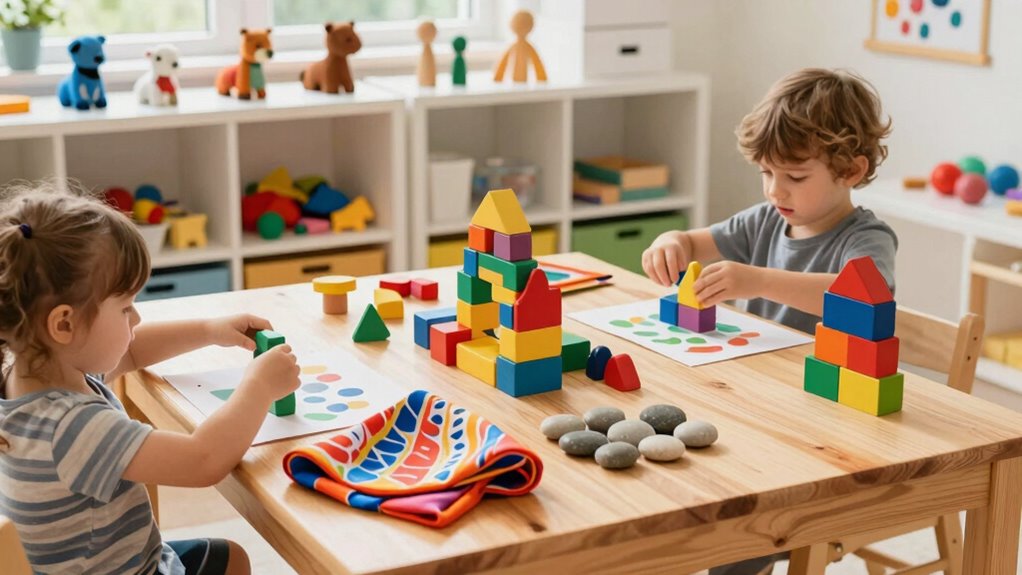
Open-ended toys are an excellent choice for preschoolers because they encourage creativity, imagination, and problem-solving skills. When you choose a toy that’s truly open-ended, you’re offering your child a tool that can evolve with their interests and developmental needs. These toys aren’t bound by specific rules or outcomes, which allows your child to explore, invent, and experiment freely. This kind of creative play is essential because it fosters not just enjoyment, but also fundamental developmental benefits, such as cognitive flexibility, social skills, and emotional resilience.
Open-ended toys foster creativity, problem-solving, and growth, adapting to your child’s evolving interests and developmental needs.
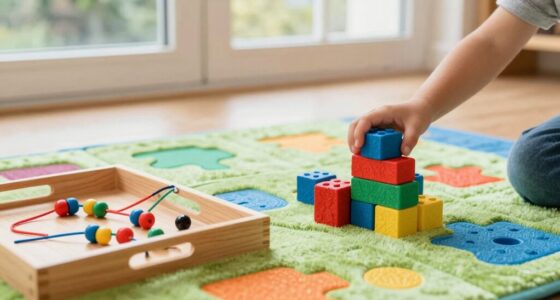
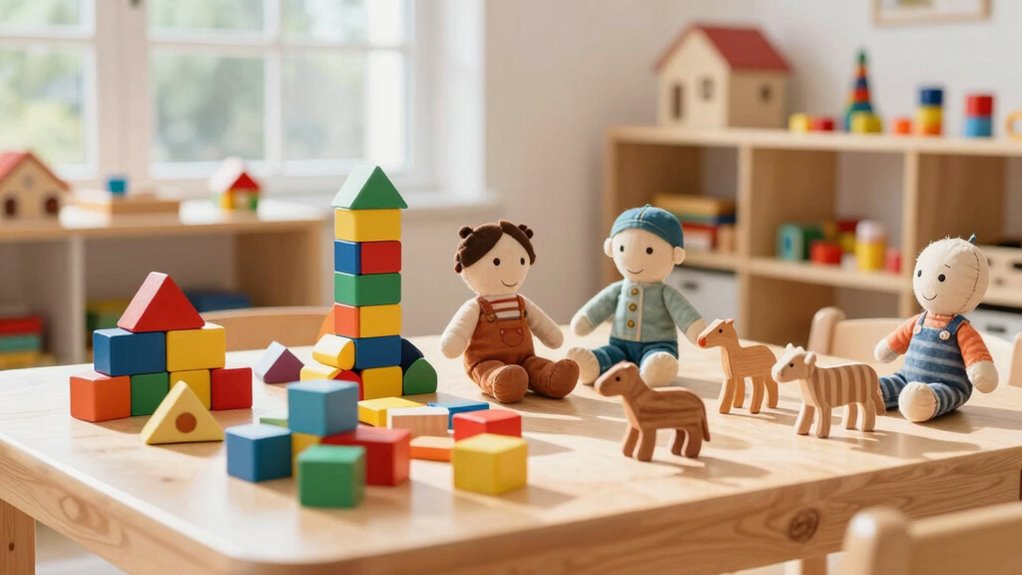
A key feature of a truly open-ended toy is its versatility. It can be used in countless ways, sparking different ideas every time your child interacts with it. For example, a set of wooden blocks isn’t just for stacking; your child might build castles, bridges, or abstract sculptures. This flexibility ignites their imagination and pushes their thinking beyond predefined boundaries. Because the toy can serve multiple purposes, it invites your child to think critically about how to use it and encourages experimentation. This process helps develop problem-solving skills, as they figure out how different pieces work together or how to achieve a certain structure. It also nurtures executive functioning skills, like planning and flexibility, as they adapt their approach based on what they’re creating.
Another hallmark of an open-ended toy is simplicity—often made from natural or neutral materials that don’t suggest a specific use. This simplicity isn’t about lacking features but about removing limitations. When a toy doesn’t have flashing lights, sounds, or complex mechanisms dictating how it should be played with, your child can make their own rules. It’s this freedom that liberates their creative play, allowing them to craft their own stories and scenarios. Plus, because these toys can be used over and over in different ways, they grow with your child, providing ongoing developmental benefits as their skills and interests evolve. Incorporating high-quality materials further ensures that toys remain safe and durable, supporting extended imaginative play.
Furthermore, choosing durable and safe toys ensures they can withstand plenty of imaginative adventures, which is crucial for long-term play value. When you select toys that meet these criteria, you’re not just providing entertainment—you’re supporting your child’s holistic development. As they explore and create, they build confidence, learn patience, and develop essential skills that will serve them well in the future.
Products Worth Considering

BowFlex Results Series SelectTech Adjustable Dumbbells (Pair)

Coway Airmega AP-1512HHS Smart HEPA Air Purifier, Black

Philips Sonicare ProtectiveClean 5300 Rechargeable Electric Toothbrush, Black, with 3 Brush Heads
As an affiliate, we earn on qualifying purchases.
Frequently Asked Questions
How Can Parents Encourage Creativity With Open-Ended Toys?
You can encourage creativity with open-ended toys by actively engaging in your child’s creative exploration and imaginative play. Ask open-ended questions to spark ideas, like “What are you building?” or “What story are you telling?” Provide diverse materials and space for free play, allowing your preschooler to explore different possibilities. Celebrate their unique ideas and creations, fostering confidence and encouraging them to imagine and innovate freely.
Are Open-Ended Toys Suitable for All Preschool Age Groups?
Yes, open-ended toys are suitable for all preschool age groups because of their toy versatility and age appropriateness. You can adapt play to fit different developmental stages, encouraging creativity and problem-solving at every level. As children grow, they find new ways to explore and invent with the same toy, making it a valuable addition to their learning journey. Always choose toys that match their current interests and skills for the best experience.
What Safety Features Should I Look for in Open-Ended Toys?
When choosing open-ended toys, look for safety certifications like ASTM or CE to guarantee they’re tested and safe. Check that the toys are made from durable, non-toxic materials to withstand rough play and prevent breakage. Avoid small parts that pose choking hazards. By prioritizing these safety features, you can confidently let your preschooler explore and create while keeping their safety a top priority.
How Do Open-Ended Toys Support Social Skills Development?
Open-ended toys promote social skills by encouraging peer interaction and cooperative play. You’ll see children sharing ideas, taking turns, and working together to create or solve problems. These toys foster communication, empathy, and teamwork as kids negotiate roles and collaborate. By providing versatile play options, open-ended toys help preschoolers build essential social skills while having fun and exploring their creativity.
Can Open-Ended Toys Replace Traditional Structured Educational Toys?
Open-ended toys can’t fully replace traditional structured educational toys because they foster Toy customization and imaginative play, which are essential for creativity and problem-solving. While structured toys teach specific skills, open-ended ones encourage children to explore and invent their own scenarios. You should see them as complementary tools, with open-ended toys enhancing creativity and social interaction, rather than replacing the focused learning that traditional educational toys provide.
Conclusion
So, when choosing toys for your preschooler, ask yourself: will this toy spark their imagination and grow with them? An open-ended toy isn’t just about what it is today but what it can become tomorrow. Imagine a simple block transforming into a castle, a spaceship, or a bridge—limitless possibilities. Isn’t that what we all want for our little ones? To see their creativity flourish with every new idea they bring to life.