
TL;DR

Get health and wellness essentials delivered free — and shop member deals
- Fast, free delivery on millions of items
- Access to Prime Big Deal Days deals on October 6–7
- Prime Video, Amazon Music and more included
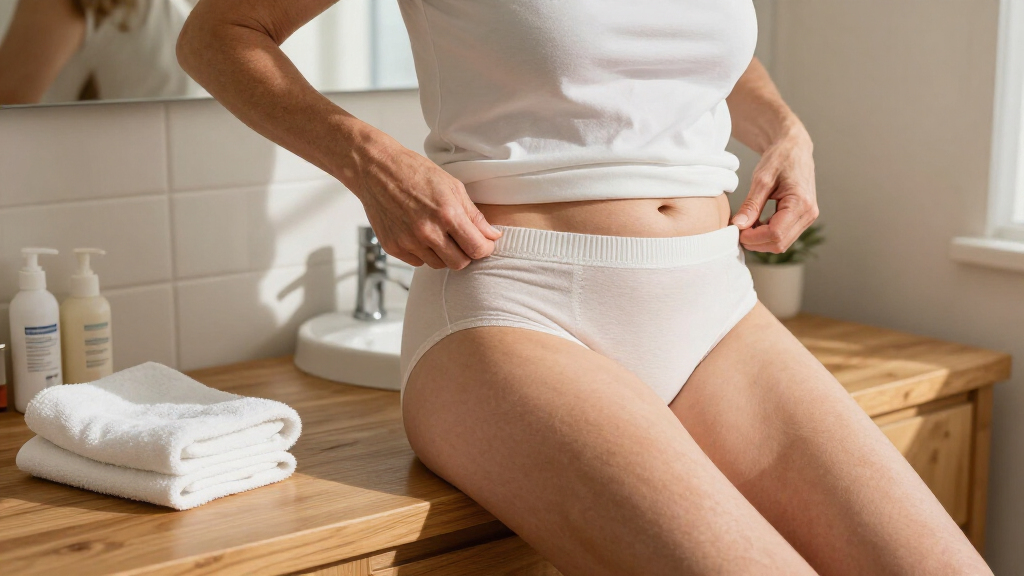
A Sixty and Me report says incontinence affects about half of women and one in four men, while embarrassment can keep people from discussing symptoms. The report advises speaking with a health professional because leakage can have different causes and care depends on the type and severity.
Adult incontinence is common, but it should not automatically be treated as an inevitable part of aging, according to a Sixty and Me report that encourages people experiencing leakage to speak with a health professional. The report cites estimates of symptoms in about half of women and one in four men, and says embarrassment may stop some older adults from seeking support.
The report describes several forms of incontinence, each involving different symptoms. Urge incontinence involves a sudden, strong need to urinate that may be followed by leakage. Stress incontinence can cause leakage during activities such as laughing, sneezing, lifting or exercising. With overflow incontinence, a bladder that does not empty adequately may leak without a sudden urge. Functional incontinence refers to difficulty reaching a bathroom in time because of mobility or other physical or mental impairments, even when bladder and urethral function are normal. Mixed incontinence involves more than one type.
Possible contributing factors listed in the report include urinary tract infections, menopause, pregnancy and postpartum changes, mobility impairments, spinal cord injuries, Parkinson’s disease, stones, and overactive bladder muscles. It also names diabetes and multiple sclerosis in connection with urge symptoms. These examples are not a diagnosis: the report says assessment is needed to identify what may be causing an individual’s symptoms.
The article recommends starting with a primary care provider or OB/GYN, who can evaluate symptoms and discuss options or refer a patient to a urologist or urogynecologist. It suggests keeping a bladder-control diary to help describe patterns. Depending on the cause and severity, options may include pelvic-floor exercises, medication, treatment for an infection, lifestyle measures or, in some cases, surgery. The supplied material does not provide clinical-trial evidence or compare the effectiveness of these approaches.
Why Symptoms Deserve Attention
Incontinence can affect daily life, yet stigma may discourage people from mentioning it. The report cites a figure that 54% of adults aged 60 and older said they would feel too embarrassed to discuss incontinence with family or friends. That statistic concerns willingness to talk with family or friends; it does not establish how many avoid medical care.
Discussing symptoms with a clinician matters because leakage can have different causes and may occur alongside another health issue. The report cautions against simply writing it off as aging and says symptoms can worsen over time. It also challenges the idea that reducing fluids is a reliable solution, noting that too little water may concentrate urine and irritate the bladder. Readers should seek individualized guidance rather than use the article as a substitute for medical evaluation.
As an affiliate, we earn on qualifying purchases.
Different Patterns, Different Causes
The report’s central point is that incontinence is not a single condition. Leakage during a cough or exercise differs from leakage associated with a sudden urge, incomplete bladder emptying or difficulty getting to a bathroom. Keeping track of when symptoms happen can give a clinician useful information, although the report does not specify a standard diary format or assessment protocol.
It also rejects two broad assumptions: that incontinence affects only older people and that nothing can be done about it. The report says people of different ages may experience symptoms and that care options exist, while acknowledging that treatment depends on the person and the type of incontinence. It does not claim every case can be cured.
“About half of women and one-in-four men experience incontinence symptoms.”
— Sixty and Me report
bladder control underwear for women
As an affiliate, we earn on qualifying purchases.
As an affiliate, we earn on qualifying purchases.
Limits of the Available Evidence
The supplied report does not give the publication date for its prevalence and embarrassment figures, identify their original research sources, or explain how the figures were collected. They should be read as estimates attributed to the article, not as newly verified statistics. The material also does not establish how common each type is or which treatment works best for a particular person.
Symptoms alone cannot determine the cause. The report lists possible conditions and treatment categories but does not offer individual medical guidance, diagnostic criteria or details about when particular tests are used. A clinician’s evaluation is needed to address those questions.
urinary incontinence pelvic floor exercises
As an affiliate, we earn on qualifying purchases.
As an affiliate, we earn on qualifying purchases.
Start With a Clinical Evaluation
For readers experiencing leakage, the report’s suggested next step is to raise it with a primary care provider or OB/GYN. A clinician can review the pattern, consider possible causes and decide whether tests or referral to a specialist are appropriate. A bladder diary may help prepare for that conversation by recording urges, leaks and relevant circumstances.
The supplied source describes no scheduled policy decision, new study or other forthcoming milestone. What happens next for an individual depends on the evaluation and any care plan developed with a qualified professional.
incontinence leak-proof underwear for men
As an affiliate, we earn on qualifying purchases.
As an affiliate, we earn on qualifying purchases.
Key Questions
Is adult incontinence just a normal part of aging?
The report says it should not simply be dismissed as aging. Because symptoms may have different causes, it recommends discussing them with a health professional.
What are the main types of incontinence?
The report describes urge, stress, overflow, functional and mixed incontinence. The patterns differ, so describing when leakage occurs can help a clinician assess it.
Can drinking less prevent leakage?
The report cautions that drinking too little may make symptoms worse by concentrating urine and irritating the bladder. Ask a qualified health professional for advice suited to your circumstances.
What should someone do if they experience symptoms?
Speak with a primary care provider or OB/GYN. The report suggests tracking symptoms in a bladder-control diary; a clinician can assess possible causes and discuss whether referral or treatment is appropriate.
Source: rss
Halloween Picks
halloween
As an affiliate, we earn on qualifying purchases.