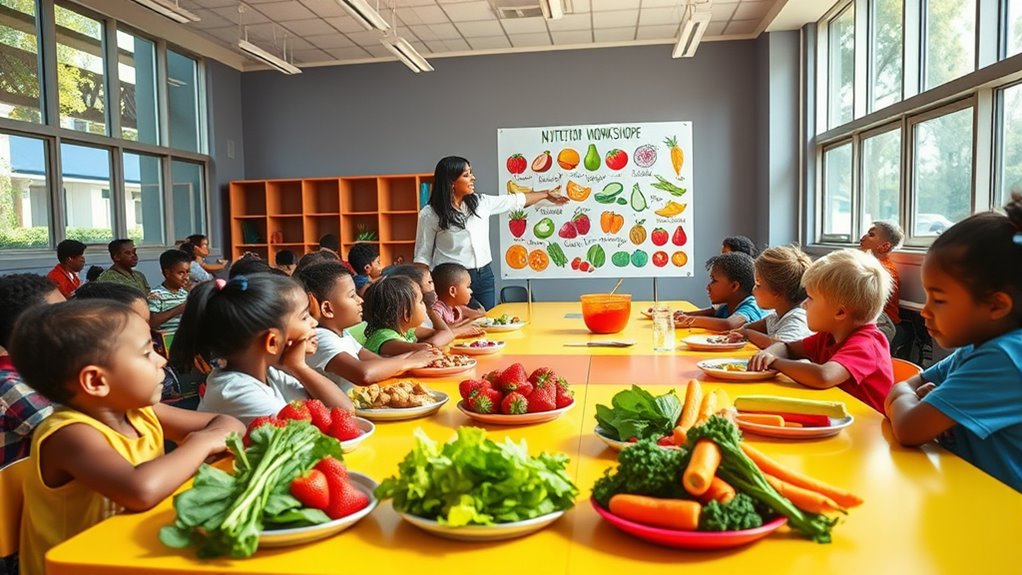

Public schools play a key role in teaching you about proper nutrition, helping you develop healthy habits that last a lifetime. Through engaging lessons, practical activities, and collaboration with nutrition experts, you learn to make smarter food choices, understand dietary guidelines, and manage portions. Schools also incorporate these lessons into routines like cafeteria meals, reinforcing healthy behaviors. Keep exploring to discover how these efforts can impact your well-being and set you up for a healthier future.
Key Takeaways
- Public schools incorporate nutrition education to promote lifelong healthy eating habits.
- Curriculum includes lessons on dietary guidelines, food groups, and practical activities like meal planning.
- Schools collaborate with nutrition experts to provide accurate, up-to-date nutritional information.
- Nutrition education is integrated into routines, including cafeteria offerings and family engagement.
- Using current nutrition data helps schools deliver relevant guidance and support healthier community choices.

Have you ever wondered how public schools can influence students’ lifelong eating habits? It all starts with the education they receive about proper nutrition. Schools play a vital role in shaping healthy behaviors, especially through lessons that focus on meal planning and understanding dietary guidelines. When students learn how to plan balanced meals, they gain skills that extend beyond the classroom and into their everyday lives. They discover how to combine different food groups, manage portion sizes, and choose nutritious options that support growth and energy. This foundational knowledge makes it easier for students to make smarter food choices, even when they’re not in school.
Public schools shape lifelong eating habits through nutrition education, meal planning skills, and dietary guidelines awareness.
Curriculum that emphasizes dietary guidelines helps students understand what their bodies need to stay healthy. For example, they learn about the importance of fruits, vegetables, whole grains, lean proteins, and low-fat dairy. By understanding these guidelines, students can better evaluate their own eating habits and identify areas for improvement. Teachers often incorporate interactive activities, such as meal planning exercises or label reading, to reinforce these concepts. These activities not only make learning engaging but also provide practical skills they can apply at home or when grocery shopping. When students see how dietary guidelines translate into real-life choices, they become more confident in their ability to maintain a nutritious diet.
Public schools also have the opportunity to collaborate with nutritionists and dietitians to deliver accurate, up-to-date information. This ensures that students aren’t just memorizing facts but genuinely understanding the importance of nutrition. When lesson plans include tips on healthy meal planning, students learn to avoid processed foods and recognize healthier alternatives. They’re encouraged to think critically about their food environment and develop habits that promote long-term wellness. This education can spark interest in cooking, encourage mindful eating, and foster a positive attitude toward nutritious foods.
Furthermore, integrating nutrition education into everyday school routines reinforces these lessons. School cafeterias that serve balanced meals aligned with dietary guidelines provide students with direct experience in making healthy choices. Discussions about meal planning and nutrition can extend to family settings, empowering students to share what they learn with loved ones. Over time, these lessons shape habits that can last a lifetime, reducing the risk of diet-related health issues later on. When public schools prioritize nutrition education—especially through lessons focused on meal planning and dietary guidelines—they lay the groundwork for healthier communities and more informed individuals. Incorporating up-to-date nutrition information ensures students receive accurate and relevant guidance in their health journey.
kids' nutrition education books
As an affiliate, we earn on qualifying purchases.
As an affiliate, we earn on qualifying purchases.
Frequently Asked Questions
How Is Nutrition Education Integrated Into the Existing Curriculum?
You see nutrition education integrated into your curriculum through targeted curriculum integration, where lessons incorporate topics on healthy eating and nutrition. Teachers receive specialized training to effectively deliver this content, ensuring students understand its importance. You might also find activities like cooking demonstrations or projects that reinforce lessons. This approach helps embed nutrition education seamlessly into your daily lessons, making healthy habits a natural part of your learning experience.
What Are the Funding Sources for Nutrition Education Programs?
You can guarantee funding through community partnerships and grant funding. Community partnerships involve local businesses, non-profits, and health organizations that support nutrition programs financially or through resources. Grant funding comes from government agencies, foundations, or health organizations that offer financial support specifically for nutrition education initiatives. These sources help expand programs, improve resources, and ensure consistent delivery of nutrition education across schools.
How Do Schools Measure the Effectiveness of Nutrition Education?
Think of measuring effectiveness as tracking a garden’s growth. You evaluate student engagement through surveys and participation rates, watching how actively students involve themselves. Behavioral outcomes are assessed via changes in eating habits, such as increased fruit and vegetable intake. Schools also look at knowledge retention through tests and observe if healthier choices become habits over time. These combined measures paint a clear picture of how well your nutrition education efforts are blooming.
Are There Specific Guidelines for Age-Appropriate Nutrition Lessons?
Yes, there are specific guidelines for age-appropriate nutrition lessons that align with curriculum standards. You should tailor content to match students’ developmental levels, ensuring concepts are understandable and engaging. Incorporate interactive activities to boost student engagement, making lessons both informative and enjoyable. By following these guidelines, you help students grasp healthy habits effectively and foster a lifelong interest in nutrition.
How Do Schools Involve Parents in Nutrition Education Initiatives?
You can involve parents by hosting workshops that teach healthy meal prep, like a school in Texas did. They foster parental engagement through newsletters and family nights focused on nutrition. Schools also build community partnerships with local farmers or health organizations, encouraging parents to participate in cooking classes or garden projects. These strategies strengthen family involvement, making nutrition education a collaborative effort that supports healthier habits at home.
meal planning for students
As an affiliate, we earn on qualifying purchases.
As an affiliate, we earn on qualifying purchases.
Conclusion
Think of nutrition education as planting seeds for a healthier future. When you learn about good food choices now, you’re watering those seeds, helping them grow into strong, mindful eaters. Public schools play a essential role in guiding students to make smarter decisions, shaping habits that last a lifetime. By investing in nutrition education today, you’re cultivating a garden of well-being that will flourish for generations to come.
healthy lunchbox containers
As an affiliate, we earn on qualifying purchases.
As an affiliate, we earn on qualifying purchases.
nutrition education kits for schools
As an affiliate, we earn on qualifying purchases.
As an affiliate, we earn on qualifying purchases.