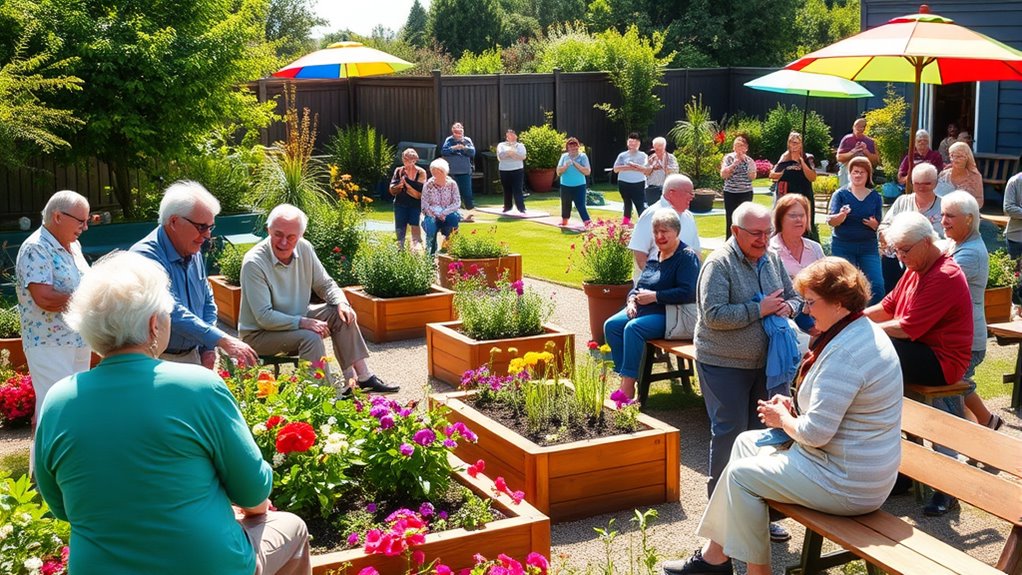

Building community for older adults involves creating opportunities for social connection through volunteering, technology, and supportive tools. Encouraging seniors to participate in local activities or online groups helps reduce loneliness and foster meaningful relationships. Using practical tools and simple tech can make social interactions easier and more engaging. By combining these approaches, you can help older adults feel valued, connected, and part of a vibrant community. Keep exploring ways to strengthen these bonds and improve lives.
Key Takeaways
- Encourage older adults to participate in volunteering activities tailored to their interests and abilities.
- Utilize practical, evidence-based tools to help seniors improve social skills and foster meaningful relationships.
- Promote technology adoption, like video calls and social media, to connect seniors with family, friends, and online communities.
- Combine volunteering with digital engagement, such as teaching tech skills, to deepen social bonds and inclusion.
- Create supportive environments that facilitate both in-person and virtual interactions, reducing feelings of loneliness among seniors.

Have you ever wondered how loneliness affects older adults? It’s a quiet but powerful issue that can impact their mental and physical health in ways you might not immediately see. When seniors feel socially isolated, they’re more prone to depression, cognitive decline, and even chronic illnesses. The good news is, there are ways to bridge that gap and build a stronger sense of community, and one effective approach involves encouraging volunteering opportunities. When older adults participate in volunteer work, they not only stay active and engaged but also forge meaningful connections with others. It gives them a sense of purpose and belonging, which is essential for their well-being. Plus, volunteering can be tailored to their interests and abilities, whether it’s helping at local food banks, mentoring younger generations, or supporting community events. These opportunities foster interaction, reduce feelings of loneliness, and create a sense of fulfillment that’s hard to find elsewhere. Building social connections is also supported by evidence-based practical tools, which can help seniors navigate social barriers and foster meaningful relationships more effectively.
In today’s digital age, technology adoption plays a key role in combating social isolation among seniors. Many older adults are initially hesitant about using new devices or platforms, but with gentle guidance, they can quickly learn to connect with loved ones through video calls, social media, or messaging apps. Technology provides an accessible bridge to the outside world, especially for those who have mobility issues or live in remote areas. Virtual communities and online groups centered around hobbies or shared interests can also offer companionship and interaction. In fact, some seniors find that online engagement becomes a new hobby, helping them stay mentally active and socially connected. You can support this by introducing simple-to-use devices and tutorials, making technology less intimidating. Over time, this adoption can transform their social landscape, making it easier for them to maintain relationships and discover new ones without leaving home.
Both volunteering opportunities and technology adoption are powerful tools to help older adults build community and reduce social isolation. They work hand-in-hand—volunteering can include digital components, like helping others learn to use technology, which in turn deepens social ties. Encouraging seniors to get involved in community activities, whether in person or online, reminds them that they’re valued and connected. It’s about creating an environment where they feel supported and included, no matter their age or physical ability. By taking small steps to promote these connections, you can make a real difference in their lives, helping them experience the warmth and companionship they deserve. Ultimately, fostering community isn’t just about reducing loneliness; it’s about enriching lives and reminding older adults they’re an essential part of the fabric of society.
![GrandPad Easy to Use Tablet & Phone for Seniors [Locked - Not Compatible with Other Wireless Carriers - Requires a Plan]](https://m.media-amazon.com/images/I/41XvvOU2BCL._SL500_.jpg)
GrandPad Easy to Use Tablet & Phone for Seniors [Locked – Not Compatible with Other Wireless Carriers – Requires a Plan]
Designed for Seniors: GrandPad is a secure, all-in-one tablet + phone. With large icons, easy navigation, and a…
As an affiliate, we earn on qualifying purchases.
As an affiliate, we earn on qualifying purchases.
Frequently Asked Questions
How Can Technology Help Reduce Social Isolation in Older Adults?
Technology helps you reduce social isolation by enabling virtual connectivity, so you can stay in touch with loved ones and participate in online communities. Improving digital literacy makes it easier for you to navigate these platforms confidently. With access to user-friendly devices and support, you’ll feel more connected, engaged, and less lonely. Embracing technology empowers you to build meaningful relationships, no matter where you are.
What Are Some Effective Community Programs for Seniors?
You can engage in effective community programs like volunteering opportunities and intergenerational programs. Volunteering lets you give back while connecting with others, boosting your social network. Intergenerational programs bring different age groups together, fostering understanding and companionship. Participating in these initiatives keeps you active, socially engaged, and minimizes feelings of loneliness, making your community a more welcoming and supportive place for everyone.
How Does Social Isolation Impact Mental Health in Older Adults?
You might not realize it, but social isolation can seriously harm your mental health and emotional well-being. It can lead to feelings of loneliness, depression, and anxiety, often worsening existing mental health stigma. When you’re isolated, you may withdraw further, making it harder to seek help. Staying connected through community programs helps combat these effects, supporting your emotional health and breaking down barriers caused by stigma and loneliness.
What Role Do Family Members Play in Preventing Isolation?
Did you know that family involvement can reduce social isolation by up to 60%? As a family member, you play a crucial role in preventing isolation through consistent emotional support and regular contact. Your efforts help older adults feel valued and connected, boosting their mental health. By actively engaging with them, you create a supportive environment that encourages social interaction and combats loneliness effectively.
Are There Specific Activities That Encourage Social Engagement for Seniors?
You can encourage seniors to participate in intergenerational activities like story-sharing or gardening projects, which foster meaningful connections. Volunteering opportunities also boost social engagement by allowing older adults to give back and meet new people. These activities keep seniors active, stimulated, and connected to their community, helping to prevent social isolation and promote overall well-being. Your involvement can make a significant difference in their social lives.
GrandPad Easy to Use Tablet & Phone for Seniors [Locked – Not Compatible with Other Wireless Carriers – Requires a Plan]
Designed for Seniors: GrandPad is a secure, all-in-one tablet + phone. With large icons, easy navigation, and a…
As an affiliate, we earn on qualifying purchases.
As an affiliate, we earn on qualifying purchases.
Conclusion
You have the power to make a huge difference in the lives of older adults. By fostering connections and building community, you can wipe out loneliness like a storm sweeping through. Remember, even one small act of kindness can create ripples that transform lives and turn isolation into joy. Don’t underestimate your ability to spark change — together, we can create a world where no one feels invisible or forgotten. The impact is truly unstoppable.

Digital Literacy & AI Guides for Seniors: Easy Guide to Smart Devices, Internet, Social Media & AI Tools Like ChatGPT – Stay Connected, Independent, … … the Digital Age (Guide for Adults Book 1)
As an affiliate, we earn on qualifying purchases.
As an affiliate, we earn on qualifying purchases.

SAMSUNG GALAXY S25 ULTRA USER GUIDE FOR SENIORS: Simple instructions, accessibility tips, messaging shortcuts, security guidance, large text features, and senior-friendly smartphone techniques
As an affiliate, we earn on qualifying purchases.
As an affiliate, we earn on qualifying purchases.