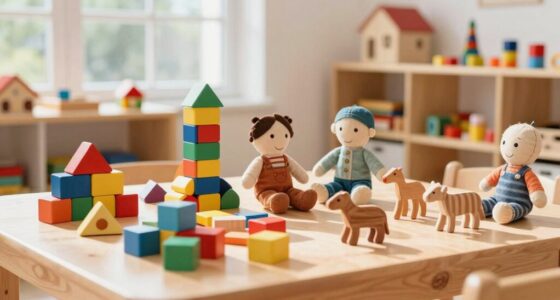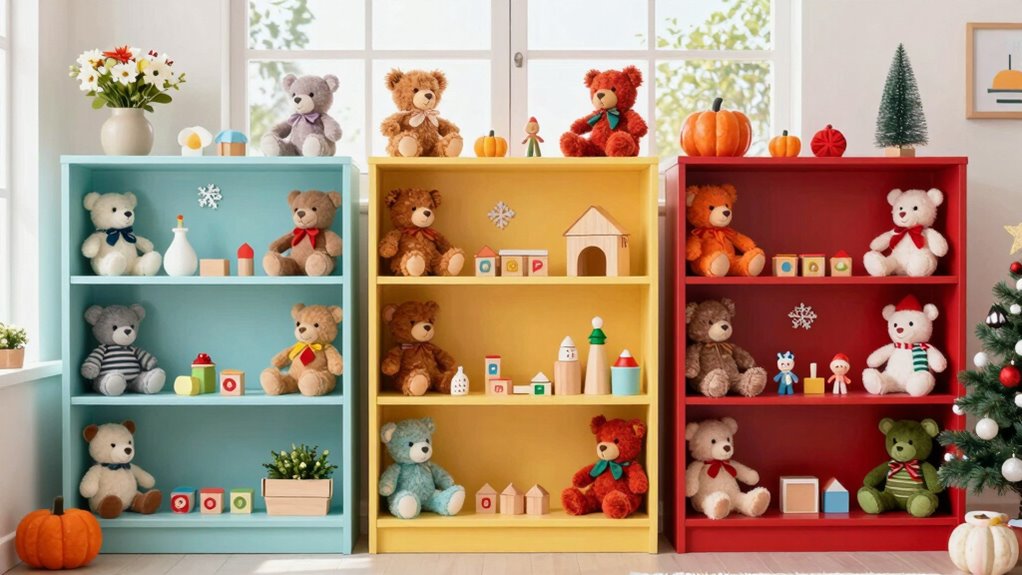

To create better toy rotation themes by season, organize your toys into seasonal groups, focusing on sensory, outdoor, or cozy items that match each time of year. Incorporate toys that teach about nature, weather, or harvests, and add sensory elements like textures or scents for each season. Switch out toys as seasons change to keep play fresh and engaging. Keep exploring ways to refine your approach, and you’ll discover even more ideas to inspire your child’s curiosity and growth.
Key Takeaways
- Align toy themes with seasonal natural elements like weather, holidays, and outdoor activities for relevance and engagement.
- Incorporate sensory and educational toys that reflect seasonal changes to deepen learning and exploration.
- Rotate toys based on seasonal focus, such as cozy textures for winter or outdoor gear for summer, to enhance sensory experiences.
- Use seasonal themes to inspire imaginative play and storytelling, making toys more meaningful.
- Plan ahead by selecting and organizing season-specific toys early to ensure a smooth, timely rotation.
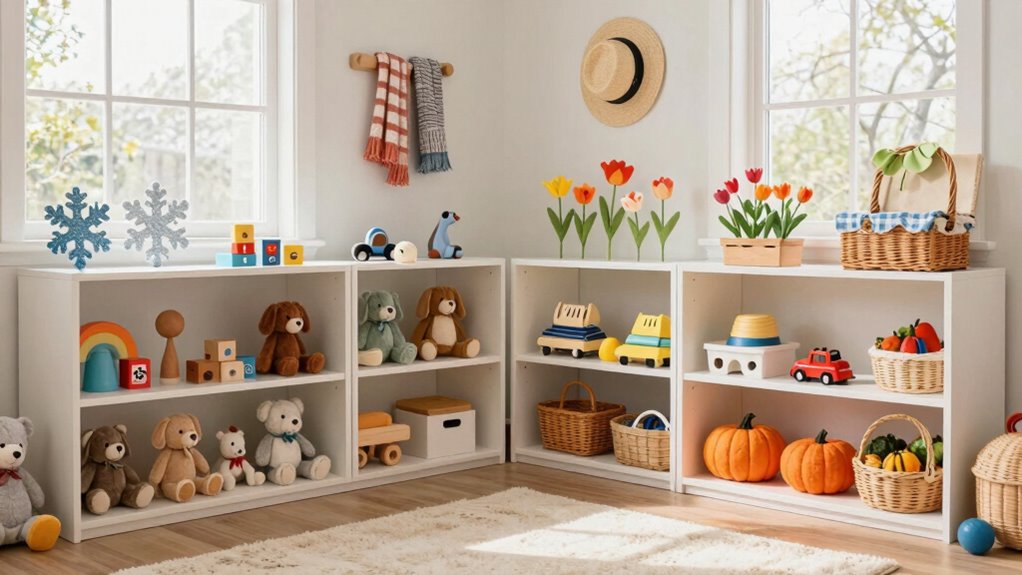
Implementing toy rotation themes can transform your child’s playtime by keeping toys fresh and engaging. When you organize toys by season, you create opportunities for your child to explore different themes, textures, and colors that align with the time of year. This approach also helps in managing clutter, making it easier to store and access toys efficiently. Seasonal toy rotation also supports sensory development because the toys you choose reflect the sensory experiences associated with each season—think soft fabrics for winter, smooth stones for summer, or fragrant herbs for spring. By thoughtfully selecting toys that evoke seasonal sensations, you help your child enhance their sensory awareness.
Seasonal toy rotation sparks curiosity, encourages creative play, and enhances sensory awareness through themed, year-round exploration.
Rotating toys seasonally allows you to introduce variety without overwhelming your child. You can start by dividing your collection into groups based on the seasons—winter, spring, summer, and fall—and then switch out toys as the seasons change. During winter, focus on cozy, tactile toys like plush animals, textured blankets, or scented play dough that evoke warmth and comfort. As spring approaches, bring out toys that inspire exploration and discovery, such as gardening tools, nature-themed puzzles, or pastel-colored art supplies. For summer, you can emphasize water toys, bright outdoor equipment, and items that promote active play. Come fall, include toys that reflect harvest themes, like pumpkin-shaped blocks or leaf-themed craft kits. This cyclical approach keeps playtime fresh, exciting, and aligned with the natural environment.
Creating seasonal toy themes also offers a chance to incorporate educational elements seamlessly. For example, during spring, you can introduce toys that teach about plants and insects, fostering curiosity and learning. In summer, you can focus on outdoor safety gear or sports equipment, encouraging physical activity. Additionally, integrating educational toys related to each season can deepen your child’s understanding of the environment and seasonal changes. When you rotate toys based on seasons, you provide your child with a balanced mix of creative play and sensory engagement that evolves throughout the year. It helps them develop a broader understanding of the world around them while keeping their play environment dynamic and stimulating.
Ultimately, seasonal toy rotation fosters a sense of anticipation and wonder. Your child begins to associate certain toys with specific times of the year, which can deepen their emotional connection to play and learning. As you plan your rotations, think about how each set of toys can inspire new play stories, support sensory exploration, and promote creative thinking. Incorporating seasonal concepts into toy selection can further enrich your child’s play experience and understanding of the changing world around them. By doing so, you create a play environment that grows with your child, nurturing their development in a playful, meaningful way.
seasonal sensory toys for children
As an affiliate, we earn on qualifying purchases.
As an affiliate, we earn on qualifying purchases.
Frequently Asked Questions
How Often Should I Change Toy Rotation Themes?
You should change toy rotation themes every 4 to 6 weeks, keeping your rotation schedule manageable and fresh. Regularly updating themes prevents boredom and encourages play. Use toy storage to organize toys by theme, making swaps easier. When changing themes, assess which toys to include or store away, ensuring your rotation schedule stays organized. This approach keeps play exciting and helps you maintain a clutter-free, engaging toy collection for your child.
What if My Child Prefers Certain Toys Year-Round?
Like a steadfast oak standing tall through seasons, your child’s personal preferences remain constant in your toy collection. If certain toys are favorites year-round, keep them accessible, but gently introduce new themes or toys to expand their interests. Think of your rotation as a garden, where familiar blooms flourish alongside new blossoms. This balance nurtures their curiosity, ensuring comfort while encouraging growth without forcing change on beloved favorites.
How Can I Incorporate Educational Themes Into Toy Rotations?
You can incorporate educational themes into your toy rotations by selecting toys that promote learning within each theme, ensuring educational integration. Keep theme consistency by focusing on specific subjects like science, art, or math, and rotate toys that reinforce those topics. This approach helps your child stay engaged and enhances their knowledge, making playtime both fun and educational. Regularly updating the themes keeps their curiosity sparked and supports ongoing development.
What Are Budget-Friendly Ways to Update Seasonal Themes?
You can update seasonal themes without breaking the bank through smart budget swaps and thrift finds. Ironically, the best decorations are often hiding in your own closet or at thrift stores, waiting to be repurposed. Repurpose old items, swap toys with friends, or find inexpensive treasures at flea markets. These budget-friendly ideas keep your toy rotation fresh, fun, and seasonal without overspending, turning everyday items into new imaginative play opportunities.
How Do I Handle Toys That Don’T Fit Seasonal Themes?
When toys don’t fit your seasonal themes, you can store them in dedicated toy storage bins labeled by category, keeping them accessible for future use. To maintain theme consistency, rotate these toys in and out during different seasons or special occasions. This approach helps you keep your space organized, guarantees toys are relevant to the theme, and makes it easy to find the perfect toys for each rotation without clutter.
As an affiliate, we earn on qualifying purchases.
Conclusion
By weaving seasonal themes into your toy rotation, you transform your child’s playroom into a vibrant garden that blooms anew with each passing season. Just as a gardener tends to each plant, you nurture curiosity and wonder by offering fresh, exciting toys that spark imagination. With a little planning, your toy rotation becomes a magical journey through the year—an ever-changing landscape of discovery that keeps your child’s world colorful, engaging, and full of endless adventures.
As an affiliate, we earn on qualifying purchases.
As an affiliate, we earn on qualifying purchases.