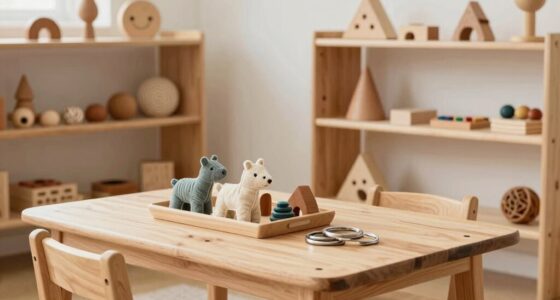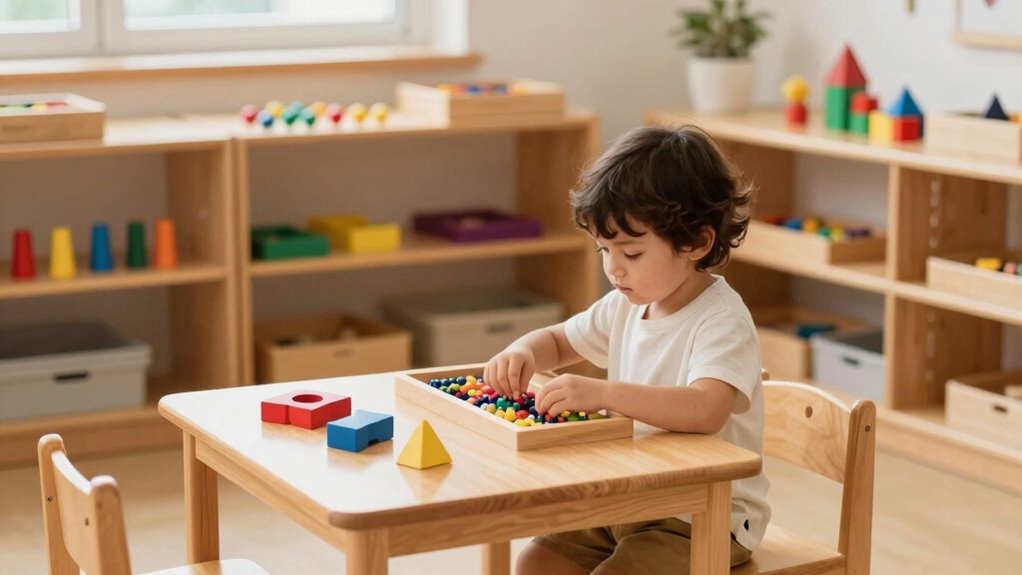
To encourage concentration with Montessori setups, you should carefully design the environment by selecting materials that promote engagement and independence. Keep the space tidy and arrange items at your child’s eye level, making them easy to access. Incorporate sensory activities like textured fabrics and sound boxes to help regulate energy and focus. Establish routines and provide comfortable, distraction-free areas to build security and consistent practice. If you continue exploring, you’ll uncover more tips to create a nurturing environment that fosters lasting attention.
Listen free for 30 days with Audible
Thousands of audiobooks and originals — cancel anytime.
As an affiliate, we earn on qualifying purchases.
Key Takeaways
- Arrange materials at child’s eye level to promote independence and easy access.
- Keep the environment tidy and uncluttered to minimize distractions.
- Incorporate sensory activities that align with the child’s interests to enhance engagement.
- Establish consistent routines and predictable setups to build security and focus.
- Use purposeful, real-world activities to develop patience and sustained attention.
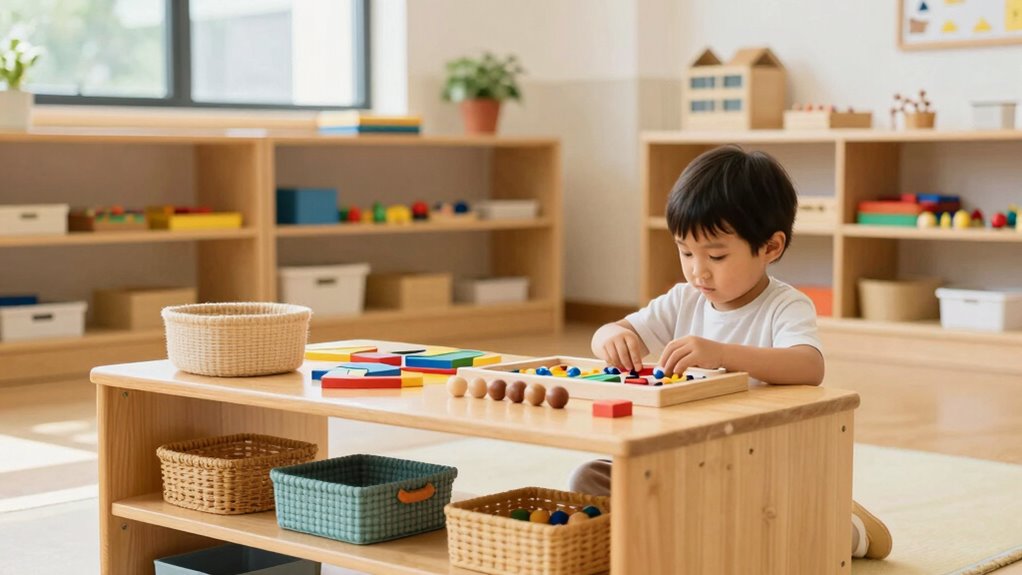
Creating an environment that fosters deep focus is essential for helping children develop strong concentration skills, and Montessori setups are designed precisely for this purpose. When you arrange a space with carefully selected materials, you encourage your child to engage with activities that promote sustained attention. Sensory activities are a key part of this, as they help children refine their senses and improve their ability to concentrate. By offering items like textured fabrics, scented jars, or sound boxes, you invite your child to explore and process sensory input at their own pace. These activities are inherently calming and help build the foundation for longer periods of focused work.
Practical life activities are equally crucial in encouraging concentration. They mimic real-world tasks and allow children to develop independence and coordination through simple, purposeful actions. Tasks like pouring water, buttoning shirts, or sweeping the floor are not just chores—they’re tools for honing fine motor skills and fostering patience. When children engage in these activities, they learn to focus on each step, which naturally extends their attention span. You’ll notice that as they master these skills, their ability to concentrate on more complex tasks also improves, laying a solid groundwork for academic and personal growth.
To create an effective Montessori environment, guarantee that the materials are accessible and inviting. Keep everything at your child’s eye level, so they can choose activities independently. This sense of autonomy motivates them to focus because they feel in control of their learning process. Limit distractions in the space—keep it tidy and uncluttered—so that the child’s attention isn’t pulled in multiple directions. When you observe your child working, give them the space and time needed to complete activities without interruption. This respect for their concentration encourages them to explore more deeply into tasks and gain confidence in their abilities. Incorporating distraction-free environments can further enhance their ability to focus by reducing external stimuli that may divert their attention.
Consistency and routine also play a significant role. Regularly scheduled activities and familiar materials help your child anticipate and prepare mentally for focused work. Over time, this predictability builds a sense of security, making it easier for your child to settle into concentration. Additionally, understanding how to set up a distraction-free environment can significantly enhance their ability to focus. Incorporating sensory activities that are tailored to your child’s interests can further boost their engagement and attention span. Using sensory input thoughtfully in the setup can help regulate your child’s energy levels and support sustained focus. Remember, patience is key. Some days will be more successful than others, but with a consistent environment rich in sensory and practical life activities, your child will gradually develop enduring focus. By thoughtfully designing your Montessori setup with these elements, you’re providing the perfect atmosphere for your child to thrive in concentration and independence.
As an affiliate, we earn on qualifying purchases.
Frequently Asked Questions
How Can Parents Adapt Montessori Setups at Home?
You can adapt Montessori setups at home by creating dedicated, organized spaces for your child. Include sensory activities and practical life tasks to foster independence and focus. Use low shelves for easy access and keep materials tidy to minimize distractions. Incorporate natural lighting and calming colors. Encourage your child’s curiosity by offering hands-on activities, helping them develop concentration skills through engaging, age-appropriate Montessori-inspired tools.
What Age Is Best for Introducing Montessori Environments?
You should introduce Montessori environments around age 2, as research shows early childhood is essential for developing lifelong skills. At this age, children thrive with Montessori materials that promote child-led learning, allowing them to explore and build independence. Starting early helps foster focus and concentration, setting a strong foundation for future learning. By providing the right environment, you support your child’s natural curiosity and love for discovery.
How Do Montessori Setups Compare to Traditional Classrooms?
Montessori setups differ from traditional classrooms by emphasizing sensory activities and practical life skills, which foster independence and focus. You’ll notice that children in Montessori environments engage actively with hands-on materials, encouraging natural curiosity and concentration. Unlike traditional settings, these setups promote self-directed learning, allowing children to explore at their own pace. This approach helps develop concentration and fine motor skills, making learning a more meaningful and engaging experience for your child.
Are Montessori Setups Suitable for Children With Special Needs?
You might find Montessori setups highly suitable for children with special needs, especially when tailored for sensory integration and behavioral adaptations. These environments promote individualized learning, helping children develop focus and independence. The materials encourage exploration at their own pace, which often aligns well with their unique needs. By fostering a calm, supportive atmosphere, you enable children to improve concentration and behavior naturally, turning challenges into opportunities for growth.
How to Handle Distractions in a Montessori Environment?
To handle distractions in a Montessori environment, you should first identify sensory distractions that may impact focus. Use environmental modifications like soft lighting, soundproofing, or calming colors to minimize these distractions. You can also organize materials neatly and keep only essential items accessible. Gently redirect your child’s attention back to their activity when they get distracted, fostering independence and concentration within a prepared, calm environment.
As an affiliate, we earn on qualifying purchases.
Conclusion
By creating a Montessori setup, you’re not just encouraging concentration—you’re releasing a superpower within your child that’s so powerful, it could move mountains! When you set up an environment that sparks curiosity and fosters independence, you’ll watch your little one become a laser-focused, unstoppable force of nature. So go ahead, craft that perfect space—because with your guidance, their potential is limitless, and their concentration can become so intense, it might just change the world!
Montessori practical life activity kit
As an affiliate, we earn on qualifying purchases.
As an affiliate, we earn on qualifying purchases.
distraction-free learning environment setup
As an affiliate, we earn on qualifying purchases.
As an affiliate, we earn on qualifying purchases.
Flea & tick season Picks
flea and tick prevention
As an affiliate, we earn on qualifying purchases.