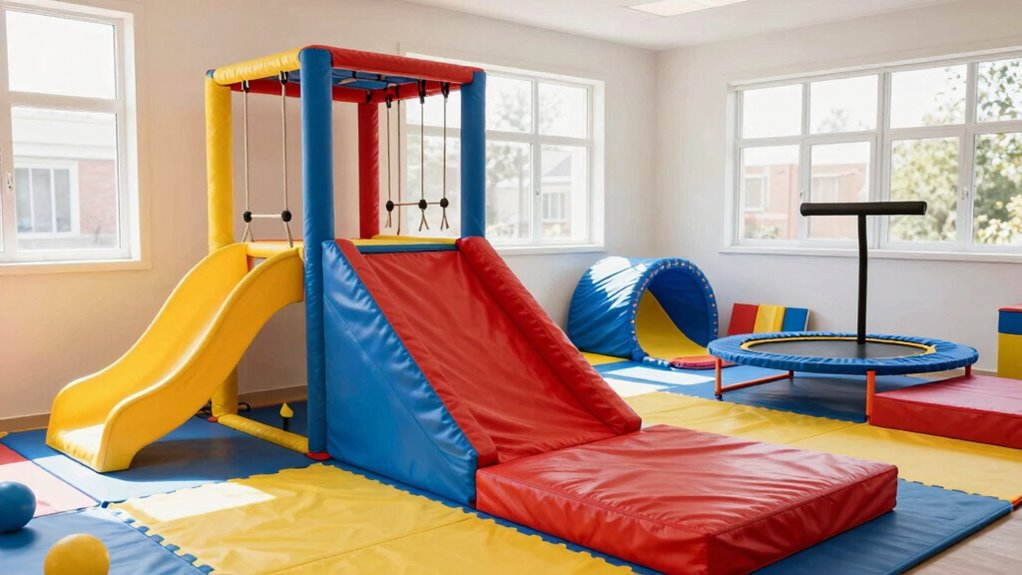

To create a gross motor zone at home, choose a clear, safe area free of hazards, with soft mats and padding for safety. Include equipment like balance beams, climbing structures, and tumbling mats to promote coordination and strength. Add sensory elements like textured mats or sensory balls for stimulation. Keep everything organized with storage solutions and use bright, appealing decorations to make the space inviting. If you continue exploring, you’ll discover more tips to build an effective and fun motor zone.
Key Takeaways
- Choose a spacious, hazard-free area with soft padding and secure equipment to ensure safety during active play.
- Incorporate versatile equipment like balance beams, climbing structures, and tumbling mats for comprehensive motor skill development.
- Add sensory elements such as textured mats and sensory balls to stimulate tactile input and focus.
- Organize the zone with accessible storage and simple layouts to promote independence and active exploration.
- Use bright colors and engaging decorations to create an inviting, motivating environment for physical activity.
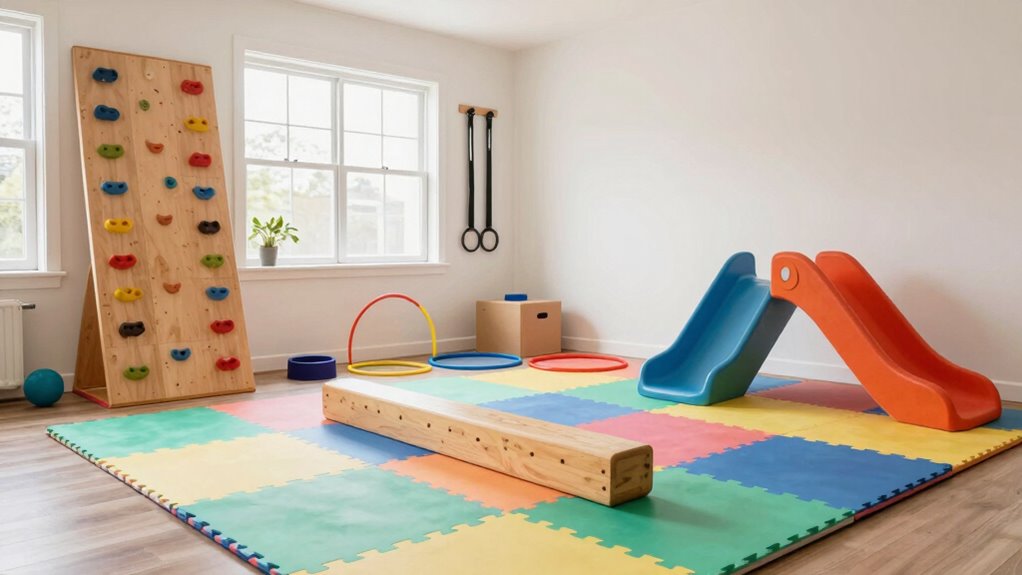
Creating a dedicated gross motor zone at home is a fantastic way to encourage your child’s physical development and keep them active. When you design this space thoughtfully, you give your child opportunities to develop essential motor skills while also supporting sensory integration. This zone becomes a safe environment where they can explore movement freely, which is crucial for their overall growth. Incorporating diverse equipment can also introduce elements of power and speed, helping children build strength and confidence in their physical abilities. Start by choosing a clear, open area free of hazards, furniture, or sharp objects. Once you have the space, consider adding a variety of equipment that promotes different types of movement. Items like balance beams, soft tumbling mats, and climbing structures are excellent choices. These help develop core strength, coordination, and balance, directly supporting physical development. Incorporate sensory-friendly elements like textured mats, sensory balls, or foam blocks to stimulate tactile input and help your child process sensory information more effectively. This sensory integration not only enhances motor skills but also calms and focuses your child’s attention. Additionally, including safety precautions such as soft padding and secure equipment can prevent injuries and create a more secure environment for active play.
Creating a safe, engaging space promotes your child’s growth, motor skills, and sensory development through active exploration.
To maximize the benefits, you can also introduce multisensory activities that engage multiple senses simultaneously, fostering more comprehensive development. When you select equipment, prioritize safety, durability, and versatility. For example, a sturdy climbing frame with multiple levels encourages climbing, crawling, and jumping—all essential gross motor activities. These movements strengthen muscles and improve spatial awareness. Balance beams help with stability and coordination, while mats provide cushioning for falls and flips, making the space safe for active play. For added sensory input, include swings or hammocks if space allows, since swinging can be incredibly soothing and help with vestibular sensory processing. Additionally, choosing equipment with multifunctional features can maximize the use of your space and make playtime more engaging for your child. Organize the zone to be inviting and engaging. Keep the layout simple and accessible, ensuring your child can move from one activity to another easily. Use bright colors or visually appealing decorations to stimulate their senses and make the space inviting. Incorporate storage solutions like bins or shelves to keep equipment organized and encourage independence in tidying up after playtime.
As an affiliate, we earn on qualifying purchases.
Frequently Asked Questions
What Safety Precautions Should I Take for a Home Gross Motor Zone?
You should prioritize safety by ensuring kids wear appropriate safety gear like helmets, knee pads, and elbow pads. Follow supervision guidelines closely by constantly watching children during play to prevent accidents. Keep the area clear of sharp objects and hazards, and choose soft, non-slip flooring. Regularly inspect equipment for wear and tear, and establish clear rules to promote safe play. This way, your gross motor zone stays fun and accident-free.
How Do I Tailor the Zone for Different Age Groups?
Imagine setting up a space where toddlers can practice crawling and walking, while older kids have climbing frames and jump ropes. To tailor the zone for different age groups, focus on age-specific activities and developmental considerations. For younger children, include soft mats and low-level equipment. For older kids, add challenging climbing structures and sports gear. Adjust complexity and safety features to match each child’s growth, ensuring fun and development for every age.
What Budget-Friendly Equipment Can I Use?
You can find affordable options like using everyday household items or DIY equipment to set up your gross motor zone. Think about incorporating items like hula hoops, jump ropes, or cushions for soft landings. Repurpose cardboard boxes for obstacle courses or create balance beams with planks. These DIY options are budget-friendly, safe, and fun, helping your child develop gross motor skills without spending much money.
How Much Space Is Needed for an Effective Zone?
You’ll want at least 50 to 100 square feet for an effective gross motor zone, depending on the activities planned. The space requirements should comfortably accommodate activities like jumping, crawling, and balancing. Make sure the activity area is free of hazards and has enough room for movement in all directions. Clear, open space encourages active play and helps children develop strength, coordination, and confidence safely.
How Often Should the Zone Be Updated or Changed?
You should update your gross motor zone every few months to keep your child engaged and excited. As they grow and develop new skills, swap out equipment, add fresh activities, and refresh the space with creative storage solutions that hide clutter. Consider color coordination to make the zone inviting and stimulating. This keeps the environment dynamic, ensuring your child’s interest never wanes and they continue to thrive physically.
kids climbing structure for playroom
As an affiliate, we earn on qualifying purchases.
As an affiliate, we earn on qualifying purchases.
Conclusion
Creating a gross motor zone at home transforms playtime into a fun, active experience. Imagine a shy toddler gaining confidence as they enthusiastically climb, jump, and balance in their new space. With just a few simple setups, you’ll see your child’s skills and self-esteem soar. It’s more than just a play area—it’s a safe haven where your little one can grow stronger, braver, and more excited to explore the world around them every day.
As an affiliate, we earn on qualifying purchases.
As an affiliate, we earn on qualifying purchases.