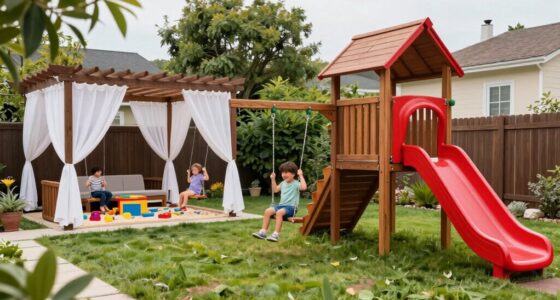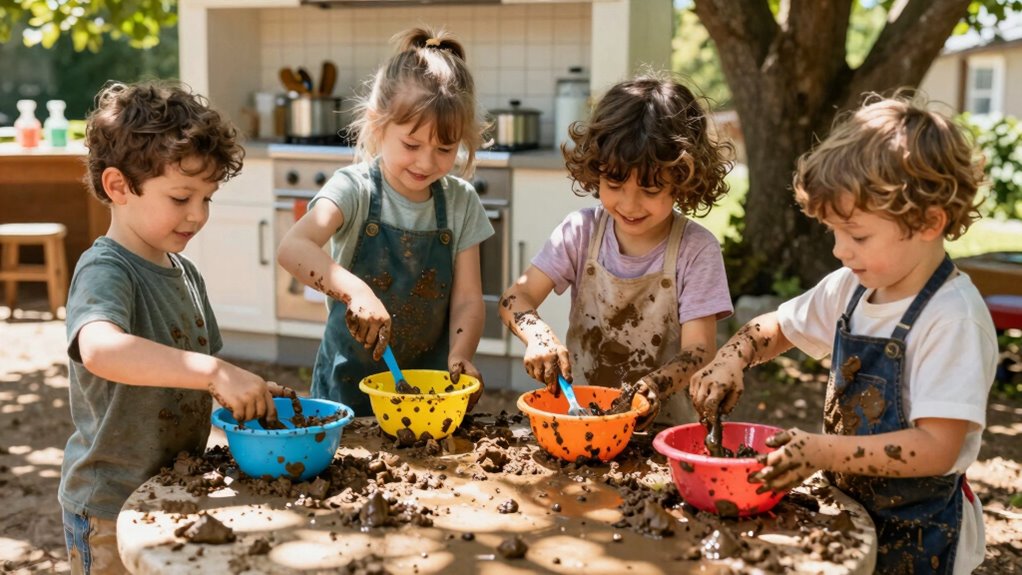

Mud kitchens turn outdoor mess into meaningful play by engaging your child’s senses with textures, smells, and sights that foster creativity and environmental understanding. As they scoop, pour, and mix, they develop fine motor skills, problem-solving abilities, and emotional regulation. Natural materials like mud promote sensory development and a deeper connection to nature. Keep exploring to discover more ways this messy play boosts your child’s growth and curiosity.

Get health and wellness essentials delivered free with Prime
- Fast, free delivery on millions of items
- Prime Video, Amazon Music and more included
- Member-only deals all year
Key Takeaways
- Mud kitchens transform natural mess into engaging, imaginative role-play experiences that foster creativity and problem-solving skills.
- They promote sensory development by exploring textures, smells, and sights in a safe, controlled outdoor environment.
- Mud kitchens encourage meaningful outdoor interaction, strengthening children’s connection to nature and environmental awareness.
- They turn messy play into developmental opportunities, enhancing fine motor skills and emotional regulation.
- Proper design and safety features make outdoor mess safe, enjoyable, and beneficial for children’s growth.

When children get messy outdoors, they’re often engaged in some of their most creative and meaningful play. A mud kitchen turns that messy play into an opportunity for growth, fostering a deeper nature connection and enhancing sensory development. A well-designed outdoor space can also include safety features that ensure children can explore freely without risk, reinforcing the importance of solar/power safety and design. Instead of seeing mud as chaos, you can see it as an essential part of your child’s learning experience. As they scoop, pour, and mix, they’re not just having fun—they’re building a bond with the natural world around them. This connection to nature isn’t just about appreciation; it’s about experiencing the textures, smells, and sights that make the outdoors rich and engaging. When they play in a mud kitchen, they learn to appreciate the environment firsthand, understanding its textures and smells in a way that books or screens can’t replicate. This direct engagement nurtures their curiosity and respect for nature, which becomes the foundation for lifelong environmental awareness. Additionally, incorporating natural elements like mud can also support the development of color accuracy in how children perceive and differentiate between different textures and hues in their environment. The sensory engagement involved in mud play also helps children develop sensory processing skills, allowing them to better interpret and respond to sensory information from their surroundings. Sensory development is another critical benefit of outdoor mess play in a mud kitchen. Every scoop of mud offers a variety of textures—sticky, slimy, gritty—that stimulate their sense of touch. They learn to differentiate between wet and dry, soft and rough, helping to strengthen their sensory pathways. The act of mixing ingredients, pouring water, or kneading mud enhances hand-eye coordination and fine motor skills. These activities also promote problem-solving and creativity, as children figure out how to combine ingredients or create “recipes.” Engaging with natural materials like mud can also boost children’s understanding of environmental awareness through direct interaction with their surroundings. The sensory input from playing with mud is calming and grounding, especially for children who thrive on tactile experiences. It helps them process their emotions and develop focus, bringing a sense of calm amid their energetic play.
Products Worth Considering

OMRON Complete 2-in-1 Upper Arm Blood Pressure Monitor with EKG

Hyperice Normatec 3 Full-Leg Compression Boots, Standard Size

Withings BeamO Contactless Smart Thermometer, ECG Monitor, and Digital Stethoscope
As an affiliate, we earn on qualifying purchases.
Frequently Asked Questions
How Safe Are Mud Kitchens for Young Children?
Mud kitchens are generally safe for young children when you follow safety precautions and conduct risk assessments. You should guarantee the area is free of sharp objects and harmful plants, supervise children at all times, and use non-toxic materials. Regularly check the equipment for damage, and teach kids about safe play. By taking these steps, you create a secure environment where children can enjoy outdoor messy play without unnecessary risks.
What Materials Are Best for Building a Mud Kitchen?
When diving into DIY projects, you’ll want materials that stand up to outdoor adventures. Opt for weather-resistant wood like cedar or cypress for durability, or sturdy plastic for easy cleaning. Metal can work too, but watch for rust. These choices guarantee your mud kitchen stays solid and safe, turning outdoor mess into meaningful play. Using durable materials keeps the focus on fun and learning, not constant repairs.
How Do I Clean and Maintain a Mud Kitchen?
To keep your mud kitchen clean and well-maintained, start with regular cleaning tips like rinsing surfaces with water and scrubbing away mud with a soft brush. You should also establish simple maintenance routines, such as checking for loose parts, sealing wood to prevent rot, and cleaning accessories after each use. This approach keeps your mud kitchen safe, durable, and ready for the next messy, imaginative play session.
Can Mud Kitchens Be Used Indoors?
Yes, you can use a mud kitchen indoors. Imagine setting up an indoor mud play area with a dedicated mud kitchen setup in your basement or playroom, using plastic bins and waterproof mats. This allows your child to enjoy mud activities without the outdoor mess. Just guarantee proper ventilation and easy cleanup, making indoor mud play safe and fun while fostering sensory exploration and imaginative play in any weather.
What Age Group Benefits Most From Mud Kitchens?
You’ll find that children aged 3 to 7 benefit most from mud kitchens. During this stage, parent involvement is essential, as you encourage their exploration through creative activities. Mud kitchens promote sensory play, imagination, and problem-solving, making outdoor mess a meaningful learning experience. As they manipulate mud and natural materials, kids develop fine motor skills and social skills, all while having fun in a safe, engaging environment.
Conclusion
A mud kitchen transforms chaos into creation, turning messy moments into meaningful memories. Like a garden blooming with possibility, it invites you to embrace nature’s untamed beauty. Every splash and scoop symbolizes freedom, imagination, and growth—reminding you that mess is just the seed of learning. As your child stirs dreams in the earthy mix, you see that in nature’s chaos, there’s harmony. In muddy hands, life’s simplest joys find their true home.