To help kids notice seasons through outdoor play, encourage regular exploration in different environments like parks or your yard. Use simple questions to spark curiosity, such as “Do you see the changing leaves?” and focus on seasonal signs like blooming flowers or falling snow. Incorporate sensory activities, seasonal scavenger hunts, and hands-on projects like planting or collecting leaves. By making outdoor time consistent and engaging, you’ll foster ongoing awareness of nature’s rhythms—keep exploring to discover even more ways to connect with the seasons.
Key Takeaways
- Encourage regular outdoor exploration with simple questions about seasonal changes to foster curiosity.
- Use seasonal scavenger hunts to actively engage children in observing specific natural items.
- Incorporate sensory activities and storytelling to deepen understanding of seasonal transformations.
- Involve children in hands-on seasonal projects like planting or collecting leaves to connect with nature.
- Promote consistent outdoor play to observe subtle and ongoing environmental changes over time.

Have you ever wondered how to help kids truly notice the changing seasons? One of the most effective ways is by encouraging regular outdoor play that emphasizes nature observation. When kids spend time outside, they become more aware of seasonal changes—like how trees shed their leaves in fall, how flowers bloom in spring, or how the air feels crisper in winter. To foster this awareness, set aside dedicated times for them to explore different environments, whether in your backyard, a park, or a nature trail. As they observe, ask simple questions: “Do you see the different colors of leaves?” or “What’s changing in the trees?” This prompts curiosity and helps them connect with the natural rhythms around them.
Encourage outdoor play and simple questions to help kids notice seasonal changes and connect with nature’s rhythms.
You can make these observations more engaging by creating seasonal scavenger hunts. For example, in autumn, challenge your child to find the most colorful leaf or acorn. In spring, look for budding buds or chirping birds. In summer, notice the insects buzzing around, and in winter, seek out bare branches or patches of snow. These activities turn routine outdoor time into meaningful lessons about seasonal changes. As kids locate each item, encourage them to describe what they see and how it’s different from last time. This practice sharpens their observation skills and deepens their understanding of nature’s cycles. Engaging their senses during these activities can also enhance their sensory awareness, making the experience more vivid and memorable.
Incorporate storytelling into outdoor play by sharing folk tales or facts related to the seasons. For instance, talk about how animals prepare for winter or why certain flowers bloom at specific times. This context helps children understand the significance of seasonal changes beyond just visual cues. Additionally, consider journaling together. Encourage your kids to draw pictures or write about what they notice each season. These reflections reinforce their observations and create a personal record of nature’s transformations over the year. Incorporating educational content about nature helps deepen their understanding and appreciation of seasonal rhythms, especially when combined with hands-on experiences that make learning active and fun.
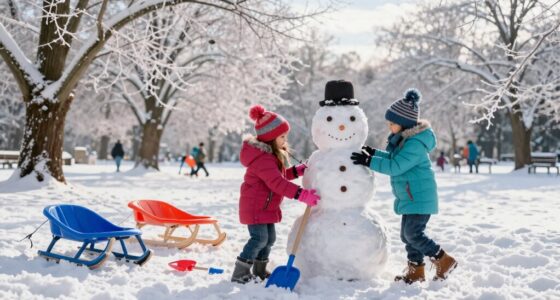
Don’t forget the power of hands-on experiences. Planting seeds in spring, collecting fallen leaves in autumn, or building snowmen in winter makes the seasons tangible. When children actively participate, they develop a stronger connection to the natural world and better recognize the ongoing seasonal shifts. Understanding seasonal changes through direct experience helps children grasp the science behind nature’s cycles. The key is consistency—regular outdoor play ensures that children continually observe and adapt to the changing environment. Over time, these experiences help them see beyond the surface, noticing subtle signs of seasonal change and developing a lifelong appreciation for nature.
As an affiliate, we earn on qualifying purchases.
Frequently Asked Questions
When Is the Best Time of Day for Seasonal Outdoor Activities?
The best time of day for seasonal outdoor activities is in the morning or late afternoon when the lighting is ideal. During these times, the sun isn’t too harsh, making it easier for your kids to notice seasonal changes like blooming flowers or falling leaves. Plus, the cooler temperatures help them stay comfortable for longer, encouraging exploration and learning about the seasons through outdoor play.
How Can I Incorporate Sensory Experiences Related to Seasons?
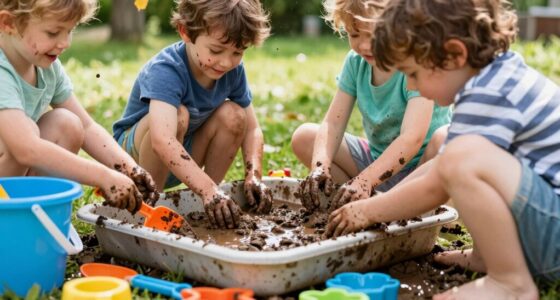
You can easily incorporate sensory exploration by introducing seasonal textures into outdoor play. Encourage kids to feel the rough bark of trees, squish wet leaves, or scoop cold snow. These experiences help children connect with the changing seasons, even if the weather isn’t ideal. Don’t worry if they’re hesitant—start with simple, fun activities like collecting different textures or making a sensory collage to deepen their seasonal awareness.
Are There Age-Specific Outdoor Activities for Different Seasons?
Yes, there are age-specific outdoor activities for different seasons. For young children, you can encourage a nature scavenger hunt tailored to their abilities, helping them identify seasonal changes. Dress them in appropriate seasonal clothing to keep them comfortable. For older kids, try more complex activities like building leaf or snow sculptures, or observing seasonal bird migrations. These activities make outdoor play engaging and educational, helping kids connect deeply with each season.
How Do Weather Conditions Affect Outdoor Seasonal Play?
Weather conditions directly influence outdoor seasonal play, so you should encourage your kids to dress in seasonal clothing suitable for the weather. When it’s hot, lightweight clothes and sun protection are essential, while cold weather calls for layered clothing and warm accessories. Promoting weather awareness helps kids understand how conditions affect outdoor activities, ensuring they stay safe and comfortable while exploring seasonal changes. Always adapt play to current weather for the best experience.
What Safety Precautions Should I Consider for Seasonal Outdoor Activities?
You should prioritize seasonal safety by checking weather forecasts and dressing kids appropriately for outdoor activities. Keep an eye out for outdoor hazards like icy surfaces, uneven terrain, or allergic plants. Make sure kids stay hydrated in summer and warm in winter, and supervise them closely to prevent accidents. Teaching kids about outdoor hazards and encouraging safe play helps them enjoy each season’s unique outdoor experiences safely.
seasonal scavenger hunt for kids
As an affiliate, we earn on qualifying purchases.
As an affiliate, we earn on qualifying purchases.
Conclusion
By engaging your kids in outdoor play, you open their eyes to the wonder of changing seasons. Encourage them to notice the colors, sounds, and textures around them, just like explorers of old discovering new worlds. Remember, it’s a timeless adventure—no need for a DeLorean—where every leaf, snowflake, or bloom can teach them about nature’s cycles. Keep exploring together, and you’ll help them appreciate the seasons’ magic for years to come.
nature observation journal for children
As an affiliate, we earn on qualifying purchases.
As an affiliate, we earn on qualifying purchases.
kids sensory activity outdoor set
As an affiliate, we earn on qualifying purchases.
As an affiliate, we earn on qualifying purchases.