Wobble boards help you develop coordination by challenging your body to maintain balance, improve stability, and strengthen key muscles. They also inspire your imaginative side by serving as props for pretend play, like ships or mountains, encouraging creativity. As you experiment with new movements and problem-solve, your confidence grows. Plus, participating in group activities fosters social skills and teamwork. Keep exploring, and you’ll discover even more ways wobble boards boost both coordination and imagination.

Get health and wellness essentials delivered free — and shop member deals
- Fast, free delivery on millions of items
- Access to Prime Big Deal Days deals on October 6–7
- Prime Video, Amazon Music and more included
Key Takeaways
- Wobble boards enhance coordination by challenging children to maintain balance and adjust their body positioning dynamically.
- They serve as versatile props for imaginative play, transforming into ships, mountains, or magic platforms.
- Balancing activities on wobble boards build confidence and promote creative problem-solving.
- Group wobble board activities foster teamwork, communication, and social skills through shared imaginative scenarios.
- Incorporating technology and sustainable materials in wobble boards can personalize and enrich imaginative and physical development.
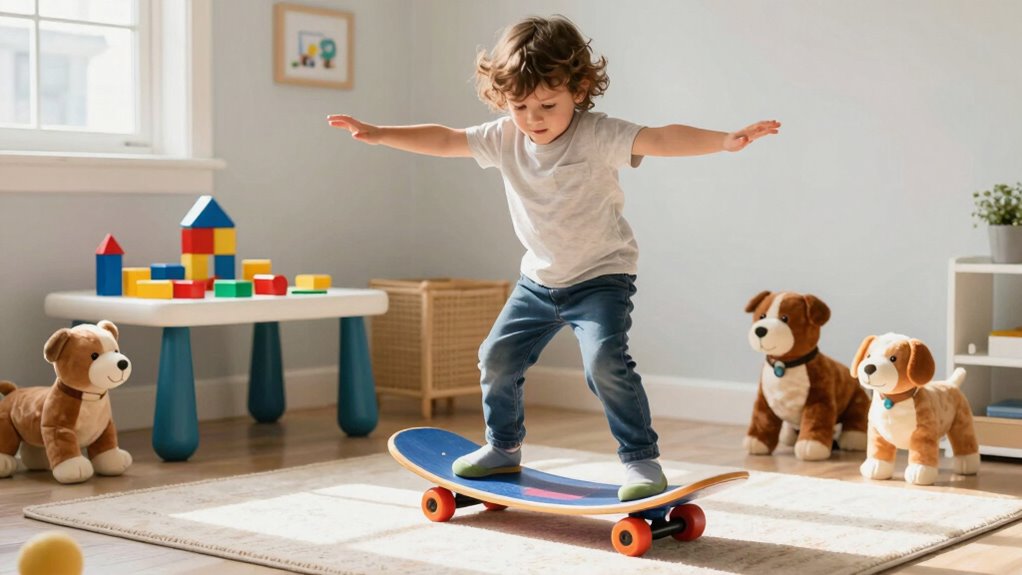
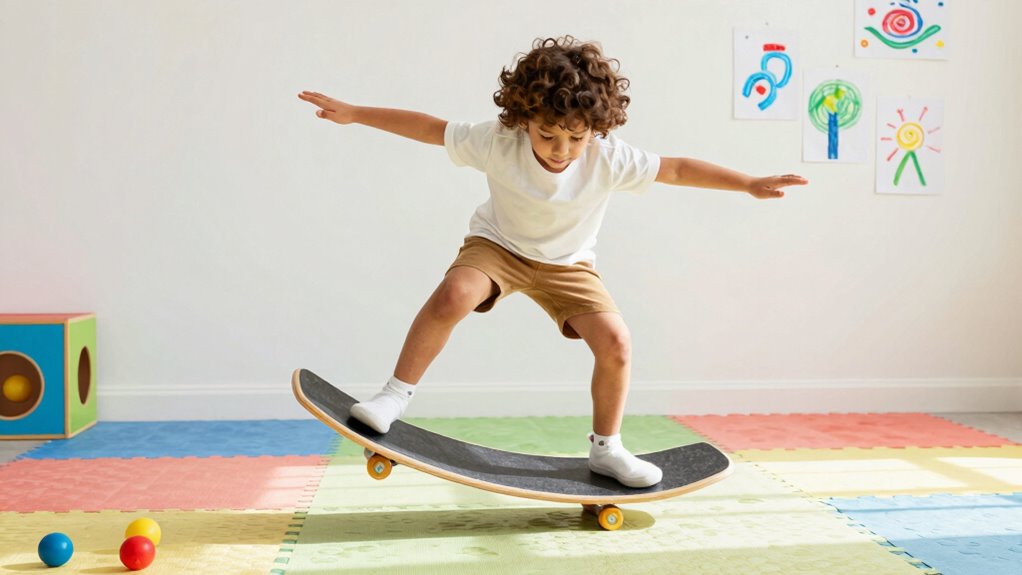
Wobble boards are more than just fun balance tools—they actively support the development of coordination and creativity in children. When you let your child stand, sit, or move on a wobble board, you’re giving them a chance to improve their balance in a way that’s engaging and enjoyable. Unlike static activities, wobble boards challenge children to adjust their body positions constantly, which boosts their overall stability and motor control. As they wobble, they learn to stabilize themselves, strengthening the muscles involved in maintaining balance. Over time, this leads to noticeable balance improvement, helping your child become more confident in their movements.
Wobble boards boost children’s balance, coordination, and confidence through engaging, playful movement and stability challenges.
But wobble boards aren’t just about physical skills; they also open up a world of creative play. Children naturally love to imagine and invent scenarios, and the wobble board becomes a versatile prop in their play. They might pretend it’s a ship steering through rough seas, a mountain to climb, or a magic platform in a fantastical world. This type of imaginative play encourages your child to think creatively and develop storytelling skills. As they invent stories around their wobble board adventures, they integrate physical activity with cognitive development, fostering a well-rounded growth experience. Additionally, incorporating balance training into their play routines enhances their coordination further. Incorporating motor skill development principles can help optimize their progress and ensure they gain the most benefit from these activities.
Using a wobble board encourages your child to experiment with different ways of moving. They might try balancing on one foot, jumping on and off, or creating obstacle courses. These activities promote creative play by pushing them to think outside the box about how to use their balance tools. This spontaneity keeps the activity fresh and exciting, motivating your child to keep practicing and exploring. As they develop their coordination through playful experimentation, they also build confidence in their ability to try new things and overcome challenges. This sense of accomplishment translates to other areas of life, encouraging resilience and problem-solving skills. The incorporation of sustainable practices can further support environmentally conscious play environments and materials. Embracing emerging trends in digital publishing can also introduce innovative ways to incorporate technology into play, making activities more engaging and personalized.
Furthermore, wobble boards can be incorporated into group activities, where children work together to achieve balance challenges or invent new games. This social aspect enhances their cooperative skills and encourages shared imaginative play. As they collaborate, they learn to communicate, negotiate, and support each other’s ideas, enriching their social development. Interestingly, recent AI discoveries related to physical activities and learning suggest that integrating technology can further personalize and enhance these play experiences. The fun and freedom of creative play on wobble boards make physical activity enjoyable rather than a chore, instilling a lifelong love for movement and exploration.
Ultimately, wobble boards serve as a powerful tool to blend physical and imaginative growth. They help children improve their balance while inspiring endless creative play, making every session a chance to learn, imagine, and grow.
kids wobble board for balance and coordination
As an affiliate, we earn on qualifying purchases.
As an affiliate, we earn on qualifying purchases.
Frequently Asked Questions
Can Wobble Boards Help Improve Balance in Seniors?
Yes, wobble boards can help improve balance in seniors. They promote neurological benefits by stimulating the brain and enhancing sensory integration, which are vital for maintaining stability. As you use the wobble board, your muscles and nervous system work together, strengthening your balance and coordination. Regular practice can boost confidence, reduce fall risk, and support overall mobility, making daily activities easier and safer for seniors.
Are Wobble Boards Suitable for Children With Special Needs?
Yes, wobble boards are suitable for children with special needs. They promote sensory integration by challenging their balance and coordination, which can help improve motor skills. As your child uses the wobble board, they develop better body awareness and spatial orientation. Always supervise their activities to guarantee safety, and customize the difficulty level to match their individual needs, making it an effective, fun tool for therapy and development.
How Long Should Beginners Use Wobble Boards Daily?
You should start with just 5-10 minutes daily, as this small time frame makes a huge difference! To guarantee safety, follow exercise frequency recommendations and always supervise beginners. Gradually increase usage as their balance improves, but never push beyond comfort. Keep safety guidelines in mind, and listen to your child’s cues—overdoing it can be counterproductive. A steady routine helps build strength and confidence safely.
Can Wobble Boards Aid in Injury Rehabilitation?
Yes, wobble boards can aid in injury rehabilitation by supporting neurological recovery and proprioception enhancement. As you practice balancing on a wobble board, you stimulate neural pathways, helping your brain regain coordination skills. This dynamic activity also improves proprioception, which is essential for understanding joint position and movement. Incorporating wobble boards into your rehab routine can accelerate recovery, restore stability, and reduce the risk of future injuries.
What Materials Are Most Durable for Wobble Boards?
You should choose wobble boards made from durable materials like high-quality wood or reinforced plastic, as they offer excellent material longevity. These materials withstand frequent use and resist wear and tear. Also, look for a surface grip that’s non-slip, ensuring safety during balance exercises. This combination of sturdy construction and reliable grip helps you enjoy longer, safer sessions while enhancing coordination and imagination through active play.
children's imaginative play wobble board
As an affiliate, we earn on qualifying purchases.
As an affiliate, we earn on qualifying purchases.
Conclusion
Using wobble boards can greatly boost your coordination and spark your imagination. Imagine improving your balance with just a few minutes of practice each day—research shows that children who play on wobble boards develop better motor skills and creativity. Picture yourself confidently steering through new challenges, your mind and body working together seamlessly. Incorporating wobble boards into your routine isn’t just fun; it’s a powerful way to enhance your overall coordination and tap into your creative potential.
balance board for kids motor skills
As an affiliate, we earn on qualifying purchases.
As an affiliate, we earn on qualifying purchases.
kids balance and coordination toy
As an affiliate, we earn on qualifying purchases.
As an affiliate, we earn on qualifying purchases.
Fall Picks
fall essentials
As an affiliate, we earn on qualifying purchases.