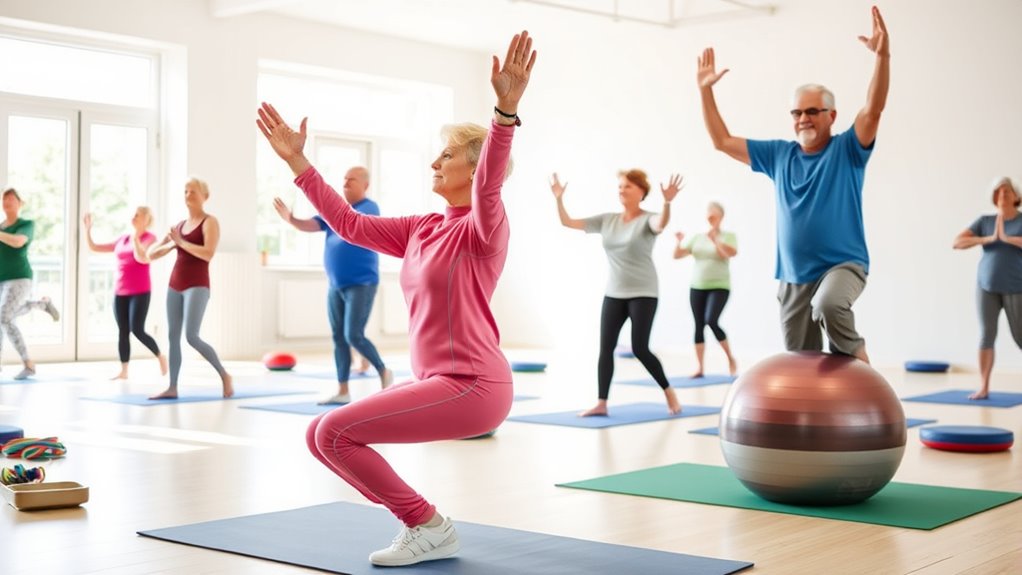

Creating exercise programs tailored for seniors focuses on improving balance, strength, and overall mobility to help you stay independent and reduce fall risks. Simple activities like standing on one foot, heel-to-toe walks, and resistance exercises can be effective when done regularly and safely. Working with fitness professionals can customize routines just for you, making exercise both enjoyable and achievable. Keep exploring to discover more ways to stay active and confident as you age.
Key Takeaways
- Customized programs incorporate balance and strength exercises suited to seniors’ abilities and safety needs.
- Regularly progressing routines help improve stability, muscle mass, and overall mobility.
- Combining simple balance and resistance exercises enhances independence and reduces fall risk.
- Professional guidance ensures exercises are safe, effective, and tailored to individual health conditions.
- Short, consistent sessions motivate seniors and support sustained engagement in physical activity.

As you age, staying active becomes increasingly important for maintaining your health and independence. One key aspect of staying balanced and strong is incorporating regular balance training into your routine. When you focus on improving your balance, you reduce the risk of falls, which can lead to serious injuries. Simple exercises like standing on one foot, heel-to-toe walks, or using balance boards can make a noticeable difference over time. These exercises challenge your stability and help strengthen the muscles that support your joints. It’s best to start slow, especially if you’re new to balance training, and gradually increase the difficulty as your confidence and strength grow. In addition to balance exercises, engaging in strength routines is essential for maintaining muscle mass and bone density. Strength routines can include bodyweight exercises such as squats, wall push-ups, or resistance band workouts. These activities help keep your muscles functional, making everyday tasks like climbing stairs or carrying groceries easier. Regularly practicing proper form during exercises can prevent injuries and enhance effectiveness. Consistency is key—aim for at least two to three strength sessions per week, focusing on major muscle groups. When you combine balance training with strength routines, you create a holistic approach that improves your overall stability, mobility, and confidence. This combination not only helps prevent injuries but also supports your ability to perform daily activities independently. To maximize benefits, consider working with a fitness professional who can tailor exercises to your specific needs and limitations. They can ensure proper form and progression, making your workouts both safe and effective. Remember, even gentle movements can deliver significant benefits if done regularly. You don’t need to spend hours in the gym; short, focused sessions are often enough to see improvement. It’s also important to listen to your body and avoid pushing yourself too hard too quickly. As you become more comfortable with your routine, you can gradually introduce more challenging balance exercises and resistance activities. Staying motivated can be easier when you set realistic goals and track your progress over time. Celebrate small achievements, like holding a balance pose longer or increasing resistance in your routines. Integrating these activities into your weekly schedule can become a rewarding part of your lifestyle, helping you stay active, healthy, and independent for years to come. Ultimately, committing to a balanced mix of balance training and strength routines empowers you to maintain your vitality and enjoy everyday life without unnecessary limitations.
senior balance exercise equipment
As an affiliate, we earn on qualifying purchases.
As an affiliate, we earn on qualifying purchases.
Frequently Asked Questions
How Do I Start Exercising if I’Ve Never Been Active Before?
If you’ve never been active before, start slowly with gentle stretching to loosen up your muscles. Incorporate balance training exercises to improve stability and prevent falls. Begin with short sessions, maybe 10 minutes a day, and gradually increase intensity as you feel comfortable. Listen to your body, stay consistent, and consider consulting a healthcare professional to create a safe, personalized plan that suits your needs and fitness level.
Are There Specific Exercises for Seniors With Joint Pain?
You might wonder if there are specific exercises for seniors with joint pain, and the answer is yes. You should focus on joint-friendly workouts and pain management exercises that gently strengthen muscles without stressing your joints. Activities like swimming, seated yoga, or gentle stretching can help. These options improve flexibility and reduce discomfort, making movement easier and more comfortable — and you’ll feel the difference as you stay active safely.
How Often Should Seniors Exercise for Optimal Health?
You should aim for at least 150 minutes of moderate exercise weekly, following senior fitness guidelines. Break this into sessions lasting about 30 minutes, five days a week, or opt for shorter sessions if needed. Consistency is key, so find activities you enjoy and stay active regularly. This exercise frequency helps boost your overall health, improve mobility, and maintain independence as you age.
Can Exercise Replace Medication for Chronic Conditions?
Exercise can sometimes serve as a medication alternative for certain chronic conditions, but it shouldn’t replace prescribed treatments without your doctor’s approval. Instead, focus on lifestyle changes that complement medication, such as regular physical activity, healthy eating, and stress management. These adjustments can improve your health and reduce reliance on medication, but always consult your healthcare provider to develop a safe and effective plan tailored to your needs.
What Should I Do if I Feel Dizzy During Exercise?
If you feel dizzy during exercise, stop immediately and sit down to prevent falls. Share your symptoms with your healthcare provider to address underlying causes like balance issues. Make sure you’re well-hydrated by following hydration tips, such as drinking water before, during, and after exercise. Take slow, deep breaths, and avoid sudden movements. Listening to your body helps prevent dizziness and keeps your exercise safe and effective.
resistance bands for seniors
As an affiliate, we earn on qualifying purchases.
As an affiliate, we earn on qualifying purchases.
Conclusion
As you explore these tailored exercise programs, you’re taking a bold step toward a healthier, more vibrant future. But remember, the journey doesn’t end here—each session could reveal new strength and confidence you never knew you had. Are you ready to discover what’s possible? Keep moving forward, stay committed, and watch how these routines transform your life in ways you never expected. The best is yet to come—are you prepared to find out?
walking stick with balance support
As an affiliate, we earn on qualifying purchases.
As an affiliate, we earn on qualifying purchases.
senior-friendly resistance training kit
As an affiliate, we earn on qualifying purchases.
As an affiliate, we earn on qualifying purchases.