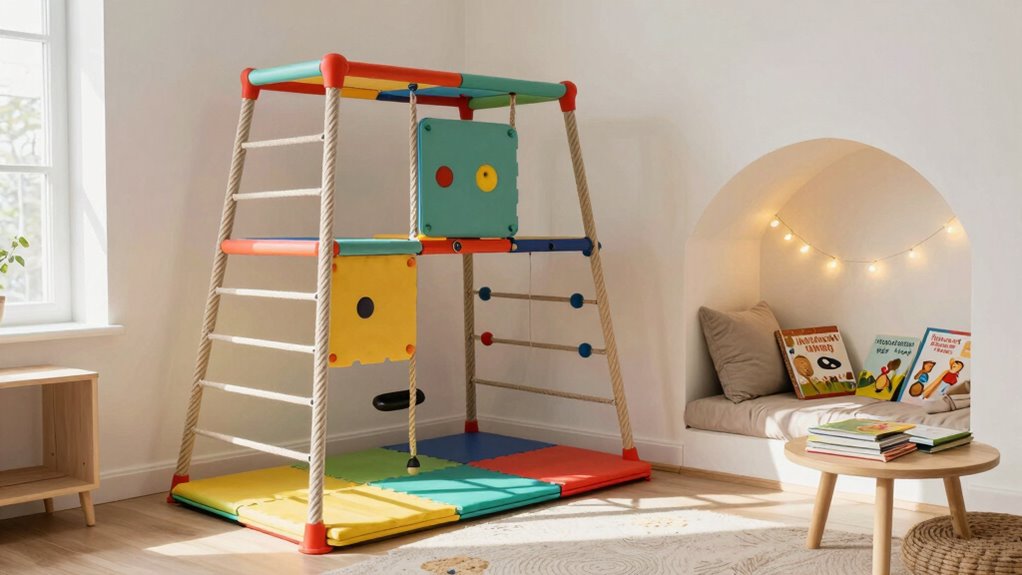

You need both challenge and calm in your home play space to support your child’s growth and emotional health. Challenge areas, like climbing or problem-solving, build confidence and resilience, while calm zones promote relaxation, mindfulness, and emotional regulation. Balancing these spaces helps your child explore freely and recharge when needed. Creating a seamless flow between active and restful areas encourages well-rounded development. Keep exploring to learn how to design the perfect environment for your child’s needs.

Get health and wellness essentials delivered free — and shop member deals
- Fast, free delivery on millions of items
- Access to Prime Big Deal Days deals on October 6–7
- Prime Video, Amazon Music and more included
Key Takeaways
- Balancing challenge and calm supports comprehensive development, fostering both resilience and emotional regulation.
- Challenge areas promote confidence and problem-solving skills, while calm zones nurture mindfulness and self-awareness.
- Seamless integration prevents overstimulation, helping children transition smoothly between active play and relaxation.
- Natural and sensory-rich spaces enhance engagement and provide soothing environments for emotional regulation.
- Flexibility in design allows spaces to adapt to changing developmental needs, ensuring balanced growth.
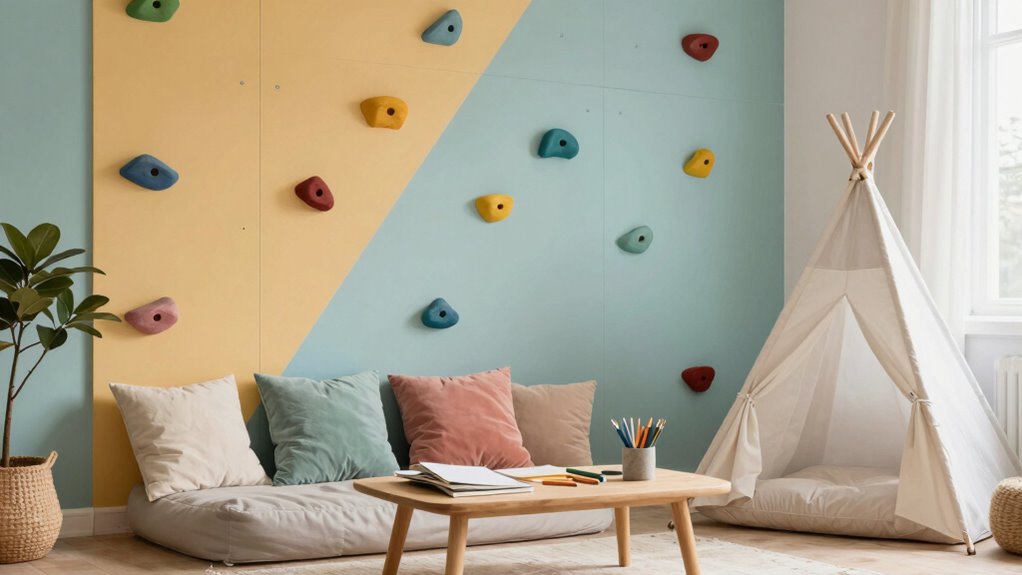
Have you ever wondered how your home environment can shape your child’s development and well-being? Creating a play space that balances challenge and calm is essential, as it directly influences how your child learns, grows, and feels. When you design areas that promote sensory integration, you help your child process different sensory inputs effectively, which is crucial for their overall development. Sensory-rich environments allow children to explore textures, sounds, sights, and movements, helping them develop their sensory systems in a natural and engaging way. This kind of sensory integration fosters focus, self-regulation, and emotional resilience, making your child better equipped to handle everyday experiences.
At the same time, offering spaces that provide calm is equally important. Calm areas serve as retreats where your child can decompress, reflect, and regain emotional balance. These spaces help prevent overstimulation, which can lead to frustration or anxiety. When a child feels safe and relaxed in a designated calming corner or quiet nook, they develop a sense of security that encourages independent play and self-awareness. A calm environment also supports imaginative exploration, allowing your child to delve into stories, pretend scenarios, or quiet activities that spark creativity and cognitive growth. Incorporating natural elements into calm spaces can further enhance relaxation and promote a sense of tranquility.
Balancing challenge and calm in your home play spaces encourages a healthy rhythm of activity and rest. Challenge areas might include climbing structures, problem-solving toys, or open-ended materials that push your child’s physical, cognitive, and emotional boundaries. These activities stimulate growth, build confidence, and foster resilience as your child learns to navigate obstacles and discover new skills. Conversely, calm zones nurture mindfulness and introspection, giving your child space to process their experiences and emotions without feeling overwhelmed. Incorporating sensory-rich elements into your environment can further enhance your child’s ability to regulate and engage with their surroundings effectively. Additionally, understanding the importance of early socialization can help in designing spaces that promote positive interactions and emotional development.
Integrating both elements into your home isn’t about creating separate spaces but rather designing environments that flow seamlessly. For example, you might have a vibrant, sensory-rich corner with textured mats, musical instruments, and art supplies, adjacent to a cozy nook with soft cushions and dim lighting. This layout allows your child to transition smoothly between energetic exploration and tranquil reflection, promoting a well-rounded developmental experience. As you curate these spaces, keep in mind that the key is flexibility—allowing your child to move freely between challenge and calm as they grow, learn, and explore their world. By thoughtfully balancing these elements, you provide a nurturing environment that supports their full spectrum of development.
As an affiliate, we earn on qualifying purchases.
Frequently Asked Questions
How Can I Balance Challenge and Calm in Limited Space?
To balance challenge and calm in limited space, get creative with brainstorming ideas that serve both purposes. Incorporate sensory exploration by adding textured fabrics or calming lights for calming activities, and use vertical space or multi-functional furniture for challenging play. Flexibility is key—swap activities based on your child’s mood. This approach keeps the environment stimulating yet soothing, promoting healthy development without overcrowding your space.
What Safety Measures Are Essential for Challenging Play Areas?
You must prioritize safety in challenging play areas—think of it as the difference between a fun adventure and a potential disaster! Implement strict supervision protocols, watching every move like a hawk. Conduct thorough hazard assessments regularly to spot risks before they become problems. Use age-appropriate equipment, soft landing surfaces, and clear boundaries. These measures guarantee your child can explore safely, fostering confidence while minimizing accidents in their exciting play environment.
How Do Challenge and Calm Areas Support Different Age Groups?
Challenge and calm areas support different age groups by promoting sensory integration and emotional regulation. Younger children benefit from calm spaces where they can relax and process sensory input, while older kids thrive with challenging activities that develop coordination and resilience. By offering both, you help children of all ages manage emotions and sensory needs effectively, fostering a balanced environment that encourages growth, exploration, and emotional stability.
Can Challenge and Calm Spaces Be Combined Effectively?
A clever layout can seamlessly combine challenge and calm spaces, proving that variety is the spice of life. You can create a creative layout that integrates sensory integration elements with designated zones for both active and relaxing play. By thoughtfully blending these areas, children can shift smoothly from energetic challenges to calming activities, fostering development and comfort. It’s all about designing a versatile space that adapts to their needs and moods.
How Often Should I Rotate Play Activities for Variety?
You should rotate play activities every one to two weeks to keep sensory integration engaging and prevent boredom. This allows your child to explore new textures, sounds, and challenges, fostering creative exploration. Regularly changing activities keeps their curiosity alive and helps develop different skills. Pay attention to their interests and mood, adapting the rotation schedule as needed to maintain a balanced mix of calm and challenging experiences.
As an affiliate, we earn on qualifying purchases.
Conclusion
Now that you know why your home play space needs both challenge and calm, the real question is—are you ready to create that perfect balance? Imagine the endless possibilities when your child experiences the thrill of discovery alongside moments of peaceful reflection. Will you take the step to design a space that nurtures growth and serenity? The choice is yours, and the future of your child’s development might just depend on it. Are you prepared to make it happen?
children's climbing and problem-solving toys
As an affiliate, we earn on qualifying purchases.
As an affiliate, we earn on qualifying purchases.
natural sensory toys for toddlers
As an affiliate, we earn on qualifying purchases.
As an affiliate, we earn on qualifying purchases.
Fall Picks
fall essentials
As an affiliate, we earn on qualifying purchases.