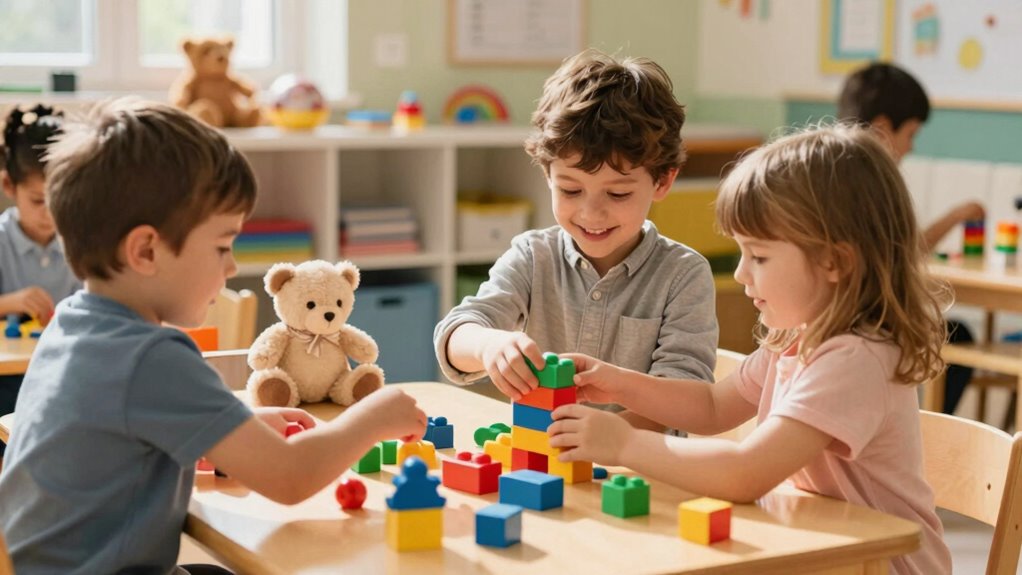

Play helps children understand and manage their emotions through imaginative and social experiences. When kids engage in pretend play or explore outdoor spaces, they develop empathy, patience, and confidence. Unstructured play teaches resilience by letting children cope with setbacks, while social interactions build their ability to interpret facial cues and express feelings. By supporting these playful activities, you foster emotional growth and self-awareness, and if you keep exploring, you’ll discover even more ways play nurtures emotional intelligence.
Key Takeaways
- Play helps children recognize and understand their own emotions through imaginative and role-playing activities.
- Engaging in social play enhances understanding of social cues, facial expressions, and emotional responses.
- Unstructured play fosters emotional resilience by teaching children to cope with setbacks and frustrations.
- Play in safe environments encourages emotional expression, exploration, and regulation without fear of judgment.
- Participating in shared play experiences builds empathy, patience, and emotional connection with others.
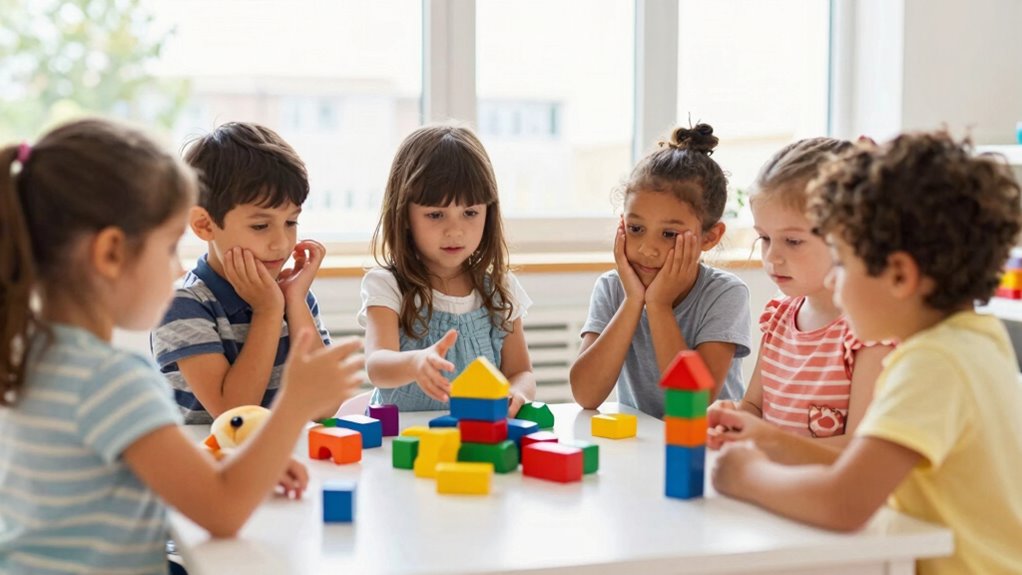
Have you ever wondered how play influences a child’s ability to understand and manage their emotions? Play isn’t just about having fun; it’s a powerful tool that shapes emotional intelligence in early childhood. When children engage in play, especially in activities that involve fantasy exploration, they learn to navigate complex feelings and develop empathy. Fantasy exploration allows children to step into different roles and scenarios, helping them process their own emotions and understand those of others. For example, pretending to be a doctor or a superhero helps them practice patience, confidence, and compassion. Through these imaginative experiences, children become more aware of their emotional responses and gain the skills to regulate them. Incorporating outdoor play spaces can further enhance their emotional development by providing a natural environment for spontaneous and unstructured play. Additionally, play environments that promote safe exploration can encourage children to experiment with emotional expression without fear of judgment. Creating supportive play settings is essential for nurturing emotional resilience and fostering a sense of security. Engaging in unstructured play also allows children to develop their emotional resilience by learning how to cope with setbacks and frustrations in a supportive setting. A well-designed play environment can serve as a foundation for meaningful emotional growth and self-awareness.
Play fosters emotional understanding and empathy through imaginative role-playing and fantasy exploration.
Social bonding is another crucial aspect of play that fosters emotional growth. When children play together, they build connections through shared experiences, which deepens their understanding of social cues and emotional expressions. These interactions teach kids how to read facial expressions, tone of voice, and body language—skills essential for managing relationships and emotions. As they negotiate rules, share toys, or resolve conflicts during play, they develop empathy and patience. You might notice that children who frequently engage in social play are better at expressing their feelings and understanding others’ perspectives, which are core components of emotional intelligence.
emotional intelligence toys for preschoolers
As an affiliate, we earn on qualifying purchases.
As an affiliate, we earn on qualifying purchases.
Frequently Asked Questions
How Does Play Influence a Child’s Empathy Development?
You can see play influence a child’s empathy development by encouraging emotional recognition through role-playing and pretend games. As they act out different scenarios, they learn to understand others’ feelings, fostering empathy. By engaging with peers during play, your child practices perspective-taking, which strengthens their ability to recognize emotions and respond compassionately. Play creates a safe space where children develop essential social-emotional skills that last a lifetime.
Are There Specific Types of Play That Boost Emotional Skills More?
Think of play as a bridge connecting your child’s heart and mind. Specific types of play, like role-playing or cooperative games, are especially effective in boosting emotional skills. These activities encourage children to understand others’ feelings, practice empathy, and manage emotions. Engaging in diverse play experiences helps develop emotional intelligence, making your child more adaptable and emotionally aware. The more they play, the more their emotional skills grow.
How Can Parents Encourage Emotional Learning During Play?
You can encourage emotional learning during play by engaging in expressive activities and emotional storytelling with your child. Encourage them to express their feelings through art, role-playing, or storytelling, which helps them identify and understand emotions. Ask open-ended questions to promote reflection and empathy. By actively participating, you foster a safe space where your child feels comfortable exploring and managing their emotions, strengthening their emotional intelligence naturally through play.
What Role Do Peers Play in Emotional Intelligence Through Play?
Peers play an essential role in emotional intelligence by fostering peer collaboration and emotional sharing. When you observe children working together, they learn to recognize and respond to each other’s feelings, building empathy. Through sharing emotions during play, they develop better emotional understanding and regulation. Encouraging peer interactions helps children navigate social cues, strengthen relationships, and build confidence, all vital components of emotional intelligence.
How Does Cultural Background Affect Play and Emotional Growth?
Your cultural background shapes how you approach play and emotional growth. While some cultures emphasize structured, rule-based play rooted in cultural norms, others favor imaginative, open-ended play that fosters emotional expression. These diverse play styles influence how children learn to understand emotions, develop empathy, and navigate social interactions. By recognizing these differences, you can support children’s emotional intelligence, respecting cultural values while encouraging meaningful play experiences.
As an affiliate, we earn on qualifying purchases.
Conclusion
As you nurture your child’s play, you’re laying the foundation for their emotional intelligence, helping them navigate feelings with confidence and empathy. Remember, just like the cherished lullabies of yesteryear, play connects hearts and minds, shaping their future. By fostering these early moments, you’re giving your little one the tools to thrive—today, tomorrow, and in every age to come. Truly, play is the timeless bridge to their emotional well-being.
As an affiliate, we earn on qualifying purchases.
As an affiliate, we earn on qualifying purchases.