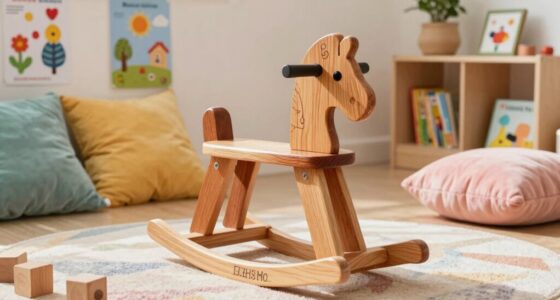

To build a home play environment around your child’s development needs, create designated zones for different activities like reading, art, and active play. Use soft ground coverings and safe, age-appropriate equipment to guarantee safety. Incorporate sensory elements with textured toys, natural materials, and visual stimuli to boost engagement. Encourage independence with organized, clutter-free spaces and teach safety boundaries through active participation. Keep exploring options to optimize your child’s growth and enjoyment even further.
Listen free for 30 days with Audible
Thousands of audiobooks and originals — cancel anytime.
As an affiliate, we earn on qualifying purchases.
Key Takeaways
- Design designated zones for different activities to support varied developmental skills like motor, sensory, and cognitive growth.
- Incorporate sensory play elements with natural and textured materials for hands-on learning and exploration.
- Ensure safety with secure fencing, hazard-free equipment, and regular inspections to promote confident, independent play.
- Use vibrant visuals, natural elements, and natural lighting to stimulate sensory development and create engaging environments.
- Model safe behaviors, set boundaries, and guide children to foster independence and teach important safety and social skills.

Creating a dedicated play environment at home can markedly boost your child’s development and make playtime more enjoyable. When designing this space, focusing on safety is vital, especially regarding outdoor safety. You want to create a secure area where your child can explore freely without unnecessary risks. Use soft ground coverings like rubber mats or grass to cushion falls, and choose sturdy, well-maintained equipment that’s appropriate for your child’s age. Keep sharp objects, small choking hazards, and toxic plants out of reach, and make sure that fences or barriers prevent unsupervised wandering. Regularly inspect the area for hazards, and teach your child about safe play boundaries to foster independence while maintaining safety.
Creating a safe, engaging outdoor play area fosters independence and supports your child’s growth.
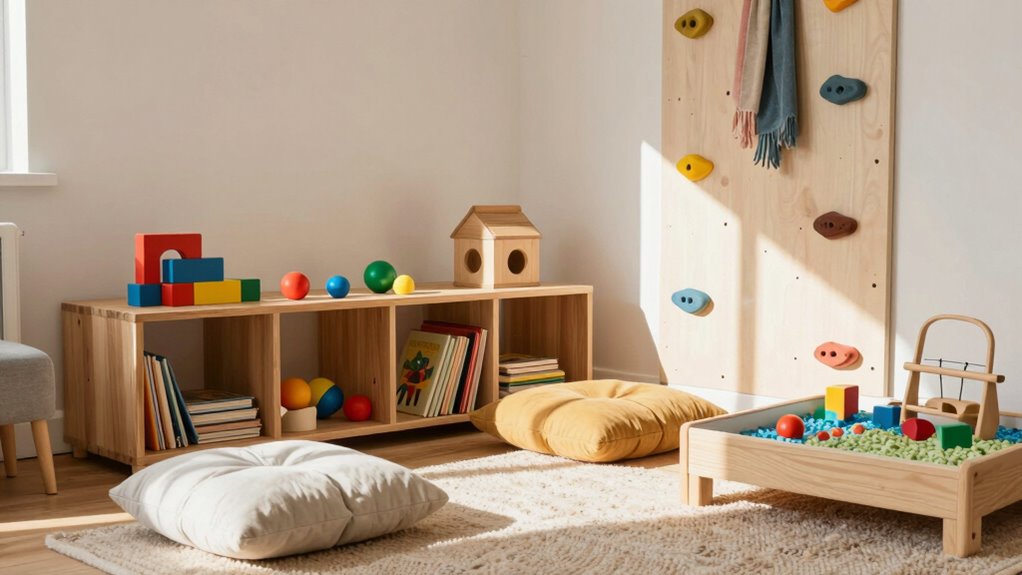
Incorporating sensory play into your home environment is another key step. Sensory activities stimulate your child’s senses and support cognitive, motor, and emotional development. You might include textured toys, sensory bins filled with rice, beans, or water beads, or natural materials like leaves and stones. These elements encourage exploration and help your child develop fine motor skills and sensory processing abilities. Position these sensory stations at accessible heights and make certain they’re easy to clean to keep the space inviting and hygienic. Adding mirrors, colorful visuals, or fragrant herbs can further enhance sensory engagement, making playtime both fun and educational. Additionally, understanding the importance of color accuracy in projectors can help you create a vibrant and stimulating visual environment for your child’s activities. Incorporating natural elements can also deepen sensory experiences and foster a closer connection to the outdoors. Moreover, choosing age-appropriate and well-maintained equipment ensures both safety and engagement during play.
To create a balanced environment, consider the layout carefully. Designate specific zones for different types of play—such as a quiet corner for reading, a creative space for art projects, and an active area with climbing or riding toys. This organization helps your child understand the purpose of each space and promotes a variety of developmental activities. Keep the area clutter-free by regularly tidying up and rotating toys to sustain your child’s interest and prevent overstimulation. A well-organized space can also help in maintaining safety by reducing trip hazards and encouraging orderly play.
Remember that your involvement is vital. Participate in play to model behaviors, encourage exploration, and offer guidance to guarantee safety and enhance learning. Use outdoor safety rules as teaching moments for your child, helping them understand boundaries and risks in a constructive way. By thoughtfully building a home play environment centered on safety and sensory experiences, you give your child the tools they need to grow confidently, learn actively, and enjoy their playtime to the fullest.
age-appropriate outdoor play equipment
As an affiliate, we earn on qualifying purchases.
As an affiliate, we earn on qualifying purchases.
Frequently Asked Questions
How Can I Ensure Safety in a Home Play Area?
You can guarantee safety by choosing appropriate playground equipment and following safety guidelines. Regularly inspect all items for damage or wear, and secure equipment firmly to the ground. Keep the area clear of sharp objects and hazards, and use soft, impact-absorbing surfacing like mulch or rubber mats. Supervise children constantly, and teach them safe play practices. Adhering to safety guidelines helps create a secure environment where kids can explore freely and safely.
What Budget Is Realistic for a Home Play Environment?
You can create a safe, engaging home play environment with a realistic budget of around $200 to $500, depending on your space and needs. Don’t worry—effective budget planning involves prioritizing versatile, durable items and using cost-effective solutions like repurposed furniture or DIY crafts. This approach guarantees you build a stimulating environment without overspending, making playtime both fun and affordable for your child’s development.
How Do I Involve Children in Designing the Space?
You involve children in designing the space through child-led planning, letting their ideas shape the environment. Encourage them to choose colors, furniture, and activities, promoting inclusivity by considering their diverse needs and interests. Ask for their feedback regularly, and adapt the design accordingly. This approach makes the space meaningful, empowering children to take ownership while ensuring the environment supports their development and inclusivity.
What Are the Best Materials for Durability and Safety?
You should choose playground equipment made from durable materials like high-quality plastic, metal, or wood, ensuring they withstand wear and tear. Opt for equipment with non-toxic finishes to keep your children safe from harmful chemicals. Always verify that the materials meet safety standards, and avoid sharp edges or splinters. This way, your play area remains safe, long-lasting, and fun for your kids to explore and enjoy.
How Can I Adapt the Environment as My Child Grows?
Think of your child’s play space as a living garden that needs tending. You can adapt it by creating a flexible, creative layout that evolves with their interests. Incorporate elements for sensory integration, like textured mats or adjustable lighting, to stimulate development. As your child grows, swap out toys and rearrange furniture to keep the environment engaging and supportive, ensuring it nurtures their changing needs and keeps playtime fresh and inspiring.
As an affiliate, we earn on qualifying purchases.
Conclusion
Creating a home play environment tailored to your child’s development needs is like planting a garden—nurturing growth, curiosity, and joy. By thoughtfully designing spaces that inspire exploration, you lay a solid foundation for their future. Remember, the right environment acts as a guiding compass, steering their imagination and skills in the right direction. When you build with purpose, you’re not just creating a play area; you’re cultivating a world where your child’s potential blossoms like a vibrant bouquet.
As an affiliate, we earn on qualifying purchases.
children's art and activity tables
As an affiliate, we earn on qualifying purchases.
As an affiliate, we earn on qualifying purchases.
Flea & tick season Picks
flea and tick prevention
As an affiliate, we earn on qualifying purchases.