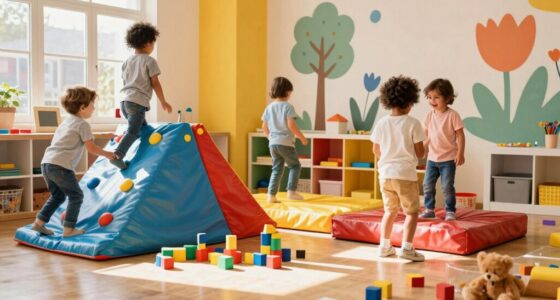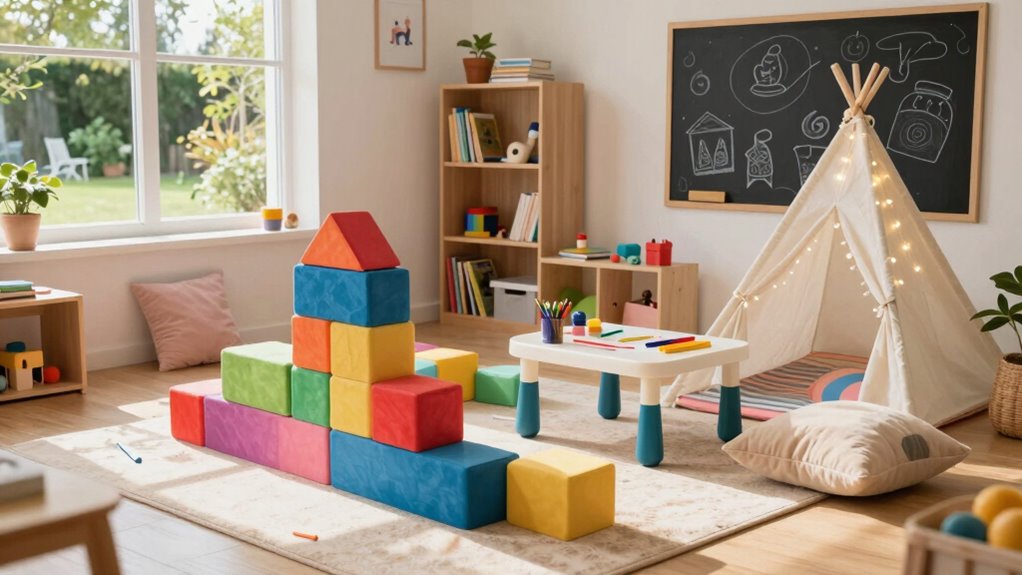

To plan a play space that evolves with your child, focus on flexible, modular designs that can be easily updated and expanded. Incorporate sensory activities with textures, colors, and sounds that match your child’s growth, and choose outdoor equipment that adapts to increasing skills. Create zones for different interests, like quiet corners or active play areas, and prioritize safety with durable materials. Keep the environment engaging and adaptable—if you keep exploring, you’ll find ways to foster curiosity and confidence at every stage.
Open a free Amazon Business account
Business pricing, bulk buying and tax-exempt orders.
As an affiliate, we earn on qualifying purchases.
Key Takeaways
- Incorporate modular, adjustable equipment that can be modified as your child’s abilities grow.
- Design multiple zones for different activities, allowing flexibility and adaptation over time.
- Use versatile sensory elements that can be easily updated to match evolving interests and developmental stages.
- Prioritize safety features that can be maintained and enhanced as your child develops new skills.
- Plan for long-term growth by integrating technology and expandable features to foster curiosity and learning.
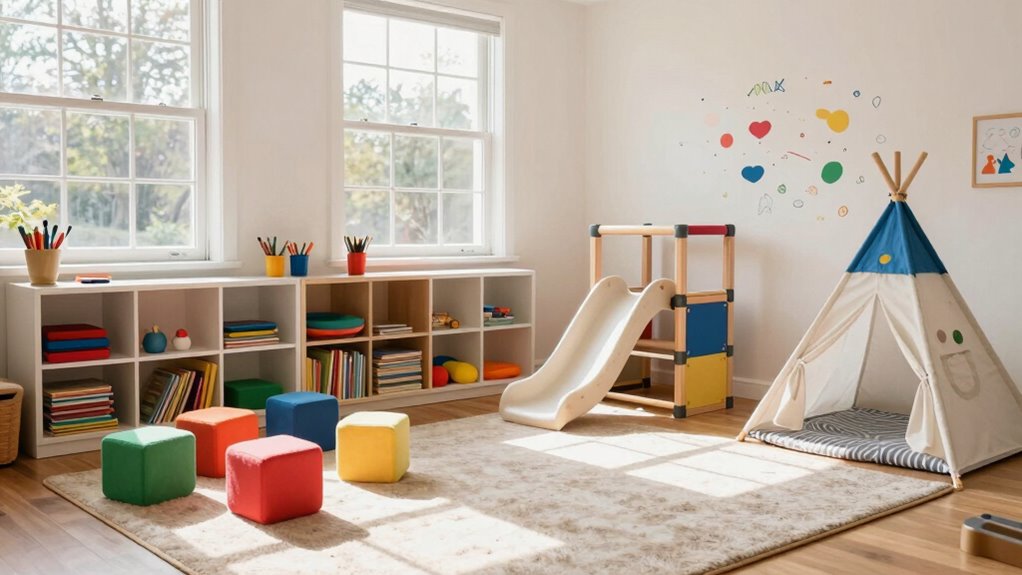
Have you ever wondered how to create a play space that grows with your child? It’s a smart question because kids change quickly, and a static play area might soon feel outdated or underwhelming. To design a space that adapts over time, you need to think about flexibility and variety. Sensory activities are a fantastic starting point because they engage multiple senses and can be tailored to your child’s evolving interests and developmental stages. Incorporate different textures, colors, and materials—think soft mats, textured walls, or water tables—that stimulate touch, sight, and sound. These elements encourage exploration and can be easily updated or supplemented as your child grows, keeping the space fresh and engaging.
Create a flexible play space with sensory activities that evolve with your child’s growth and interests.
When planning outdoor equipment, focus on modular and versatile options. For example, choose a sturdy swing set that can accommodate different ages or a climbing frame that you can add accessories to over time. Consider including adjustable features like a slide with different height settings or a set of balance beams that can be rearranged. As your child matures, they’ll appreciate challenges that match their increasing strength and coordination, so select equipment that can evolve with their skills. Additionally, outdoor areas should include open space for free play, which remains valuable regardless of age. This allows your child to run, jump, and invent games, fostering creativity and physical development. Incorporating playground safety considerations is essential to ensure this evolving environment remains secure as your child develops new skills. Regularly updating safety measures and inspecting equipment can help prevent accidents as your child’s physical abilities improve.
To further support their development, integrating bioluminescent-inspired lighting can make the space enchanting and functional during evening hours, encouraging safe outdoor play after sunset. Emphasizing safety features during the planning process ensures the space remains a secure environment as your child’s independence grows.
Incorporate zones within your play space to cater to different activities and age groups. For instance, a cozy corner with seating for reading or quiet time can be just as important as active zones with climbing or ball pits. As your child develops new interests, these zones can be expanded or redesigned. For example, a small gardening corner might become a science project station or a craft area later on. Keep in mind that safety is paramount, especially with outdoor equipment. Regularly check for wear and tear, and choose durable, weather-resistant materials that withstand the elements. This guarantees the play space remains inviting and safe for years to come.
Ultimately, planning a play space that evolves with your child involves balancing fun, safety, and adaptability. By selecting sensory activities that can be expanded and outdoor equipment that can grow with their abilities, you create a dynamic environment that encourages exploration and development at every stage. This approach not only saves you money in the long run but also nurtures your child’s curiosity, confidence, and love of play for years ahead. A well-designed space can also incorporate projector technology, allowing for interactive learning and entertainment options as your child grows older.
As an affiliate, we earn on qualifying purchases.
Frequently Asked Questions
How Can I Ensure the Space Is Safe as My Child Grows?
To keep your child’s play space safe as they grow, regularly perform safety inspection routines to spot potential hazards. Implement child-proofing measures like outlet covers, corner protectors, and secure furniture. Stay vigilant and adapt the space as your child develops, removing or modifying equipment that no longer fits their age or abilities. Consistent supervision and routine safety checks make certain your child’s environment remains safe and engaging at every stage.
What Materials Are Best for a Durable, Flexible Play Area?
You should opt for durable, flexible materials like high-quality foam, rubber flooring, and eco-friendly options such as cork or bamboo. Incorporate creative storage solutions like multi-functional furniture and colorful bins to keep the space organized and adaptable. These materials withstand wear and tear, while flexible storage keeps the area versatile as your child grows. Choosing eco-friendly options also supports sustainability and guarantees a safe, healthy environment.
How Often Should I Update the Play Space?
Think of your play area as a living canvas that needs regular updates to stay inspiring. You should refresh and adapt it every 6 to 12 months, depending on your child’s changing interests and growth. Prioritize design flexibility, adding modular pieces or adjustable zones. This way, your play area remains engaging, functional, and perfectly suited for your child’s evolving needs, making playtime a continuously exciting adventure.
Can a Small Space Still Be Versatile for Different Ages?
Yes, a small space can be versatile for different ages by using multi-purpose furniture and a modular design. Opt for fold-away beds, stackable chairs, or storage units that serve multiple functions. Incorporate adjustable elements like height-changing tables and flexible play zones. This way, you maximize limited space, creating an adaptable environment that grows with your child and accommodates various activities and age groups effortlessly.
How Do I Involve My Child in Designing the Space?
You involve your child in designing the space by discussing their preferences and encouraging their ideas. Use design collaboration to make them feel invested, asking about favorite colors, toys, or activities. Observe what excites them and incorporate those elements into the plan. Let them choose a few decor pieces or suggest new features, making the process fun and empowering, so the space truly reflects their personality and evolving interests.
As an affiliate, we earn on qualifying purchases.
Conclusion
As your child grows, so should their play space—from toddler toys to tween hangouts. While it’s tempting to keep things static, embracing change keeps the space vibrant and engaging. Think of it as a canvas that evolves with their interests, balancing the innocence of early years with the independence of adolescence. In the end, a flexible, thoughtfully designed play area becomes a reflection of their journey—ever-changing, yet always a sanctuary for growth.
children's safety outdoor play equipment
As an affiliate, we earn on qualifying purchases.
As an affiliate, we earn on qualifying purchases.
expandable climbing frame for kids
As an affiliate, we earn on qualifying purchases.
As an affiliate, we earn on qualifying purchases.
NFL season / tailgating Picks
team gear
As an affiliate, we earn on qualifying purchases.