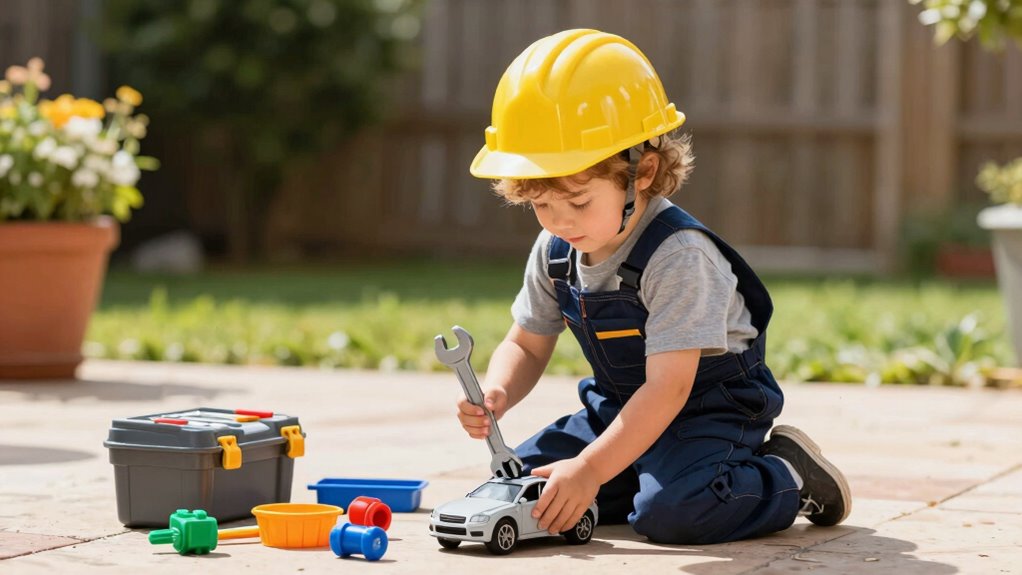

Pretend repair play helps your child build confidence by letting them experiment, make mistakes, and succeed in a safe environment. As they mimic real-world tasks, like fixing or building, they develop their coordination and motor skills through manipulating small objects and tools. This playful approach encourages independence and problem-solving, boosting self-assurance. Plus, their social skills and understanding grow as they collaborate and communicate. Keep exploring to discover more ways this fun activity supports their development.

Get health and wellness essentials delivered free with Prime
- Fast, free delivery on millions of items
- Prime Video, Amazon Music and more included
- Member-only deals all year
Key Takeaways
- Repeated manipulation of tools enhances fine motor skills and hand-eye coordination.
- Successfully completing pretend repair tasks boosts children’s confidence in their abilities.
- Role-playing encourages practice, reducing fear and increasing comfort with real-world procedures.
- Collaborative play develops social skills and teamwork, fostering physical and emotional coordination.
- Engaging in safe, hands-on activities promotes independence and mastery of new physical skills.
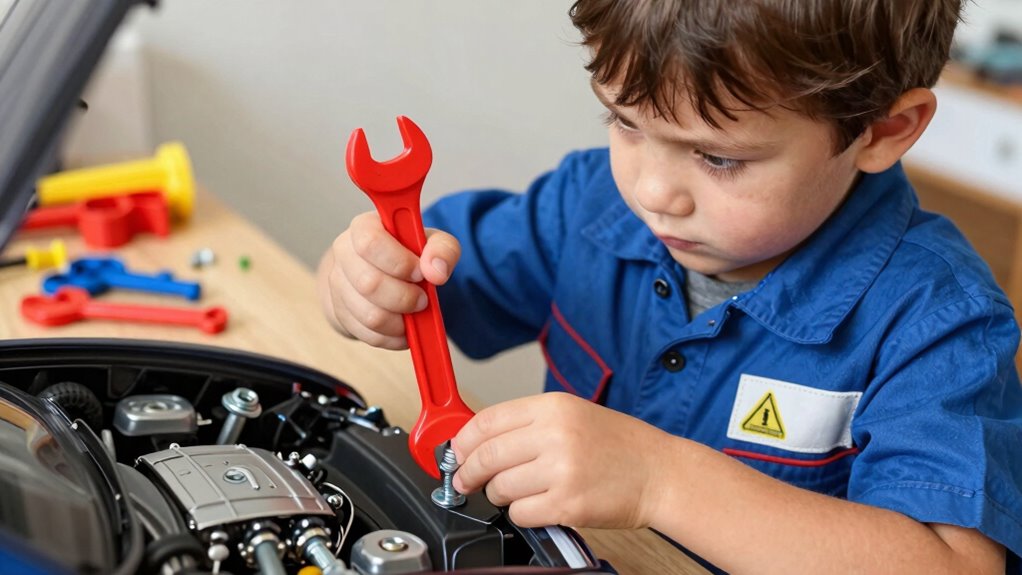
Have you ever noticed how kids naturally immerse themselves in pretend repair play, transforming simple tools into gateways for learning? It’s fascinating to watch as they pick up a toy hammer or screwdriver, completely absorbed in imagining they’re fixing a broken chair or building a house. This kind of play isn’t just fun—it’s a powerful way for children to develop essential skills. When they mimic construction skills, they’re practicing hand-eye coordination, fine motor control, and problem-solving. They learn how to hold tools correctly, apply just the right amount of pressure, and follow a sequence of steps to complete a task. Over time, these activities build their confidence because they see that they can accomplish something on their own, even if it’s just pretend.
Kids’ pretend repair play boosts coordination, problem-solving, and confidence through imaginative, hands-on learning.
Pretend repair play also helps children understand real-world processes, like dental procedures or construction projects, in a way that’s accessible and engaging. For example, when they pretend to be dentists, they familiarize themselves with the concept of health and hygiene. They learn about the importance of caring for teeth, and this can reduce fears about visiting the dentist. By role-playing as a dentist, they gain a sense of mastery over the procedure, which boosts their confidence in unfamiliar situations. Similarly, when they act as builders or architects, they get to plan, measure, and assemble, which mirrors actual construction skills. This playful mimicry encourages curiosity about how things work and fosters a sense of independence. Developing these early motor skills through pretend repair play can support their overall physical development.
As they repeatedly practice these pretend activities, children develop better coordination. They learn to coordinate their hands and eyes, to manipulate small objects, and to move with purpose. This improved coordination translates into other areas of life, like tying shoelaces or riding a bike. Plus, the social aspect of pretend repair play—working with siblings or friends—teaches them to communicate clearly, share tools, and negotiate roles. These interactions further build their confidence, as they realize they can collaborate and contribute meaningfully to a shared project. Engaging in body awareness activities through pretend repair play can enhance their ability to control movements and improve overall coordination.
Ultimately, pretend repair play offers children a safe space to experiment, make mistakes, and succeed. It nurtures their confidence by showing them they’re capable of understanding complex ideas, whether it’s fixing a leaky faucet or performing a dental check-up. Meanwhile, the physical aspects of manipulating tools and coordinating movements sharpen their motor skills, laying a foundation for more advanced construction skills later on. This playful learning environment empowers children, helping them grow into confident, capable individuals prepared to tackle real-world challenges. Recognizing the importance of play-based learning can help caregivers foster these beneficial activities more intentionally.
As an affiliate, we earn on qualifying purchases.
Frequently Asked Questions
What Age Is Best for Pretend Repair Play?
You can start pretend repair play around age three, as it’s age-appropriate and supports developmental benefits like fine motor skills and imaginative thinking. At this stage, children enjoy mimicking adults and exploring tools, which builds their confidence and coordination. As they grow, they’ll refine their skills and deepen their understanding. Engaging in pretend repair play at the right age helps develop essential skills while having fun, fostering creativity and independence.
Are There Safety Concerns During Pretend Repair Activities?
Sure, pretend repair play is safe—if you keep your eyes on your child and follow safety precautions. Ironically, the real danger isn’t the toy tools, but neglecting supervision. Always supervise, verify tools are age-appropriate, and set boundaries to prevent accidents. Child supervision is your best defense against potential hazards, making pretend play fun and safe while boosting your child’s confidence and coordination.
How Can Parents Encourage Creative Repair Scenarios?
You can encourage creative repair scenarios by engaging your child in imaginative storytelling and role-playing activities. Suggest they pretend to fix a broken toy or appliance, and join in their role-playing to make it more fun. Provide simple tools or props to inspire their ideas and encourage them to think creatively. This approach helps boost their confidence, problem-solving skills, and coordination while making pretend repair play enjoyable and educational.
What Materials Are Safest for Pretend Repair Play?
Did you know that 85% of toy recalls involve safety issues related to material durability? For pretend repair play, stick to safe, non-toxic materials like plastic, wood, or fabric. These materials are durable and less likely to break into harmful pieces. Always check for toy safety labels, guarantee smooth edges, and avoid small parts that could be swallowed. Your child’s safety depends on choosing the right materials for imaginative, worry-free play.
How Does Pretend Repair Play Support Emotional Development?
Pretend repair play boosts your child’s emotional resilience by helping them process feelings of problem-solving and success. It encourages social skills as they interact, cooperate, and negotiate roles with others. Through imaginative scenarios, they learn to manage emotions, build confidence, and develop empathy. This type of play provides a safe space for your child to explore and express their feelings, fostering emotional growth and stronger social connections.
children's pretend construction play kit
As an affiliate, we earn on qualifying purchases.
As an affiliate, we earn on qualifying purchases.
Conclusion
As you encourage pretend repair play, you empower your child to embrace challenges with confidence and coordination. Watching them wield wrenches and fix imaginary flaws fosters a fearless, fun-filled foundation for future skills. With every giggle and goal, they grow more confident and coordinated, cultivating curiosity and creativity. So, support their playful pursuits, and see how their skills soar, shaping strong, self-assured youngsters ready to face the world with wonder and willingness.
As an affiliate, we earn on qualifying purchases.
toy screwdriver and hammer set for kids
As an affiliate, we earn on qualifying purchases.
As an affiliate, we earn on qualifying purchases.
Cold & flu season Picks
humidifiers
As an affiliate, we earn on qualifying purchases.