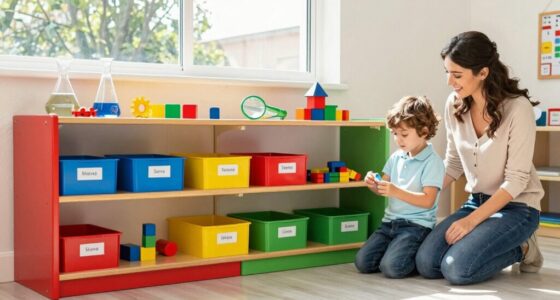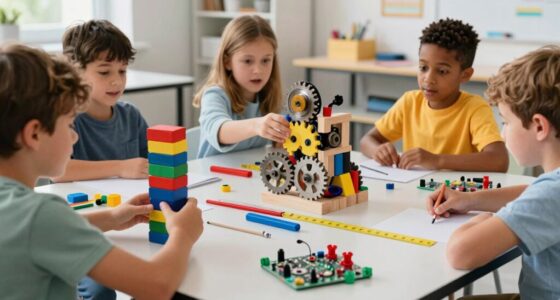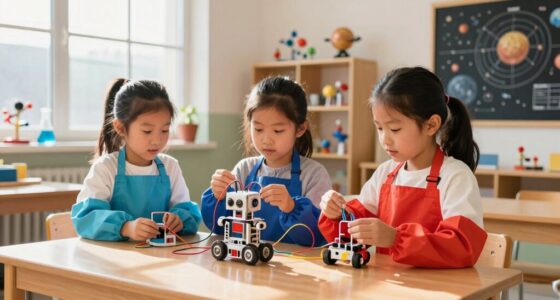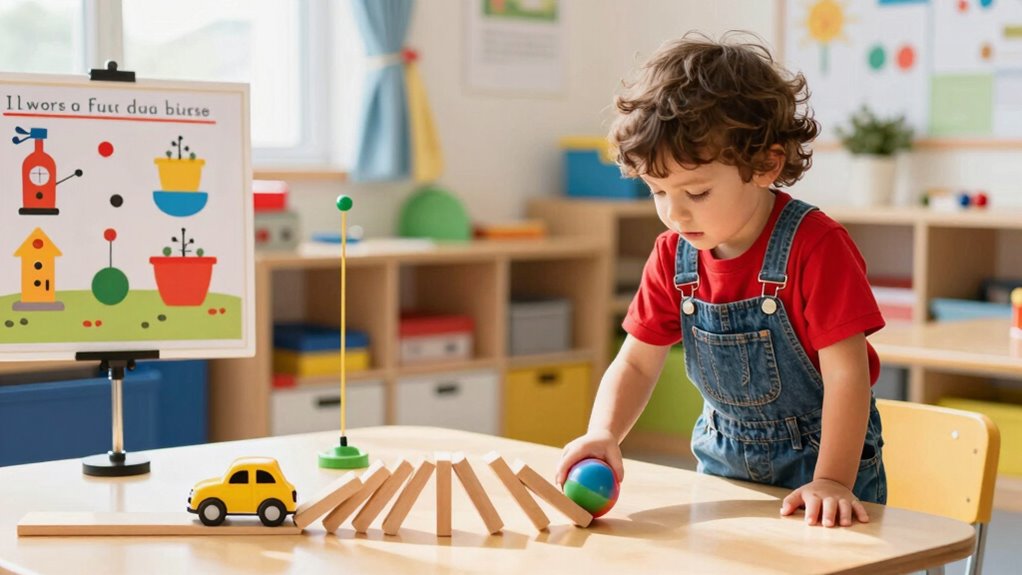

You can easily engage your curious preschoolers with simple cause-and-effect activities like exploring textured objects or using household items that activate lights or sounds. Setting up story sequences helps children understand how actions lead to outcomes, while sensory activities allow hands-on discovery of how things work. These activities build confidence, curiosity, and critical thinking skills in fun ways. Keep exploring more ideas, and you’ll find even more ways to encourage their learning and discovery journey.
Key Takeaways
- Use textured toys and household items to encourage tactile exploration of cause and effect.
- Incorporate simple electronic toys that activate lights or sounds when buttons are pressed.
- Create story sequencing activities with familiar pictures to demonstrate event order and consequences.
- Personalize activities with familiar routines to make cause-and-effect concepts relatable.
- Keep activities short, engaging, and adaptable to sustain preschoolers’ curiosity and interest.
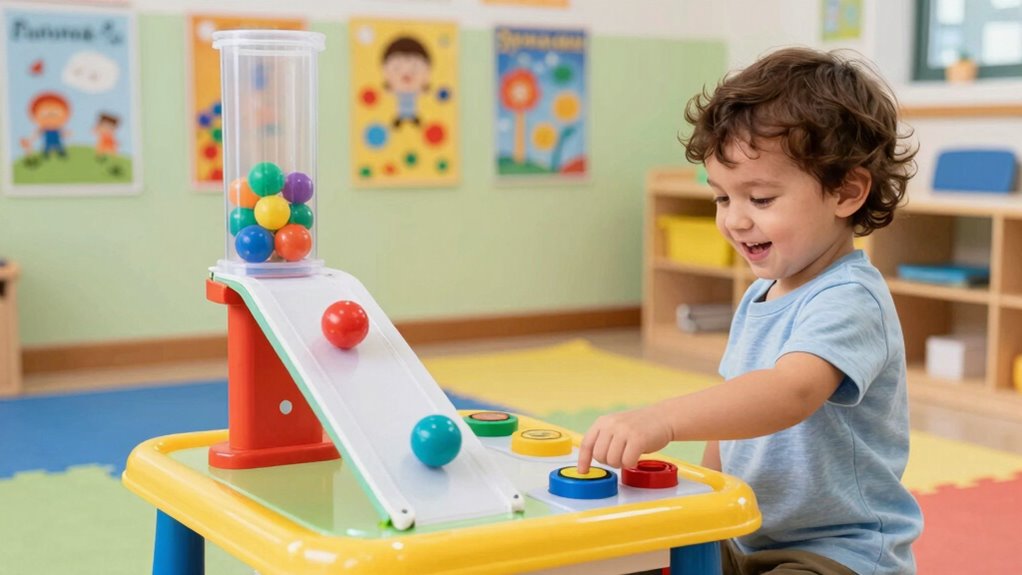
Engaging preschoolers in cause-and-effect activities helps them understand the relationship between their actions and the outcomes. One simple yet effective way to do this is through sensor exploration. Kids are naturally curious about how things work, and by providing them with sensory toys or materials, you give them a hands-on chance to see cause and effect in action. For example, you might set up a tray with different textured objects—soft, rough, sticky, or cold—and encourage your preschooler to touch and explore. When they press a button that activates a light or sound, they quickly learn that their actions produce specific responses. These activities foster their understanding of cause and effect while engaging their senses, making learning both fun and meaningful. As they experiment with sensors, they start to grasp that their movements, choices, and interactions lead to different results, building their confidence and curiosity. Incorporating emerging trends like sensor exploration into your activities helps keep learning engaging and relevant for young children.
Another powerful activity to develop cause-and-effect understanding is story sequencing. Children love stories, and when you involve them in sequencing activities, you’re helping them see how events connect and follow a logical order. You can create simple story cards with pictures of familiar scenarios—like brushing teeth, getting dressed, or planting a seed. Invite your preschooler to arrange these cards in the correct order, emphasizing how one step leads to the next. This helps them recognize cause-and-effect relationships within stories: brushing teeth leads to a clean mouth, planting a seed results in a sprout. As they practice story sequencing, they not only learn about sequencing but also reinforce their understanding of cause and effect in everyday routines. This skill is essential for their language development and cognitive growth, as they begin to see how actions lead to specific outcomes in stories and real life.
Both sensor exploration and story sequencing activities are easy to set up and adapt to your child’s interests. With sensor activities, you can use household items or simple electronic toys to ignite their curiosity about how things work. For story sequencing, you can craft your own picture cards or use familiar books, making the experience personal and relatable. When you guide your preschooler through these cause-and-effect activities, you’re helping them develop critical thinking skills. They learn to predict outcomes, understand consequences, and connect their actions with results. These foundational skills will serve them well as they grow, encouraging a love of exploration and learning that lasts. Plus, engaging in these activities together strengthens your bond while nurturing their natural curiosity and desire to discover how the world works.
cause and effect sensory toys for preschoolers
As an affiliate, we earn on qualifying purchases.
As an affiliate, we earn on qualifying purchases.
Frequently Asked Questions
How Can I Adapt Activities for Different Learning Styles?
To adapt activities for different learning styles, observe how your preschooler prefers to explore—whether through hands-on, visual, auditory, or kinesthetic methods. Then, modify the activity by incorporating varied materials, visuals, sounds, or movement. For example, add tactile objects for tactile learners or use pictures and songs for visual and auditory learners. These activity adaptations guarantee each child’s unique learning style is engaged and supported effectively.
What Safety Precautions Should I Consider During Activities?
Ensure safety by having your preschooler wear appropriate safety gear like helmets, gloves, or goggles depending on the activity. Always supervise closely, keeping a watchful eye to prevent accidents. Use supervision tips such as setting clear boundaries and staying within arm’s reach. Regularly check the activity area for hazards, and explain safety rules clearly. Staying proactive helps create a safe environment where your child can explore and learn confidently.
How Do I Encourage Preschoolers to Explore Independently?
Think of guiding preschoolers as planting seeds of independence. To encourage independent exploration, give them safe, open-ended materials and set boundaries that foster curiosity nurturing. Praise their efforts and let them make simple choices, building confidence. Create a supportive environment where they feel empowered to discover on their own, like explorers charting new territories. This approach fuels their curiosity and helps develop their independence naturally.
What Are Effective Ways to Assess Understanding of Cause and Effect?
To assess understanding of cause and effect in preschoolers, observe their reactions during activities and ask open-ended questions. Look for their ability to predict outcomes or explain why something happened. Use simple preschool assessment tools like checklists or ongoing observations to track their grasp over time. Engaging them in guided conversations helps you gauge their comprehension, ensuring they connect actions with results effectively.
How Can These Activities Support Language Development?
These activities support language development by encouraging you to use descriptive language and expand vocabulary. As your child explores cause-and-effect, you can introduce new words like “suddenly,” “because,” or “result.” This interaction helps them connect words with actions, boosting vocabulary expansion. Plus, describing what they see and do fosters their ability to articulate ideas clearly, laying a foundation for more complex language skills.
electronic light and sound button toys
As an affiliate, we earn on qualifying purchases.
As an affiliate, we earn on qualifying purchases.
Conclusion
By exploring cause-and-effect activities, you open a world of discovery for your curious preschooler. These simple yet powerful exercises help them understand how their actions create change, nurturing both their curiosity and critical thinking. Just as a single spark ignites a flame, your encouragement fuels their love for learning. Embrace these activities, and watch as their understanding deepens—transforming everyday moments into magical learning adventures. After all, isn’t every small step a giant leap in their growth?
story sequencing cards for preschool children
As an affiliate, we earn on qualifying purchases.
As an affiliate, we earn on qualifying purchases.
texture exploration toys for toddlers
As an affiliate, we earn on qualifying purchases.
As an affiliate, we earn on qualifying purchases.