
Carbon filters effectively reduce many VOCs and odors by trapping gases as air passes through them, but they can’t handle all pollutants alone. They struggle with small or less reactive gases and can’t remove particulate matter like dust or pollen. Poor maintenance or high VOC levels can also cause them to be less effective. To improve your indoor air, combining filtration with proper ventilation and other strategies is essential. If you want to learn more about maximizing your air quality, keep exploring these solutions.

Get health and wellness essentials delivered free — and shop member deals
- Fast, free delivery on millions of items
- Access to Prime Big Deal Days deals on October 6–7
- Prime Video, Amazon Music and more included
Key Takeaways
- Carbon filters mainly adsorb certain VOCs but are limited against small, less reactive, or non-adsorbing gases.
- They cannot remove particulate matter like dust, pollen, pet dander, or smoke particles.
- Filter saturation and poor maintenance reduce VOC removal effectiveness over time.
- VOC reduction often requires additional filtration methods like HEPA filters or ventilation strategies.
- Natural solutions and proper air exchange are essential to complement carbon filters for comprehensive indoor air quality.
HEPA and activated carbon air purifier
As an affiliate, we earn on qualifying purchases.
As an affiliate, we earn on qualifying purchases.
How Do Carbon Filters Remove VOCS From Indoor Air?
How Do Carbon Filters Remove VOCs From Indoor Air?
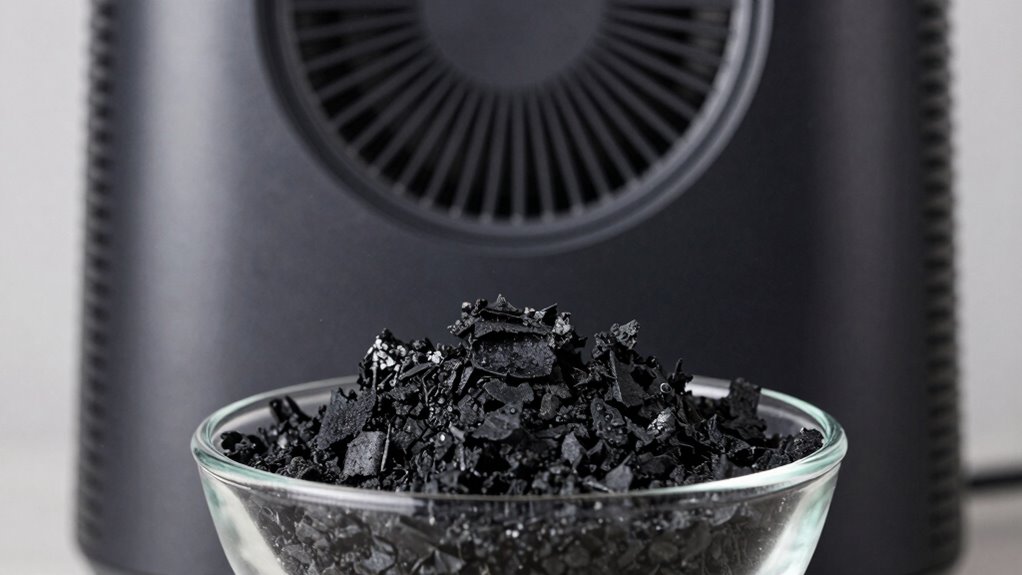
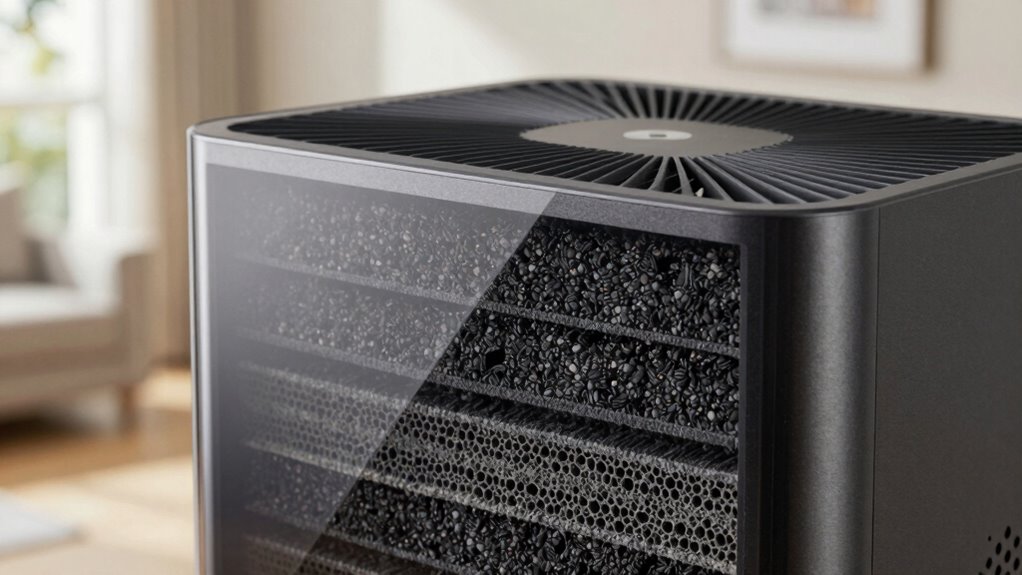
Carbon filters remove VOCs from indoor air through a process called adsorption, where harmful gases stick to the surface of the activated carbon. This makes them effective for addressing VOC emission sources like cleaning products, paints, and air freshener alternatives. When VOCs are released into your home, the activated carbon traps these molecules as air passes through the filter. Unlike filters that only trap particles, carbon filters target gaseous pollutants, reducing odors and chemical hazards. If you’re relying on air fresheners or other scented products, carbon filters can help neutralize the VOCs they emit. This makes them a smart choice for improving indoor air quality, especially when reducing exposure to common VOC sources is a priority. Additionally, using portable oil radiators can help maintain a comfortable temperature, which may further support the effectiveness of air purifiers in mitigating VOCs. Furthermore, their performance can be enhanced by considering electric power generation methods that utilize bike generators, making them ideal for sustainable living. Moreover, incorporating luxurious lifestyle products such as high-end air purifiers can significantly elevate your indoor environment. Improving indoor air quality involves understanding microplastics in dust and their effects, which can be effectively minimized through proper filtration. Regular maintenance of your air purifier, including cleaning and replacing filters, is crucial for ensuring optimal performance in reducing VOCs.
VOC removing air purifier filter
As an affiliate, we earn on qualifying purchases.
As an affiliate, we earn on qualifying purchases.
What Are the Limits of Carbon Filters?
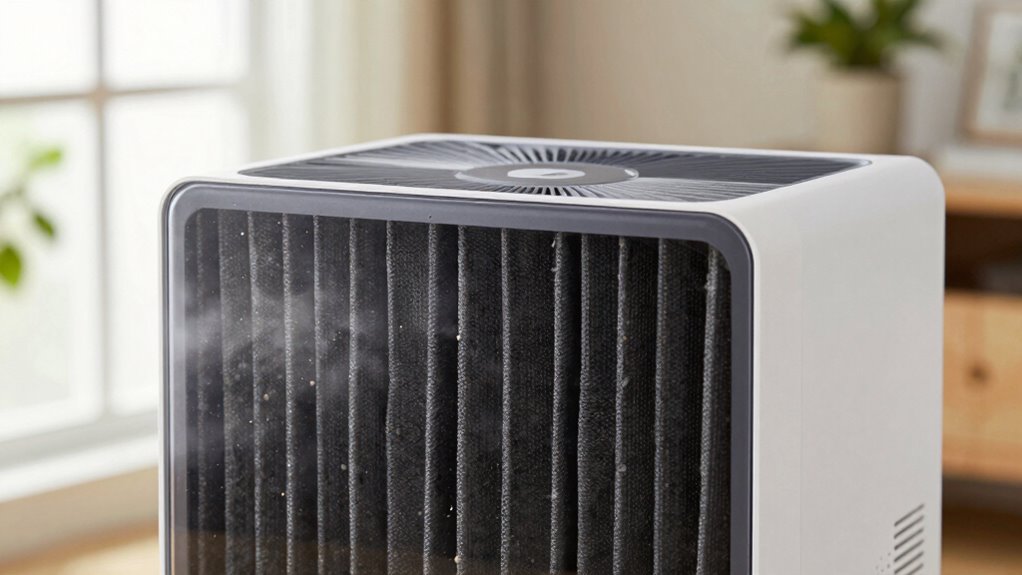
While carbon filters are effective at absorbing certain gases and odors, they have limitations. They don’t work well against all types of gases, especially those that are less reactive or smaller in size. Plus, they can’t remove particulate matter like dust or pollen from the air. Additionally, eco-friendly natural pools can help improve outdoor air quality by promoting better air circulation and reducing pollutants. Incorporating cycling skills can also enhance your overall well-being by encouraging outdoor activities and fresh air exposure. Furthermore, utilizing data storage solutions can ensure that important air quality monitoring data is securely backed up and easily accessible. It’s crucial to maintain proper piercing care and hygiene to prevent complications and ensure health safety in personal practices. Moreover, ensuring regular routine checkups for your pets can help maintain their health and mitigate allergens in the home environment.
Limited Effectiveness Against Gases
Have you ever wondered how effective carbon filters really are at removing gases? While they excel at odor absorption, their ability to eliminate all VOCs is limited. Carbon filters work through chemical reactions, trapping some gases, but not all. They’re less effective against certain chemicals that don’t readily react with activated carbon.
Some key limitations include:
- Gases with low reactivity that bypass chemical reactions
- VOCs that are too small or lightweight to be absorbed efficiently
- Rapid saturation reducing filter lifespan
- Gases that diffuse deeply into materials instead of passing through the filter
Therefore, while carbon filters can reduce many odors and some VOCs, they aren’t a complete solution for all gases. You might need additional filtration methods for extensive VOC removal. Additionally, understanding digital concepts can help inform better choices for air quality solutions.
Cannot Remove Particulate Matter
Certainly! Here’s the revised content with the requested modifications:
—
Although activated carbon filters are effective at trapping many gases and odors, they cannot remove particulate matter such as dust, pollen, pet dander, or smoke particles. These airborne particles are too small to be captured by carbon alone. Without a proper filter, dust accumulation in your home can worsen allergy symptoms and respiratory issues. To better understand this limitation, consider the following:
| Particle Type | Filter Type Needed | Typical Size (microns) |
|---|---|---|
| Dust | HEPA | 0.3 |
| Pollen | HEPA | 10-100 |
| Pet Dander | HEPA | 0.5-10 |
| Smoke Particles | HEPA + Activated Carbon | 0.1-1 |
| Airborne Germs | HEPA | 0.3 |
Carbon filters alone won’t handle these airborne particles effectively. Additionally, incorporating strategic lifestyle changes can significantly enhance your overall well-being and improve indoor air quality. This is especially important considering that high-protein breakfast options can contribute to better energy levels and overall health. Furthermore, regular foam rolling techniques can aid in recovery and improve respiratory function, promoting a healthier indoor environment. Investing in a comprehensive air purification strategy that includes HEPA filters will ensure a more thorough removal of harmful particulates from your home, including time-efficient applications that can help maintain a cleaner environment.
—
Feel free to let me know if you need further modifications!
air purifier with carbon filter and HEPA
As an affiliate, we earn on qualifying purchases.
As an affiliate, we earn on qualifying purchases.
Can VOCs Bypass Your Carbon Filter? Here’s Why
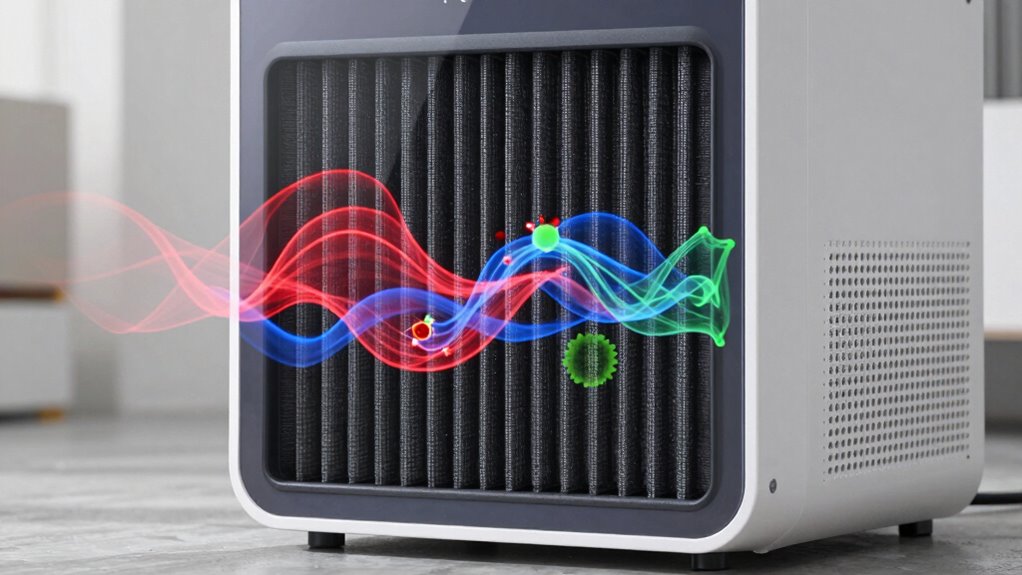
VOCs, or volatile organic compounds, can sometimes slip past your carbon filter because of their chemical properties and the way filters are designed. Their small size and high volatility make complete VOC absorption challenging. Over time, the filter’s effectiveness decreases, shortening its lifespan and reducing VOC removal efficiency. Factors like high VOC concentrations or frequent use can cause VOCs to bypass the filter.
- VOCs with low molecular weight can evade absorption more easily.
- The filter’s saturation point limits its VOC trapping ability.
- Poor maintenance or infrequent replacement decreases effectiveness.
- Some VOCs react with filter materials, reducing absorption capacity.
Furthermore, using airless paint spraying techniques can increase VOC emissions, making effective filtration even more critical. Understanding these factors helps you realize why VOCs might still linger even with a carbon filter in place. Moreover, creative applications of AI can enhance air quality monitoring, providing real-time data on VOC levels to optimize purifier usage. In fact, consumer awareness of indoor air quality has become increasingly important in making informed choices about air purification. Additionally, regular skin care routines can help mitigate the effects of indoor pollutants on your skin’s health. Incorporating sustainable textile practices can further reduce VOC emissions from fabrics and other materials in your environment.
As an affiliate, we earn on qualifying purchases.
Best Air Purifier Features to Boost VOC Removal
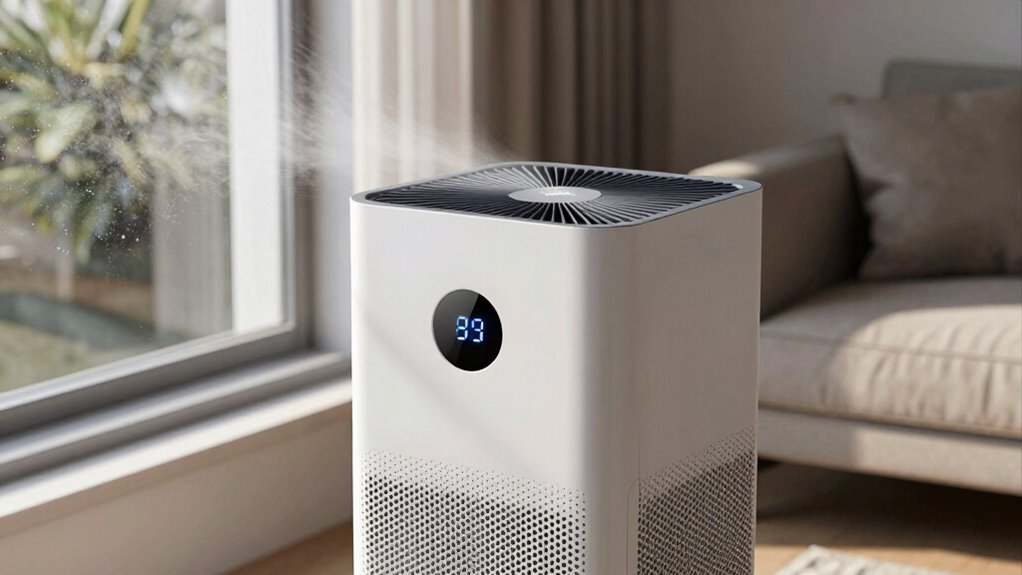
To enhance your air purifier’s ability to remove VOCs effectively, look for key features that boost filtration performance. A multi-stage filtration system, including activated carbon and HEPA filters, is essential. Air fryers can also utilize activated carbon to reduce cooking odors, showcasing the versatility of this material. Additionally, understanding the principles of molecular-scale circuits can provide insights into the efficiency of air purification technologies. Choosing models that promote self-care for caregivers can help ensure that the environment remains healthy for those providing care. Choose models with indicators for air purifier maintenance and clear filter replacement schedules to guarantee peak performance. Regular filter changes prevent VOCs from bypassing the filters and maintain efficiency. Some purifiers offer real-time air quality sensors, automatically adjusting fan speeds for better VOC removal. Additionally, look for units with sealed chambers to prevent leaks. Remember, even the best features won’t work without proper maintenance. Staying on top of filter replacement schedules ensures consistent VOC filtration, helping your air purifier perform at its best and creating a healthier indoor environment. Incorporating multi-stage filtration systems can significantly enhance overall air quality.
How to Reduce VOCs at Home or Work

You can cut down VOC levels by improving your ventilation systems to bring in fresh air more often. Additionally, identify and reduce sources of VOCs, like certain cleaning products or new furniture. Making these changes helps create a healthier environment at home or work.
Improve Ventilation Systems
Improving ventilation systems is one of the most effective ways to reduce VOC levels in your home or workplace. Proper airflow helps dilute indoor pollutants, including VOCs, enhancing overall air quality. You can increase ventilation by opening windows regularly or installing exhaust fans. Adding indoor plants can also boost air quality naturally, as some plants absorb VOCs and improve air circulation. Consider upgrading your HVAC filters to higher efficiency models that trap VOCs better. Ensuring your ventilation system is well-maintained prevents the buildup of harmful chemicals and promotes fresh air flow. Regularly evaluating and optimizing your ventilation setup creates a healthier environment, making it easier to breathe and reducing potential health risks associated with VOCs.
Minimize VOC Sources
Reducing VOC levels starts with identifying and eliminating sources of these chemicals in your environment. Source identification is vital—look for common VOC emission sources like new furniture, paints, cleaning products, and air fresheners. Once you pinpoint these sources, take steps to minimize exposure. Use low-VOC or VOC-free products whenever possible, and store chemicals in well-ventilated areas or outside your living space. Avoid purchasing items with strong odors or labels indicating high VOC content. Regularly inspect and maintain appliances and materials that may emit VOCs. By actively reducing VOC emission sources, you create a healthier environment, making air purifiers more effective and decreasing overall chemical exposure. This proactive approach is essential to improving indoor air quality.
Why Proper Ventilation Matters for Indoor Air Quality
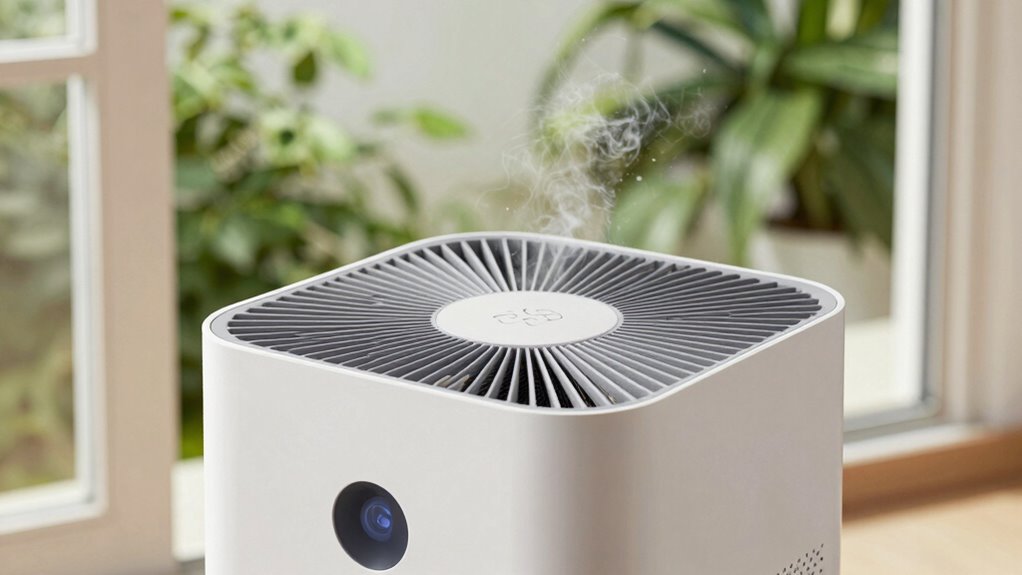
Proper ventilation plays a crucial role in maintaining good indoor air quality, especially when dealing with volatile organic compounds (VOCs) emitted by household products and building materials. When you guarantee fresh air flows in, you reduce the concentration of pollutants and prevent them from lingering. Natural ventilation, like opening windows or using vents, is an easy way to improve air exchange. Adding indoor plants can also help, as they absorb some VOCs naturally. To maximize ventilation benefits, consider:
Good ventilation reduces indoor pollutants and improves air quality naturally.
- Regularly opening windows and doors
- Using exhaust fans in kitchens and bathrooms
- Incorporating indoor plants for natural purification
- Ensuring proper airflow pathways throughout your space
Good ventilation supports other air cleaning methods and keeps your indoor environment healthier overall.
Combining Technologies for Better Indoor Air

Combining different air purification technologies can considerably enhance your indoor air quality because each method targets specific pollutants and complements others. For example, a HEPA filter captures particles, while activated carbon reduces VOCs. Incorporating indoor plants adds natural benefits, like moisture regulation and air filtering, improving overall environment health. To keep your system efficient, regular air purifier maintenance is essential, ensuring filters function properly. Pairing technology with indoor plants maximizes pollutant removal and creates a more comfortable space. Here’s a quick comparison:
| Technology | Primary Benefit |
|---|---|
| HEPA Filters | Particle removal |
| Activated Carbon | VOCs and odors |
| Indoor Plants | Natural air purification |
Simple Strategies for a Healthier Indoor Environment
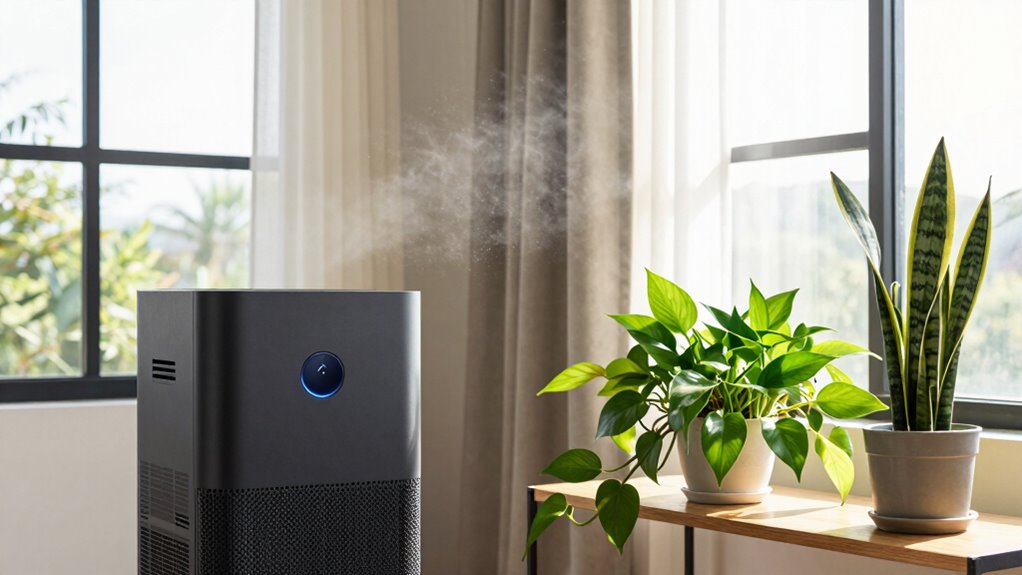
Creating a healthier indoor environment doesn’t require complex solutions—simple, consistent habits can make a big difference. You can improve air quality by incorporating easy strategies into your daily routine. Adding indoor plants helps naturally filter pollutants and boosts humidity. Ensuring proper air exchange by opening windows or using exhaust fans reduces VOC buildup and refreshes indoor air. Regularly cleaning surfaces and vacuuming with HEPA filters remove dust and allergens. Also, avoid clutter that traps dust and emissions. These small actions, combined with proper ventilation and plants, create a cleaner, healthier space. Remember, consistency is key—small daily efforts add up to a significant improvement in your indoor air quality over time.
Frequently Asked Questions
How Long Do Carbon Filters Typically Last Before Needing Replacement?
You should replace your carbon filter every 6 to 12 months, depending on usage and air quality. Regular filter maintenance is key to ensuring efficiency, so keep an eye out for replacement indicators on your air purifier. If it doesn’t have one, check the manufacturer’s guidelines. Heavy pollution or frequent use may require more frequent changes, while cleaner environments might extend filter life.
Are There Specific VOCS That Carbon Filters Cannot Remove Effectively?
You should know that carbon filters can struggle with certain VOCs, especially those with chemical saturation that cause the filter to become quickly degraded. Commonly, filters are less effective against highly volatile or complex chemical compounds, like formaldehyde or ammonia, because they can fill the pores rapidly, leading to filter degradation. So, for these VOCs, relying solely on carbon filters isn’t enough—they often need supplementary filtration methods.
Can Air Purifiers With Carbon Filters Eliminate All Indoor Odors?
Air purifiers with carbon filters can considerably reduce many indoor odors, but they can’t eliminate all odors completely. They work through chemical absorption, neutralizing many smells, yet some strong or persistent odors may still linger. Avoid relying solely on odor masking; combine proper ventilation with regular cleaning. Remember, while effective, carbon filters have limitations and might not handle every type of odor, especially those from certain chemicals or deeply embedded sources.
What Are the Signs That a Carbon Filter Needs Replacing?
Imagine you’re stuck in a time warp, sensing that your air isn’t as fresh as it used to be. When your carbon filter’s odor absorption declines, you’ll notice lingering smells or reduced air freshness. Also, if filter maintenance becomes more frequent or airflow weakens, it’s a sign it’s time to substitute the filter. Keep an eye out for these signs to guarantee your air purifier functions effectively.
Do Air Purifiers With Carbon Filters Remove Other Pollutants Besides VOCS?
Air purifiers with carbon filters mainly target VOCs and odors, but they also help improve overall air quality by trapping certain gases and chemicals. However, they don’t remove particles like dust, pollen, or pet dander. To maintain ideal air quality, you need regular filter maintenance, including replacing or cleaning filters as recommended. Combining a carbon filter with HEPA filters provides a more thorough approach to cleaner, healthier indoor air.
Conclusion
While carbon filters are your frontline defense against VOCs, they can’t do it alone. Think of them as an essential piece of the puzzle, but not the entire picture. Without proper ventilation and additional technologies, VOCs can still linger, silently affecting your health. Don’t settle for just one solution—embrace a layered approach. Because in the fight for cleaner air, every step counts, and your well-being depends on more than just one filter.
Fall Picks
fall essentials
As an affiliate, we earn on qualifying purchases.