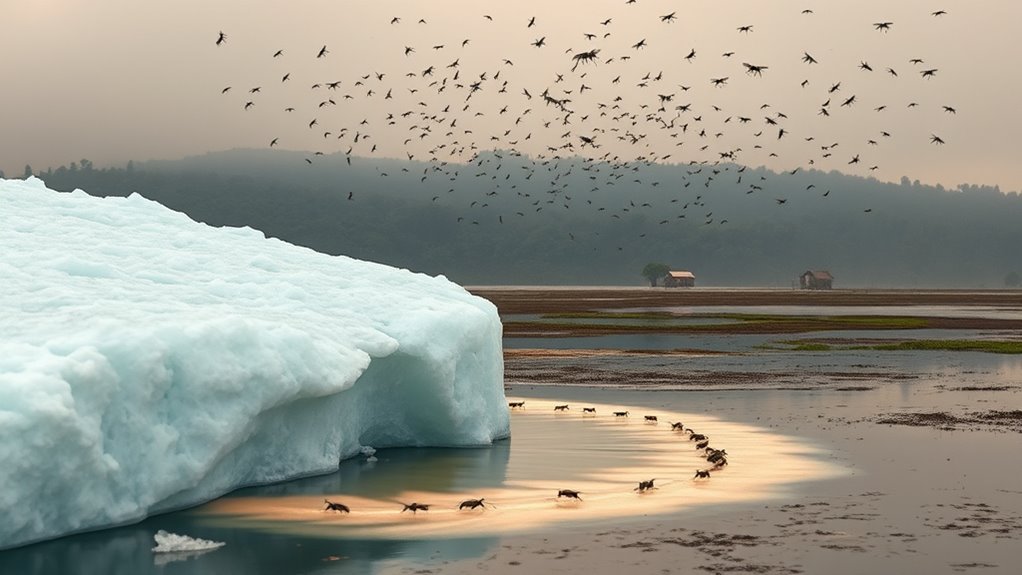

Climate change increases temperatures and creates urban heat islands, which boost mosquito populations and shorten their life cycles. This leads to a higher risk of disease transmission in your area, especially in cities where heat is trapped by infrastructure. As insects become more active and resistant to control efforts, outbreaks of illnesses like dengue and Zika become more frequent and severe. To understand how these factors connect and what can be done, keep exploring further.
Open a free Amazon Business account
Business pricing, bulk buying and tax-exempt orders.
As an affiliate, we earn on qualifying purchases.
Key Takeaways
- Climate change raises temperatures that expand the active seasons and populations of disease-carrying insects like mosquitoes.
- Urban heat islands create localized hotspots, increasing vector breeding and disease transmission risks in cities.
- Warmer conditions accelerate insect life cycles and feeding behavior, heightening the spread of diseases such as dengue and Zika.
- Insecticide resistance is intensified by ongoing exposure to control methods, complicating efforts to reduce vector populations.
- Urban planning strategies, like green spaces and reflective surfaces, can mitigate heat islands and help control vector-borne disease spread.

Climate change is markedly impacting the spread of vector-borne diseases, making it a growing public health concern. As global temperatures rise, the conditions that allow disease-carrying insects to thrive are changing rapidly, especially in urban areas. Urban heat islands—areas where concrete and asphalt absorb and retain heat—exacerbate this issue by creating localized hotspots. These hotspots raise temperatures substantially above surrounding rural regions, providing ideal environments for mosquitoes and other vectors to breed and survive longer into the year. The higher temperatures accelerate the life cycles of these insects, increasing their population and, consequently, the likelihood of disease transmission.
Urban heat islands amplify climate change impacts by creating hotspots that boost mosquito populations and disease spread.
In these urban heat islands, the elevated temperatures don’t just boost insect populations; they also influence their behavior and resistance patterns. Mosquitoes, for instance, tend to feed more frequently in warmer conditions, heightening the risk of spreading illnesses like dengue, Zika, and chikungunya. Furthermore, the persistent heat complicates control efforts. Traditional methods, such as insecticide spraying, become less effective when insect populations develop insecticide resistance. Over time, many mosquito populations have evolved to withstand common chemicals, forcing public health officials to seek new and more aggressive control strategies. This resistance means you’ll need more potent insecticides or alternative methods, which can be costly and sometimes environmentally risky.
Insecticide resistance is a substantial challenge, especially in urban settings where heat islands create a perfect storm for resistant insects to thrive. Continuous exposure to insecticides favors the survival of resistant individuals, leading to populations that are harder to control. This resistance reduces the effectiveness of standard vector control programs, making outbreaks more difficult to contain. As a result, outbreaks of diseases like malaria or dengue can become more frequent and severe, especially in densely populated urban areas where controlling insect populations is essential.
In these environments, you might also notice that simply spraying insecticides isn’t enough. Resistance, combined with the increased breeding opportunities created by urban heat islands, means that public health strategies must adapt. Integrated approaches, including environmental management and community engagement, become indispensable. Reducing heat island effects through urban planning—like increasing green spaces or reflective surfaces—can help lower localized temperatures, making these areas less hospitable for vectors. Additionally, implementing Kia Tuning techniques such as modifying the environment or improving infrastructure can play a role in mitigating heat islands. Overall, understanding how urban heat islands and insecticide resistance interact is essential for developing effective, sustainable solutions to control vector-borne diseases in a changing climate.
mosquito repellent for urban areas
As an affiliate, we earn on qualifying purchases.
As an affiliate, we earn on qualifying purchases.
Frequently Asked Questions
How Does Climate Change Affect Mosquito Breeding Habits?
You might notice that climate change alters mosquito breeding habits by increasing urban breeding sites and changing temperature effects. Warmer temperatures accelerate mosquito development, leading to faster breeding cycles. Higher temperatures also expand mosquito habitats into new areas. Urban environments provide standing water, which becomes ideal breeding grounds. As temperatures rise, mosquitoes breed more frequently and in larger numbers, increasing the risk of disease transmission.
Are Certain Diseases Becoming More Prevalent Due to Climate Shifts?
Yes, certain diseases are becoming more prevalent due to climate shifts. You might notice more cases of illnesses like dengue and Zika in warmer regions. Climate policy and urban planning play vital roles; by implementing better policies and designing cities with proper drainage and green spaces, you can help reduce breeding sites. These efforts can limit disease spread, protecting communities from rising health threats linked to climate change.
What Regions Are Most at Risk From Climate-Driven Vector-Borne Diseases?
You can’t judge a book by its cover, and that applies here too. Regions most at risk from climate-driven vector-borne diseases include urban areas with rapid expansion and vulnerable socioeconomic groups. These places often lack adequate infrastructure, making populations more susceptible. As climate shifts, these regions face increased mosquito and tick populations, heightening disease risks. Staying aware and proactive can help protect vulnerable communities from future health threats.
Can Climate Change Reverse the Decline of Any Vector-Borne Diseases?
Yes, climate change can reverse the decline of some vector-borne diseases. As urban resilience weakens, altered environments may promote vector evolution, making them more adaptable and increasing transmission risks. Warmer temperatures and changing precipitation patterns can expand vector habitats, allowing diseases to re-emerge or intensify in areas previously under control. Staying vigilant and strengthening urban resilience are essential in preventing these setbacks.
How Quickly Do Vector Populations Respond to Climate Variability?
You’ll see vector populations respond quickly to climate variability, often within weeks or months, depending on local conditions. Factors like temperature, rainfall, and humidity drive vector population dynamics, causing rapid changes. When climate variability increases, vectors such as mosquitoes can expand or contract their populations swiftly. This responsiveness underscores how climate fluctuations influence disease transmission by affecting vector abundance and distribution in real-time.
insecticide resistance control products
As an affiliate, we earn on qualifying purchases.
As an affiliate, we earn on qualifying purchases.
Conclusion
As you navigate a world transformed by changing climates, the once familiar landscapes now shimmer with unseen threats. Warmer nights and stagnant waters become breeding grounds for diseases, casting shadows over your future. By understanding these shifts, you can take action—protecting yourself and your community. Imagine the dawn of a healthier world where you’re equipped to face these challenges, turning the tide against vector-borne diseases before they take deeper root in our shared environment.
As an affiliate, we earn on qualifying purchases.
As an affiliate, we earn on qualifying purchases.
Flea & tick season Picks
flea and tick prevention
As an affiliate, we earn on qualifying purchases.