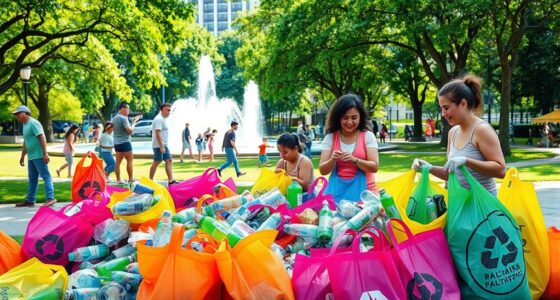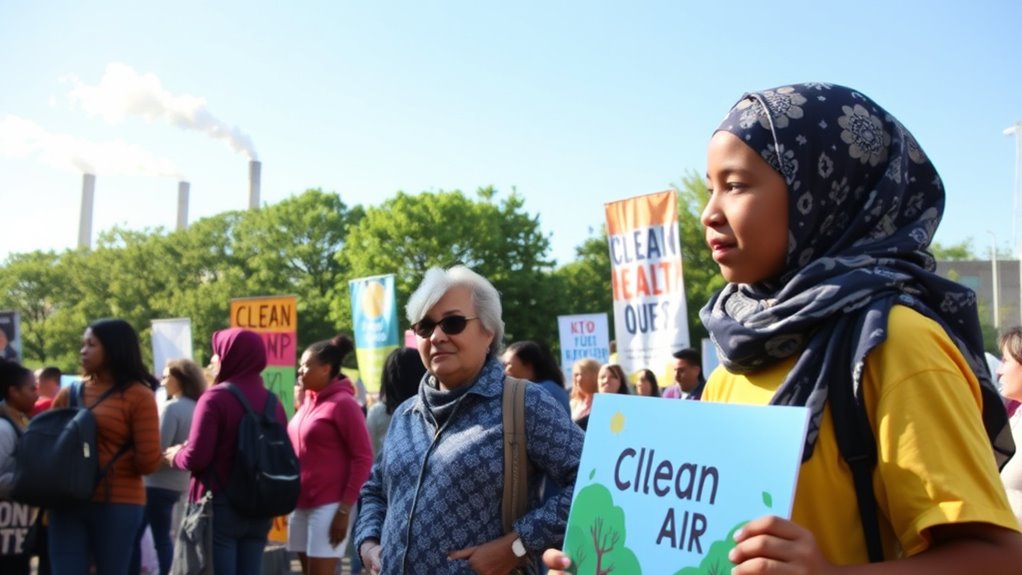

Environmental justice focuses on reducing health disparities caused by pollution in marginalized communities. You can see how urban areas often concentrate industries, traffic, and waste where low-income and communities of color live, leading to higher exposure to pollutants. This results in increased health issues like asthma and respiratory problems. Addressing these issues involves community activism, policy changes, and equitable urban planning. Learning more reveals how collective efforts can create healthier, fairer neighborhoods for everyone.
Key Takeaways
- Marginalized communities face higher exposure to urban pollution, leading to increased health issues like asthma and respiratory illnesses.
- Systemic inequalities in urban planning contribute to environmental injustice and health disparities.
- Community activism raises awareness and pressures policymakers to enforce pollution controls and improve infrastructure.
- Engaging residents through local participation and grassroots efforts promotes equitable urban development and health outcomes.
- Policy reforms focused on environmental justice aim to reduce disparities and ensure clean air and healthier living conditions for all.
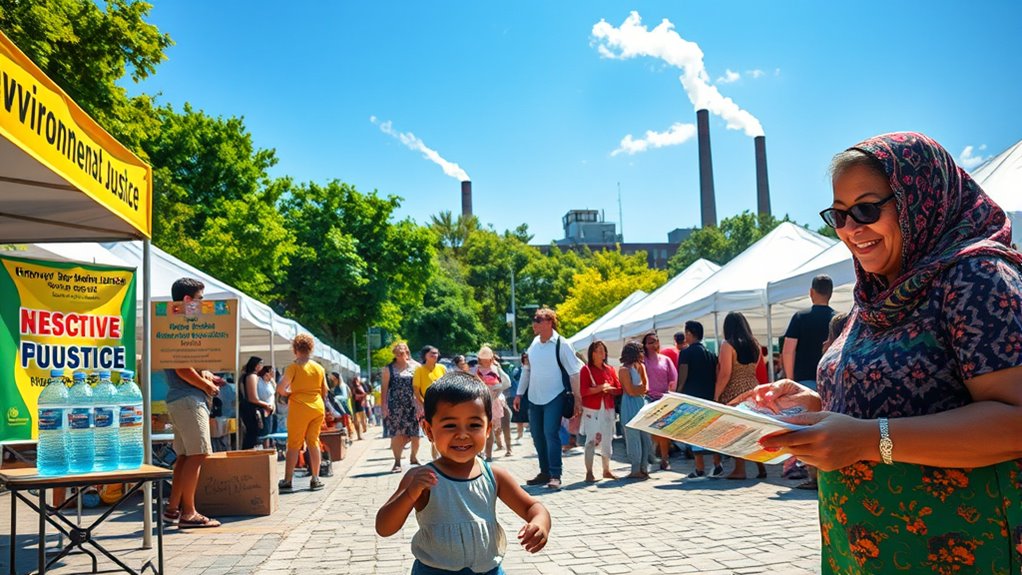
Have you ever wondered why some communities bear the brunt of environmental hazards while others are unaffected? It’s often tied to factors like urban pollution, which disproportionately impacts marginalized neighborhoods. Cities tend to concentrate industries, traffic, and waste disposal in specific areas, creating a toxic environment for residents who already face social and economic disadvantages. You might notice that low-income neighborhoods or communities of color are more exposed to pollutants, leading to higher rates of asthma, respiratory illnesses, and other health problems. This pattern isn’t accidental; it reflects systemic inequalities embedded in urban planning and policy decisions. Recognizing these patterns is essential for understanding the roots of environmental injustice and working toward solutions.
Marginalized communities face higher pollution levels due to systemic urban planning inequalities.
Urban pollution doesn’t just happen—it’s a result of structural neglect and neglect that communities can’t always fight alone. That’s where community activism becomes essential. When residents organize, they can draw attention to these injustices, press local governments for stricter pollution controls, and demand equitable land use. Active community groups often serve as the voice for those most affected, pushing for policies that prioritize health and environmental safety over corporate or political interests. Through protests, public awareness campaigns, and legal action, community activism can challenge the status quo and push for cleaner, healthier neighborhoods.
Your involvement can make a difference. Participating in local meetings, supporting grassroots organizations, or simply spreading awareness about urban pollution issues amplifies the community’s voice. When residents stand together, they can pressure decision-makers to enforce stricter emissions standards, improve waste management, and create green spaces that help filter urban pollutants. These efforts not only reduce health risks but also foster a sense of empowerment among community members. They learn that their voices matter and that change is possible when collective action occurs.
Addressing health disparities linked to urban pollution requires persistent advocacy and policy change. It’s about recognizing that environmental injustice isn’t just an isolated problem—it’s rooted in social inequality. You have the power to challenge these disparities by supporting community-led initiatives, advocating for equitable urban development, and holding authorities accountable. As more people become aware of how urban pollution affects vulnerable communities, the pressure for meaningful change grows. Ultimately, environmental justice is about creating healthier, fairer cities where everyone, regardless of their background or economic status, can breathe clean air and live without fear of toxic exposure. Your engagement and activism are essential in turning this vision into reality.

LEVOIT Air Purifiers for Bedroom Home Dorm, AHAM Verified, 3-in-1 Filter Cleaner With Aroma Pad, Filters Smoke, Allergens, Pet Dander, Odor, Dust, Office, Desktop, Core Mini-P, White
𝗥𝗘𝗠𝗢𝗩𝗘 𝗣𝗢𝗟𝗟𝗨𝗧𝗔𝗡𝗧𝗦 𝗘𝗩𝗘𝗥𝗬𝗪𝗛𝗘𝗥𝗘: Our Pre-Filter and Main Filter capture allergens as lint, hair, pet dander, pet hair, fine…
As an affiliate, we earn on qualifying purchases.
As an affiliate, we earn on qualifying purchases.
Frequently Asked Questions
How Do Environmental Justice Issues Specifically Impact Children’s Health?
You might not realize it, but environmental justice issues greatly impact children’s health. Poor indoor air quality exposes them to pollutants that can cause respiratory problems, while lead poisoning from old paint or contaminated water can lead to developmental delays. These hazards disproportionately affect disadvantaged communities, meaning children in these areas face higher risks. Addressing these issues is vital to protect their health and guarantee they grow up in safer, healthier environments.
What Are Effective Community-Led Strategies for Environmental Justice?
You can improve environmental justice through community-led strategies like grassroots organizing and community empowerment. Did you know that neighborhoods with active community groups experience 30% better environmental conditions? By fostering local leadership, advocating for policy changes, and educating residents, you create sustainable change. Your involvement helps amplify marginalized voices, ensuring that those most affected lead efforts to address pollution and health disparities, making a real difference in your community’s future.
How Can Policymakers Prioritize Environmental Justice in Urban Planning?
You can prioritize environmental justice in urban planning by advocating for equitable urban zoning that protects vulnerable communities from industrial pollution. Incorporate green infrastructure like parks, green roofs, and permeable pavements to reduce heat islands and improve air quality. Engage local communities in decision-making processes, ensuring their voices shape policies. By balancing development with environmental health, you promote fairness and create healthier, more resilient urban environments for all residents.
What Role Do Corporations Play in Environmental Health Disparities?
Imagine corporations as both creators and culprits, shaping your environment daily. They play a vital role in health disparities through inadequate corporate accountability, often hiding behind greenwashing strategies to mask harmful practices. While some claim to champion sustainability, their true impact can worsen environmental injustices. You must hold these companies responsible, demanding transparency and accountability to guarantee healthier, fairer communities for everyone, especially the most vulnerable.
How Can Individuals Advocate for Environmental Justice Locally?
You can advocate for environmental justice locally by engaging in grassroots activism, such as organizing community meetings or protests to raise awareness. Support policy advocacy efforts by contacting local officials and pushing for stricter environmental regulations or cleanup initiatives. Educate your neighbors about health disparities caused by environmental issues, and collaborate with organizations working on these causes. Your active participation helps build a stronger, more equitable community for everyone.

Advances in Energy Materials and Environment Engineering: Proceedings of the 8th International Conference on Energy Materials and Environment … 2022), Zhangjiajie, China, 22–24 April 2022
As an affiliate, we earn on qualifying purchases.
As an affiliate, we earn on qualifying purchases.
Conclusion
By embracing environmental justice, you can champion change and challenge complacency. Recognize the disparities, dismantle the divisions, and dedicate yourself to delivering equitable solutions. When you prioritize people over pollution, progress becomes possible. Together, through compassion and commitment, you can create a community where clean air, safe water, and healthy lives are accessible for all. Remember, your actions matter—make them meaningful, mindful, and motivated to manifest a more just and healthier world for everyone.

Indoor Air Quality Test Kit for Home by Detekt – (12) Simple Screening 6 Mold Tests + 6 Bacteria Tests – Test HVAC & Surfaces – DIY Mold Testing with Species Identification Guide & Free Consultation
Made in the USA – Trusted Quality & Customer Service: Each Detekt Test Kit is proudly made and…
As an affiliate, we earn on qualifying purchases.
As an affiliate, we earn on qualifying purchases.

Meekear 10 Herb Seeds Garden Starter Grow Kit with Green Pots, Markers, Nutritional Soil, Watering, Herb Clipper, Complete Indoor Potted Plant Growing Set for Kitchen DIY
MEET ALL NEEDS FOR HERB GROWING: Package comes with 10 types of herb seeds, 10 pots, 10 plant…
As an affiliate, we earn on qualifying purchases.
As an affiliate, we earn on qualifying purchases.