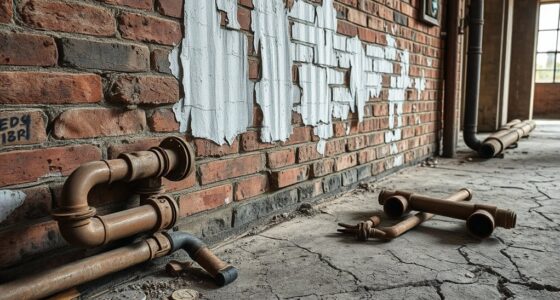
Exposure to mold and dampness in your building can cause health problems like allergies, respiratory issues, and asthma symptoms. Mold spores become airborne, and moisture promotes mold growth, especially if ventilation is poor. You might notice a musty smell, visible mold patches, or condensation, which are signs to watch for. Addressing leaks, improving airflow, and controlling humidity can prevent health risks. Continue exploring to learn how you can protect yourself from these issues and improve your indoor air quality.
Key Takeaways
- Mold spores can become airborne, leading to respiratory issues and allergies.
- Exposure to dampness increases the risk of asthma exacerbation and sinus infections.
- Skin irritations may occur from direct contact with mold-contaminated surfaces.
- Poor indoor air quality due to mold can worsen existing health conditions.
- Chronic dampness and mold exposure can cause long-term health problems.

Mold and dampness are common problems in buildings that can pose serious health risks and cause structural damage. When moisture accumulates, it creates the perfect environment for mold growth, impacting the air quality inside your space. Poor air quality can lead to respiratory issues, allergies, and other health problems, especially if mold spores become airborne. As a building occupant or owner, you need to recognize the importance of proper building maintenance to prevent these issues from escalating. Regular inspections, fixing leaks promptly, and ensuring proper ventilation are critical steps in preventing moisture buildup that promotes mold growth.
Prevent mold and damage with regular inspections, prompt repairs, and proper ventilation.
If you neglect building maintenance, you allow dampness to persist, which not only weakens the structure but also worsens indoor air quality. Mold spores thrive in humid conditions, and when these spores become airborne, they can be inhaled, leading to health complications such as asthma exacerbations, sinus infections, and even skin irritations. You might notice a musty smell, visible mold patches, or condensation on windows and walls—all signs that moisture levels are too high. Addressing these signs early is essential to maintaining a healthy indoor environment and safeguarding your property.
Managing air quality is a essential part of controlling mold and dampness. Using dehumidifiers, installing exhaust fans, and increasing fresh air circulation help reduce humidity levels and keep moisture from settling. When you keep humidity below 60%, you greatly decrease the chances of mold developing. It’s also important to clean and dry any areas affected by water promptly. This prevents mold spores from taking hold and spreading further. Remember, mold isn’t always visible, so monitoring humidity and air quality regularly helps catch problems before they become severe.
Building maintenance becomes your best defense against moisture-related issues. Regularly inspecting roofing, plumbing, and walls for leaks or signs of water intrusion is crucial. Fixing leaks immediately prevents water from seeping into walls, floors, and ceilings, which can lead to mold growth. Ensuring proper drainage around your building and maintaining gutters also help divert water away from foundations, reducing dampness indoors. When you prioritize maintenance, you maintain better air quality and create a healthier, safer environment for everyone inside.

Moisture Absorber & Humidity Eliminator – Disposable Dehumidifier for Closets, Basements, Bathrooms & RV – Damp Rid Style Odor Remover, Mold & Mildew Prevention for Home Storage (Pack of 3)
Eliminate Moisture: This 1 lb disposable moisture absorber uses a non-toxic silica gel formula to effectively eliminate moisture…
As an affiliate, we earn on qualifying purchases.
As an affiliate, we earn on qualifying purchases.
Frequently Asked Questions
How Can I Prevent Mold Growth in My Home?
To prevent mold growth in your home, guarantee good air circulation by opening windows and using fans. Control humidity levels, keeping them below 60%, with dehumidifiers or air conditioners. Fix leaks promptly, dry out damp areas, and clean surfaces regularly. Proper ventilation in bathrooms and kitchens also helps. These steps reduce moisture and air stagnation, making your home less inviting for mold.
Are Some People More Sensitive to Mold Than Others?
Yes, some people are more sensitive to mold than others due to genetic susceptibility and immune response differences. You might notice more severe reactions if your immune system reacts strongly or if you have specific genetic factors. These individuals could experience symptoms like allergies or respiratory issues more intensely. To protect yourself, stay vigilant about mold presence and consider consulting a healthcare professional if you notice persistent symptoms.
What Are the Long-Term Health Risks of Mold Exposure?
Think of mold exposure as a slow storm brewing inside your body. Over time, it can cause chronic respiratory issues, making every breath harder. It may also suppress your immune system, leaving you vulnerable to other illnesses. Long-term, this silent threat can weaken your health’s defenses, leading to persistent health problems that stick around even after mold is gone. Protect yourself now before the storm worsens.
Can Mold Problems Be Fixed Without Professional Help?
Yes, you can fix mold problems without professional help through DIY remediation. Start by wearing gloves and a mask, then clean small mold patches with a mixture of water and detergent or vinegar. Use mold-resistant materials like paint or drywall to prevent future growth. Make certain proper ventilation and fix leaks promptly. For extensive mold, consider consulting a professional to ensure thorough removal and safety.
How Do I Identify Hidden Mold Behind Walls?
You can identify hidden mold behind walls by looking for wall discoloration, which often indicates moisture and mold growth. Pay attention to musty odors or damp patches, as these are signs of hidden spores. You might also notice peeling paint or warped drywall. If you suspect mold, consider professional testing, but early signs like discoloration and odor are your clues to locate and address the problem before it spreads further.
air purifier for indoor air quality
As an affiliate, we earn on qualifying purchases.
As an affiliate, we earn on qualifying purchases.
Conclusion
If you ignore mold and dampness, you’re inviting health problems into your home. Think of these issues as silent invaders, quietly harming your well-being while you go about your daily life. Don’t let mold’s sneaky presence turn your sanctuary into a danger zone. Take action now—ventilate, fix leaks, and keep your space dry. Remember, a dry home is a healthy home, and you hold the power to protect yourself from unseen threats lurking in the shadows.
mold inspection kit
As an affiliate, we earn on qualifying purchases.
As an affiliate, we earn on qualifying purchases.
ventilation fan for bathroom
As an affiliate, we earn on qualifying purchases.
As an affiliate, we earn on qualifying purchases.