
To prevent mold at home, keep your indoor humidity between 30% and 50%. Use a hygrometer to measure levels accurately and adjust with dehumidifiers or good ventilation, especially in damp areas like basements and bathrooms. Watch for signs of imbalance, like water stains or dry skin, and manage temperature to avoid excess moisture. Maintaining these targets creates an environment less friendly to mold, and you’ll find helpful tips if you keep going.

Get health and wellness essentials delivered free — and shop member deals
- Fast, free delivery on millions of items
- Access to Prime Big Deal Days deals on October 6–7
- Prime Video, Amazon Music and more included
Key Takeaways
- Keep indoor humidity between 30% and 50% to prevent mold growth effectively.
- Use a hygrometer to monitor humidity levels regularly for optimal mold prevention.
- Maintain proper ventilation and airflow in all rooms, especially bathrooms and basements.
- Utilize dehumidifiers in damp areas to keep humidity below 60%.
- Address moisture sources promptly, like leaks or condensation, to reduce mold risk.
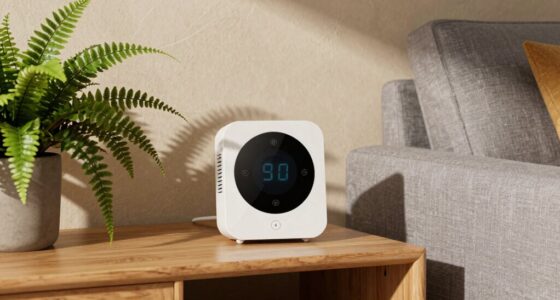
digital hygrometer for indoor humidity
As an affiliate, we earn on qualifying purchases.
As an affiliate, we earn on qualifying purchases.
What Is the Ideal Humidity Level to Prevent Mold?
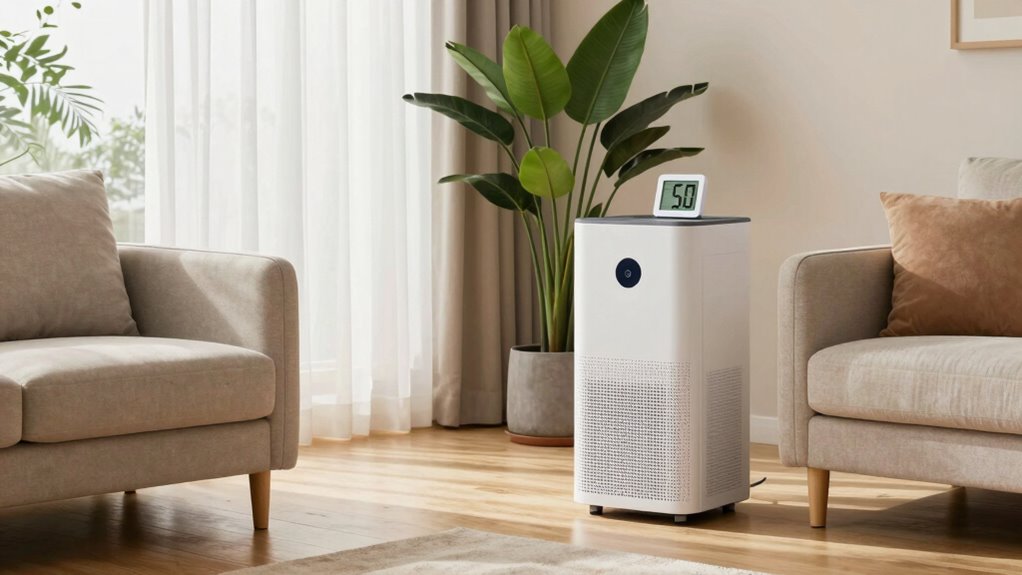
Maintaining the right humidity level is essential in preventing mold growth in your home. Keeping indoor humidity between 30% and 50% helps control mold allergies and improves indoor air quality. When humidity rises above this range, mold spores thrive, potentially worsening allergy symptoms and compromising air safety. Use a hygrometer to monitor the humidity regularly, ensuring it stays within the ideal range. Proper ventilation, dehumidifiers, and air circulation are key tools in maintaining consistent humidity levels. By managing humidity effectively, you create an environment less hospitable to mold, reducing health risks and protecting your home’s air quality. Staying vigilant about indoor moisture helps prevent mold growth and keeps your living space healthier and safer. Additionally, regular gear maintenance can help improve air circulation and reduce moisture retention in your home.
As an affiliate, we earn on qualifying purchases.
How to Measure Indoor Humidity Accurately

To measure your indoor humidity accurately, you need the right hygrometer and proper placement. Make sure you position it in a central location away from windows or vents, and understand how to read and interpret the data correctly. This way, you can keep your home’s humidity at a level that prevents mold growth effectively. Additionally, maintaining proper aftercare for your home environment can help reduce moisture accumulation and prevent mold. Regularly checking your humidity levels can aid in making informed choices about how to manage your living space and promote a healthier atmosphere. For instance, utilizing seasonal travel tips can inform you on how weather changes affect indoor humidity, helping you to adapt your home environment accordingly. Incorporating self-watering planters can also assist in managing moisture levels while promoting plant health indoors. Ultimately, understanding color accuracy in your home’s environment can enhance your overall living experience by ensuring a visually pleasing space.
Choosing the Right Hygrometer
Choosing the right hygrometer is essential for accurately measuring indoor humidity and preventing mold growth. A quality device, like a smart hygrometer, ensures precise readings and easy monitoring. To keep your measurements reliable, regularly apply calibration techniques—comparing your hygrometer to a known humidity source. Understanding regional flavors can also add depth to your appreciation of beverages enjoyed in various cultures. Additionally, being aware of digital content strategies can enhance your overall research and engagement with various topics. When selecting a hygrometer, consider features such as digital displays, app connectivity, and ease of use. Understanding humidity targets is crucial for effective mold prevention in your home, as maintaining optimal humidity levels can significantly reduce the risk of mold growth. Maintaining optimal humidity can also help improve user autonomy in managing personal comfort levels.
| Feature | Benefit |
|---|---|
| Smart hygrometer | Monitor remotely, get alerts |
| Calibration options | Maintain accuracy over time |
| User-friendly design | Simplifies regular checks |
| Reliable sensors | Ensures consistent, precise readings |
Choosing wisely helps you stay in control of your home’s humidity and ward off mold effectively.
Proper Placement Techniques
Proper placement of your hygrometer is essential for getting accurate humidity readings indoors. To guarantee reliable data, position it away from direct sunlight, heating vents, or windows, which can skew readings. Keep it at eye level, avoiding areas with heavy furniture placement that might block airflow or create microclimates.
- Place the hygrometer away from windows, especially if they are frequently opened or closed.
- Keep it on a shelf or table, not tucked into corners or behind furniture.
- Avoid spots near heating or cooling vents to prevent false readings caused by drafts.
Additionally, regular calibration of your hygrometer ensures accurate humidity measurements over time, helping you maintain optimal conditions in your home. Maintaining proper humidity levels can also aid in reducing noise pollution, as overly dry air can lead to creaky floorboards and other unwanted sounds. Proper humidity control can also enhance cooking techniques, making it easier to achieve the desired crispiness with air-fried foods. Creating cozy spaces that utilize natural light can further improve your overall home environment, while keeping humidity levels in check can also reduce the appearance of fine lines on your skin.
Reading and Interpreting Data
Ever wonder if you’re reading your hygrometer correctly? Accurate readings are essential for maintaining good air quality and preventing mold spores from thriving. To interpret your data correctly, make sure your hygrometer is placed at eye level and away from direct sunlight or drafts, which can skew results. Check the humidity levels regularly, aiming for 30-50%, as this range helps inhibit mold growth while supporting healthy air quality. Incorporating foam rolling techniques can also enhance your overall wellness, making it easier to maintain a comfortable living environment. Look for consistent readings over several hours or days to get a true sense of your indoor environment. If your hygrometer shows high humidity, take steps to improve ventilation or use a dehumidifier. Conversely, if levels are too low, consider adding moisture sources. Correct interpretation helps you maintain ideal humidity, reducing mold spores and improving your home’s air quality. Additionally, understanding LPGA milestones can inspire women to take charge of their living spaces, just as they have excelled in the sport. Implementing financial strategies such as converting 401k to Gold IRA can also provide peace of mind, allowing you to focus on maintaining a healthy home environment.
As an affiliate, we earn on qualifying purchases.
Signs Your Home’s Humidity Is Too High or Too Low
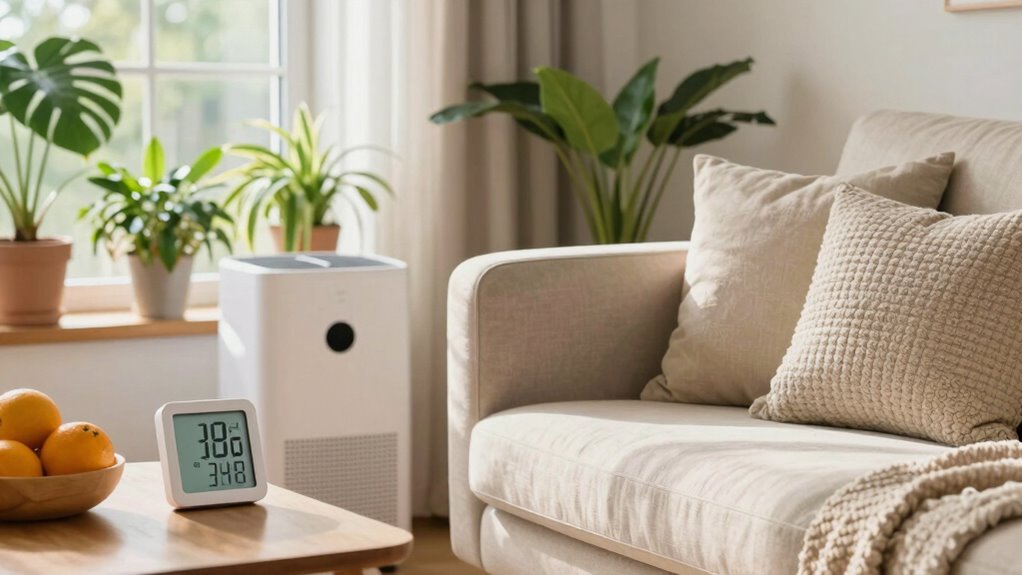
Have you noticed any unusual signs of moisture or dryness in your home? These can indicate your humidity levels are off, affecting air quality and mold spores. If the air feels damp or you see water stains, your humidity might be too high. Conversely, if you experience dry skin or cracked paint, it could be too low.
- Musty odors or visible mold spots suggest excessive moisture and high humidity.
- Static electricity or cracked wooden furniture indicate low humidity.
- Constant condensation on windows points to humidity imbalance.
Monitoring these signs helps prevent mold growth and maintains healthy air quality. Keeping humidity within the recommended range guarantees your home stays comfortable and mold spores stay at bay.
mold prevention moisture absorber
As an affiliate, we earn on qualifying purchases.
As an affiliate, we earn on qualifying purchases.
Practical Strategies for Maintaining Optimal Indoor Humidity

Maintaining the right indoor humidity level requires a proactive approach and the right tools. Start by improving air circulation throughout your home; open windows when weather permits and use fans to keep air moving. Proper air flow helps prevent moisture buildup, reducing mold growth risk. Consider applying mold-resistant paint in high-moisture areas like bathrooms and kitchens, as it adds an extra layer of protection. Keep furniture and curtains away from walls to allow better airflow and prevent damp spots. Regularly monitor humidity levels with a hygrometer, aiming for 30-50%. By combining good air circulation practices with mold-resistant paint, you create an environment less conducive to mold, making your home healthier and safer. Additionally, using HEPA filters in your HVAC system can significantly improve indoor air quality by trapping airborne particles that contribute to mold growth. The SPF ratings of your indoor environment can also play a role in overall comfort and health. Incorporating a whole-home water system can further aid in moisture control, ensuring that your home remains dry and less prone to mold growth. Furthermore, utilizing car protection accessories can enhance your overall home environment by ensuring that any vehicles parked indoors are also shielded from humidity-related issues.
How to Use Dehumidifiers and Ventilation Effectively to Prevent Mold
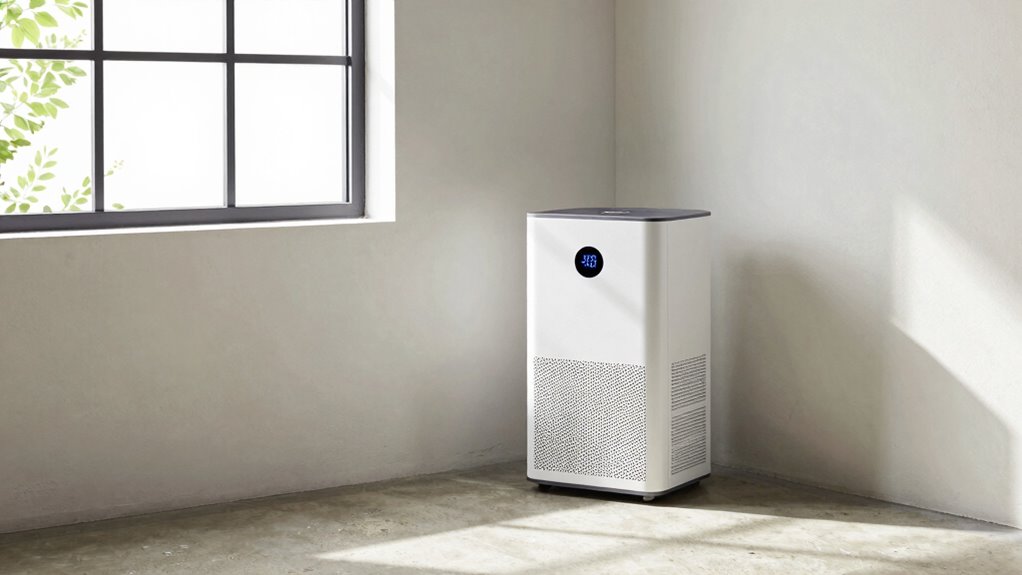
Using dehumidifiers and ventilation effectively can considerably reduce indoor moisture levels and prevent mold growth. Keep dehumidifiers running in damp areas like basements and bathrooms, setting them to maintain humidity below 60%. Guarantee proper airflow by regularly opening windows and using exhaust fans, especially when cooking or showering. Incorporate mold-resistant materials, such as mold-resistant drywall or paint, to add a barrier against mold. Additionally, use air purification devices with HEPA filters to remove mold spores and improve air quality. To maximize effectiveness, position dehumidifiers and air purifiers where moisture tends to collect, and keep vents clear of dust and obstructions. These steps help create an environment inhospitable to mold growth, keeping your home safer and healthier. Understanding the importance of humidity targets can further aid in effective mold prevention strategies.
How Temperature Affects Humidity and Mold Risk

Temperature plays a crucial role in controlling indoor humidity and mold risk because warmer air can hold more moisture than cooler air. If your home is too warm, humidity levels can rise, increasing mold risk. Proper temperature regulation helps maintain ideal humidity levels, reducing mold growth. Using mold-resistant materials in your home can also help, as they are less prone to mold when humidity spikes.
| Temperature Range | Effect on Humidity | Mold-Resistant Material Use |
|---|---|---|
| 68-72°F | Suitable for humidity control | Recommended for high-moisture areas |
| 73-78°F | Slight increase in moisture | Suitable but monitor humidity |
| Above 78°F | Higher moisture capacity | Use mold-resistant materials |
| Below 68°F | Reduced humidity, potential condensation | Less critical but beneficial |
Monitoring and Adjusting Humidity to Keep Mold Away

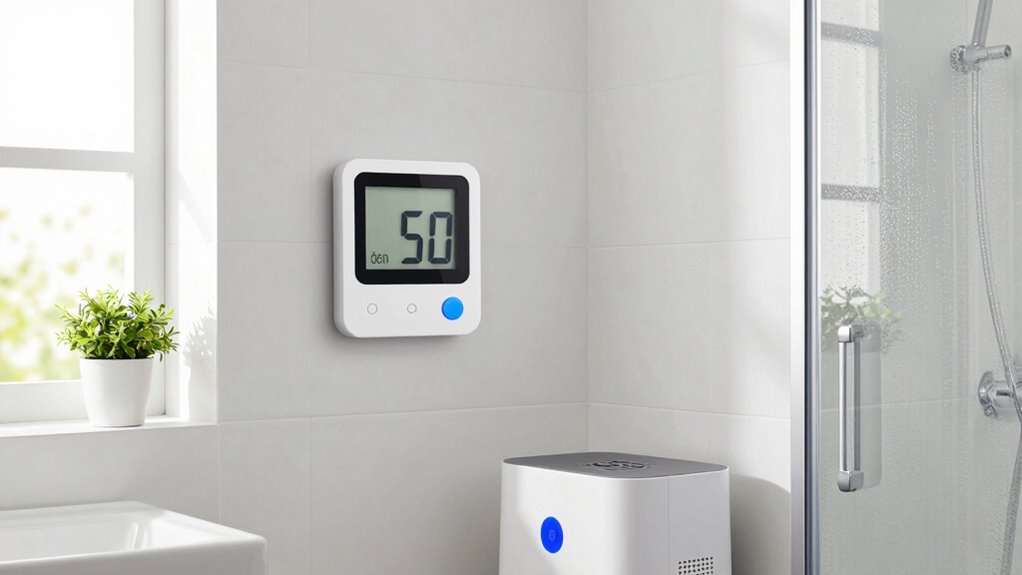
To effectively prevent mold growth, keeping humidity levels in check is key. You should regularly monitor your home’s humidity to maintain ideal air quality and prevent mold spores from thriving. Use a reliable hygrometer to track levels, aiming for 30-50%. Adjust humidity by using dehumidifiers or increasing ventilation when levels rise. Pay attention to common problem areas like bathrooms and basements. Good airflow helps reduce excess moisture, making it harder for mold to develop. Keep windows open when possible, and fix leaks promptly. Remember, controlling humidity isn’t just about comfort; it’s essential for mold prevention. By staying vigilant, you ensure your home stays dry, safe, and mold-free for everyone’s health.
Frequently Asked Questions
Can Mold Grow in Areas With Low Humidity?
Mold can’t grow well in areas with low humidity because mold spores need moisture to thrive. When humidity stays below 30-50%, it creates an environment that inhibits mold development. You should monitor your home’s humidity levels and keep them within this range to prevent mold growth effectively. Maintaining proper humidity thresholds helps keep mold spores inactive, reducing the risk of mold problems and protecting your health and home.
How Do Seasonal Changes Affect Indoor Humidity Levels?
Like the changing seasons of the year, indoor humidity levels fluctuate. During summer, air conditioning reduces humidity, making your home drier. In winter, heating causes humidity to rise, especially with increased moisture from snow or rain outside. These seasonal changes impact humidity fluctuations inside, so you should monitor and adjust your humidifiers or dehumidifiers accordingly. This helps maintain ideal humidity levels, thwarting mold growth and keeping your home comfortable year-round.
Are There Natural Ways to Control Indoor Humidity?
Yes, you can naturally control indoor humidity through simple remedies. Use humidity regulation methods like placing bowls of charcoal or silica gel around your home to absorb excess moisture. Ventilate regularly by opening windows or using exhaust fans, especially in high-moisture areas like kitchens and bathrooms. Indoor plants also help maintain humidity levels, while ensuring your home stays dry and mold-free without relying on artificial devices.
What Is the Best Way to Prevent Mold in Basements?
Imagine you’re fixing a damp basement, and you decide to apply mold-resistant paints to walls. That’s a great start! Combining this with proper ventilation techniques—like installing exhaust fans or opening windows—keeps moisture levels low. You should also fix leaks promptly and use dehumidifiers if necessary. These steps prevent mold growth effectively, creating a healthier, drier space that resists mold buildup over time.
How Often Should I Check My Home’s Humidity Levels?
You should check your home’s humidity levels at least once a week to maintain good air quality and prevent mold growth. Use a hygrometer to get accurate readings and guarantee your dehumidifier is functioning properly through regular maintenance. Keeping humidity between 30-50% helps control moisture, reducing mold risk. Frequent checks help you catch any fluctuations early, so you can adjust your dehumidifier or ventilation as needed.
Conclusion
Maintaining the right humidity levels is key to preventing mold in your home. Did you know that indoor humidity above 60% can substantially increase mold growth? By regularly measuring your humidity, using dehumidifiers, and ensuring proper ventilation, you can create a healthier environment. Staying vigilant and adjusting your strategies accordingly helps keep mold at bay and protects your home’s air quality. Remember, a humidity level between 30-50% is your best defense—keep it in check for a mold-free space.
Fall Picks
fall essentials
As an affiliate, we earn on qualifying purchases.