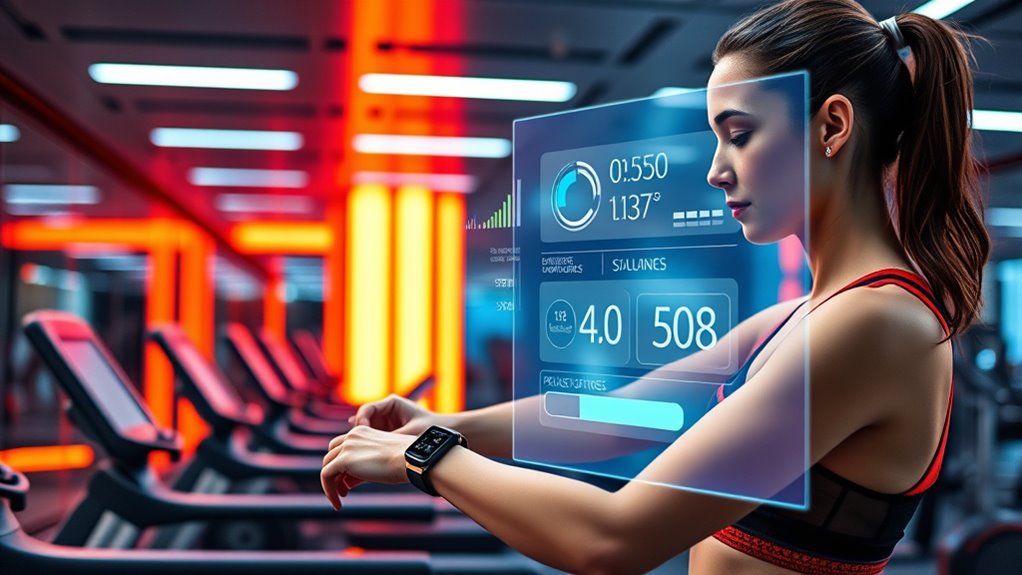

AI in fitness personalizes your workouts by analyzing your performance in real-time, adapting plans to meet your specific goals like strength or weight loss. Wearable sensors track essential signs and technique, giving you immediate feedback to prevent injuries and improve form. Integrated data helps the AI learn your strengths and weaknesses, adjusting routines on the fly. As technology evolves, smarter and more tailored workouts are just around the corner—keep exploring to see how this innovation can shape your fitness journey.
Key Takeaways
- AI analyzes real-time workout data to tailor personalized routines based on individual progress and goals.
- Wearable sensors monitor vital signs and exercise form, providing immediate feedback for optimized performance.
- Data integration connects sensors with coaching apps, enabling comprehensive tracking of progress over time.
- AI detects improper technique and fatigue signs to prevent injuries and improve exercise effectiveness.
- Personalized, adaptive routines driven by AI enhance motivation, efficiency, and faster achievement of fitness goals.
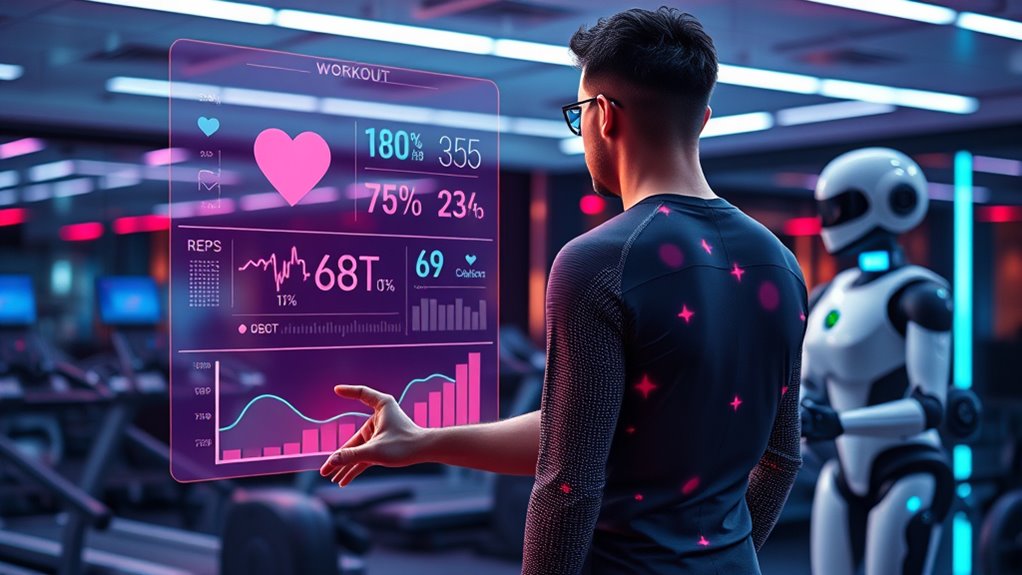
Have you ever wondered how artificial intelligence is transforming your workout routine? It’s no longer just about hitting the gym and following generic plans. Today, AI-powered tools are personalizing your fitness experience in ways you never imagined. One of the most exciting innovations is virtual coaching. Unlike traditional personal trainers, virtual coaching uses AI algorithms to analyze your performance, provide real-time feedback, and adapt workouts based on your progress. This means you get a customized plan that evolves as you improve, all without needing to schedule in-person sessions. Virtual coaching platforms often incorporate advanced data analysis, guaranteeing your routines target your specific goals, whether it’s building strength, increasing endurance, or losing weight.
AI-driven virtual coaching personalizes workouts, providing real-time feedback and adaptive plans to help you reach your fitness goals effectively.
Complementing virtual coaching are wearable sensors, which have become game-changers in fitness technology. These small devices, worn on your wrist, chest, or even clothing, continuously monitor vital signs, movement patterns, and exercise form. The data collected helps AI systems understand not only how hard you’re working but also how effectively you’re performing each movement. With this insight, AI can offer precise corrections, prevent injuries, and optimize your workout for maximum results. Instead of generic instructions, you receive tailored guidance based on real-time biometric feedback, pushing you just the right amount without overexertion.
These wearable sensors also connect seamlessly with virtual coaching apps, creating a comprehensive ecosystem that tracks your progress over time. As your data accumulates, the AI learns your strengths and weaknesses, adjusting your training plan accordingly. For example, if sensors detect signs of fatigue or improper form, your coach might suggest lighter sessions or specific drills to improve technique. This constant feedback loop ensures your workouts are not only personalized but also safer and more effective. Additionally, AI can analyze patterns across multiple sessions, offering insights into trends and motivating you with clear progress reports. You’ll see how your body responds to different exercises, enabling smarter decisions about your fitness journey.
Furthermore, the integration of wearable sensors with AI-driven platforms helps to identify and correct improper form, reducing the risk of injury and enhancing overall technique. In essence, AI’s integration with virtual coaching and wearable sensors puts you in control of a highly personalized fitness experience. It removes the guesswork from training, making every session purposeful and aligned with your goals. No more one-size-fits-all routines—your workouts become dynamic, data-driven, and tailored to your unique needs. This blend of smart technology and real-time feedback empowers you to train smarter, stay motivated, and achieve results faster. As these innovations continue to evolve, your fitness journey will become more efficient, engaging, and ultimately more successful.
Frequently Asked Questions
How Secure Is My Personal Fitness Data With AI Apps?
Your personal fitness data’s security depends on the app’s data privacy policies and encryption methods. Many AI fitness apps use strong encryption to protect your information during transmission and storage. However, always review their privacy settings and terms. Be cautious about sharing sensitive details, and choose apps that prioritize data privacy. Regularly update the app to benefit from the latest security features and keep your information safe.
Can AI Adapt Workouts for Specific Medical Conditions?
A stitch in time saves nine, so yes, AI can adapt workouts for your specific medical condition. It analyzes your health data to create personalized workout plans that accommodate limitations, ensuring safety and effectiveness. By monitoring your progress, AI adjusts exercises as needed, helping you recover or improve without risking injury. This personalized approach makes it easier to stay active while managing your medical needs confidently.
What Devices Are Compatible With AI Fitness Personalization?
You can use a variety of devices compatible with AI fitness personalization, like smartwatches, fitness trackers, and smart scales. These devices often feature wearable compatibility and seamless app integration, allowing AI to tailor workouts to your needs. Make sure your device supports the specific fitness app you’re using, as compatibility varies. This integration helps you get personalized recommendations, track progress, and stay motivated more effectively.
How Accurate Are Ai-Generated Fitness Assessments?
AI-generated fitness assessments are typically around 80-90% accurate, giving you reliable insights. However, the accuracy depends on data privacy and the quality of your input data. If your data is incomplete or compromised, assessment accuracy drops. You can improve results by ensuring your data is secure and accurate, so you get the most personalized and effective workout plans. Trustworthy data privacy measures are essential for superior AI fitness assessments.
Will AI Replace Personal Trainers Entirely?
AI won’t replace personal trainers entirely because human interaction remains essential. While AI can personalize workouts and track progress, it can’t replicate the empathy, motivation, and nuanced understanding a trainer offers. AI ethics emphasize responsible use, ensuring technology complements rather than replaces human connection. You’ll benefit most by combining AI tools with personal trainer guidance, creating a balanced approach that maximizes your fitness journey while maintaining meaningful human support.
Conclusion
Embracing AI in fitness isn’t just about gadgets; it’s about revealing your full potential. Many believe personalized tech can replace trainers, but evidence shows it complements human guidance rather than replaces it. AI helps tailor workouts to your needs, but your dedication and consistency remain key. So, trust that combining technology with your effort creates the most effective path to your goals. After all, the right tools can make your journey smarter and more motivating.