Get health and wellness essentials delivered free with Prime
- Fast, free delivery on millions of items
- Prime Video, Amazon Music and more included
- Member-only deals all year
Fitbit Charge 6 vs Garmin vívosmart 5: which tracker fits your routine?
Women comparing the Fitbit Charge 6 and Garmin vívosmart 5 are choosing between a more connected everyday tracker and a simpler band built around activity and recovery data. Both track steps, heart rate, sleep, and workouts, and neither is a full smartwatch. Their practical differences show up in how often you charge, which health details you want, and whether you value phone-connected features or Garmin’s training ecosystem.

WHOOP 5.0 Screenless Fitness, Health & Sleep Wearable – 12-Month Membership
- ✔ Battery life: 14+ days
- ✔ Water resistance: IP68, up to 10 meters for 2 hours
- ✔ Health metrics: Heart rate, resting heart rate, HRV, respiratory rate, SpO₂, skin temperature
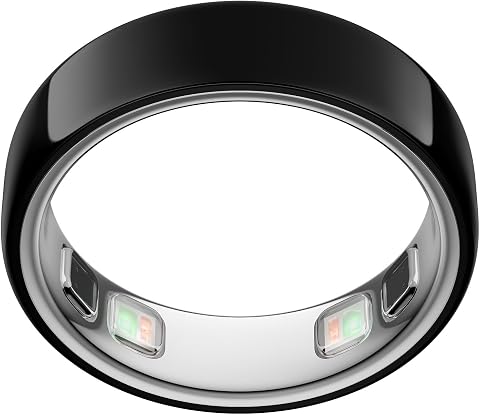
Oura Ring 5 Smart Ring – Black, Size 10
- ✔ Material: Titanium
- ✔ Color and size: Black, size 10
- ✔ Weight: 0.06 kg as listed

Fitness Tracker with 24/7 Heart Rate, Blood Pressure, Sleep Tracking, Step Counter
- ✔ Display: 1.1-inch AMOLED HD color touchscreen
- ✔ Battery life: Up to 7 days regular use; up to 15 days standby
- ✔ Charging: Magnetic fast charging
The Charge 6 is the stronger fit if you want Google Maps and Wallet on your wrist, a color touchscreen, and Fitbit’s broad health dashboard. Some deeper Fitbit insights are tied to Premium, so the purchase price is not the whole cost. The vívosmart 5 has a monochrome display and fewer connected extras, but it lasts longer between charges and puts Garmin health and activity metrics in a subscription-free app. Choose based on the features you will use every week, rather than on the size of either brand’s feature list.
WHOOP 5.0 Screenless Fitness, Health & Sleep Wearable – 12-Month Membership
WHOOP 5.0 is our top pick for readers who want their tracker to help interpret patterns, rather than simply show steps or workout stats. It continuously tracks measures including heart rate, HRV, respiratory rate, blood oxygen, and skin temperature, then uses its coaching features to connect those readings with sleep, stress, and recovery. Its listed menstrual cycle tracking, hormonal-health insights, and fertility integration give it a more explicit women’s-health focus than the Moremore band.Its screenless design is a practical choice for anyone who finds a watch distracting or wants a lightweight band that stays on through daily routines. The 14+ day battery claim is the longest listed here, and the waterproof wireless PowerPack can charge it on the wrist. Compared with the Oura Ring, WHOOP is worn on the wrist and is built around ongoing coaching; Oura is smaller and less watch-like, while WHOOP offers a longer stated battery interval.That coaching comes with a commitment: full access requires a 12-month membership. We also give up immediate on-device checks, since the band has no display. Readers who mainly want visible workout stats or notifications should look at Moremore instead; anyone uncomfortable with a membership should compare the ongoing requirements of all three before choosing. WHOOP makes the most sense when health trends and recovery guidance matter more than a screen.
Pros:
- Lists menstrual cycle tracking, hormonal-health insights, and fertility integration.
- Tracks a broad set of measures, including HRV, respiratory rate, and skin temperature.
- Listed battery life of 14+ days with waterproof wireless charging.
- Screenless band supports a low-distraction, all-day-wear approach.
Cons:
- Full features require a 12-month paid membership.
- No screen for immediate feedback or at-a-glance notifications.
- The supplied details do not list built-in GPS.
Best for: Women who want ongoing sleep, recovery, and cycle-related insights in a lightweight wrist wearable and are comfortable with a 12-month membership.
Not ideal for: Readers who want a display for quick workout checks, prefer to avoid memberships, or need a standalone GPS tracker.
Bottom line: Choose WHOOP 5.0 when recovery coaching and women’s health trends matter more than a screen or a membership-free experience.
“Choose WHOOP 5.0 when recovery coaching and women’s health trends matter more than a screen or a membership-free experience.”
Oura Ring 5 Smart Ring – Black, Size 10
For readers who would rather not wear a band or watch, Oura Ring 5 puts tracking on the finger in a titanium design. Its discreet shape can suit work, sleep, and everyday wear where a screen would feel intrusive. Oura lists more than 50 health metrics across sleep, activity, stress, heart, metabolic, and women’s health categories, giving it broader stated coverage than the Moremore tracker’s listed sensors and activity features.The ring’s up-to-one-week battery life is shorter than WHOOP’s 14+ day claim, but it still means charging less often than a daily-use device. Its no-screen format also means we should expect to check an app for information rather than glance at the device. That makes it closer to WHOOP’s discreet, insight-oriented approach than Moremore’s visible notifications, though Oura’s ring form is the least wrist-focused option in this lineup.Fit is a central buying decision: this is a specific size 10 model, and the product requires a proprietary sizing kit rather than standard ring sizing. The first month of membership is included, but full functionality then requires an ongoing subscription. We would choose Oura for discreet health tracking and skip it if sizing uncertainty, finger-worn devices, or a recurring membership would be frustrating. The product description calls its accuracy research-grade; that is the manufacturer’s claim, not a substitute for medical assessment.
Pros:
- Compact titanium ring design for discreet day-and-night wear.
- Lists 50+ health metrics, including women’s health categories.
- Up to one week of listed battery life and IP68 water resistance.
- First month of Oura membership is included.
Cons:
- Requires the proprietary sizing kit to confirm fit.
- Ongoing membership is required after the first included month for full functionality.
- No display for immediate workout or notification feedback.
Best for: Women who want broad health and sleep tracking in a compact ring and are willing to confirm fit and maintain a membership.
Not ideal for: Anyone who wants an on-device display, prefers wrist-based workout tracking, or does not want to use a sizing kit and subscription.
Bottom line: Oura Ring 5 is the compact choice for readers who value discreet health tracking and accept the sizing and membership requirements.
“Oura Ring 5 is the compact choice for readers who value discreet health tracking and accept the sizing and membership requirements.”
Fitness Tracker with 24/7 Heart Rate, Blood Pressure, Sleep Tracking, Step Counter
The Moremore tracker is the most straightforward pick here for readers who want their activity information visible on the wrist. Its 1.1-inch AMOLED touchscreen and customizable dials make steps, notifications, and other readings easier to check without opening an app. It includes 25 sport modes and can show call, SMS, and app-message notifications, which gives it a more familiar fitness-band feel than the screenless WHOOP or ring-shaped Oura.For a first tracker, reminders for movement and water, plus an alarm and stopwatch, may be more immediately useful than advanced recovery coaching. Its listed battery life is up to seven days with regular use, similar to Oura’s stated interval, while standby life is listed as up to 15 days. The pink color and wrist-based screen may also appeal to buyers seeking a conventional fitness accessory rather than a discreet ring.The compromise is that the supplied details do not list menstrual-cycle or hormonal-health features, so we rank Moremore behind WHOOP and Oura for a roundup specifically aimed at women’s tracking needs. It also has no built-in GPS; location-based activity depends on a connected phone. The tracker lists blood pressure and blood oxygen monitoring, but we should not interpret wearable readings as clinical measurements. Choose it for simple visible feedback and notifications; look elsewhere for stronger cycle-related insights or phone-free route tracking.
Pros:
- 1.1-inch AMOLED touchscreen with customizable dials.
- Supports 25 sport modes and smart notifications.
- Lists heart rate, blood pressure, SpO₂, and sleep tracking.
- Up to seven days of regular-use battery life with magnetic charging.
Cons:
- No built-in GPS; location data depends on a connected phone.
- Supplied feature details do not mention menstrual or hormonal-health tracking.
- Listed compatibility requires Android 5.0+ or iOS 9.0+.
Best for: Beginners who want an affordable-style conventional band experience, a color screen, reminders, and basic activity modes without a screenless design.
Not ideal for: Women prioritizing cycle or hormonal-health insights, built-in GPS, or detailed recovery coaching.
Bottom line: Pick Moremore for visible wrist feedback and everyday reminders, while recognizing its phone dependence and limited women-specific feature detail.
“Pick Moremore for visible wrist feedback and everyday reminders, while recognizing its phone dependence and limited women-specific feature detail.”
As an Amazon Associate we earn from qualifying purchases.
At a Glance
| Criteria | Fitbit Charge 6 | Garmin vívosmart 5 | Winner |
|---|---|---|---|
| Health and wellness features | Heart rate, sleep, stress, SpO2, skin temperature variation, ECG app, and EDA stress scan | Heart rate, sleep, stress, respiration, pulse ox, and Garmin Body Battery energy monitoring | A |
| Workout tracking | Multiple exercise modes; built-in GPS can use a paired phone, while connected equipment support is limited | Activity profiles and Garmin Connect training and recovery data; GPS relies on a paired phone | Depends |
| Battery life | Up to 7 days claimed; actual life varies with GPS, display, and health tracking use | Up to 7 days claimed; commonly a better fit for users who want fewer charging interruptions | B |
| Smart features and display | Color touchscreen, Google Maps and Wallet support, notifications, and music controls | Monochrome touchscreen with notifications, safety features, and limited connected functions | A |
| App and subscription value | Fitbit app includes useful free tracking; some deeper insights and coaching features require Premium | Garmin Connect provides core health and activity data without a paid subscription | B |
| Comfort and everyday wear | Slim band with a compact color screen; comfortable for continuous wear, though fit and skin response vary | Lightweight band with a narrow monochrome display; a practical low-profile option | Tie |
Key Differences
What separates these trackers?
The Charge 6 has the broader feature set for daily convenience and health checks. Its color screen, Google Wallet and Maps support, ECG app, and EDA stress scan give it more ways to interact with the tracker beyond counting steps. These extras matter most to someone who wants a small wrist device to support errands, exercise, and routine wellness checks. They matter less if a phone is always nearby or the wearer mainly needs sleep, steps, and heart rate.
The vívosmart 5 makes a stronger case on charging and ongoing value. Garmin claims up to seven days of battery life, and its core data is available in Garmin Connect without a paid plan. Fitbit also advertises up to seven days, but real battery life depends on settings and use; the Charge 6’s brighter color display and connected features can add charging demands. The clearest cost difference is not simply the tracker price: Fitbit Premium adds recurring expense for some insights and coaching, whereas Garmin’s main app is subscription-free.
Neither is the obvious choice for everyone. The Charge 6 is better for a feature-rich, phone-connected experience, while the vívosmart 5 suits a wearer who prefers Garmin’s activity and recovery framing and wants fewer paid extras. Both lack built-in GPS, so reliable route tracking generally means taking a compatible phone. For menstrual or cycle tracking, app features and availability can change, and neither band should be treated as a diagnostic or contraceptive device.
Detailed Comparison
Health and wellness features (Fitbit Charge 6 wins — moderate)
Winner: Fitbit Charge 6, moderate gap. It combines sleep and heart-rate tracking with an ECG app, EDA stress scan, and skin temperature variation data. Garmin offers a useful set of continuous metrics, including Body Battery, stress, respiration, sleep, and pulse ox. The Charge 6 better suits users who want more types of wellness checks in one device; Garmin’s presentation may be more useful to people who already follow its recovery metrics. Neither tracker provides medical diagnosis, and pulse-ox or cycle-related readings should be interpreted as estimates.
Workout tracking (minor difference)
Winner: Depends, minor gap. Both cover common activities and can record heart rate, duration, and related workout data. The Charge 6 supports a range of exercise modes and can connect with selected equipment, while the vívosmart 5 fits naturally into Garmin Connect’s activity and recovery ecosystem. Neither has built-in GPS, so outdoor distance and route accuracy can depend on a paired phone. Choose Fitbit for its connected convenience features or Garmin if its training history is already where you review workouts.
Battery life (Garmin vívosmart 5 wins — moderate)
Winner: Garmin vívosmart 5, moderate gap. Garmin claims up to seven days, and its simpler monochrome screen helps make longer stretches between charges practical. Fitbit also claims up to seven days, but actual life varies with settings and feature use. Either may need charging more often than the headline suggests. Garmin is the better match for people who dislike frequent charging or want to keep sleep tracking uninterrupted; compare the official estimates with the features you plan to leave on.
Smart features and display (Fitbit Charge 6 wins — major)
Winner: Fitbit Charge 6, major gap. Its color touchscreen and Google Maps and Wallet support make it more useful when checking directions or making a supported contactless payment. Garmin has a touchscreen and phone notifications, but its monochrome display and narrower connected features keep attention on health and activity. If wrist-based convenience matters, the Charge 6 offers a meaningful upgrade. If those extras would rarely leave their settings page, paying or charging for them has little practical return.
App and subscription value (Garmin vívosmart 5 wins — moderate)
Winner: Garmin vívosmart 5, moderate gap. Garmin Connect includes the central tracking and health data without a paid subscription. Fitbit’s free app still covers useful basics, but some deeper insights and coaching features sit behind Premium. The added fee only makes sense if those specific tools help shape a routine the wearer will follow. For someone who wants to buy a band and keep using its core information, Garmin has the clearer long-term value.
Comfort and everyday wear (minor difference)
Winner: Tie, minor difference. Both are lightweight bands designed for continuous wear and sleep tracking, though their screen and strap feel differ. Fitbit has a slim profile and color display; Garmin keeps the interface simpler and monochrome. Wrist size, skin sensitivity, and personal preference matter more than a spec sheet here. Check sizing and return terms, and remove either device if it irritates the skin. A tracker that feels comfortable overnight is more useful than one with more features left unused.
Fitbit Charge 6: Pros and Cons
Pros:
- More connected features, including Google Maps and Wallet support
- ECG app and EDA stress scan add wellness checks beyond basic activity tracking
- Color touchscreen makes information easier to glance at
Cons:
- Some deeper insights and coaching require a recurring Fitbit Premium plan
- Actual battery life depends on feature use and may fall short of the maximum claim
- Built-in GPS is absent, so route tracking generally relies on a phone
Garmin vívosmart 5: Pros and Cons
Pros:
- Garmin Connect provides core tracking data without a subscription
- Long claimed battery life and a simpler display suit users seeking fewer charging interruptions
- Body Battery and other activity and recovery data connect with Garmin’s wider ecosystem
Cons:
- Monochrome screen and fewer connected conveniences than the Charge 6
- Built-in GPS is absent, so outdoor route tracking generally needs a paired phone
- Its more limited smart feature set may feel basic to users expecting a mini smartwatch
Who Should Choose What
Choose Fitbit Charge 6 if:
- You want a color screen and use Google Maps or Wallet on your wrist.
- You value ECG and EDA features alongside everyday activity and sleep tracking.
- You are comfortable paying for Premium if its extra insights and coaching suit your routine.
Choose Garmin vívosmart 5 if:
- You want Garmin’s activity and recovery data in Garmin Connect without a paid plan.
- Reducing charging interruptions matters more to you than display quality or smart features.
- You already use Garmin devices or services and want a compact band that fits that ecosystem.
Skip both if: You need built-in GPS, advanced running or multisport training tools, or a large smartwatch screen; compare dedicated sports watches or smartwatches instead.
Value for Money
Is the more feature-rich option worth paying for?
The Charge 6 earns a higher spend if its connected tools and additional wellness checks will see regular use. Google Wallet and Maps support can make it feel more capable than a basic band, while the ECG and EDA features add specific checks for users who want them. But Fitbit Premium changes the long-term calculation: pay for it only if you expect to use the extra insights or coaching, rather than assuming it is necessary to see any useful data.
The vívosmart 5 is the stronger value for someone who wants core health and activity tracking without another subscription. Its case rests on Garmin Connect’s included data, longer stretches between charges in typical use, and fit with Garmin’s wider ecosystem. If a color screen, payments, and extra wellness checks are not priorities, paying more for Fitbit’s feature set may not improve day-to-day use. Compare current retail prices and subscription terms before buying, since discounts can change which band costs less upfront.
Final Verdict
For most people choosing a compact band, the decision turns on what happens after the workout. Choose the Fitbit Charge 6 if you want the more capable everyday companion, value its color screen and connected features, and will use its added wellness checks. Choose the Garmin vívosmart 5 if you want subscription-free core data, prefer Garmin’s activity and recovery app, and care more about simpler upkeep than wrist-based payments or maps.
The Charge 6 is the better pick for feature breadth; the vívosmart 5 is the better value for a subscription-free routine. Pay more for Fitbit only when its added functions match habits you already have or plan to build. If built-in GPS or advanced sports training is the deciding need, skip both and look at a watch built for that job.
Frequently Asked Questions
Which tracker is better for women’s health tracking?
The Fitbit Charge 6 offers more types of health checks, including an ECG app and EDA stress scan, while the Garmin vívosmart 5 covers common sleep, stress, heart-rate, respiration, and activity metrics. Neither is a medical device. Cycle tracking can be app-dependent, and neither tracker should be relied on for diagnosis or contraception.
Do Fitbit Charge 6 or Garmin vívosmart 5 have built-in GPS?
No. For outdoor route tracking, both generally use a paired phone for GPS. If you want to leave your phone at home and still record a route, choose a tracker or watch with built-in GPS.
Do I need to pay a monthly fee to use either tracker?
Garmin Connect includes its core tracking data without a subscription. Fitbit has a useful free app, while some deeper insights and coaching features require Fitbit Premium. Check current plan terms to see whether the features you want are included.
Which one should I buy if I mainly want sleep tracking?
Both track sleep, so comfort and the app’s presentation are better deciding factors than the feature list alone. The Charge 6 offers a broader set of health features; the vívosmart 5 appeals if you prefer Garmin Connect and want its core data without a subscription. Wear either snugly but comfortably, and remove it if your skin becomes irritated.