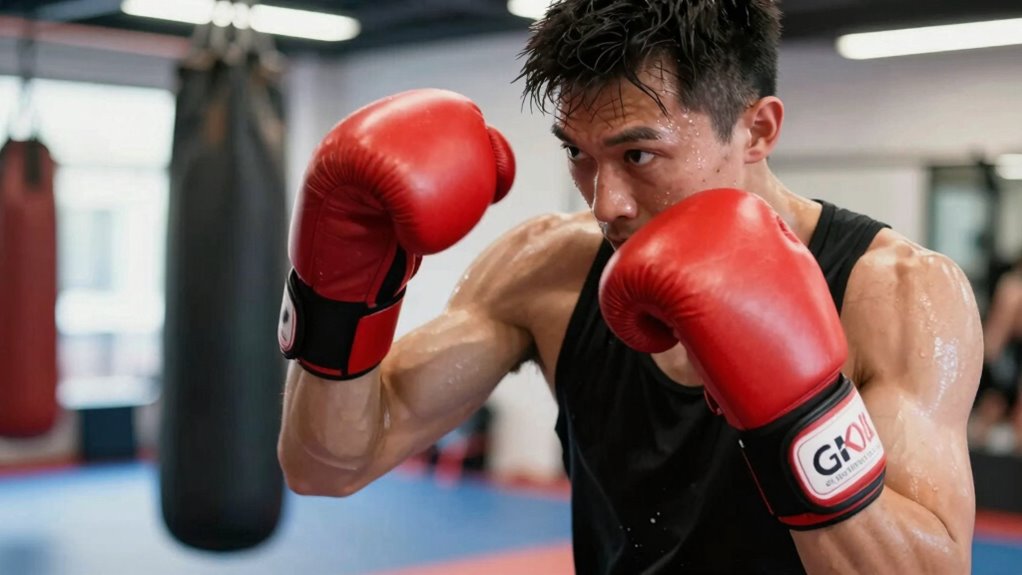

To train hard in boxing for cardio without wrist pain, focus on proper technique, including keeping wrists straight and aligned with your forearms. Use supportive gloves and tightly wrap your wrists for stability. Incorporate wrist-strengthening exercises and warm-up routines like wrist circles and stretches. Avoid overextending at impact and gradually increase punching intensity. If you stay mindful of these tips, you’ll stay safe and maximize your workouts—more insights on preventing wrist injuries await.

Get health and wellness essentials delivered free — and shop member deals
- Fast, free delivery on millions of items
- Access to Prime Big Deal Days deals on October 6–7
- Prime Video, Amazon Music and more included
Key Takeaways
- Maintain proper wrist alignment and keep wrists straight during punches to prevent strain and injury.
- Incorporate wrist stretches, mobility drills, and strengthening exercises into warm-up routines.
- Use well-fitted, supportive gloves and wraps to stabilize wrists and protect joints during training.
- Focus on controlled, precise punches and avoid overextending or twisting wrists under pressure.
- Gradually increase punching intensity and duration, listening to your body to prevent overuse injuries.
As an affiliate, we earn on qualifying purchases.
How Wrist Pain Affects Your Boxing Cardio Goals

Wrist pain can considerably hinder your boxing cardio routine, making it difficult to perform punches with proper form and speed. Limited wrist flexibility can cause discomfort and reduce your punching range, forcing you to hold back on intensity. When your wrist isn’t flexible enough, you might compensate with improper technique, risking further injury. Additionally, weak grip strength can make maintaining control over your punches challenging, leading to fatigue and reduced power. This discomfort can demotivate you from pushing your cardio limits, ultimately stalling your progress. You might find yourself avoiding high-intensity drills that strain your wrists, which hampers your overall fitness gains. Improving wrist flexibility and grip strength is essential to maintaining consistent, effective training sessions without pain. Incorporating proper gear care can also help prevent wrist strain during your workouts, as using the right equipment significantly contributes to injury prevention. Ultimately, developing an adaptable training strategy can help you navigate these challenges while still achieving your cardio goals.
As an affiliate, we earn on qualifying purchases.
Learn Proper Punching Technique to Protect Your Wrists

To protect your wrists during boxing, mastering proper punching technique is essential. Your proper stance forms the foundation, ensuring your body is aligned and balanced. Keep your feet shoulder-width apart, knees slightly bent, and weight evenly distributed. When you punch, focus on maintaining correct punching form—your wrist should stay straight, not bent or cocked. As you throw a punch, rotate your hips and shoulders to generate power, while keeping your wrist aligned with your forearm. Avoid overextending or snapping your wrist at the moment of impact, which can cause pain. Proper technique distributes force evenly and reduces strain on your wrists. Practicing controlled, precise punches helps prevent injury while maximizing your workout. Additionally, incorporating outdoor ovens for versatile cooking options after training can provide a delicious way to refuel. Consistent focus on form is key to protecting your wrists during cardio boxing. Moreover, fostering a growth mindset in your training can help you embrace challenges and improve your technique. Additionally, understanding the importance of communication in training can help you address any concerns with your coach or training partner. Using interactive murals in your workout environment can also enhance your motivation and create a more engaging training atmosphere. To further support your recovery, consider the benefits of hydrotherapy after intense workouts, as it can help soothe sore muscles and improve circulation.
wrist strengthening exercise equipment
As an affiliate, we earn on qualifying purchases.
As an affiliate, we earn on qualifying purchases.
How to Choose Gloves and Wraps That Support Your Wrists
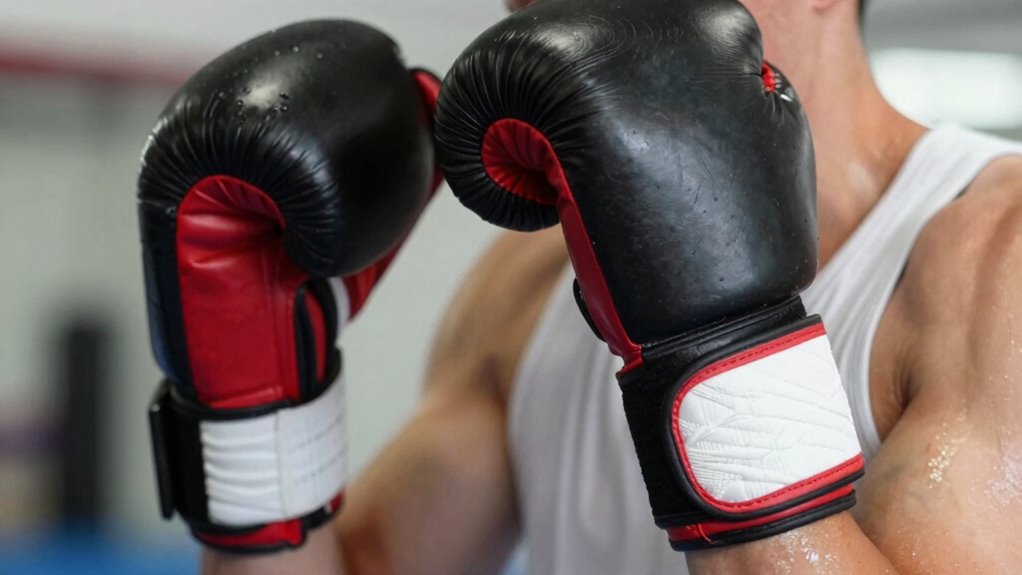
Choosing the right gloves and wraps is essential for providing the support your wrists need during boxing. Look for gloves with good glove ventilation to keep your hands cool and dry, reducing discomfort during intense training. When selecting wraps, pay attention to wrap tension—tight enough to stabilize your wrists without restricting blood flow or movement. Proper tension ensures your wrists stay aligned during punches, minimizing strain. Remember that inner strength is key in both boxing and Stoicism, as it helps you push through challenges. Consider gloves with reinforced wrist support, especially if you’re prone to wrist pain, and opt for wraps that are easy to adjust for a snug fit. The goal is to find equipment that offers both comfort and stability, so your wrists are protected and you can focus on your training without worry. Additionally, participating in cultural festivals can enhance your overall well-being by providing a sense of community and relaxation outside of your training sessions.
boxing hand wraps for wrist protection
As an affiliate, we earn on qualifying purchases.
As an affiliate, we earn on qualifying purchases.
Wrist-Strengthening Exercises to Fight Injuries
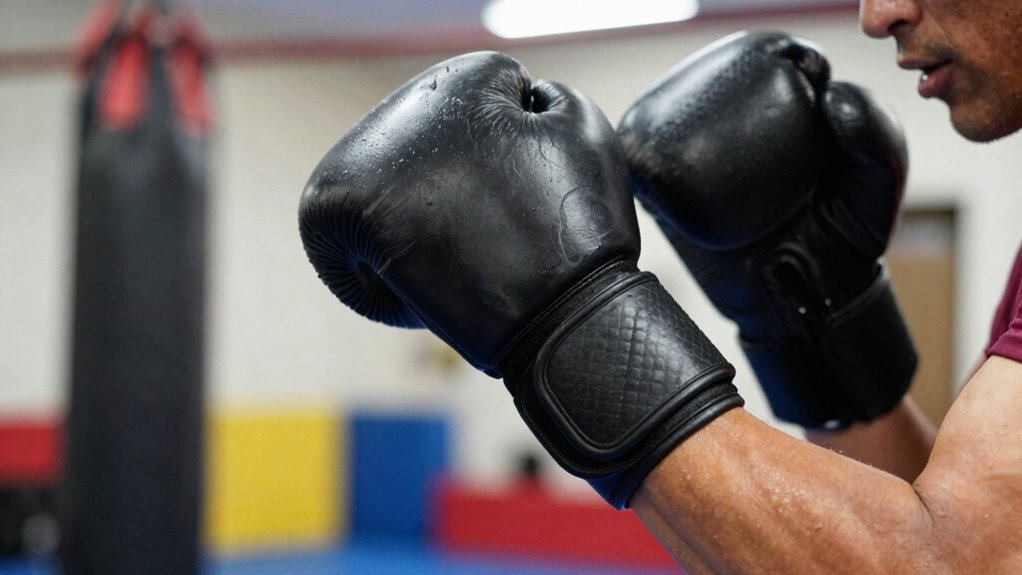
Focusing on proper wrist alignment techniques helps prevent injuries and improves your punch accuracy. Incorporate targeted strengthening exercises to build stability and resilience in your wrists. By doing so, you’ll better protect yourself during intense training sessions and competitions. Additionally, understanding proper technique can significantly enhance your performance and reduce the risk of injury. Ensuring high-quality protein sources in your nutrition will support overall muscle recovery and strength, further enhancing your training effectiveness. Including multi-tool use in your training can also improve your overall hand and wrist dexterity, benefiting your boxing skills. Moreover, the increasing interest in wellness tourism emphasizes the importance of mental and physical well-being, which can further motivate your training efforts. Regularly engaging in wood stove maintenance ensures that your environment remains safe and comfortable, allowing for focused training sessions.
Proper Wrist Alignment Techniques
Maintaining proper wrist alignment during boxing punches is essential to prevent injuries and enhance performance. To achieve this, focus on improving wrist mobility through regular flexibility training. This helps your wrists stay supple and adaptable, allowing for better control and correct positioning during punches. When throwing a punch, keep your wrist straight and aligned with your forearm, avoiding any bending or collapsing. Incorporate wrist stretches and mobility drills into your warm-up routine to increase flexibility and reduce tension. Proper wrist alignment not only protects your joints but also ensures maximum power transfer. Consistent flexibility training reinforces good habits, making it easier to maintain proper form under fatigue. Additionally, infection risks can arise from improper techniques that lead to strain or injury. Including espresso machines in your training regimen can also enhance overall endurance and strength. Indoor air quality can also play a role in overall health, impacting your performance and recovery. To further support your training, consider integrating smart home technology that can help monitor your environment for optimal performance. Furthermore, the principles of wrist strengthening exercises can be applied to bolster your training routine. Prioritize wrist mobility exercises daily to build resilience and keep your wrists healthy during intense boxing sessions.
Targeted Strengthening Exercises
Targeted Strengthening Exercises (Wrist-Strengthening Exercises to Fight Injuries)
Targeted wrist strengthening exercises are essential for building resilience against injuries and improving overall punching power. These exercises enhance wrist flexibility and grip strength, which are vital for safe, effective boxing. To get started:
- Wrist Rolls: Rotate your wrists clockwise and counterclockwise to improve flexibility. This simple movement also helps to enhance overall joint health, which is crucial for preventing injuries. Additionally, maintaining proper hydration can support joint function during training. Incorporating educational resources can further aid in understanding proper techniques for injury prevention.
- Grip Squeeze: Use a stress ball or grip trainer to strengthen your grip and prevent wrist strain.
- Wrist Curls: With light weights, curl your wrists upward and downward to build strength.
- Finger Extensions: Stretch your fingers with resistance bands to enhance grip endurance.
Incorporating these exercises regularly will help you fight injuries, maintain wrist stability, and punch with more power and confidence. Additionally, understanding the importance of proper system design can help prevent injuries related to incorrect boxing techniques and equipment use.
Common Mistakes That Cause Wrist Injuries in Boxing
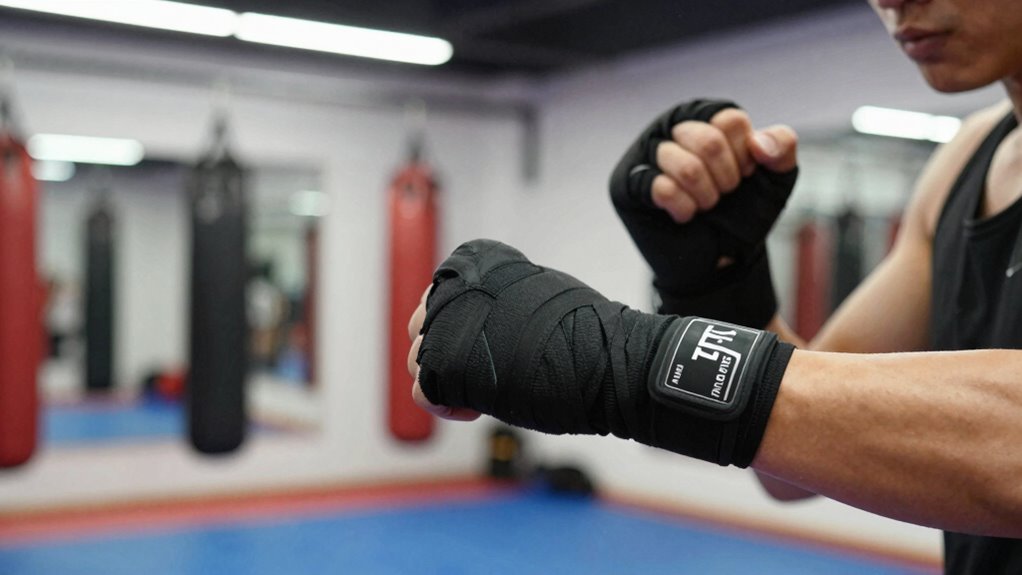
Have you ever wondered why wrist injuries happen so often in boxing? One common mistake is an incorrect stance, which can put unnecessary strain on your wrists during punches. When your stance isn’t stable, it forces your wrists to compensate, increasing the risk of injury. Another mistake is poor grip—holding your gloves or fists incorrectly can lead to improper wrist alignment. A weak or awkward grip causes your wrist to bend unnaturally upon impact, risking sprains or fractures. Additionally, neglecting proper wrist positioning when throwing punches can cause overextension or sudden twists. To avoid these mistakes, focus on maintaining a strong, balanced stance and guarantee your grip is secure yet relaxed. Proper technique minimizes stress and helps protect your wrists during intense training. Incorporating digestible pre-swim carbs into your diet can also enhance overall performance and stamina, which is crucial for avoiding injuries.
Warm-Ups to Prepare Your Wrists for Heavy Punching
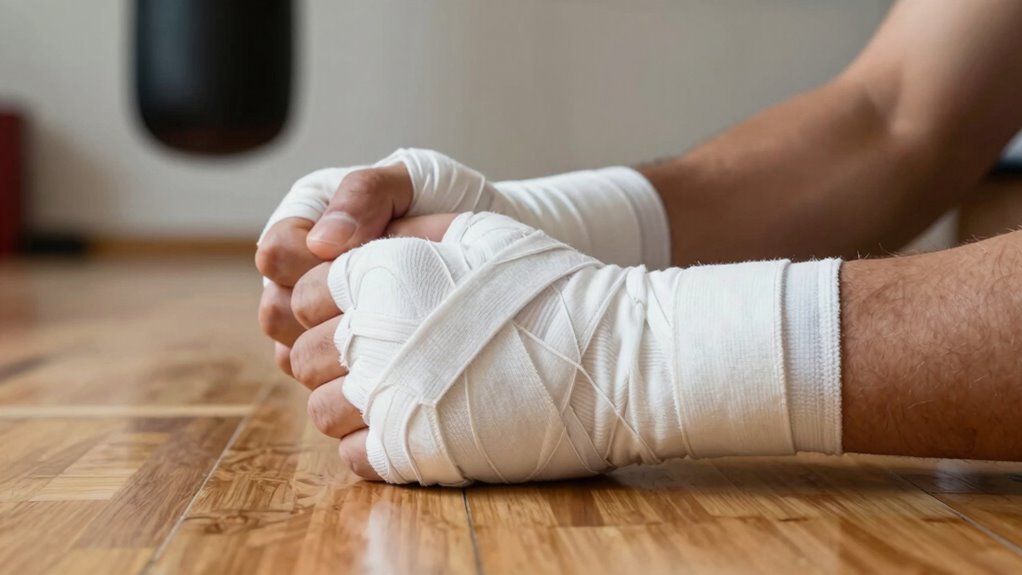
Warming up your wrists before heavy punching is essential to prevent injuries and improve performance. Proper warm-up routines boost wrist flexibility and prepare your joints for the intensity ahead. To get started:
- Rotate your wrists clockwise and counterclockwise for 15 seconds each way to loosen stiff joints.
- Extend your arms and gently stretch your wrists backward and forward, holding each stretch for 10 seconds.
- Perform wrist circles with your palms facing down, increasing the circle size gradually.
- Use light resistance bands or hand grips to strengthen and warm up your wrist muscles.
These routines improve blood flow and flexibility, helping you punch harder without risking wrist pain. Incorporate them into your pre-training to stay safe and perform at your best.
How to Progress in Boxing Safely Without Wrist Pain
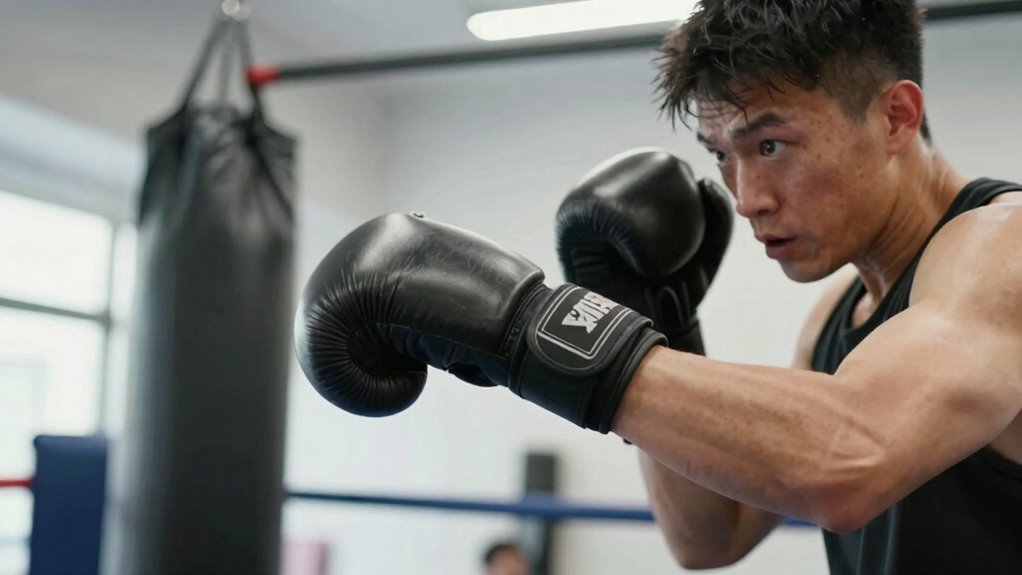
Progressing in boxing safely requires paying close attention to your wrist health as you advance your training intensity. Respect boxing etiquette by focusing on proper technique and avoiding shortcuts that can strain your wrists. Study boxing history to understand how fighters historically protected their hands and used correct form to prevent injuries. Gradually increase your punching power and duration, ensuring your wrist remains aligned and stable with each strike. Incorporate wrist-strengthening exercises and proper wrapping techniques to support your joints. Remember, rushing progression increases the risk of wrist pain and injury. Listening to your body and maintaining good form is essential. Consistent, mindful training will help you improve without compromising your wrist health, allowing you to train harder and longer safely.
When to See a Professional for Persistent Wrist Pain

If your wrist pain persists beyond a few days or worsens despite rest, it’s time to see a professional. Watch out for severe symptoms like swelling, numbness, or inability to move your wrist. Ignoring these signs can lead to more serious injuries, so don’t hesitate to seek expert advice.
Recognizing Severe Symptoms
How can you tell if wrist pain during boxing is a sign of something serious? Recognizing severe symptoms early can prevent long-term damage. Look for these immediate symptoms:
- Swelling that worsens over time
- Intense, persistent pain that doesn’t improve
- Limited range of motion or inability to move your wrist
- Numbness, tingling, or a feeling of instability
If you experience any of these, it’s a clear sign of a serious wrist injury. Ignoring these symptoms can lead to more severe damage or chronic issues. Persistent wrist pain that doesn’t subside warrants professional evaluation. Trust your body—seek medical help promptly to avoid further complications.
When to Seek Help
Persistent wrist pain after boxing shouldn’t be ignored, especially if symptoms linger beyond a few days or worsen over time. If your wrist feels stiff, swollen, or limited in flexibility, it’s time to see a professional. Poor wrist flexibility can increase your risk of injury, so addressing pain early helps prevent further damage. Ignoring persistent pain can lead to chronic issues that hinder your training and compromise injury prevention. A healthcare provider can assess your wrist, identify the cause of pain, and recommend appropriate treatment or rehab. Don’t push through ongoing discomfort—professional help ensures you recover properly and maintain safe boxing habits. Prioritizing your wrist health now can keep you training hard without risking long-term damage.
Frequently Asked Questions
Can Wrist Pain Affect My Overall Boxing Performance?
Yes, wrist pain can impact your overall boxing performance. When you experience wrist discomfort, your wrist flexibility suffers, limiting your punch power and speed. Poor wrist flexibility can also increase the risk of injury. To improve pain management, focus on strengthening your wrists and stretching regularly. Proper wrist support and technique are essential, allowing you to train harder, avoid setbacks, and maintain confidence during your boxing sessions.
Are There Specific Types of Boxing Gloves Better for Wrist Support?
Did you know that 60% of boxers experience wrist injuries? For better wrist support, choose gloves with sturdy materials like leather or synthetic blends designed for durability. Look for gloves with built-in wrist wraps or extra padding around the wrist area to provide extra support. These features help stabilize your wrist during punches, reducing strain and preventing injuries, so you can train harder and safer without risking wrist pain.
How Long Should I Rest if I Experience Wrist Pain?
If you experience wrist pain, you should rest for at least 48 hours to allow pain management and healing. Listen to your body and avoid putting pressure on your wrist during this time. Ice your wrist to reduce inflammation, and consider gentle stretches if your pain subsides. If pain persists beyond a few days, consult a healthcare professional to prevent further injury and guarantee proper recovery.
Can Wrist Taping Prevent Boxing-Related Injuries?
Like a knight’s armor, wrist taping acts as a shield, helping prevent boxing-related injuries. It offers extra support, stabilizing your wrists during hard punches. While it’s not a foolproof solution, wrist taping considerably reduces strain, helping you train harder without risking pain. For injury prevention, always guarantee proper technique and choose quality tape. Think of wrist taping as your secret weapon for safer, more confident boxing sessions.
Is Wrist Pain Common Among Beginner or Experienced Boxers?
Wrist pain is quite common among both beginner and experienced boxers, especially if your hand wraps aren’t providing enough support or your wrist flexibility is limited. To reduce pain, make sure you properly wrap your wrists and focus on improving wrist flexibility through regular stretching. Strengthening your wrists helps you maintain better control and reduce injury risk, allowing you to train harder and longer without discomfort or pain.
Conclusion
Don’t let wrist pain hold you back from achieving your boxing cardio goals—pushing through injury can turn your passion into pain. Instead, train smart, protect your wrists, and focus on proper technique. Think of your wrists as the foundation of your punch; neglecting them risks everything. With the right care and precautions, you can punch hard and stay injury-free—turning your boxing routine into a powerful, pain-free workout.
Halloween Picks
halloween
As an affiliate, we earn on qualifying purchases.