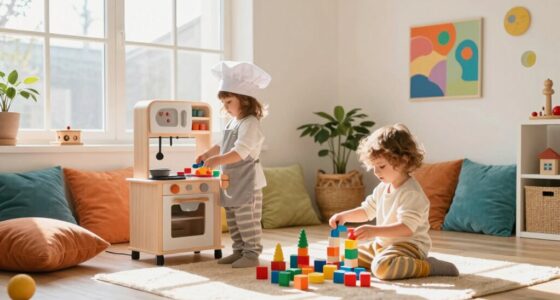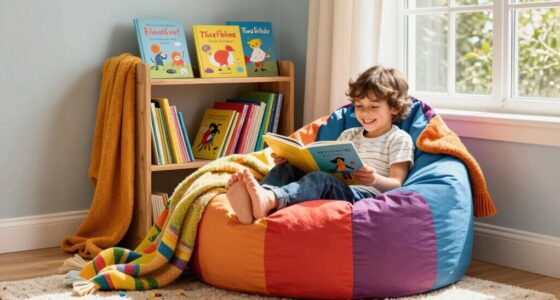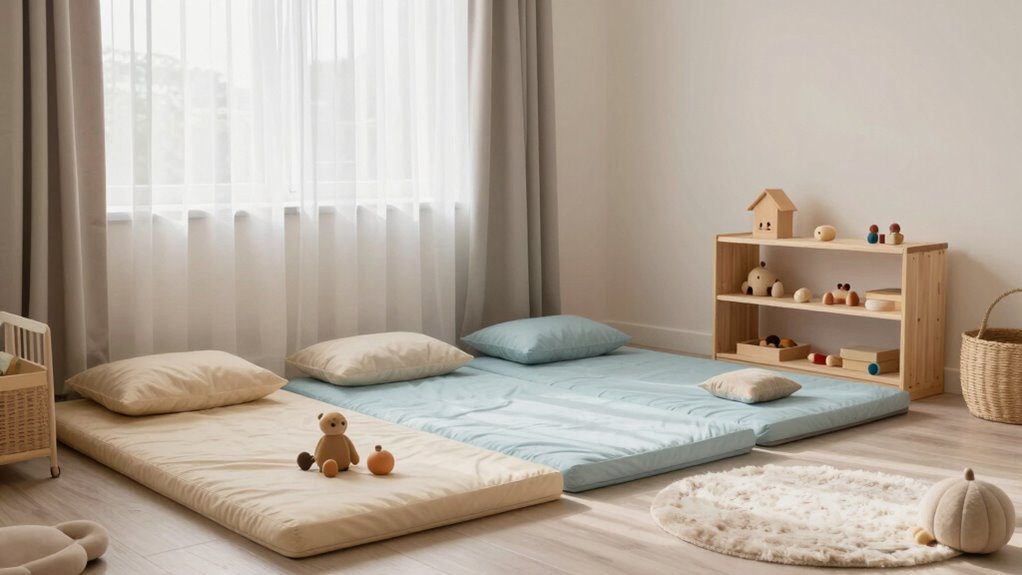

To set up a play space that reduces overstimulation, keep the environment simple and clutter-free. Use gentle colors, soft lighting, and natural materials to create a calming atmosphere. Incorporate sensory zones with textured mats, soft pillows, and calming visuals. Choose furniture with rounded edges and keep open spaces for safe movement. Regularly assess the area to remove unnecessary items. If you keep exploring, you’ll find more tips to make a soothing, inviting environment.

Get health and wellness essentials delivered free — and shop member deals
- Fast, free delivery on millions of items
- Access to Prime Big Deal Days deals on October 6–7
- Prime Video, Amazon Music and more included
Key Takeaways
- Incorporate calming color palettes and soft lighting to create a soothing environment.
- Keep the space clutter-free with accessible storage to minimize sensory overwhelm.
- Use simple, rounded furniture and natural materials to promote safety and relaxation.
- Designate sensory and calming zones with calming visuals, textures, and gentle sensory input.
- Arrange furniture for easy navigation, maintaining a simple layout to prevent feelings of crowding.
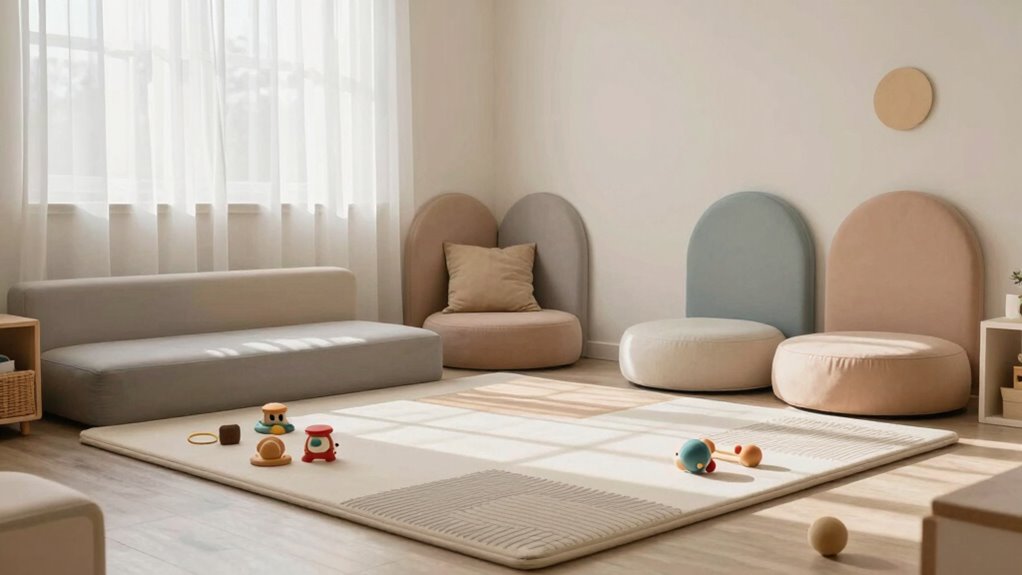
Creating a well-designed play space is essential for fostering children’s creativity, safety, and enjoyment. When setting up a space that reduces overstimulation, you want to focus on creating a sensory friendly design that promotes calmness and comfort. This means choosing elements that soothe rather than excite, with soft lighting, gentle colors, and textures that feel inviting. A sensory friendly design helps children feel more in control, reducing anxiety and sensory overload. It’s also crucial to keep the environment clutter-free, as excess toys, decorations, or furniture can overwhelm a child’s senses and make the space feel chaotic. A clutter-free environment allows children to focus on their play without distractions, making the experience more enjoyable and less stressful.
A sensory-friendly, clutter-free play space fosters calmness, safety, and joyful exploration for children.
Start by selecting a calming color palette—muted tones like soft blues, greens, or pastel shades tend to be less stimulating and can help establish a peaceful atmosphere. Incorporate natural light whenever possible, as it boosts mood and energy without the harshness of fluorescent bulbs. When choosing furniture and decor, opt for simple, rounded shapes and avoid sharp edges. Keep furniture minimal and functional, ensuring there’s enough open space for movement and exploration. Storage solutions should be easy to access and encourage tidiness, so children can easily put away toys and materials, maintaining that clutter-free environment you want. Understanding the importance of a sensory friendly environment can help guide your design choices to support children’s sensory needs. Additionally, integrating appropriate sensory input can enhance the calming effects and help children self-regulate more effectively. Including elements that promote natural materials can also contribute to a more soothing and grounding environment.
Pay attention to sensory input, but do so thoughtfully. Include a few sensory items like textured mats, soft pillows, or a small tent for quiet time, but avoid overwhelming the space with too many options. Incorporating sensory-friendly elements such as weighted blankets or calming visuals can create a more soothing environment. Consider adding a sensory corner that’s specifically designed for calming activities, like a weighted blanket, a soft rocking chair, or a calming visual or auditory element, such as a gentle projector or white noise machine. These features can help children self-regulate if they start feeling overstimulated. Incorporating air quality considerations can also contribute to creating a healthier, more comfortable environment, as proper ventilation helps reduce indoor pollutants that might affect sensory sensitivities.
Finally, keep the overall layout simple and accessible. Arrange furniture and play zones so children can navigate easily without feeling crowded or trapped. Regularly assess the space and remove anything that might cause sensory overload or isn’t being used. Remember, the goal is to create a safe, inviting environment where children can explore, play, and relax without feeling overwhelmed. By focusing on sensory friendly design and maintaining a clutter-free environment, you set the stage for positive, stress-free play that nurtures their development and joy.
As an affiliate, we earn on qualifying purchases.
Frequently Asked Questions
How Can I Customize Play Spaces for Children With Sensory Processing Disorders?
You can customize play spaces for children with sensory processing disorders by incorporating sensory-friendly furniture, such as soft seating and textured mats, to create calming zones. Use noise-canceling solutions like headphones or soundproof panels to minimize auditory overstimulation. Make certain the space has adjustable lighting and a variety of tactile toys. By tailoring these elements, you help children feel safe, engaged, and comfortable, encouraging positive play experiences.
What Are the Best Materials to Minimize Overstimulation?
You want a calming space, so choose sensory-friendly fabrics like soft cotton or fleece, which feel gentle on sensitive skin. Incorporate noise-reducing materials such as thick curtains, foam panels, or plush rugs to muffle sounds. Imagine a cozy corner where gentle textures and quiet surroundings invite children to explore comfortably. These carefully selected materials create a peaceful environment, helping children feel safe, focused, and less overwhelmed during play.
How Often Should Play Spaces Be Reorganized or Refreshed?
You should refresh your play space regularly, ideally every few weeks, to maintain a calming environment. Incorporate play space maintenance and organizational strategies, like rotating toys and decluttering, to keep the space inviting and reduce overstimulation. Frequent reorganization helps prevent chaos, making it easier for children to focus and feel secure. Adjust refresh frequency based on how often the space is used and your child’s needs for a consistently soothing environment.
Are There Specific Colors That Help Reduce Overstimulation?
Yes, certain colors can help reduce overstimulation by leveraging color psychology. Soothing palettes like soft blues, gentle greens, and muted neutrals create calming environments that promote relaxation. These colors minimize visual noise and help children feel more secure in their play spaces. By choosing calming palettes, you encourage focus and comfort, making the space more inviting and less overwhelming for children sensitive to bright or intense hues.
How Can I Incorporate Calming Elements Into a Play Area?
Research shows sensory integration can markedly improve calming effects in play areas. To incorporate calming elements, add soft, calming textures like plush rugs and cushions. Use gentle lighting and include sensory tools such as weighted blankets or fidget toys. These elements help children self-regulate and feel secure. By combining calming textures with sensory integration techniques, you create a space that promotes relaxation and reduces overstimulation effectively.
As an affiliate, we earn on qualifying purchases.
Conclusion
By creating play spaces that are calm and thoughtfully arranged, you turn chaos into a gentle stream rather than a raging river. Keep clutter minimal, incorporate soothing colors, and include cozy corners to give your child a peaceful haven amid the whirlwind of activity. With these mindful touches, you’re building a sanctuary where overstimulation dissolves like sugar in tea, allowing your little one to explore and grow comfortably within a nurturing environment.
As an affiliate, we earn on qualifying purchases.
As an affiliate, we earn on qualifying purchases.
Cold & flu season Picks
humidifiers
As an affiliate, we earn on qualifying purchases.