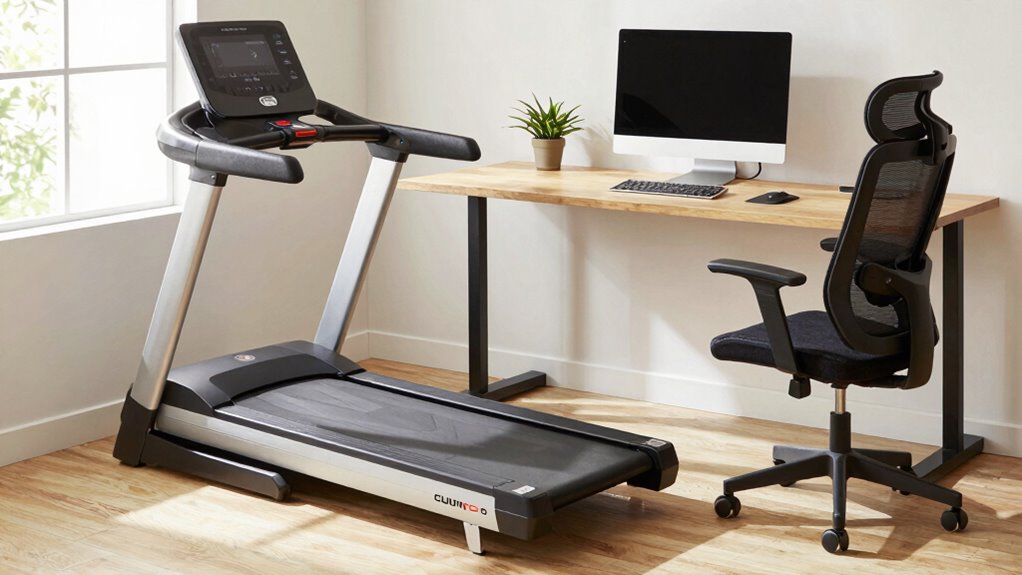

To set up your desk treadmill without wrecking your posture, make sure your monitor is at eye level and about an arm’s length away, and adjust your desk height so your elbows form a 90-degree angle with straight wrists. Keep your shoulders relaxed, back straight, and head level while walking. Take regular breaks to stretch and check your posture. For more tips to stay comfortable and avoid common mistakes, keep exploring the best setup practices.
Listen free for 30 days with Audible
Thousands of audiobooks and originals — cancel anytime.
As an affiliate, we earn on qualifying purchases.
Key Takeaways
- Position your monitor at eye level and about an arm’s length away to prevent neck strain.
- Adjust desk height so elbows are at 90 degrees with straight wrists during walking.
- Keep the treadmill aligned with your desk, clear of obstructions, and maintain a safe surface for movement.
- Maintain a tall, upright posture with relaxed shoulders and engaged core during treadmill use.
- Take regular breaks to stretch and check your posture to avoid prolonged static positions.
adjustable monitor stand for ergonomic setup
As an affiliate, we earn on qualifying purchases.
As an affiliate, we earn on qualifying purchases.
Why Proper Desk Treadmill Setup Is Essential for Your Posture

Have you ever considered how your desk treadmill setup impacts your posture? Proper setup is vital for posture correction and preventing discomfort. When your desk height isn’t right, you might hunch or strain your neck and shoulders. Using ergonomic accessories like adjustable monitors, keyboard stands, and footrests helps keep your body aligned. These tools support a natural sitting or standing position, reducing fatigue and injury risk. An improper setup forces you into awkward positions, which can worsen posture over time. Taking the time to adjust your workspace ensures your body stays comfortable and healthy during movement. Prioritizing ergonomic accessories and correct positioning makes a significant difference in maintaining good posture while using your desk treadmill. It’s essential for long-term comfort and health. Additionally, understanding how burnout prevention relates to physical health can motivate you to create a sustainable workspace. Moreover, ensuring your desk treadmill is at the correct height can help you maintain proper ergonomic alignment throughout your workout. Implementing effective ergonomic strategies can further enhance your overall experience and support your posture while working. Furthermore, good posture while using a desk treadmill can improve your overall performance in golf-related activities, as it promotes better balance and coordination. Embracing Italian gelato culture can also remind you to take breaks and enjoy small pleasures, which is essential for maintaining a balanced work-life dynamic.
desk treadmill with foldable design
As an affiliate, we earn on qualifying purchases.
As an affiliate, we earn on qualifying purchases.
How to Choose the Right Desk Treadmill for Your Space and Needs

Choosing the right desk treadmill involves considering the space you have and the features that best support your activity level. Measure your area carefully to *guarantee* the treadmill fits comfortably without cluttering your workspace. Look for models that offer storage solutions, like built-in compartments or foldable designs, to keep your space organized. Decorative accessories, such as sleek mats or stylish desk attachments, can enhance your setup while maintaining a professional look. Think about your typical walking pace and how much room you need for comfortable movement. Prioritize quiet operation if your workspace is shared. By selecting a treadmill that matches your space and needs, you’ll create an efficient, ergonomic environment that encourages movement without sacrificing style or organization. Additionally, consider how drone bees contribute to pollination, as this can inspire a more dynamic workspace atmosphere. Incorporating ergonomic design principles can further enhance your setup, ensuring comfort during extended use. Moreover, exploring digital content formats can provide valuable insights into optimizing your workstation. Research shows that incorporating biohacking techniques can improve overall wellness, positively influencing productivity. Remember, regular piercing care and hygiene is essential for maintaining overall well-being, which can positively affect your productivity.
ergonomic keyboard and mouse supports
As an affiliate, we earn on qualifying purchases.
As an affiliate, we earn on qualifying purchases.
Adjust Your Desk and Monitor Heights for Better Ergonomics
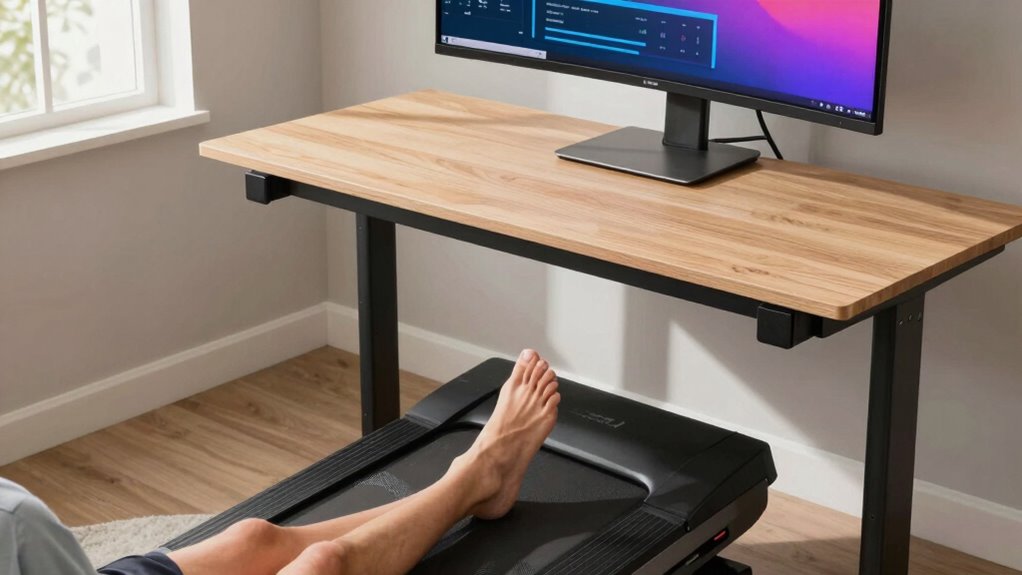
To improve your ergonomics, make sure your monitor is at eye level to reduce neck strain. Adjust your desk height so your elbows are at a 90-degree angle and your wrists stay straight. Incorporating balance exercises can also help strengthen your core while you work. Additionally, maintaining a clean workspace can enhance focus and reduce distractions. Also, choose an ergonomic chair that supports your lower back and encourages good posture. Investing in luxury ergonomic products can significantly enhance your overall comfort and productivity. Additionally, using high-quality monitors can provide better image clarity, which contributes to reduced eye strain during long work sessions. Moreover, taking breaks to engage in outdoor activities can help refresh your mind and improve your overall well-being.
Proper Monitor Leveling
Ensuring your monitor is at the correct height is essential for maintaining good posture and reducing strain during your workouts. When your monitor is too high or low, it causes neck and eye fatigue, making it harder to stay comfortable. To achieve proper leveling, position your monitor so the top of the screen is roughly eye level. Keep your ergonomic keyboard and chair adjustments in mind to support proper alignment—your eyes should naturally gaze downward slightly when viewing the monitor.
- Place the monitor about an arm’s length away for optimal viewing.
- Adjust your chair height so your feet rest flat on the floor.
- Use ergonomic keyboard placement to keep wrists straight and reduce tension.
Adjustable Desk Heights
Adjusting your desk height is essential for creating an ergonomic workspace that supports good posture during your treadmill workouts. Standing desks are a great option, allowing you to switch between sitting and standing easily. When setting up, make sure your desk is at a height where your elbows are bent at roughly 90 degrees and your wrists stay straight. This prevents strain and promotes comfort. Use ergonomic accessories like monitor risers or adjustable monitor arms to align your screen at eye level, reducing neck strain. If your desk isn’t adjustable, consider adding risers or platforms to achieve proper height. Moreover, investing in a Gold IRA can be a beneficial strategy for long-term financial health while you focus on your physical well-being. Additionally, incorporating herbal remedies into your routine can help alleviate stress, enhancing your overall well-being. In a fast-paced environment like Bollywood culture, maintaining an ergonomic workspace is crucial for sustaining your productivity. Keep your workspace flexible so you can move effortlessly between sitting, standing, and walking, maintaining good posture throughout your work and exercise sessions. Remember that good posture plays a crucial role in minimizing discomfort and maximizing productivity. Additionally, be aware that cookies utilized on websites can affect your overall browsing experience, highlighting the importance of a comfortable setup.
Ergonomic Seating Position
Ergonomic Seating Position (Adjust Your Desk and Monitor Heights for Better Ergonomics)
A proper ergonomic seating position hinges on setting your desk and monitor heights correctly. When your monitor is at eye level, it reduces neck strain and keeps your posture healthy. Adjust your chair height so your feet are flat on the floor and your knees are at a 90-degree angle. Keep your desk organized to prevent clutter, which can disrupt office ambiance and cause unnecessary strain. To optimize ergonomics:
- Position the monitor about an arm’s length away, with the top of the screen at eye level.
- Ensure your keyboard and mouse are within easy reach, allowing your elbows to stay close to your sides.
- Maintain a neutral wrist position to avoid repetitive strain injuries. Incorporating ethical consumerism into your workspace can further enhance focus and promote comfort. Additionally, creating comfortable seating areas can help support good posture during treadmill use. Proper desk organization and monitor placement promote comfort and support good posture during treadmill use.
As an affiliate, we earn on qualifying purchases.
How to Set Your Treadmill Speed for Comfortable Walking
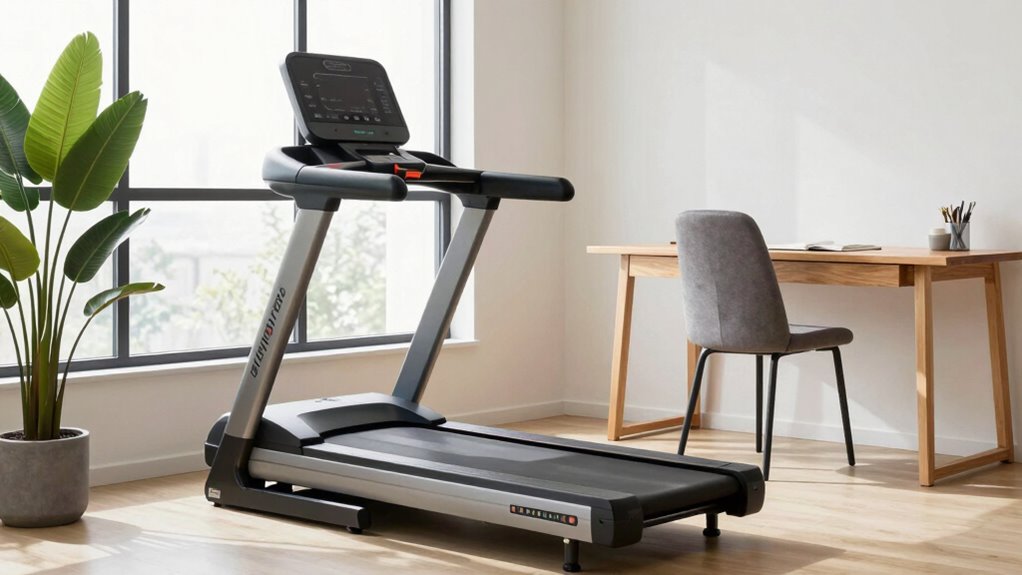
Finding the right treadmill speed is essential for comfortable walking, and it’s best to start slow to gauge your comfort level. Begin with a low speed, around 1.0 to 1.5 mph, and gradually increase if you feel steady. Always prioritize treadmill safety; avoid rushing to higher speeds that could compromise your balance or posture. Use the speed calibration feature to fine-tune your pace, ensuring it feels natural and not rushed. Pay attention to how your body responds—if you start to feel strained or off-balance, dial back to a more comfortable pace. Remember, the goal is consistent, relaxed walking, not speed. Setting your treadmill speed carefully helps prevent injury and keeps your posture intact during your work sessions.
Maintain Good Posture While Walking and Working

Keeping your posture in check while walking on your treadmill guarantees you stay comfortable and avoid strain. Focus on posture awareness to maintain proper alignment, keeping your shoulders relaxed and your back straight. Use ergonomic accessories, like a supportive chair or monitor stands, to keep your workspace aligned with your body. Additionally, incorporating air fryer accessories into your cooking routine can enhance your overall well-being. Adjust your desk height so your elbows form a 90-degree angle, preventing slouching. Pay attention to your head position—your gaze should be straight ahead, not downward. Regularly engage your core muscles to support your spine and promote stability. Remember, staying mindful of your posture throughout your walk helps prevent discomfort and long-term issues. Incorporate these tips for a healthier, more comfortable work-from-home setup while using your desk treadmill. Additionally, consider how Zodiac traits can influence your personal work habits and posture awareness.
Incorporate Breaks and Stretching Into Your Routine
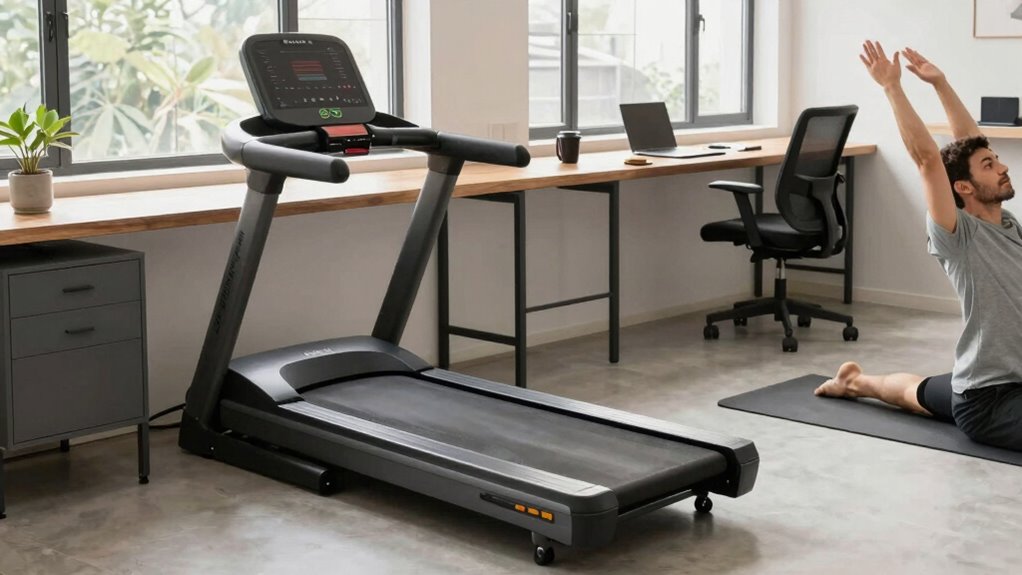
To prevent stiffness and fatigue, it’s essential to incorporate regular breaks and stretching into your routine when using a desk treadmill. Taking short pauses allows your muscles to relax and reduces strain. During breaks, try desk yoga poses to loosen tight areas and improve circulation. Stretch your legs, arms, neck, and back to maintain flexibility and prevent discomfort. Wearing ergonomic footwear can also help support your feet and posture during these breaks. Set a timer to remind yourself to stand, stretch, or walk around every 30 to 60 minutes. These simple actions help counteract the effects of prolonged walking and keep your body aligned. Consistently integrating breaks and stretching guarantees you stay comfortable, focused, and safe while working on your desk treadmill.
Common Setup Mistakes That Hurt Your Posture and How to Fix Them

Setting up your desk treadmill incorrectly can lead to discomfort and long-term posture issues. Common mistakes include having the desk too high or low, misplacing your screen, and walking with poor form. Fixing these issues is key to staying comfortable and maintaining good posture while walking.
Improper Desk Height
When your desk is too high or too low, it can throw off your posture and lead to discomfort or strain over time. An improper desk height forces you into awkward positions, increasing tension in your neck, shoulders, and back. To fix this, focus on ergonomic adjustments that support your body’s natural alignment.
- Make sure your elbows are at a 90-degree angle when typing, reducing strain.
- Adjust your desk so your wrists stay straight, avoiding repetitive stress injuries.
- Incorporate office décor that promotes proper posture, like supportive chairs and footrests, and consider noise control to create a calming workspace.
A well-set desk height not only improves comfort but also helps maintain focus and productivity without sacrificing your posture.
Incorrect Screen Positioning
Incorrect screen positioning is a common mistake that can cause strain on your neck, shoulders, and eyes. When your monitor is too high or low, you might tilt your head awkwardly, leading to discomfort and long-term issues. Screen glare from nearby windows or improper lighting can also force you to lean forward or squint, worsening posture. Make sure your screen is directly in front of you at eye level to avoid neck strain. Proper keyboard placement is equally important; it should be close enough to prevent reaching and maintain a relaxed shoulder position. Keep the monitor at a comfortable distance, about arm’s length, and adjust the brightness to reduce glare. Correct screen positioning helps you stay aligned and prevents posture-related aches during your treadmill work.
Poor Walking Posture
Poor walking posture is a common mistake that can undermine your comfort and safety during treadmill workouts. Incorrect walking biomechanics often result from poor postural habits, leading to strain and discomfort. You might find yourself slouching, leaning forward, or gripping the handrails too tightly, which disrupts natural movement. These habits can cause long-term issues and reduce exercise effectiveness. To fix this, focus on maintaining a tall, aligned posture with shoulders relaxed and your head level. Engage your core and take smooth, natural strides. Avoid looking down or leaning forward. Small adjustments can improve your walking biomechanics and help you avoid unnecessary strain. Remember, proper posture isn’t just about comfort—it’s essential for safe, effective treadmill workouts.
Tips for Staying Focused and Comfortable During Walk-and-Work Sessions
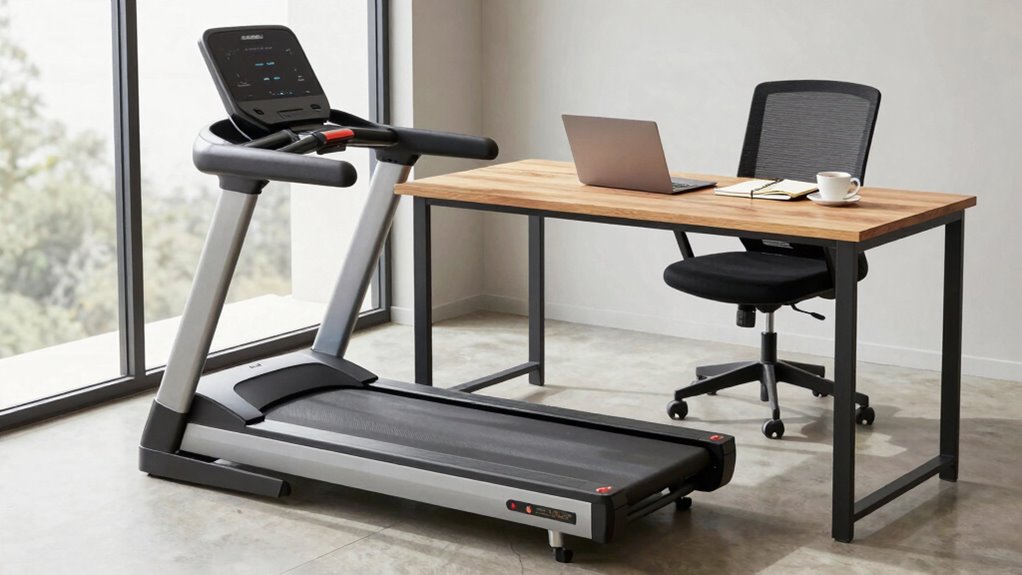
Staying focused and comfortable during walk-and-work sessions requires intentional adjustments to your environment and habits. To boost concentration, try music therapy—playing calming or instrumental music can minimize distractions and improve mood. Incorporate mindfulness exercises, such as deep breathing or brief stretches, to stay present and reduce fatigue. Keep your workspace organized, ensuring your monitor is at eye level and your posture stays aligned. Wear supportive footwear and take regular breaks to prevent discomfort. Adjust your treadmill speed to a comfortable pace, avoiding rushing or too slow movements. Hydrate often and listen to your body’s signals. These strategies help you maintain focus, reduce strain, and enjoy the benefits of walking while working effectively.
Troubleshooting and Fine-Tuning Your Desk Treadmill Setup

Even with careful setup, you might encounter issues when using your desk treadmill, but many problems can be fixed with some troubleshooting. First, check your workspace lighting—insufficient lighting can cause eye strain or make it hard to see controls, so adjust or add lighting as needed. Next, review your cable management; tangled or loose cables can interfere with movement or cause tripping hazards. Ensure all cables are neatly secured and out of your walking path. Additionally, verify your treadmill’s calibration and speed settings to prevent discomfort or uneven walking. Regularly inspect for loose bolts or parts, and make adjustments to improve stability. Properly managing workspace lighting and cable organization can markedly enhance your experience, keeping your posture safe and your setup functioning smoothly.
Frequently Asked Questions
How Often Should I Adjust My Treadmill and Desk Setup?
You should adjust your treadmill and desk setup whenever you notice discomfort or postural issues. Regularly check your posture alignment and guarantee your ergonomic accessories, like a supportive chair or monitor stand, promote proper alignment. Every few weeks, revisit your setup, making small tweaks to maintain comfort and prevent strain. Staying proactive helps you avoid long-term issues and keeps your workspace optimized for movement and support.
Can I Use a Standing Desk With a Treadmill?
Think of your workspace as a well-orchestrated symphony—you can use a standing desk with a treadmill for harmony. Yes, you can, but make certain you have ergonomic accessories like a proper monitor stand and keyboard placement. Use a treadmill cushion to soften impacts and maintain comfort. Adjust your treadmill speed and desk height to keep your posture aligned, preventing strain and making your walk-work session both productive and comfortable.
What Safety Precautions Are Necessary When Walking and Working?
When walking and working, prioritize posture alignment by keeping your back straight and shoulders relaxed. Always wear appropriate safety gear, like non-slip shoes, to prevent slips. Make sure your treadmill is stable and within reach to avoid overextending. Keep your workspace clear of obstacles, and use handrails if needed for balance. Regularly check your posture and treadmill settings to maintain safety and comfort during your walk-and-work routine.
How Do I Prevent Slipping or Tripping on the Treadmill?
Did you know that slip-and-fall accidents account for nearly 25% of workplace injuries? To prevent slipping or tripping on your treadmill, always use a non-slip mat designed for exercise equipment. Make certain your treadmill is on secure, flat flooring that provides stability. Regularly check for loose bolts or worn-out parts, and keep cords and clutter clear to avoid tripping hazards. Staying vigilant keeps your workspace safe and injury-free.
Is It Better to Walk Slowly or at a Moderate Pace While Working?
You should walk at a moderate pace while working, as it helps maintain pacing consistency and manages your heart rate effectively. Walking too slowly might cause discomfort or muscle stiffness, while going too fast can distract you or raise your heart rate excessively. A steady, moderate pace allows you to stay focused, reduces fatigue, and keeps your posture aligned, making your work session more comfortable and productive.
Conclusion
Think of your desk treadmill as a steady river guiding you through your workday — flowing smoothly depends on your setup. When you fine-tune your posture, speed, and breaks, you create a harmonious current that keeps you energized without strain. Like a skilled captain steering through calm waters, your mindful adjustments guarantee your journey remains balanced and sustainable. Embrace this flow, and your workspace becomes a vessel of health and productivity.
Flea & tick season Picks
flea and tick prevention
As an affiliate, we earn on qualifying purchases.