TL;DR

Get health and wellness essentials delivered free — and shop member deals
- Fast, free delivery on millions of items
- Access to Prime Big Deal Days deals on October 6–7
- Prime Video, Amazon Music and more included
Two studies using UK joint registry data found similar five-year implant survival after robot-assisted and conventional hip and knee replacements. The findings bear on plans to expand NHS use of surgical robots, which add equipment and per-procedure costs; the studies did not assess every possible measure of recovery.
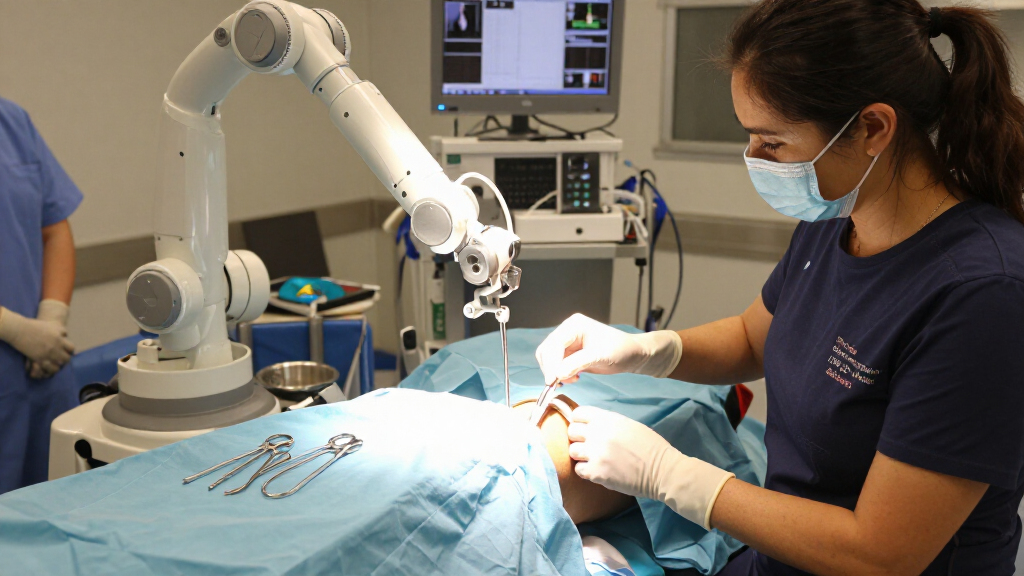
Two studies drawing on more than 2.5 million UK joint replacement records found no clear difference in five-year implant survival between robot-assisted and conventional hip and knee surgery. The results challenge the expectation that robots would reduce revisions by improving implant positioning and arrive as the NHS plans to expand robotic procedures.
Hasan R. Mohammad of Queen Mary University of London and colleagues analyzed records from the National Joint Registry covering England, Wales, Northern Ireland, the Isle of Man, Guernsey and Jersey. Scotland was not included. The data covered surgeries from 2018 through 2024 and included total hip replacements, total knee replacements and unicompartmental knee replacements, which replace part of the knee.
For the main comparison, the researchers matched patients who received robotic surgery with similar patients who had conventional surgery, accounting for clinical and demographic factors and surgeons’ procedure volume. In those matched groups, five-year implant survival was 98.8% for both robotic and conventional hip replacements. For total knee replacements, it was 98.6% with robotics and 98.5% with conventional surgery. For partial knee replacements, it was 96.4% and 97.8%, respectively.
The studies found no clear difference in revision rates for the procedures overall. In hip replacements, some differences in dislocation-related revisions and fractures appeared in the unmatched data but were no longer clear after matching. The researchers also found no clear difference in all-cause mortality among hip replacement patients. The reported analysis did not establish whether robotics affects other aspects of recovery, such as pain or function.
NHS Robot Plans Face a Cost Test
The findings matter because robotic systems add costs to a procedure already performed at scale. The reports estimated a purchase cost of about £1 million per robotic device, plus £1,000 to £2,500 per operation. With no clear reduction in five-year revisions in these studies, health officials face a question about whether the added expense produces benefits patients or the health service can measure.
The UK government’s 10-year plan, published in July, calls for the NHS to increase sevenfold the share of hip and knee replacements performed with robots. It says adoption will expand in line with NICE guidelines. NICE evaluates medical technologies, including their clinical value and cost-effectiveness. The registry studies may inform that assessment, but they do not by themselves settle whether broader use is worthwhile.
For patients, the results provide a useful comparison of implant survival, one important outcome after joint replacement. They do not show that every patient will have the same result, nor do they answer whether robotic surgery offers advantages in other outcomes. Decisions about care remain a matter for patients and their clinical teams.
What the Registry Comparison Measured
The rationale for robotic assistance is that it can help surgeons position implants more precisely. Better positioning is intended to reduce problems such as malalignment and loosening that can lead to an early revision, when an implant is replaced or repaired. The studies tested whether that proposed advantage was reflected in revision-related implant survival across a large set of real-world procedures.
The analysis included 656,080 conventional and 10,203 robotic total hip replacements; 585,242 conventional and 17,431 robotic total knee replacements; and 89,792 conventional and 4,680 robotic partial knee replacements. More than 90% of hip replacements were for osteoarthritis, and nearly all knee replacement patients had that condition. The researchers also compared the robotic patients with four conventional-surgery patients each in their matched analysis.
The BMJ published the two reports, one on hip replacement and one on knee replacement. Their observational design means the researchers compared existing patient records rather than assigning patients at random to a type of surgery. The large registry provides a broad view of practice, while the matching approach helps account for measured differences between patient groups.
““Given the observational design of the study … we cannot rule out the possibility of unmeasured and residual confounding.””
— Hasan R. Mohammad and colleagues
Benefits Beyond Revision Rates
Revision is not the only way to assess a joint replacement. The researchers said more accurate positioning may affect pain, stiffness, function or instability, but the supplied findings do not establish whether patients experienced better outcomes on those measures. The reports also do not show whether results differ by specific robot system, hospital or surgeon experience.
Because the studies were observational, unmeasured differences between patients or care settings could influence the results. The data largely reflect procedures in the NHS, whose conditions may differ from those in other countries and health systems. The registry did not include Scotland, and the reported findings do not establish what the NHS or NICE will decide about future use.
NICE Guidance and NHS Expansion
The UK government has said robotic surgery adoption will expand in line with NICE guidance. NICE’s evaluation will be a key next point for the NHS plan, alongside consideration of the studies’ findings and the costs of devices and procedures. The available material does not specify when NICE will issue or update guidance in response to these reports.
Further evidence on outcomes such as pain, function and complications could help clarify whether robotic assistance offers benefits not captured by revision rates. For now, the studies report similar five-year implant survival across the compared procedures, while the broader clinical and economic case for wider NHS use remains under assessment.
Key Questions
What did the UK studies find?
They found similar five-year implant survival after robot-assisted and conventional hip and knee replacements in the analyzed registry data.
Did robotic surgery reduce revisions?
The studies found no clear overall difference in revision rates for the procedures. Some differences in unmatched hip data were no longer clear after patient matching.
How much do robotic systems cost?
The reports estimated that a device costs about £1 million to purchase, with an additional £1,000 to £2,500 per procedure.
Will the NHS stop expanding robotic surgery?
The studies do not determine NHS policy. The government’s plan calls for a sevenfold increase in the share of hip and knee replacements using robots, with expansion tied to NICE guidelines.
Did the studies measure pain and recovery?
The reported findings focus on implant survival, revisions and selected complications. They do not establish whether robotic surgery improves pain, stiffness or function.
Source: rss
Fall Picks
fall essentials
As an affiliate, we earn on qualifying purchases.