
Advances in telemedicine and remote diagnostics now let you access faster, more accurate healthcare from home. AI-powered tools analyze your medical data, images, and lab results quickly, improving diagnosis and treatment. Digital platforms make it easy to consult specialists, share data securely, and get instant feedback. Wearable devices continuously monitor your health, providing real-time insights. If you want to discover how these innovations are transforming healthcare, keep exploring the latest developments.
Key Takeaways
- AI-powered diagnostics enable rapid, accurate analysis of medical data remotely, improving diagnostic precision and reducing errors.
- Integration with virtual healthcare platforms facilitates seamless consultations, image sharing, and instant feedback.
- Advances in medical data analysis enable personalized treatment plans and continuous monitoring through wearable devices.
- Virtual healthcare features support real-time communication, automated decision support, and remote assessments for various conditions.
- Telemedicine reduces geographical barriers, increases access to expert care, and promotes proactive health management from home.

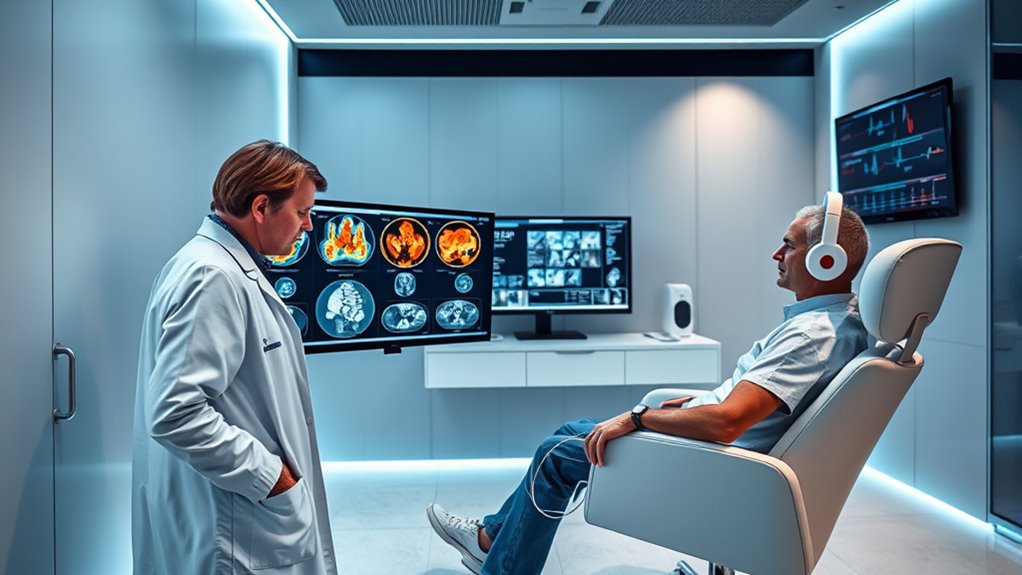
Telemedicine has rapidly transformed healthcare by making medical services more accessible and efficient, especially amid recent technological advancements. One of the most significant innovations fueling this change is AI-powered diagnostics, which leverages artificial intelligence to analyze medical data quickly and accurately. These systems can interpret imaging, lab results, and patient histories, providing clinicians with rapid insights that help in diagnosing illnesses more precisely than ever before. As a result, you can receive quicker assessments, reducing wait times and enabling timely treatment, even from remote locations. This technology minimizes errors and enhances diagnostic confidence, especially in complex cases where human evaluation alone might miss subtle signs. AI-powered diagnostics are seamlessly integrated into virtual healthcare platforms, creating a *thorough* digital environment where you can consult specialists, upload medical images, and receive instant feedback. These platforms harness AI to streamline workflows, making healthcare more efficient and personalized. You no longer need to wait days or weeks for specialist referrals or in-person visits; instead, you can access high-quality diagnostics through your smartphone or computer in minutes.
Advances in medical data analysis are enabling more precise and personalized treatment plans, further improving patient outcomes. Virtual healthcare platforms serve as the backbone for these advancements, offering a wide array of services that connect you directly with healthcare professionals from anywhere. These platforms incorporate AI-powered diagnostics tools, allowing you to undergo assessments and receive recommendations without leaving your home. Whether it’s a routine check-up, chronic disease management, or urgent care, these platforms facilitate real-time communication, secure data sharing, and automated decision support. They enable continuous monitoring through wearable devices and remote sensors, feeding data into AI systems that flag anomalies or suggest adjustments to your treatment plan. This proactive approach helps prevent complications and promotes better health outcomes. *Furthermore*, virtual healthcare platforms break down geographical barriers, making expert care accessible in rural or underserved areas where traditional clinics might be scarce. You benefit from the convenience of scheduling appointments at your preferred times, saving travel costs and time while maintaining consistent health management.
Frequently Asked Questions
How Is Patient Privacy Protected in Remote Diagnostics?
You’re protected in remote diagnostics through data encryption, which safeguards your sensitive health information from unauthorized access. Providers also ensure you give informed consent, meaning you understand how your data will be used and shared. These measures help maintain your privacy, giving you confidence that your personal health details stay confidential while you benefit from remote healthcare services.
What Are the Limitations of Current Telemedicine Technologies?
You might face limitations with current telemedicine technologies due to technological barriers like poor internet connectivity or incompatible devices, which can hinder smooth consultations. Additionally, user acceptance remains a challenge; some patients or providers may be hesitant to trust or fully adopt remote diagnostics. These issues can affect the quality and accessibility of care, emphasizing the need for ongoing improvements and education to overcome these hurdles.
How Do Telemedicine Solutions Integrate With Existing Healthcare Systems?
You might think integrating telemedicine solutions into healthcare systems is seamless, but interoperability challenges often make you wish for a simple plug-and-play. Despite the hurdles, you actively adopt new technologies by working with standards and platforms that bridge gaps. This integration requires effort, but it ultimately improves patient care, streamlines workflows, and helps you stay current in a rapidly evolving digital health landscape.
What Training Is Required for Healthcare Providers to Use Telemedicine Tools?
You need provider certification and technical proficiency to effectively use telemedicine tools. Training should cover device operation, data security, and troubleshooting to guarantee you can deliver quality care remotely. Many programs offer certification courses that validate your skills, helping you stay compliant with regulations. Regular practice and updates keep your technical proficiency sharp, enabling you to confidently navigate new telemedicine platforms and provide seamless virtual consultations.
How Accessible Is Telemedicine for Rural and Underserved Populations?
Imagine a rural town where a patient sees a doctor through a screen, despite distant mountain views. Telemedicine’s accessibility depends on overcoming urban infrastructure gaps and technological barriers like limited internet or devices. While it offers hope, many underserved populations still face hurdles like poor connectivity. To truly bridge the gap, investments in infrastructure and technology are essential, ensuring everyone can access quality healthcare remotely.
Conclusion
As you embrace these advances in telemedicine and remote diagnostics, remember that technology is your trusty compass guiding you through uncharted healthcare waters. With each innovation, you hold the power to transform lives, making care more accessible and efficient. Don’t just watch from the sidelines—be part of this revolution, where the future of medicine is a journey you’re actively shaping. After all, isn’t it thrilling to think that the next breakthrough could be just a click away?