
TL;DR

Get health and wellness essentials delivered free with Prime
- Fast, free delivery on millions of items
- Prime Video, Amazon Music and more included
- Member-only deals all year
A peer-reviewed Viewpoint by psychiatrists from the universities of Ottawa and Toronto argues that physical activity should be prescribed in psychiatry with a defined activity, dose, safety plan and follow-up. The authors cite evidence for improved mood and possible cognitive benefits, particularly in schizophrenia, while stressing that some findings are based on small trials or observational studies.
A peer-reviewed Viewpoint in Brain Health argues that clinicians should treat physical activity as a structured part of psychiatric care, with a planned type, frequency, intensity, duration, safety assessment and follow-up. The authors, psychiatrists Carl Zhou and Nicholas Fabiano of the University of Ottawa and Stanley Wong of the University of Toronto, say evidence supports benefits for mood and suggests potential cognitive gains, while emphasizing that important findings—especially for schizophrenia—need stronger trials.
The Viewpoint draws on randomized trials, meta-analyses and cohort studies. The authors say the evidence is strongest for mental-health symptoms: physical activity interventions have been associated in randomized and meta-analytic research with reductions in depressive symptoms, anxiety and psychological distress, as well as suicide-related outcomes. A 2024 network meta-analysis of randomized trials found reductions in depression symptoms with walking, jogging, yoga and strength training; effects were generally larger at higher intensity.
The authors also cite dose-response analyses suggesting that benefits may occur below public-health activity targets. They describe a level of about 75 minutes of moderate activity a week—roughly half the recommended weekly volume—as a potentially useful starting point. This is not presented as a universal prescription: the appropriate activity and amount depend on a person’s health, capacity and circumstances.
For people with schizophrenia and other severe mental illnesses, the paper highlights the combination of sedentary behavior, cardiometabolic disease and premature mortality. Meta-analytic evidence suggests aerobic exercise may improve global cognition in schizophrenia, with possible gains in working memory, attention and social cognition. The authors caution that the cognition evidence comes from a limited number of modest trials. The paper also discusses exercise mimetics, but says these would be an adjunct for people facing major barriers to movement, not a replacement for safe, accessible activity.
A More Practical Role for Exercise in Care
The proposal matters because a general instruction to “get some exercise” may not give a patient or care team a workable plan. A graded prescription can specify what activity to try, how often and for how long, while building in safety checks and follow-up. The authors frame that structure as a way to make physical activity more actionable within psychiatric care, rather than leaving it as informal lifestyle advice.
For patients, the emphasis on starting small may lower the barrier to beginning. Depression can reduce energy and motivation, and physical limitations or unsafe surroundings can make standard targets difficult to meet. The Viewpoint suggests options such as a five-minute walk, chair-based exercise or supervised group activity, with gradual progression where appropriate. These are examples, not proof that one format is suitable for everyone.
The potential relevance extends beyond symptoms. In schizophrenia, cognitive difficulties can affect everyday functioning, while available medications often do little to improve those difficulties, the authors say. If exercise can support symptoms, cognition and physical health together, it could address several needs at once. That possibility remains more promising than settled: better-powered research is needed to establish the size and reliability of cognitive effects.
Products Worth Considering

Fitbit Versa 2 Health and Fitness Smartwatch with Heart Rate, Alexa, Music, Sleep and Swim Tracking

Fitbit Charge 6 Fitness Tracker – Obsidian/Black
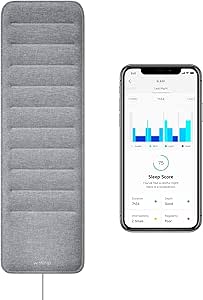
Withings Sleep Under-Mattress Sleep Tracking Pad
As an affiliate, we earn on qualifying purchases.
Evidence Behind the Prescription
The Viewpoint links exercise with brain health through several possible pathways. Contracting skeletal muscle releases signaling molecules called myokines, which may interact with metabolic, inflammatory, neuroendocrine and neurotrophic processes tied to mood and cognition. The authors present this muscle-brain axis as one model, not a complete explanation; sleep, vascular health and psychological experiences such as mastery and social connection may also matter.
One cited randomized trial, published by Erickson and colleagues in 2011, found that aerobic exercise in older adults increased the volume of the anterior hippocampus, a brain region involved in memory, and improved memory. The authors distinguish this trial evidence from broader research associating physical activity with sharper cognition and slower brain aging, much of which is observational and cannot establish cause and effect.
The World Health Organization recommends adults do 150 to 300 minutes of moderate aerobic activity a week, or 75 to 150 minutes of vigorous activity, and muscle-strengthening activity on at least two days. The Viewpoint does not suggest that everyone should immediately meet those targets. It favors a graded approach, with intensity and duration adjusted to ability and safety.
“The evidence we reviewed supports something more deliberate: a prescription that names the type of activity, the frequency, the intensity, the duration, the safety considerations, and a plan for follow-up, just as we would for a medication.”
— Carl Zhou, Department of Psychiatry, University of Ottawa
Limits in the Current Evidence
The Viewpoint synthesizes existing studies; it does not report a new clinical trial testing a graded prescription against usual psychiatric care. The material provided does not establish which prescription format works best, how much benefit patients can expect, or whether effects differ by diagnosis, medication, baseline fitness or level of support.
Evidence also varies by outcome. The authors describe the mood findings as the strongest, but broader claims about cognition and brain aging draw partly on observational research, which cannot establish that activity caused the differences. In schizophrenia, the reported cognitive benefits come from a limited set of modest trials. The source does not give pooled effect sizes or a detailed account of adverse events, adherence or long-term outcomes.
Safety and access are also individual questions. The authors say frailty, unstable cardiac or respiratory symptoms, and recent falls may require medical assessment, supervision or a temporary pause. How health systems would fund and deliver exercise support, and how clinicians would monitor progress across different settings, are not specified in the source report.
From Advice to Monitored Plans
The immediate next step proposed by the authors is clinical: where appropriate, care teams can replace vague encouragement with an individualized activity plan and follow-up. A graded start may involve short or seated activity, a supervised group, or movement incorporated into a patient’s daily routine, followed by gradual increases when safe and feasible.
For the research field, the authors call for adequately powered studies, particularly to test cognitive outcomes in schizophrenia. Further trials would need to clarify which activities and doses are effective, who benefits, how long gains last and what support helps people continue. The source does not identify a specific upcoming trial or publication date.
Any plan must account for medical risk and practical barriers rather than treating a public-health target as a one-size-fits-all requirement. The Viewpoint presents exercise mimetics only as a possible future adjunct for people who cannot move enough, and not as a substitute for accessible physical activity.
Key Questions
What does a graded physical activity prescription involve?
It sets out an activity’s type, frequency, intensity and duration, along with safety considerations and follow-up. A clinician can tailor the plan to a person’s health and ability and increase activity gradually when appropriate.
Which psychiatric outcomes does the Viewpoint say may improve?
The authors cite evidence that physical activity interventions can reduce depressive symptoms, anxiety and psychological distress, as well as suicide-related outcomes. They also discuss possible cognitive benefits, including in schizophrenia, but say that evidence is less developed.
Do patients need to meet the full weekly activity guideline to benefit?
The Viewpoint cites dose-response analyses suggesting benefits may appear at about 75 minutes of moderate activity per week, below the WHO adult target of 150 to 300 minutes. That figure is not a personalized target or guarantee; activity should be adjusted to individual circumstances.
Is exercise a replacement for psychiatric medication?
No. The Viewpoint argues that physical activity should be treated as a structured part of care, not that it should replace medication or other treatment. It describes exercise mimetics as a possible adjunct for people facing major barriers to movement, not as a substitute for safe, accessible activity.
Who may need medical assessment before starting?
The authors identify frailty, unstable cardiac or respiratory symptoms, and recent falls as situations that may call for medical assessment, supervision or a temporary pause. The appropriate approach depends on the individual; the article does not provide personal medical advice.
Source: news-medical.net