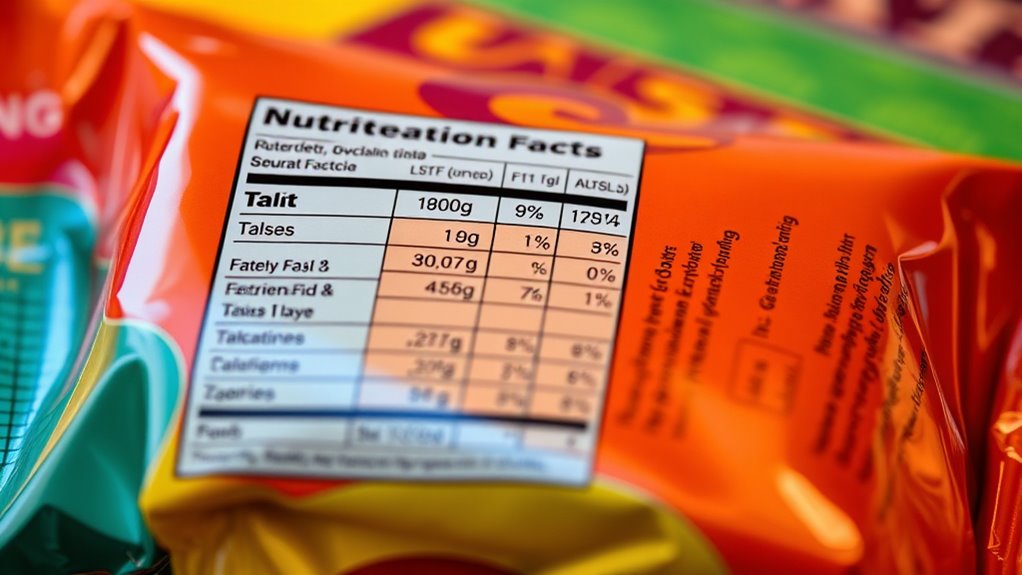

Understanding food labels helps you make healthier choices by paying attention to serving sizes, calories, and macronutrients like fats, carbs, and proteins. Clear ingredient lists reveal additives, preservatives, and allergens, allowing you to avoid unwanted chemicals and processed foods. Comparing labels enables you to select options that align with your dietary goals. Mastering this info empowers you to take control of your nutrition; keep exploring to learn how to interpret every detail on the label.

Get health and wellness essentials delivered free — and shop member deals
- Fast, free delivery on millions of items
- Access to Prime Big Deal Days deals on October 6–7
- Prime Video, Amazon Music and more included
Key Takeaways
- Always check the serving size to accurately interpret caloric and nutrient information.
- Review calorie counts and macronutrient details to manage your energy intake effectively.
- Read ingredient lists to identify allergens, additives, and minimally processed foods.
- Use labels to compare products and make informed, healthier choices aligned with your goals.
- Develop skills to understand numbers and recognize simple ingredients for better dietary management.

Have you ever wondered what all those numbers and claims on food packages really mean? It can be confusing trying to make sense of everything listed on a label, especially when you’re aiming to make healthier choices. Understanding nutrition labels is essential, and getting a handle on how they present information can empower you to make smarter decisions. When you look at a food label, the first thing you might notice is the serving size. This small detail is fundamental because all the nutritional information is based on it. If you don’t pay attention, you might underestimate how much you’re actually consuming. Once you’re clear on the serving size, you can start calorie counting more accurately. The calorie count on the label tells you how much energy you’ll get from one serving. Knowing this helps you manage your daily intake, especially if you’re tracking calories for weight management or health reasons. But calories are just part of the story. The label also provides details about macronutrients—fats, carbohydrates, and proteins—so you can balance your diet according to your goals. For example, if you’re trying to reduce saturated fat intake, the label shows how much is in each serving, allowing you to choose options that align with your health plan.
Beyond the numbers, ingredient transparency is another essential aspect of food labels. It reveals exactly what’s in your food, listing everything from common ingredients to additives and preservatives. When you understand what’s in your food, you can make more informed choices, especially if you have allergies or sensitivities. Labels often highlight added sugars, sodium, and artificial ingredients, helping you spot products that might not fit your dietary needs. Ingredient transparency also helps you avoid processed foods that hide unpronounceable chemicals or excessive preservatives. Additionally, becoming familiar with food labels can help you identify products with added sugars or hidden preservatives that may impact your health. The more you educate yourself on reading labels, the better you’ll become at identifying whole, minimally processed foods. This awareness enables you to select products with simple, recognizable ingredients, supporting a healthier lifestyle.
In the end, food labels are tools designed to inform and empower you. By focusing on calorie counting and ingredient transparency, you gain insight into what you’re putting into your body. This knowledge allows you to compare products, avoid hidden additives, and stay aligned with your nutritional goals. It’s a skill that, once developed, makes grocery shopping more intentional and your diet more balanced. So, next time you reach for a packaged food item, take a moment to read the label carefully. It’s not just about what’s on the front but understanding the story behind every number and ingredient listed inside.
As an affiliate, we earn on qualifying purchases.
Frequently Asked Questions
How Often Do Nutritional Labels Get Updated?
Nutritional labels typically get updated every few years, depending on regulatory compliance requirements. You should check product packaging for the most recent label, as companies update them to reflect new regulations or ingredient changes. The label update frequency varies by country and industry standards, but it’s essential to stay informed. Always read the label carefully to guarantee you’re getting accurate and current nutritional information about the food you consume.
Are Organic Foods Required to Have Different Labels?
Organic foods aren’t required to have different labels, but if they’re certified organic, they must display the USDA Organic label. This label follows strict organic certification and label regulations, ensuring the product meets specific standards. When you see the USDA Organic seal, you know the food was produced without synthetic fertilizers or GMOs. So, while the labels look similar, the certification guarantees the organic quality and adherence to regulations.
What Do Serving Size Changes Mean for My Diet?
When serving size changes, it directly impacts your portion control and calorie counting. For example, if a snack’s serving size increases from 1 ounce to 2 ounces, you may unknowingly consume more calories if you stick to the original portion. Adjusting your intake to match new serving sizes helps you stay on track with your diet, ensuring accurate calorie counting and better portion control for your health goals.
How Can I Identify Hidden Sugars on Labels?
To spot hidden sugars on labels, check the ingredients list for terms like honey, syrup, or malt. Look at the Nutrition Facts for added sugars, which are separate from natural sugars found in fruits or dairy. By comparing products, you’ll notice how much added sugar is included, helping you make healthier choices and reduce intake of unnecessary sugars that can sneak into your diet.
Do Labels Indicate Allergen Information Clearly?
Did you know that 90% of food recalls are due to allergen mislabeling? Labels do indicate allergen information clearly, making allergen transparency a priority. You should look for bolded or highlighted ingredients like nuts, dairy, or gluten, which are required by law to be clearly listed. For label clarity, check the ingredients list and allergen statement to guarantee you’re fully informed, especially if you have allergies or sensitivities.
As an affiliate, we earn on qualifying purchases.
Conclusion
Think of food labels as your compass on a journey to better health. By understanding what’s inside each package, you’re steering yourself toward smarter choices and a stronger, happier you. Don’t let confusing labels be a fog that clouds your way—shine a light on what truly fuels your body. Take control, read the labels, and navigate your nutrition with confidence. Your health is a precious garden; tend to it wisely with every mindful decision.
As an affiliate, we earn on qualifying purchases.
As an affiliate, we earn on qualifying purchases.
Fall Picks
fall essentials
As an affiliate, we earn on qualifying purchases.